
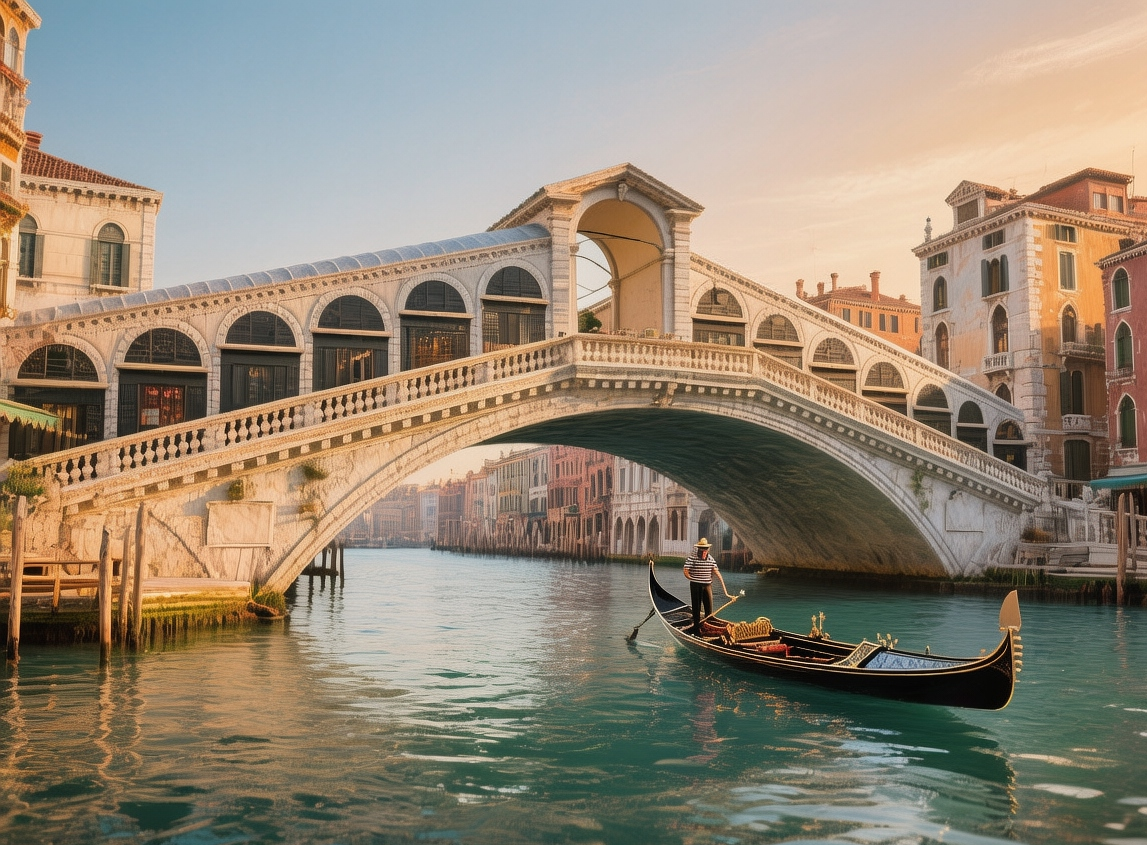
Rialto Bridge Renaissance Engineering Meets Venetian Commerce
The first light of dawn spills over the rooftops of San Polo, casting a warm glow on the marble balustrades of the Rialto Bridge. The Grand Canal below is still and glassy, reflecting the pastel facades of palazzos like a liquid mirror. A lone gondolier pushes off from a mossy step, his oar breaking the surface with a soft ripple. The air is cool and damp, scented with salt, coffee, and the faint earthiness of ancient brick. This is not just a crossing—it is Venice’s historic commercial heart, where for over 400 years merchants have haggled, lovers have met, and travelers have paused to marvel at one of the Renaissance’s most daring engineering feats. In 2026, as Venice navigates the delicate balance between heritage and hospitality, the Rialto Bridge remains a powerful symbol of resilience, ingenuity, and daily life.
Why Rialto Bridge Embodies Architectural Audacity
Completed in 1591 after decades of debate and failed wooden predecessors, the Rialto Bridge was a triumph of stone engineering in a city built on mud. Designed by Antonio da Ponte, its single 28-meter (92-foot) span defied contemporary wisdom that such a wide arch would collapse under its own weight. The bridge’s innovative design features two inclined ramps lined with shops—a nod to its role as a marketplace—and a central portico that allows tall-masted boats to pass beneath. For centuries, it was the only pedestrian crossing over the Grand Canal, anchoring the Rialto market district, which has been Venice’s commercial hub since the 11th century. Unlike later bridges, the Rialto was built not for ceremony, but for commerce—its very stones infused with the energy of trade, negotiation, and urban life.
The Best Time to Visit Rialto Bridge
To experience the bridge with fewer crowds and optimal light for photography, visit between April 12 and May 18, 2026. During this window, daytime temperatures average 16–20°C (61–68°F), and humidity is low. The ideal time is 6:30–8:00 AM, when the canal is quiet, the light is soft and golden, and you can capture the bridge’s reflection without the glare of midday sun or the press of tour groups. Avoid weekends and holidays, when the narrow walkways become congested. Note that while the bridge itself is always open and free to cross, the surrounding Rialto Market is closed on Sundays and Mondays.
Approximate 7-Day Budget for Venice (2026)
Based on mid-range travel standards and a projected 4% annual inflation from 2025 Italian tourism
- Accommodation: €150–€200 per night in a 3-star hotel or guesthouse in San Polo or Santa Croce—neighborhoods within a 5-minute walk of the bridge and rich in local character.
- Food: €60 per day. Breakfast (€8): espresso and brioche at a local bar. Lunch (€22): fresh seafood or cicchetti at the Rialto Market or a bacaro nearby. Dinner (€30): pasta with crab or grilled sardines at a family-run trattoria.
- Local Transport: €22 for a 7-day ACTV pass (includes unlimited vaporetto rides). The nearest water bus stop is Rialto, a 2-minute walk from the bridge.
- Attractions: While the bridge is free, nearby sites include the Rialto Market (free), Ca’ d’Oro (€14), and a Grand Canal gondola ride (€90 for 30 minutes).
- Miscellaneous: €70 for souvenirs (e.g., authentic spice blends from the market, Murano glass), gelato, and small donations at historic churches.
Total Estimated Cost: €1,200–€1,500 for one person for 7 days.
5 Essential Rialto Bridge Experiences
- Cross the Bridge at Dawn: Walk from San Marco to San Polo as the city wakes. The morning light reveals intricate carvings often lost in the midday crowd, and the canal is alive with delivery boats.
- Explore the Rialto Market: Open Tuesday–Saturday until 1:00 PM, this historic market offers fresh produce, seafood, and local specialties. Watch vendors unload crates from boats—a tradition unchanged for centuries.
- Photograph the Bridge from the Accademia Vaporetto Stop: Ride the No. 1 water bus to Accademia and capture the Rialto in full context, framed by the Grand Canal’s sweeping curve.
- Visit the Church of San Giacomo di Rialto: Just steps from the bridge, this 12th-century church claims to be Venice’s oldest. Its clock face bears the inscription “Horas non numero nisi serenas” (“I count only the happy hours”).
- Take a Gondola Ride Under the Arch: Book a short ride specifically to glide beneath the central portico—a perspective few consider, yet deeply evocative of Venetian scale and grace.
3 Hidden Gems Most Travelers Miss
- Calle Varisco: A tiny alley just off the bridge’s San Polo side, this narrow passage is so slim you can touch both walls. It’s a favorite shortcut for locals and a quirky photo op.
- Pescaria Back Entrance: While most tourists face the main fish stalls, walk around to the rear of the Pescheria (fish market) to see vendors cleaning catch and chatting with regulars—a raw, unfiltered slice of Venetian life.
- Al Bottegon: At Calle dei Nomboli 5855, this no-frills bacaro serves legendary cicchetti and spritz to locals. No English menu, no tourist prices—just authentic Venetian flavor.
Cultural & Practical Tips
- Keep moving on the bridge: Stopping to take photos in the center creates bottlenecks. Step to the side shop fronts or view from the adjacent embankments instead.
- Respect market hours: The Rialto Market is a working space. Avoid touching produce, and never photograph vendors without permission.
- Learn basic Italian phrases: “Buongiorno” (good morning), “Grazie” (thank you), and “Quanto costa?” (how much does it cost?) show respect and enhance interactions.
- Avoid eating on the bridge: Consuming food or drink while crossing is discouraged and can result in fines under Venice’s anti-littering ordinances.
- Carry cash for market purchases: Many small vendors do not accept cards. Small bills and coins are essential for buying spices, cheese, or fresh fruit.
Travel with Curiosity, Not Just Cameras
In 2026, the Rialto Bridge is more than an architectural icon—it is a living artery of Venetian commerce and community. By visiting with curiosity—observing the rhythm of the market, respecting the flow of foot traffic, and supporting local vendors—you honor its enduring role in the city’s fabric. Choose a spritz at a neighborhood bacaro over a café on the main drag, buy spices from a family stall, and remember that your presence carries weight in this fragile ecosystem. Let your journey across the Rialto be not just a crossing, but a connection—to history, to craft, and to the resilient spirit of Venice itself.