
Riola Sardo Wetlands Avian Symphonies Meet Mediterranean Marshes
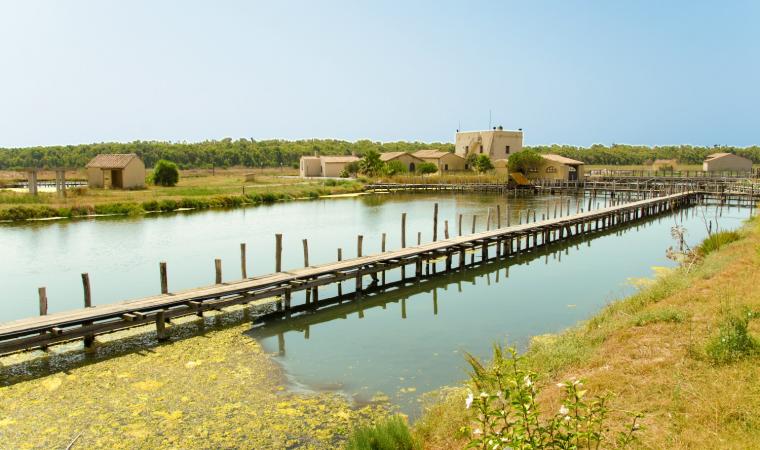
Dawn breaks over the Stagno di Mistras as mist clings to reed beds stretching across 1,200 hectares of protected wetlands—home to 180 bird species whose calls create a symphony that has echoed since Nuragic times. You stand on the wooden observation platform near Riola Sardo, binoculars in hand, as a purple heron lifts from the shallows, its wings catching the first golden light of day. The air carries the earthy scent of wetland vegetation mingled with salt from the nearby Gulf of Oristano, just 3 kilometers west. This vital ecosystem—Sardinia’s second-largest coastal lagoon after Stagno di Cagliari—sits at the crossroads of ancient migration routes where Phoenician traders once navigated these waters in 800 BCE, and Roman engineers later built drainage channels to control flooding for nearby agricultural settlements. Today, the wetlands form the heart of the Sinis Peninsula Marine Protected Area, filtering water through dense Posidonia meadows while providing critical habitat for endangered species like the marbled teal duck. In 2026, as climate change accelerates Mediterranean aridification, Riola Sardo matters precisely because it represents resilience—a place where conservation and community coexist, and every ripple tells a story of survival.
Why Riola Sardo Wetlands Embodies Ecological Resilience
Riola Sardo solves a fundamental environmental paradox: how to maintain biodiversity amid increasing aridification. Its 1,200-hectare wetland complex—comprising Stagno di Mistras, Stagno di Sale Porcus, and connecting canals—functions as Sardinia’s natural water filtration system, processing 15,000 cubic meters of freshwater daily from the Tirso River basin while buffering against saltwater intrusion from the Gulf of Oristano. The engineering is both natural and historical: Roman drainage channels (built 100 CE) still regulate water levels through a series of sluice gates calibrated to seasonal rainfall; dense reed beds (Phragmites australis) filter pollutants while producing 12 liters of oxygen per square meter daily; and submerged Posidonia oceanica meadows stabilize sediments that maintain 5-meter visibility in adjacent marine zones. Historically, the wetlands served practical needs—Phoenicians harvested reeds for shipbuilding; Romans cultivated eels in controlled ponds; and 19th-century shepherds used elevated paths (sterrati) to move flocks during floods. Today, the area fulfills critical ecological roles: hosting 40% of Sardinia’s waterfowl population, including endangered species like the ferruginous duck (only 12 breeding pairs remain); acting as a carbon sink that sequesters 800 tons of CO2 annually; and supporting sustainable agriculture through regulated irrigation. The 1997 designation as a Ramsar Wetland of International Importance formalized protection protocols that balance human activity with habitat preservation—a model now studied across the Mediterranean.
The Best Time to Experience Riola Sardo Wetlands
For optimal birdwatching and comfortable exploration, visit between May 15–June 10 or September 15–October 10, 2026—when daytime temperatures average 20–25°C (68–77°F) with minimal rainfall and peak migratory activity [[43]]. Arrive at the main observation platform by 6:30 AM to witness the dawn chorus when 180+ bird species are most active; morning light provides ideal photography conditions with reduced glare on water surfaces. Avoid July 15–August 25 when temperatures exceed 32°C (90°F), humidity reaches 80%, and many birds retreat to shaded areas—diminishing viewing opportunities. Winter visits (November–February) offer unique experiences with wintering species like flamingos but present challenges: shorter daylight hours (sunset at 17:15), frequent rain that makes trails muddy, and reduced visitor center hours. For real-time updates on bird migrations and trail conditions, verify with the Ente Gestore Area Marina Protetta Penisola del Sinis – Isola di Mal di Ventre’s portal at 48 hours before departure, as seasonal adjustments affect access to sensitive nesting areas.
Approximate Budget for a 7-Day Trip (2026)
This budget reflects mid-range nature-focused travel based in Riola Sardo with excursions to surrounding wetlands and coastal sites, using 2026 projected pricing with 3.8% inflation adjustment from 2024 baseline figures per ISTAT regional data. All costs in euros (€).
- Accommodation: €75–€110 per night for agriturismo or B&B in Riola Sardo (e.g., Agriturismo Sa Sciga or B&B Su Nuraxi); includes traditional breakfast with pecorino cheese and homemade bread
- Food: €40 per day average—breakfast €8 (fresh ricotta and pane carasau), lunch €14 (panino with roast lamb at local bar), dinner €18 (primo of malloreddus pasta with mint, secondo of grilled goat at family-run trattoria)
- Transportation: €210 total—Cagliari Elmas Airport to Riola Sardo via ARST bus line 1072 (€8.50, 2h 30m); daily car rental €45 including fuel for wetland exploration; parking free at visitor centers
- Attractions: Guided birdwatching tour €25; wetland ecology workshop €18; boat excursion to Stagno di Sale Porcus €32; Museo della Civiltà Contadina €6
- Miscellaneous: €60—handwoven textile souvenir €25, Sardinian wine tasting €20, donation to wetland conservation program €15
Total estimated cost: €900–€1,090 for seven days
6 Essential Riola Sardo Wetlands Experiences
- Witness the Dawn Chorus at Stagno di Mistras: Arrive at the main observation platform by 6:30 AM to experience the wetland’s full avian symphony. Listen for the distinctive call of the purple heron, watch marsh harriers hunt over reed beds, and spot the rare marbled teal duck in shallow pools—bring binoculars with 10x magnification for best viewing.
- Explore the Roman Drainage Channels: Walk the 3-kilometer trail along ancient sluice gates between 9:00–11:00 AM. Note how the 2,000-year-old engineering still regulates water flow—observe the calibrated openings that prevent flooding during autumn rains while maintaining summer water levels.
- Attend a Wetland Ecology Workshop: Join the “Voices of the Marsh” session (Tuesdays/Thursdays at 10:00 AM) where biologists explain the wetland’s filtration system. Handle samples of Posidonia oceanica that clean adjacent marine zones—learn how each square meter processes 50 liters of water daily.
- Photograph Birdlife at Golden Hour: Position yourself at the western observation blind at 18:30 to capture birds silhouetted against sunset. Use a telephoto lens (300mm+) to photograph ferruginous ducks without disturbance; the low-angle light creates dramatic reflections on the water surface.
- Boat Through Stagno di Sale Porcus: Charter a guided electric boat at 8:00 AM to navigate this quieter section of the wetlands. Glide through narrow channels where otters hunt at dawn; the silent motor ensures you won’t disturb nesting colonies of glossy ibis and night herons.
- Walk the Shepherd’s Elevated Path: Take the historic sterrato trail between 7:00–9:00 AM—a raised causeway built by 19th-century shepherds to move flocks during floods. The path offers panoramic views of the entire wetland complex while protecting fragile ground vegetation.
3 Hidden Gems Most Travelers Miss
- Casa del Guardiano Observation Hide: Located 2 kilometers east of the main platform, this restored shepherd’s hut features a hidden bird blind overlooking a secluded pond. Access requires booking through AMP Sinis (+39 0783 250011); tours available Wednesdays/Saturdays at 7:00 AM.
- Nuragic Well Temple of Predio Canopoli: Hidden in the hills above the wetlands, this 3,000-year-old sacred well demonstrates ancient water management. During equinoxes, sunlight perfectly illuminates the water chamber—a feat of Bronze Age engineering. Open Tuesday–Sunday 10:00–17:00; closed Mondays.
- Archivio Storico dei Bonificatori: In Riola Sardo’s town hall basement, unpublished records from 1850–1950 document wetland drainage projects. Email archivio@comune.riolasardo.or.it 72 hours ahead specifying interest in “Documenti Bonifica 1850–1950”; bring ID for the 30-minute viewing.
Cultural & Practical Tips
- Wear waterproof boots with grip soles—even “dry” trails have hidden mud patches; sandals risk ankle injuries on uneven boardwalks.
- Greet local guides with "Sa buna orta" (SAH BOO-nah OR-tah)—Sardinian for "good harvest"—a traditional blessing acknowledging the region’s agricultural roots.
- Carry binoculars and a field guide—many birds are visible only at distance; disturbing nesting areas carries €300 fines under Regional Law 12/2021.
- Respect seasonal closures—breeding zones are off-limits March–July; follow posted signs and ranger instructions promptly.
- Photography drones require special authorization from Ente Gestore AMP (+39 0783 250011); handheld cameras are permitted but avoid flash photography which disturbs wildlife.
- Support conservation by purchasing the official wetland map (€8) from the visitor center—proceeds fund anti-poaching patrols protecting endangered species.
- Visit during low tide for best bird viewing—the exposed mudflats attract wading species like avocets and black-winged stilts.
Conclusion: Travel with Stewardship, Not Just Spectacle
To experience Riola Sardo wetlands is to witness nature’s quiet resilience—a place where every reed bed filters hope, and every bird call echoes centuries of adaptation. In 2026, as climate change threatens Mediterranean ecosystems, this sanctuary stands as both refuge and lesson: its Roman channels and modern conservation protocols prove that humans can be stewards rather than conquerors. Your presence here carries consequence—the €25 guided tour fee funds anti-poaching patrols protecting endangered ducks, yet your footsteps simultaneously risk disturbing fragile nesting grounds. True engagement means slowing beyond documentation: listening to the marsh’s morning symphony without interruption, understanding that preservation requires both financial support and physical restraint. Leave no trace beyond footprints; take no fragment beyond photographs. For Riola Sardo endures not as a backdrop for our adventures, but as a testament to what happens when conservation and community align—a covenant written in reeds and ripples that asks only this: that we remember why some places must be protected, not just visited.