
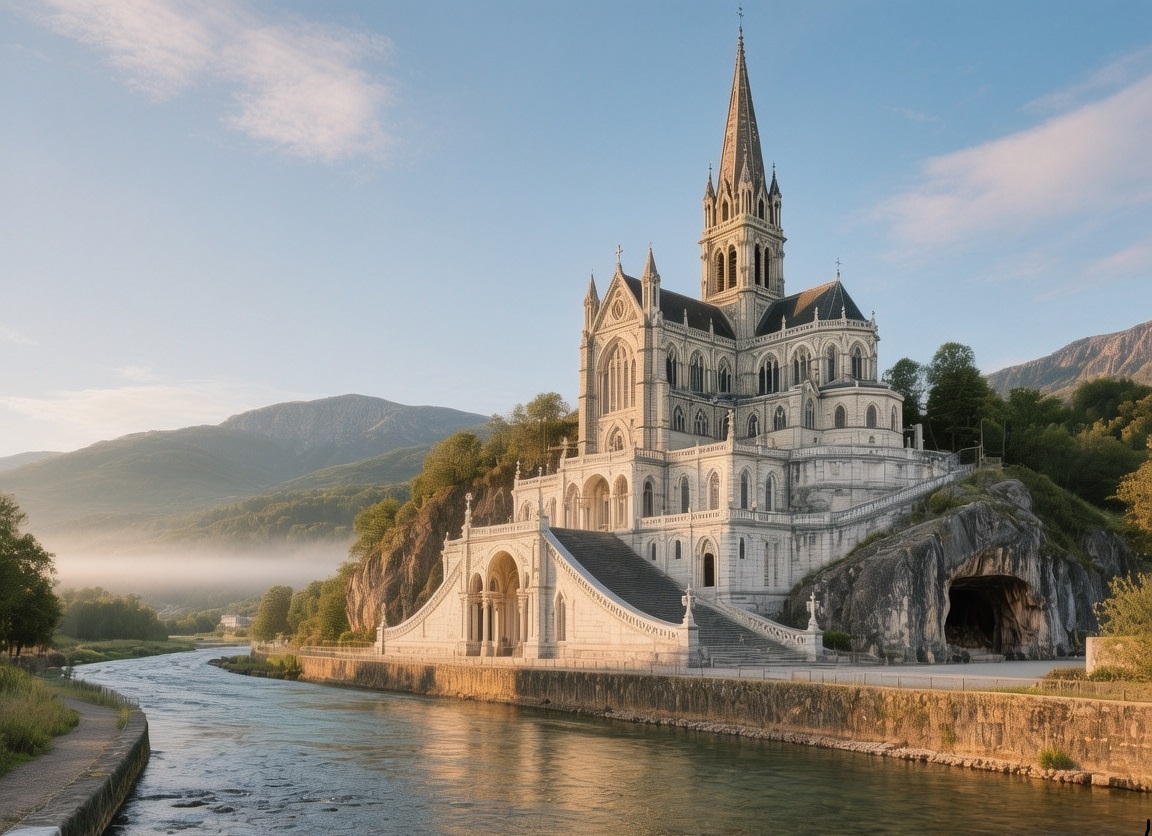
Sanctuary of Our Lady of Lourdes : A Pilgrimage of Presence and Compassion
Before first light touches the Pyrenees, the Sanctuary of Our Lady of Lourdes stirs with quiet purpose. Along the banks of the Gave de Pau river, pilgrims move in unhurried procession—some in wheelchairs guided by volunteers in blue aprons, others leaning on crutches, many simply walking with hands clasped in prayer. The air carries the scent of damp stone and beeswax as thousands of candles flicker in the pre-dawn darkness, their flames reflected in the river flowing past the Grotto of Massabielle. This is not performance but practice: a grandmother from Manila dipping her hands in the spring, a young man from Senegal lighting a taper for his village, a French nurse adjusting a blanket on a sleeping patient. In 2026, the Sanctuary of Our Lady of Lourdes remains one of humanity's most profound expressions of shared vulnerability—not for promises made, but for compassion witnessed in its purest form.
Why the Sanctuary of Our Lady of Lourdes Endures as Sacred Space
The Sanctuary of Our Lady of Lourdes represents more than religious significance—it embodies a living ecosystem of radical hospitality that has evolved since February 1858, when 14-year-old Bernadette Soubirous experienced visions in a riverside grotto. Unlike static shrines, Lourdes functions as an active community of care: 55,000 volunteers annually serve 1.5 million pilgrims through the Hospitalité Notre-Dame, with 40% arriving as sick or disabled persons accompanied by helpers. The sanctuary's power lies not in supernatural claims but in its tangible compassion—the Accueil Notre-Dame residence houses 1,200 ill pilgrims nightly at minimal cost, while medical professionals at the Bureau Médical document unexplained recoveries through rigorous scientific review without making theological assertions. Architecturally, the site reflects layered devotion: the modest Grotto remains preserved as Bernadette encountered it, while the Rosary Basilica's Byzantine domes and subterranean St. Pius X Basilica (capacity: 25,000) accommodate global pilgrimages without overwhelming the sacred source. This balance creates rare authenticity: where faith manifests not in spectacle, but in the daily ritual of washing another's feet.
The Best Time to Experience the Sanctuary of Our Lady of Lourdes
For meaningful participation without overwhelming crowds, visit between April 20 and May 25 or September 15–October 5. These shoulder seasons offer mild temperatures (12–20°C / 54–68°F), manageable procession sizes, and the sanctuary's full liturgical calendar without July–August's intense heat. Arrive by 5:00 AM to witness the Dawn Rosary Procession—a profoundly moving experience where candlelight transforms the esplanade into a river of flame against pre-dawn mountains. Avoid August 15 (Assumption Day) when crowds exceed 500,000, creating dangerous density around the Grotto. For contemplative solitude, visit Tuesday afternoons when organized pilgrimage groups depart—this window allows quiet reflection at the Grotto without queues. Note that the sanctuary operates year-round; winter months (November–February) offer stark beauty and intimate access, though some facilities reduce hours and temperatures drop below 5°C (41°F).
Approximate Budget for a 7-Day Trip (2026)
Based on 2025 benchmarks adjusted for 4% inflation (per INSEE and Occitanie Tourism Board projections), here's a realistic mid-range budget for a spiritually focused Pyrenean itinerary:
- Accommodation: €80–€125 per night for a pilgrim guesthouse near the sanctuary (e.g., Hôtel Notre-Dame du Rosaire) or family-run pension in Lourdes center—many offer reduced rates for those traveling for spiritual purposes.
- Food: €70–€85 per day—breakfast at lodging, lunch of piperade and local cheese (€14–€19), dinner at charitable refectories like Restaurant Le Pain de la Parole (€11–€17).
- Transportation: €28 for a 7-day regional bus pass. Train from Paris Montparnass to Lourdes (5 hours, €58–€88 one-way if booked 3 months ahead via SNCF Connect).
- Experiences: Sanctuary access: free. Grotto candle: €3. Blessed candle for procession: €2. Guided spiritual history tour: €14. Allocate €45 total.
- Miscellaneous: €35 for religious items from authorized sanctuary shops (avoid street vendors), local Pyrenean honey, or donations to Hospitalité Notre-Dame.
Total Estimated Cost: €900–€1,350 for seven days, excluding international flights.
5 Essential Sanctuary of Our Lady of Lourdes Experiences
- Grotto of Massabielle: The sacred site of Bernadette's visions—visit between 6:00–8:00 AM for contemplative access before crowds arrive. Touch the rock wall where the spring emerged; drink from the fontaines with reverence.
- Dawn Rosary Procession: Join the 5:00 AM candlelit procession along the riverbank—a silent, moving river of light culminating in multilingual prayer beneath the basilicas.
- Baths of Lourdes: Experience the 17°C spring water immersion (open 9:00 AM–6:00 PM)—participate as ritual rather than seeking specific outcomes; modest swimwear required, attendants assist all mobility levels with dignity.
- St. Pius X Basilica: The world's largest underground church carved into rock—visit during weekday Mass (10:00 AM) to witness its extraordinary acoustics and global congregation in quiet reverence.
- Bernadette's Path: Walk the 1.5km route from her birthplace (Maison Natale) to the Cachot prison where her family lived in poverty—contextualizes her humility before the apparitions.
3 Hidden Gems Most Travelers Miss
- Chapel of Bethlehem: Hidden behind the Rosary Basilica, this intimate chapel marks where Bernadette first heard the call—accessible via unmarked path near the Piety Bridge; favored by locals for quiet prayer without queues.
- Calvary Hill Way of the Cross: A secluded path ascending behind the sanctuary—14 stations carved by local artisans offer panoramic views and solitude rarely found in main precincts; best visited at 4:00 PM when light gilds the Pyrenees.
- Hospice Sainte-Honorine: A 19th-century hospice where Sisters of Charity still care for terminally ill pilgrims—request permission at reception to observe their compassionate work (no photography permitted).
Cultural & Practical Tips
- Respectful Participation: Dress modestly (covered shoulders/knees) throughout sanctuary grounds. Maintain silence near the Grotto—conversations belong in designated areas like the esplanade.
- Photography Ethics: Never photograph ill pilgrims without explicit permission. No flash during processions or Mass. Best architectural shots captured at 6:30 AM before crowds arrive.
- Volunteer Opportunities: Able-bodied visitors may assist Hospitalité Notre-Dame with wheelchair transport (register 24h ahead at Bureau des Malades)—a profound way to engage authentically with the sanctuary's mission.
- Learn Key Phrases: "Bonjour," "Merci," "Je suis en pèlerinage" (I am on pilgrimage)—French speakers appreciate effort even with imperfect pronunciation.
- Accessibility: Free wheelchair loans at sanctuary entrances. Follow blue-marked paths designated for disabled pilgrims during processions rather than main routes.
Conclusion: Travel with Compassionate Presence, Not Just Observation
The Sanctuary of Our Lady of Lourdes endures not as tourist attraction but as testament to human dignity in vulnerability. As a conscious traveler, your presence carries responsibility: to witness without gawking, to participate without appropriating, to honor without exoticizing. Support the sanctuary's charitable mission through official donation boxes rather than street vendors selling unauthorized items. Sit quietly beside pilgrims rather than rushing between sites. Understand that your footsteps tread ground where millions have sought solace—not as spectators, but as fellow travelers on life's fragile journey. By approaching Lourdes not as destination to be consumed but as sacred space to be respected, you help preserve its true purpose: to remind us that compassion remains humanity's most enduring practice—a light that no darkness, however profound, can extinguish.