
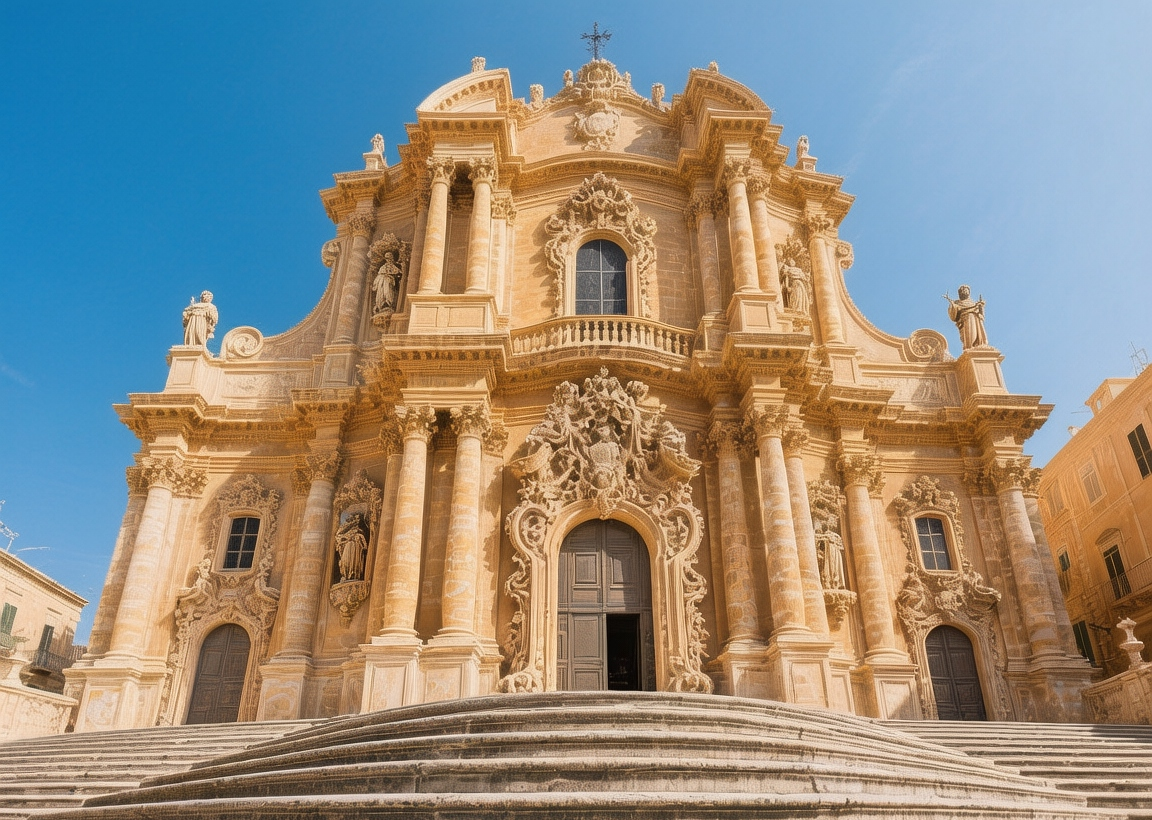
Scicli Baroque Theatrical Stone Meets Val di Noto Light
The morning sun strikes the honey-colored limestone of Scicli’s Baroque facades, setting the entire town ablaze with a warm, theatrical glow. You hear the soft echo of footsteps on ancient basalt stones, the distant chime of bells from the Church of San Matteo, and the murmur of locals gathering at a café beneath ornate wrought-iron balconies. Nestled in a deep valley of the Hyblaean Mountains, Scicli is one of Sicily’s most dramatic Baroque towns—a place where architecture seems to erupt from the earth like a stage set designed by nature itself. Rebuilt after the catastrophic 1693 earthquake that destroyed southeastern Sicily, Scicli’s urban plan follows the natural contours of its rocky gorge, creating a series of breathtaking vistas where churches crown cliffs and palaces cascade down slopes [[45]]. In an age of predictable urban design, Scicli matters now more than ever—it is a living testament to human creativity rising from disaster, where every street corner feels like a scene from an opera.
Why Scicli Baroque Embodies Theatrical Drama
Scicli’s Baroque architecture is not merely decorative; it is a masterclass in theatrical urban planning born from catastrophe. After the 1693 earthquake leveled the original medieval settlement, the town was rebuilt with a revolutionary vision: instead of imposing a rigid grid, architects embraced the dramatic topography of the gorge, using it as a natural stage for their creations. The result is a town of stunning contrasts—narrow alleyways open suddenly onto grand piazzas dominated by masterpieces like the Church of San Matteo, which sits atop a 120-step staircase carved directly into the rock face. Its concave-convex facade, adorned with putti and floral motifs, exemplifies the exuberant “Sicilian Baroque” style that blends Spanish, Roman, and local influences. This approach “solved” a profound emotional need: how to rebuild a community with both spiritual hope and civic pride in the face of utter devastation. Today, it fulfills a modern longing—for a place where architecture is not just functional, but emotionally stirring, where beauty emerges organically from the landscape itself.
The Best Time to Experience Scicli Baroque
To experience Scicli in its most photogenic and comfortable state, plan your visit for the specific windows of April 20–May 30 or September 10–October 15, 2026. During these periods, the weather in southeastern Sicily is ideal, with daytime temperatures ranging from a pleasant 22–27°C (72–81°F), and the intense summer crowds have yet to arrive or have already departed [[11]]. The best time of day to explore is in the late afternoon, between 4:30 PM and 6:30 PM, when the setting sun bathes the limestone facades in a rich, golden light that accentuates every sculptural detail. It is strongly advised to avoid the peak summer months of July and August, when temperatures can soar above 35°C (95°F) and the narrow streets feel claustrophobic with crowds [[63]]. For the most current information on opening hours, the famous Infiorata flower festival (May), and guided tours, always consult the official tourism portal: comune.scicli.rg.it.
Approximate Budget for a 7-Day Trip (2026)
This budget is calculated for a solo traveler seeking a comfortable, culturally rich experience in southeastern Sicily in 2026, based on current inflation trends and average regional costs.
- Accommodation: €85–€140 per night. Staying in a historic guesthouse in the old town offers an immersive experience. Options in the newer part of town are more affordable.
- Food: €45 per day. Breakfast (€5): a cappuccino and brioche at Caffè Italia. Lunch (€16): a plate of cavatelli alla sciclitana (pasta with tomato and ricotta) at a trattoria near Piazza Italia. Dinner (€24): a main course like grilled lamb chops with a glass of local Frappato wine.
- Transportation: €120 total. A rental car for the week is essential for exploring the Val di Noto (€40/day). Occasional taxi rides from the bus station (€10).
- Attractions: Entry to the Church of San Matteo Treasury (€3). Guided walking tour of Scicli’s Baroque secrets (€20). Visit to the Civic Museum (€5).
- Miscellaneous: €95. This covers a box of local pastries (€15), several gelato stops (€3 each), a cooking class featuring local recipes (€40), and souvenirs like handmade ceramics.
Total Estimated Cost: €885–€1,005
6 Essential Scicli Baroque Experiences
- Climb the Staircase to San Matteo: Ascend the 120 steps to the Church of San Matteo at sunset. The panoramic view over the red rooftops and the surrounding valley is unforgettable, and the church’s interior is a treasure trove of gilded stuccoes.
- Stroll Via Francesco Mormino Penna: Walk this elegant street to admire palaces like Beneventano del Bosco, whose balcony is supported by carved figures of Moors and mermaids—a masterpiece of Sicilian Baroque whimsy.
- Visit Palazzo Beneventano: This 18th-century palace, now the town hall, features a stunning courtyard and a facade that exemplifies the theatricality of the local style. Don’t miss the grotesque masks carved into the stone.
- Attend the Infiorata Festival: If your visit coincides with May, witness the streets transformed into a carpet of millions of flower petals depicting religious and artistic scenes—a tradition that turns the town into a living canvas.
- Explore the Cave Churches: Just outside the town center, ancient rupestrian churches like the Grotta del Crocifisso offer a fascinating contrast to the Baroque splendor, showcasing Scicli’s layered history.
- Dine on a Rooftop Terrace: Reserve a table at a restaurant like Ristorante Antica Scicli for dinner. Savor local specialties as the sun sets and the Baroque facades begin to glow with evening light.
3 Hidden Gems Most Travelers Miss
- The Belvedere of Madonna della Consolazione: This small sanctuary on the eastern ridge offers a panoramic vista that includes the entire sweep of Scicli’s Baroque skyline. It’s a perfect spot for a quiet moment of reflection, far from the main tourist paths.
- The Secret Courtyard of Palazzo Spadaro: Look for the unmarked archway near Piazza Busacca. Inside, a private courtyard features a beautiful Baroque fountain and centuries-old citrus trees—accessible by appointment through the tourist office.
- The View from Ponte Fiumara: This ancient bridge spanning the dry riverbed offers a dramatic, postcard-perfect vista of the town’s cascading rooftops and the Church of San Matteo perched high above. Go at dawn for the best light.
Cultural & Practical Tips
- Wear sturdy walking shoes: The streets are steep, cobbled, and uneven. Good footwear is essential for navigating the town safely.
- Dress respectfully for churches: Shoulders and knees must be covered. Carry a light scarf or jacket even in summer.
- Learn a few key phrases: “Dov’è San Matteo?” (DOH-veh sahn maht-TEH-oh?) for “Where is San Matteo?”, and “Un caffè, per favore” (oon kah-FEH).
- Beware of the midday sun in summer: The white stone reflects intense heat. Wear a hat, sunglasses, and high-SPF sunscreen, especially between 11:00 AM and 3:00 PM.
- Respect the siesta: Many small shops and cafes close between 1:00 PM and 4:00 PM. Plan your hikes or visits to viewpoints during these hours.
- Tipping is appreciated but not expected: Rounding up the bill or leaving €1–€2 for exceptional service is a kind gesture.
Conclusion: Travel with Wonder, Not Just a Lens
Scicli is not a town to be navigated with a checklist; it is a stage set for life itself, to be absorbed with all your senses. In 2026, as we seek travel experiences that are both beautiful and meaningful, Scicli offers a powerful lesson in the transformative power of art and resilience. Your journey here should be one of wonder—not just capturing its facades, but feeling the drama of its staircases, listening to the echo of history in its streets, and understanding the triumph that built this masterpiece from rubble. By traveling with this mindful attention, you honor the spirit of Scicli and help preserve its luminous legacy. Slow down. Sit on a step and watch the light change on the balconies. In that quiet moment of communion with art and landscape, you don’t just visit Scicli—you become part of its enduring, theatrical story.
Image Description: Sun-drenched Baroque Church of San Matteo in Scicli, with dramatic staircase and golden limestone facade under a clear blue sky at mid-morning