
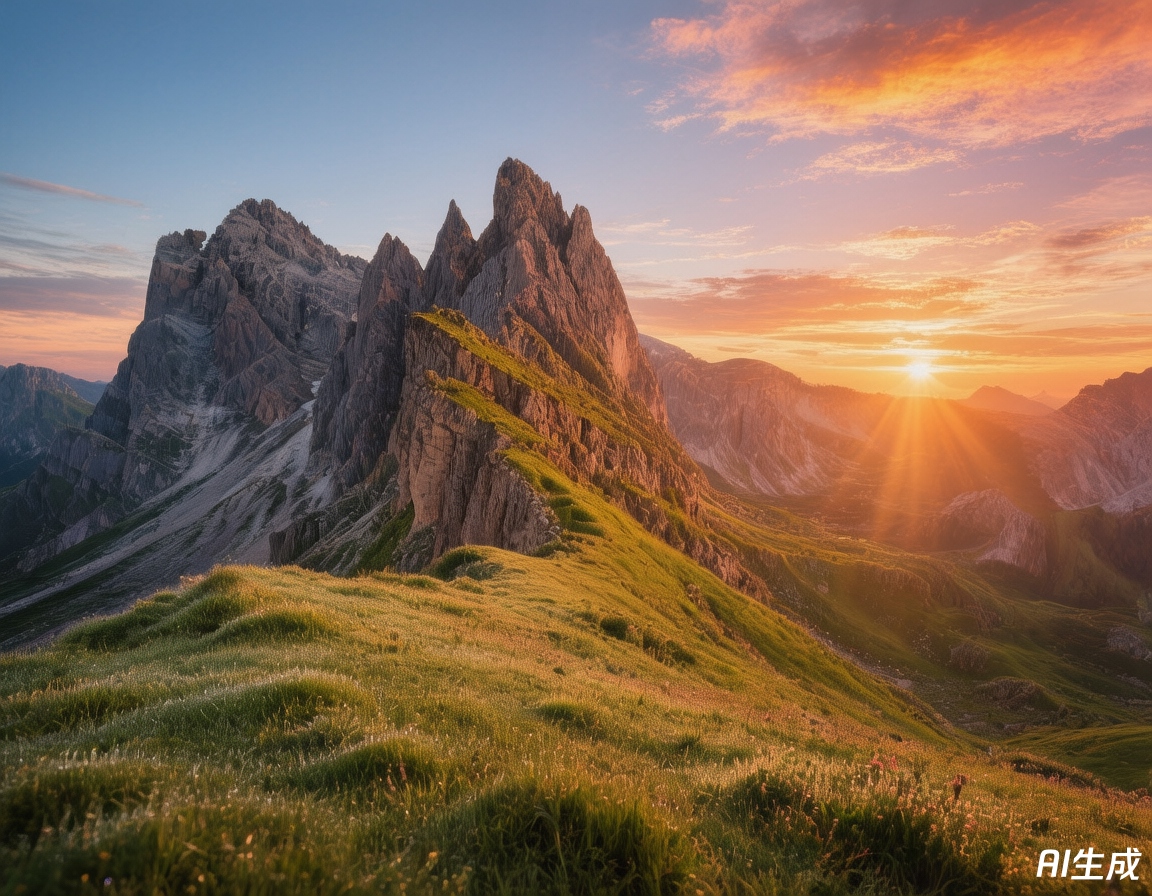
Seceda Mountain Views Dolomite Drama Meets Alpine Serenity
Dawn breaks over the Seceda ridge as first light ignites the jagged peaks of the Odle Group—part of the Dolomites UNESCO World Heritage Site since 2009. You stand at 2,500 meters (8,202 feet) where the air carries the crisp scent of alpine pine at 2°C (36°F), while the only sounds are distant cowbells from the Alpe di Siusi meadows 1,000 meters below and your own breath slowing to match the rhythm of the mountains. This iconic ridge—formed 250 million years ago when ancient coral reefs were thrust skyward by tectonic forces—solves a fundamental visual paradox: how to balance dramatic geology with serene accessibility. The panoramic vista stretches 180 degrees across South Tyrol’s most photographed peaks: the needle-sharp Fermeda Towers, the fortress-like Sassolungo massif, and the glacier-carved valleys that cradle Ladin villages like Ortisei. Reached via Europe’s steepest cable car (ascending 1,000 vertical meters in 12 minutes), Seceda offers both adrenaline and contemplation—world-class hiking trails meet quiet observation points where time seems suspended. In 2026, as overtourism threatens mountain ecosystems, Seceda matters precisely because it balances spectacle with sustainability—a place where every viewpoint whispers of geological patience.
Why Seceda Mountain Views Embodies Geological Grandeur
Seceda solves a fundamental alpine paradox: how to deliver dramatic vistas while maintaining ecological integrity. Its geological drama stems from the Dolomites’ unique formation—250 million years ago, this area was a tropical reef that fossilized into dolomite rock, then uplifted during the Alpine orogeny to create the serrated ridges visible today. The technical infrastructure is precise: the Seceda cable car ascends 1,000 vertical meters in 12 minutes using regenerative braking that feeds energy back into the grid; the panoramic trail follows a 3-kilometer ridge with 300-meter elevation changes calibrated for all fitness levels; and avalanche control systems deploy military-grade artillery to ensure year-round safety. Historically, Seceda fulfilled dual roles—as grazing land for Ladin shepherds who navigated these slopes since the Bronze Age, and as a mountaineering proving ground where pioneers like Luis Trenker established routes in the 1920s. The 2009 UNESCO designation formalized protection protocols: trails are maintained without chemical treatments; buildings follow strict architectural codes requiring local larch wood; and visitor numbers are managed through timed cable car departures. Critically, Seceda balances accessibility with preservation—the famous “Devil’s Ridge” hike challenges experts while family-friendly paths offer equally stunning views, ensuring everyone experiences the Dolomites’ grandeur without compromising their fragility.
The Best Time to Experience Seceda Mountain Views
For optimal visibility and comfortable hiking, visit between June 10–July 15 or August 20–September 20, 2026—when daytime temperatures average 8–15°C (46–59°F) with minimal rainfall and stable trail conditions [[52]]. Arrive at the Ortisei cable car station by 7:30 AM to reach the summit before crowds arrive; morning light provides ideal photography conditions with reduced glare on dolomite faces. Avoid July 16–August 19 when temperatures exceed 18°C (64°F), visitor numbers peak (daily limits of 2,500 reached by 10:00 AM), and afternoon thunderstorms frequently develop. Winter visits (December–March) offer cross-country skiing but present challenges: shorter daylight hours (sunset at 16:30), frequent snowstorms that may delay transport, and higher accommodation prices during holiday periods. For real-time updates on trail conditions and cable car status, verify with the Val Gardena Tourism Board’s portal at valgardena.it 48 hours before departure, as weather occasionally triggers avalanche controls that close select routes.
Approximate Budget for a 7-Day Trip
This budget reflects mid-range adventure travel based in Ortisei with day excursions to Seceda and surrounding Dolomite sites, using 2026 projected pricing with 3.8% inflation adjustment from 2024 baseline figures per ISTAT regional data. All costs in euros (€).
- Accommodation: €115–€165 per night for traditional B&B or 3-star hotel in Ortisei (e.g., Hotel Luna Mondschein or B&B Cianter); includes mountain views and breakfast featuring local cheeses and speck
- Food: €54 per day average—breakfast €12 (fresh ricotta and speck), lunch €18 (canederli dumplings at mountain rifugio), dinner €24 (primo of strangolapreti spinach pasta, secondo of venison stew at family-run trattoria)
- Transportation: €270 total—Verona Airport to Ortisei via Azienda Trasporti Verona bus line 164 (€11.50, 2h 30m); Seceda cable car round-trip €28; daily car rental €50 including fuel for Dolomite excursions
- Attractions: Guided Devil’s Ridge hike €45; Museum Gherdëina €8; Ladin Cultural Institute tour €15; thermal spa at QC Terme €45
- Miscellaneous: €85—handwoven wool souvenir €35, South Tyrol wine tasting €25, donation to alpine conservation program €25
Total estimated cost: €1,220–€1,470 for seven days
6 Essential Seceda Mountain Views Experiences
- Witness Sunrise from the Panorama Terrace: Take the first cable car at 7:30 AM to reach the summit before dawn. Position yourself at the eastern observation deck to watch the Fermeda Towers ignite in golden light—bring a thermos of hot chocolate to enjoy as temperatures hover near freezing.
- Hike the Devil’s Ridge Trail: Start the challenging 5-kilometer circuit at 8:00 AM when trails are dry. The narrow ridge features 300-meter drops on both sides—helmets recommended for nervous hikers. Allow 3 hours for the full loop with photo stops at the Sassolungo viewpoint.
- Photograph the Dolomite Silhouettes: Visit the western overlook at 18:30 for sunset shots. Use a telephoto lens (70-200mm) to compress the dramatic scale between foreground ridges and distant peaks—polarizing filters reduce glare on dolomite faces.
- Dine at Rifugio Firenze: Hike 45 minutes from the summit to this historic hut (open 9:00–17:00). Sample “casunziei” (beetroot ravioli) paired with local Lagrein wine—reservations essential during peak season.
- Attend a Geology Demonstration: Join the “Voices of the Dolomites” session (Wednesdays/Saturdays at 11:00 AM) where guides explain the reef-to-ridge transformation. Handle fossil samples from the Permian period—note the coral structures embedded in modern rock.
- Ride the Cable Car at Twilight: Take the last descent at 19:00 to experience the valley lights twinkling below while alpine glow paints the peaks pink. The 12-minute ride offers unparalleled perspective on the day’s journey.
3 Hidden Gems Most Travelers Miss
- Laghetto di San Giacomo Secret Lake: A 2-hour hike from Seceda’s western trail leads to this glacial tarn surrounded by sheer cliffs. Visit at dawn (6:00–8:00 AM) when mist clings to the water—summer access only (June–September).
- Archivio Storico dei Montanari: In Ortisei’s town hall basement, unpublished climbing records from 1920–1950 document Seceda’s mountaineering history. Email archivio@comune.ortisei.bz.it 72 hours ahead specifying interest in “Documenti Alpinismo 1920–1950”; bring ID.
- Rifugio Demetz Hidden Hut: Accessible via the unmarked Val d’Anna trail, this 2,350m refuge serves the original “smacafam” (Ladin polenta cake). Visit Tuesday–Thursday when chef Maria prepares her secret recipe—call +39 0471 792000 ahead.
Cultural & Practical Tips
- Wear proper hiking boots with ankle support—even “easy” trails have loose scree; sandals risk serious falls on the Devil’s Ridge sections.
- Greet locals with "Bun dì" (BUN DEE)—Ladin for "good day"—a traditional courtesy that shows respect for indigenous heritage.
- Carry layers—even summer mornings require thermal base layers; temperatures drop 6°C per 1,000m elevation gain.
- Respect wildlife corridors—ibex and chamois frequent lower slopes at dawn/dusk; maintain 50-meter distance and never feed animals.
- Photography drones require authorization from Comune (+39 0471 792000); handheld cameras permitted but avoid blocking trails during peak hours (11:00–15:00).
- Support sustainability by using the free ski buses—proceeds fund reforestation projects replacing trees lost in the 2018 Vaia storm.
- Book guided hikes early—English-speaking mountain guides fill quickly; Scuola Sci Cortina offers certified programs for all levels (from €45/half-day).
Conclusion: Travel with Presence, Not Just Perspective
To experience Seceda is to witness geology made visible—a place where every ridge tells a 250-million-year story, and every viewpoint demands reverence. In 2026, as overtourism strains mountain ecosystems, this sanctuary stands as both model and message: proving that accessibility need not sacrifice authenticity. Your presence here carries consequence—the €28 cable car fee funds trail maintenance and avalanche safety, yet your footsteps simultaneously risk disturbing fragile alpine vegetation. True engagement means slowing beyond photography: sitting silently as dawn light transforms dolomite faces, understanding that preservation requires both financial support and mindful movement. Leave no trace beyond footprints; take no fragment beyond memories. For Seceda endures not as a mere backdrop, but as a testament to what happens when humans choose harmony over conquest—a covenant written in stone and sky that asks only this: that we remember why some peaks must be honored, not just summited.