
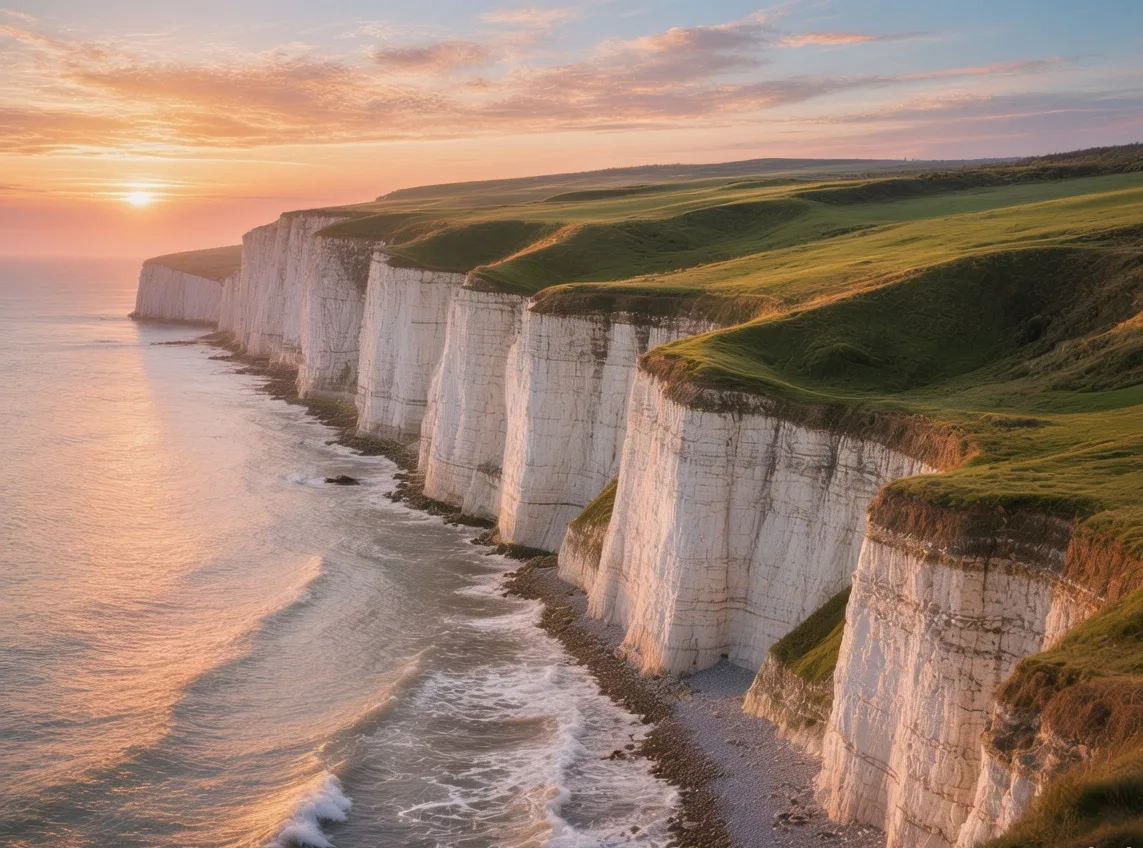
Seven Sisters Cliffs Chalk Majesty Meets Coastal Wilderness
The wind sweeps—a relentless, salty gust that whips across the grass—as you stand on the cliff edge at 6:30 AM, watching the sun ignite the seven white peaks that rise dramatically from the English Channel. The air smells of wildflowers and sea spray; the silence hums with the weight of 90 million years of geological history carved into the landscape. Stretching 8 kilometers along the East Sussex coast, the Seven Sisters cliffs stand as England's most iconic chalk escarpment, their dazzling white faces contrasting sharply with the emerald green downs above. You stand where the South Downs meet the sea, where each sister—from the first at Seaford Head to the seventh at Birling Gap—rises up to 162 meters above the waves, their names echoing through centuries of coastal defense and literary inspiration. The chalk, formed from ancient seabed sediment, glows with an ethereal light that shifts from pearl to gold as the day progresses. In 2026, as coastal erosion accelerates and climate change threatens historic landscapes, visiting the Seven Sisters means engaging with a fragile monument of natural beauty. This place matters now because it remains one of Britain's most pristine coastal wilderness areas, challenging visitors to confront the raw power of nature while navigating the delicate balance between preservation and access.
Why Seven Sisters Cliffs Embodies Coastal Natural Heritage
The Seven Sisters cliffs solve the geological puzzle of creating England's most dramatic coastal landscape—a feat achieved through millions of years of sedimentary deposition and relentless erosion. Formed during the Cretaceous period approximately 90 million years ago, these chalk cliffs consist of coccolithophores—microscopic algae skeletons compressed into pure white limestone, interspersed with bands of black flint. The cliffs rise up to 162 meters at their highest point (Birling Gap), utilizing the natural hardness of chalk to create vertical faces that plunge directly into the English Channel. Engineering-wise, the South Downs National Park Authority manages 16 kilometers of coastline, balancing public access with conservation efforts to combat erosion rates of up to 30 centimeters per year. The iconic seven peaks—Bishopstone, Haven Brow, Short Brow, Rough Brow, Long Brow, Brass Point, and Seaford Head—create a rhythmic silhouette that has inspired poets from Rudyard Kipling to modern filmmakers. Today, the National Trust protects the cliffs while the South Downs Way provides a 160-kilometer walking route along the escarpment. This unique status ensures the Seven Sisters remain not merely a scenic viewpoint but a protected wilderness, blending geological significance with recreational access in a manner few coastal sites sustain.
The Best Time to Experience Seven Sisters Cliffs
For optimal visibility and manageable crowds, plan your visit between May 18–June 12 or September 10–October 15, when temperatures range from 15–22°C (59–72°F) and daylight extends until 9:00 PM. Arrive precisely at 8:00 AM when the parking areas open to beat the tour buses that typically converge by 11:00 AM; the morning light illuminates the white cliffs beautifully without the glare of midday sun. Evening visits during summer offer a romantic atmosphere as the sunset paints the chalk pink and gold, though parking becomes limited after 6:00 PM. Avoid August 25–September 2 when the Bank Holiday weekend brings peak congestion, pushing parking queues beyond 45 minutes despite the paid lots. Winter months (December–February) offer shorter lines but temperatures drop to 2–8°C (36–46°F), and the wind chill makes the exposed paths uncomfortably cold and dangerous. For path closures and weather warnings, verify the calendar at before booking, as erosion can close sections unexpectedly. Tuesday and Wednesday mornings typically see the lowest visitor volume, allowing for quieter contemplation on the South Downs Way.
Approximate Budget for a 7-Day Trip (2026)
East Sussex remains a moderate destination, but staying near the Seven Sisters provides immediate access to the cliffs without excessive transport costs. These 2026 estimates assume a moderate travel style, accounting for approximately 3-4% annual inflation in UK hospitality and attraction pricing.
- Accommodation: £90–£200 per night for a double room in Eastbourne, Seaford, or Alfriston; budget B&Bs from £65/night in nearby Polegate
- Food: £45–75 per day—breakfast £8–12 (café pastry or full English), lunch £12–20 (pub meal or fish and chips), dinner £25–43 (mid-range restaurant with wine); traditional cream tea £16
- Transportation: £40.00 daily average for car rental and fuel; Train from London Victoria to Eastbourne £35 return; Local bus day pass £8
- Attractions: Seven Sisters cliffs free, Cuckmere Haven free, Beachy Head Lighthouse £8.00, Eastbourne Pier free, Brighton day trip £25.00
- Miscellaneous: Souvenir guidebook £12, cliff postcards £5, windproof jacket (essential) £40, travel insurance £50 for week
Total for 7 days: £1,200–1,750 per person (excluding international flights)
7 Essential Seven Sisters Experiences
- South Downs Way Hike: Traverse the iconic coastal path between Seaford and Eastbourne. The 13-kilometer section takes 4-5 hours; the views are uninterrupted. The grass is soft underfoot; listen for the skylarks singing above the wind noise.
- Birling Gap Visitor Centre: Start your journey at this National Trust facility. Open 10:00 AM–5:00 PM; the exhibits explain the geology. The café serves local produce; the view from the terrace encompasses all seven sisters.
- Cuckmere Haven Beach: Descend to the pebble beach below the cliffs. The path is steep but rewarding; the view looking up at the white faces is iconic. The sound of waves is constant; sit on the shingle to watch the meandering river.
- Beachy Head Lighthouse: Visit the red-and-white striped tower at the cliff base. Access via the beach path; the lighthouse is 43 meters tall. The view from below shows the scale of the 162-meter cliff; the structure dates to 1902.
- Seven Sisters Country Park: Explore the nature reserve at the eastern end. Open dawn–dusk; the wildflower meadows bloom in summer. The visitor center provides maps; the bird hides offer chances to spot rare species.
- Sunset Photography: Capture the cliffs glowing in the evening light. Best light occurs at 8:00 PM in summer; the white stone turns gold and pink. Use the Birling Gap viewpoint to frame the shot without obstructing the path.
- Coastal Walk to Eastbourne: Complete the journey to the Victorian seaside town. The final 5 kilometers offer pier views; the contrast between wilderness and civilization is striking. The town's seafront provides a rewarding finish.
3 Hidden Gems Most Travelers Miss
- Exceat Bridge Viewpoint: This lesser-known spot offers a unique angle of the cliffs from the river valley. Access via the B2103 road; parking is limited but free. Most tourists stay at Birling Gap, missing this peaceful perspective where the Cuckmere River meets the sea.
- Flagstaff Point: Located between Haven Brow and Short Brow, this viewpoint is rarely crowded. Access via the South Downs Way; the path is less maintained but rewarding. The view encompasses both the cliffs and the English Channel shipping lanes; it offers solitude away from the main tourist areas.
- Alfriston Clergy House Garden: This National Trust property sits in the valley below the cliffs. Access via the village center; open 11:00 AM–5:00 PM. The medieval garden provides a contrast to the coastal wilderness; it offers a quiet spot to rest after hiking the cliffs.
Cultural & Practical Tips
- Safety first: The cliff edges are unstable and crumble easily; stay on the marked paths at all times. Do not approach the edge closer than 5 meters; falls are fatal and rescue is extremely difficult.
- Photography rules: Photography is permitted in all outdoor areas for personal use without flash. Drones are prohibited without special permission from the National Trust due to wildlife and safety concerns.
- Weather preparedness: The cliffs are exposed to high winds and sudden weather changes; carry a windproof jacket (£40 from outdoor stores) and secure your hat. Rain makes the chalk paths slippery—wear shoes with good grip.
- Local phrases: Learn "Mind the gap" (watch the step), "Cheers" (thanks), and "Queue here" (wait in line); locals appreciate visitors who respect pedestrian flow on the narrow coastal paths.
- Parking logistics: Paid parking is available at Birling Gap and Seven Sisters Country Park; arrive by 9:00 AM to secure a space during peak season. The lots are 500 meters from the cliff edge; allow 10 minutes to walk.
- Accessibility: The visitor centers offer step-free access; some cliff views are accessible via paved paths. Contact visitors@nationaltrust.org.uk 48 hours ahead to arrange assistance for specific trails.
- Respectful behavior: Do not carve initials into the chalk or remove flint stones; the landscape is protected by law. Keep voices lowered near nesting areas; this is a Site of Special Scientific Interest.
Conclusion: Travel with Reverence, Not Just Checklists
The Seven Sisters cliffs demand more than a snapshot beside the edge—it invites you to contemplate the weight of geological time resting on that fragile chalk. When you walk the paths in 2026, tracing the same routes worn by coastal walkers for generations, you're not just ticking a sightseeing box; you're witnessing the delicate balance between natural erosion and heritage preservation. As overtourism pressures historic landscapes, visiting mindfully means respecting the fragility of this wilderness, understanding that behind the scenic views, conservationists work tirelessly to hold the land together. Walk slowly across the grass, noticing how the light changes on the white face; listen to the wind not as background noise but as the voice of the channel. Leave only footprints on the path, take only memories of coastal grandeur, and carry forward the understanding that places like this endure because each generation chooses to protect them—not as backdrops, but as living testaments to nature, time, and the enduring human connection to the edge of the land.