
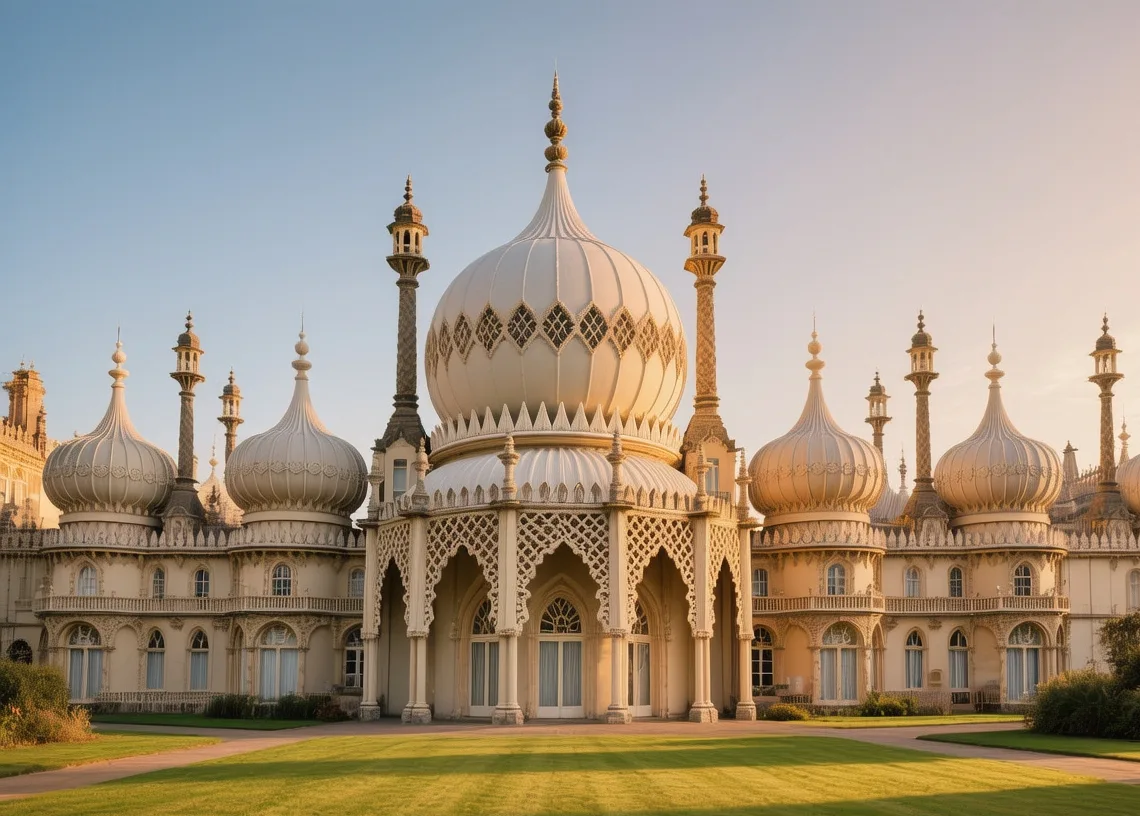
Brighton Royal Pavilion Regency Exoticism Meets Seaside Whimsy
The sea breeze whispers—a salty, rhythmic hush that brushes against the cast-iron verandas—as you stand before the South Gate at 9:15 AM, watching the sun ignite the golden stone of the onion domes. The air smells of salt spray and blooming jasmine; the silence hums with the weight of two centuries of royal decadence contained within these exotic walls. Commissioned by King George IV between 1815 and 1823, the Brighton Royal Pavilion spans 10 hectares of seaside grounds, standing as the most extravagant example of Indo-Saracenic architecture in Europe. You stand beneath the 40-meter-high central dome, where John Nash's visionary design merges Indian minarets with Chinese interiors, while the peacocks of the garden strut across the manicured lawns. Every archway tells a story: Regency dandies gambling in the salon, Queen Victoria hiding from the public eye, and modern tourists marveling at the audacity of it all. In 2026, as heritage sites balance preservation with accessibility, visiting the Brighton Royal Pavilion means engaging with a monument that defies architectural convention. This place matters now because it remains a testament to individual expression and royal excess, challenging visitors to confront the whimsy of history while navigating the splendor of a seaside palace.
Why Brighton Royal Pavilion Embodies Regency Architectural Extravagance
The Brighton Royal Pavilion solves the royal need for a private seaside retreat that offered both relaxation and spectacle—a feat achieved through the controversial vision of architect John Nash. When the Prince Regent purchased the site in 1787, he sought an escape from the stifling formality of London, transforming a modest farmhouse into the oriental fantasy you see today. The building utilizes cast iron for its structural framework, a revolutionary material choice in 1815 that allowed for the slender columns and expansive windows characteristic of the style. Engineering-wise, the Music Room features a dome 18 meters in diameter, supported by cast-iron ribs that distribute the weight to the external walls, creating a vast, column-free space for orchestral performances. The interiors, redesigned between 1815 and 1823, incorporate Chinese wallpaper, Indian chandeliers, and dragon motifs, covering over 2,000 square meters of floor space. Today, Brighton & Hove City Council manages the site, balancing the cost of maintaining the unique cast-iron structure with public access to the State Rooms. This unique status ensures the Brighton Royal Pavilion remains not merely a museum but a cultural landmark, blending 19th-century innovation with exotic design in a manner few historic houses sustain.
The Best Time to Experience Brighton Royal Pavilion
For optimal lighting and manageable crowds, plan your visit between May 18–June 12 or September 10–October 15, when temperatures range from 15–22°C (59–72°F) and daylight extends until 9:00 PM. Arrive precisely at 9:30 AM when doors open to beat the tour groups that typically converge by 11:00 AM; the morning light illuminates the domes beautifully without the glare of midday sun. Evening visits during summer offer a romantic atmosphere as the floodlights activate, though the palace closes at 5:00 PM except for special events. Avoid August 25–September 2 when the Bank Holiday weekend brings peak congestion, pushing entry queues beyond 45 minutes despite timed tickets. Winter months (December–February) offer shorter lines but temperatures drop to 2–8°C (36–46°F), and the seafront becomes windy and cold. For special events like the Christmas ice rink or summer concerts, verify the calendar at brightonmuseums.org.uk before booking, as these attract additional crowds. Tuesday and Thursday mornings typically see the lowest visitor volume, allowing for quieter contemplation in the Banqueting Room.
Approximate Budget for a 7-Day Trip (2026)
Brighton remains a premium coastal destination, but staying in the city center provides immediate access to the Pavilion without excessive transport costs. These 2026 estimates assume a moderate travel style, accounting for approximately 3-4% annual inflation in UK hospitality and attraction pricing.
- Accommodation: £120–£280 per night for a double room in Brighton City Centre, The Lanes, or Kemptown; budget hostels from £50/night in nearby Hove
- Food: £50–85 per day—breakfast £10–15 (café pastry or full English), lunch £15–25 (pub meal or fish and chips), dinner £25–45 (mid-range restaurant with wine); traditional curry £18
- Transportation: £15.00 daily average for local buses; Train from London Victoria to Brighton £35 return; Taxi from station £15 minimum
- Attractions: Royal Pavilion £20.00 adult, Brighton Museum free, Brighton Pier £5.00 (entry), Sea Life Centre £28.00, British Airways i360 £18.00
- Miscellaneous: Souvenir guidebook £15, Pavilion postcards £5, rain jacket (essential) £35, travel insurance £50 for week
Total for 7 days: £1,400–1,950 per person (excluding international flights)
7 Essential Brighton Royal Pavilion Experiences
- State Rooms Tour: Walk the grand apartments used for royal entertaining. Open 9:30 AM–5:00 PM; the audio guide details the history of each room. Look for the dragon chandeliers in the Banqueting Room; the light streams through the stained glass at noon.
- Music Room Visit: Enter the acoustically perfect hall designed for concerts. The dome soars 18 meters high; the organ pipes are gilded. The smell of old wood and polish is palpable; listen for the echo of your footsteps on the parquet floor.
- King's Gallery Exploration: View the exhibition space featuring Regency artifacts. Open during palace hours; the displays include furniture and portraits. The lighting is dim to protect the textiles; the detail in the embroidery is visible up close.
- Pavilion Gardens Stroll: Wander the 10-hectare grounds surrounding the palace. Open dawn–dusk; the lawns are meticulously maintained. The scent of roses is strongest in June; sit on the benches to enjoy the view of the domes.
- Queen Victoria's Bedroom: Step into the private quarters of the young queen. Located on the ground floor; open during tour hours. The room is simpler than the state rooms; look for the small door used by servants.
- Cast Iron Veranda Walk: Traverse the external galleries surrounding the building. Open during palace hours; the intricate patterns are unique. The view from the veranda encompasses the garden and the city skyline beyond.
- Brighton Museum Visit: Explore the adjacent museum connected to the Pavilion. Open 10:00 AM–5:00 PM; the collections span local history to art. The facade matches the Pavilion; the rooftop terrace offers a view over the grounds.
3 Hidden Gems Most Travelers Miss
- Royal Pavilion Stables: This Grade I listed building houses the city's horse-drawn vehicle collection. Access via the rear of the grounds; open 10:00 AM–5:00 PM. Most tourists stay in the main palace, missing the impressive carriage house designed by William Porden in 1808.
- The Tea Room: Located within the Pavilion grounds, this café serves traditional afternoon tea. Access via the garden path; open 10:00 AM–4:00 PM. The interior features period decor; it offers a quiet spot to rest away from the busy state rooms.
- Queen Victoria's Bathing Machine: A replica of the wooden carriage used for sea bathing. Located in the garden near the south gate; open during daylight hours. It provides a tangible connection to Victorian seaside customs often overlooked by visitors focused on the architecture.
Cultural & Practical Tips
- Dress code: No strict dress code, but smart casual is recommended for the Tea Room. Shoulders should be covered when entering the chapel if services are held; carry a light jacket for coverage.
- Photography rules: Photography is permitted in the gardens and some State Rooms for personal use without flash. Interior photography is strictly prohibited in specific galleries to protect light-sensitive artifacts. Phones must be silenced during tours.
- Accessibility: The palace offers step-free access via ramps and lifts; wheelchair users receive priority entry—contact visitors@brightonmuseums.org.uk 48 hours ahead to arrange assistance. Some garden paths are gravel.
- Local phrases: Learn "Mind the gap" (watch the step), "Cheers" (thanks), and "Queue here" (wait in line); locals appreciate visitors who respect pedestrian flow on the narrow seafront paths.
- Weather preparedness: Brighton is exposed to sea wind and rain; carry a compact umbrella (£10 from Boots pharmacy) and waterproof layers. Stone surfaces become slippery when wet—wear shoes with good grip.
- Transport logistics: The train station is a 10-minute walk from the Pavilion; buses 7, 25, and 27 stop nearby. Parking is limited; use the NCP car park on Charlotte Street for easier access.
- Respectful behavior: Keep voices lowered in the State Rooms; this is a historic monument. Do not touch the artifacts or lean on the historic woodwork; the materials are centuries old and fragile.
Conclusion: Travel with Curiosity, Not Just Checklists
The Brighton Royal Pavilion demands more than a snapshot beside the domes—it invites you to contemplate the weight of whimsy resting on that cast iron. When you walk the State Rooms in 2026, tracing the same floors worn by kings and queens, you're not just ticking a sightseeing box; you're witnessing the delicate balance between preserving eccentricity and maintaining heritage. As overtourism pressures historic landmarks, visiting mindfully means respecting the cultural nature of this institution, understanding that behind the ticket barriers, a team of conservators works tirelessly to maintain the fantasy. Walk slowly across the parquet floors, noticing how the light changes on the gilded dragons; listen to the silence of the music room not as emptiness but as potential. Leave only footprints on the lawn, take only memories of Regency grandeur, and carry forward the understanding that places like this endure because each generation chooses to nurture them—not as relics, but as living testaments to creativity, history, and the enduring human desire for the extraordinary.