
Tarragona Roman Ruins Imperial Stone Meets Mediterranean Light
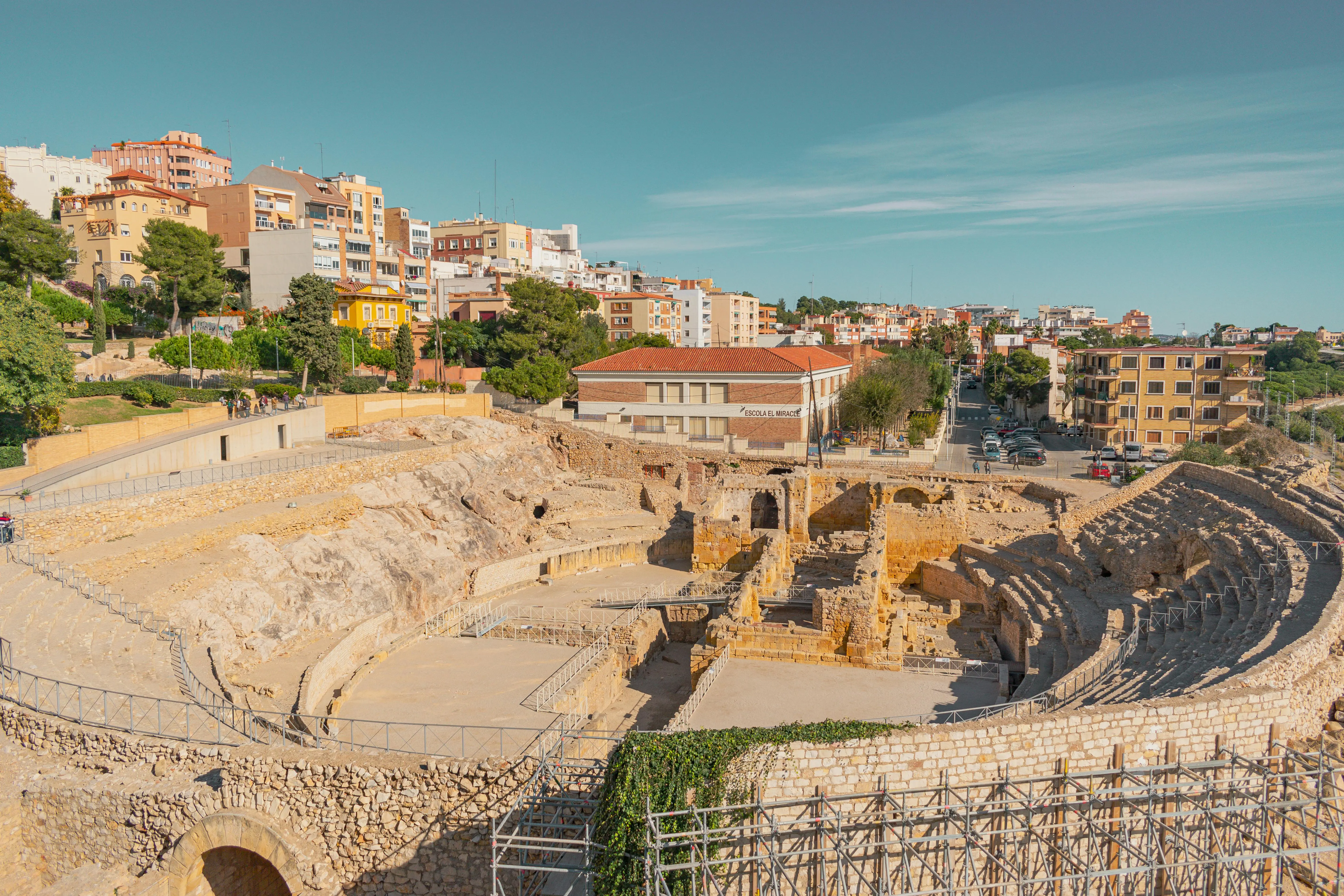
Golden hour breaks over the Amphitheatre as the sun dips toward the horizon—painting the limestone arches in shades of apricot and rose while the Mediterranean laps against the shore just 50 meters away. You stand within the arena where gladiators once fought, breathing air scented with salt and ancient dust, listening to the distant chime of bells from the Gothic cathedral that rises above the ruins. This is Tarragona Roman ruins, a UNESCO World Heritage Site inscribed in 2000, where 14 scattered monuments trace the footprint of Tarraco, the first Roman capital of Hispania founded in 218 BC. The silence here is profound, broken only by the cry of gulls circling the vaulted ceilings and the whisper of wind through 2,000-year-old masonry. In 2026, as modern cities erase their pasts to build glass towers, the Tarragona Roman ruins matter because they remain a tangible archive of empire—demanding visitors walk not just as tourists, but as witnesses to the layers of history that built Western civilization.
Why Tarragona Roman Ruins Embodies Imperial Engineering
The Tarragona Roman ruins solve a fundamental historical puzzle: how Rome projected power across the Iberian Peninsula using stone and infrastructure. This 14-site ensemble represents the most complete example of a Roman provincial capital in the Mediterranean, spanning 4 kilometers of urban fabric from the harbor to the highest hill. The engineering feats are staggering: the Les Ferreres Aqueduct (Devil's Bridge), built in the 1st century AD, stands 27 meters high and stretches 217 meters long, transporting water from the Francolí River using gravity alone. The city walls, constructed in the 3rd century BC, enclose 4,000 meters of perimeter, making them the oldest surviving Roman fortifications in the Iberian Peninsula.
Historical significance centers on the Amphitheatre, built in the 2nd century AD to hold 14,000 spectators. It was here that Christians were martyred before becoming the seat of a Visigothic church and later a medieval prison. The Patrimoni Cultural de Tarragona manages conservation efforts, employing laser scanning to monitor erosion on the sandstone blocks. Technical preservation involves injecting lime mortar to stabilize cracks without altering the visual texture. This preservation fulfills a need for tangible connection to antiquity; in 2026, amidst digital reproduction, walking these stones offers a physical link to the era when Tarraco rivaled Rome in architectural ambition. The ruins are not isolated monuments but an integrated urban system where the Circus, Forum, and Pretorium functioned as the administrative heart of an empire.
The Best Time to Experience Tarragona Roman Ruins
For optimal conditions—when the stone is cool to the touch and the light is soft for photography—target May 15–June 25 or September 10–October 20. During these windows, daytime temperatures in Tarragona range 20–28°C (68–82°F), while evenings cool to 14–18°C (57–64°F), perfect for evening walks along the walls without summer heat. For photography and atmosphere, arrive at the Amphitheatre by 7:30–8:00 AM, when morning mist often lingers over the sea and tourist buses have not yet arrived.
The golden hour before sunset—approximately 8:30–9:30 PM in June, 7:00–8:00 PM in October—casts warm amber light onto the limestone blocks, creating ideal conditions for capturing the texture of ancient masonry against the darkening sky. Visit Tuesday through Thursday to avoid weekend crowds from Barcelona; Saturday afternoons see visitor numbers exceed 5,000 people in the old town, creating bottlenecks at the ticket offices. Avoid August 1–20 unless you tolerate temperatures exceeding 32°C (90°F) and peak tourist density; similarly, avoid December 24–January 6 when some sites close for holidays or operate on reduced hours.
Verify current opening hours and ticket availability at the official Tarragona Tourism website: www.tarragonaturisme.cat or call the Visitor Center at +34 977 249 249.
Approximate Budget for a 7-Day Trip (2026)
This budget reflects mid-range travel with comfortable accommodations, quality dining, and cultural experiences—based on 2025 pricing adjusted for Spain's projected 3.2% inflation rate for 2026. Tarragona is more affordable than Barcelona, but prices rise during the Santa Tecla festival in September. This itinerary includes day trips to the Costa Daurada.
Accommodation: €90–€180 per night
- 3-star hotel in Old Town: €90–€130 (Hotel Central)
- Boutique hotel near Rambla Nova: €150–€180 (Hotel Astori)
- Apartment rental (self-catering): €100–€140 (requires 3-night minimum)
Food: €45–€75 per day
- Breakfast: €7–€12 (coffee, pastry, toast at local café)
- Lunch: €16–€28 (menú del día: seafood paella, meat, or fish with wine)
- Dinner: €25–€40 (traditional restaurant: steak, wine, dessert)
Transportation:
- Train Barcelona to Tarragona (RENFE): €14 one-way, 1 hour
- Local bus within Tarragona: €1.50 per ride
- Rental car (7 days, compact): €260–€330 (for coastal day trips)
- Fuel for regional exploration (350 km): €55–€65
Attractions & Experiences:
- Tarraco Pass (all monuments): €22
- National Archaeological Museum: €6
- Guided Roman tour: €15
- PortAventura World (day trip): €65
- Boat trip along coast: €35
Miscellaneous:
- Local wine (Tarragona DO, bottle): €10–€20
- Souvenirs and art prints: €30–€60
- Travel insurance (7 days): €35–€55
- Emergency fund: €100 (recommended)
Total for 7 days (mid-range): €1,350–€1,800 per person (excluding international flights)
6 Essential Tarragona Roman Ruins Experiences
- Explore the Amphitheatre: This iconic site sits directly on the seafront. Enter through the modern museum building at 9:00 AM. Walk the arena floor where gladiators fought; the underground cells are visible through glass panels. Climb to the upper tiers for views of the Mediterranean. Allow 60 minutes. The acoustics amplify the sound of waves, creating a unique atmosphere. Photography is permitted; respect barriers near excavations. This experience is the centerpiece of the Tarragona Roman ruins.
- Walk the Les Ferreres Aqueduct: Located 4 kilometers north of the city. Take bus Line 10 from the interchange (€1.50). The path leads through a pine forest to the 27-meter high structure. Walk across the top channel (safely fenced) for panoramic views. Best visited at 10:00 AM when light filters through the arches. Allow 90 minutes including hike. No entry fee; it is an open public monument. Bring water; shade is limited in summer.
- Visit the Roman Circus: Hidden beneath the modern streets, this 300-meter long chariot racing track is accessed via the Passatge del Sang. Enter at 11:00 AM. The underground vaults are remarkably preserved, showing the seating foundations. The view from the top terrace overlooks the Plaza de la Font. Entry included in Tarraco Pass. Allow 45 minutes. This site illustrates the scale of public entertainment in Tarraco. Audio guides explain the racing mechanics.
- Climb the Roman Walls: The fortifications encircle the old town. Access points are at the Portal del Roser and Arco de Barà (outside city). Walk the ramparts for 500 meters. The stone blocks are cyclopean, some weighing 10 tons. Best visited at 5:00 PM when the stone glows. Entry included in Tarraco Pass. Allow 60 minutes. This experience offers the best vantage point of the city layout. Wear sturdy shoes; the surface is uneven.
- Tour the National Archaeological Museum: Located near the Amphitheatre. Open Tuesday–Saturday, 9:30 AM–8:00 PM. Entry €6. The collection features mosaics, sculptures, and everyday objects from Tarraco. The Mosaic of the Fishes is a highlight. Allow 90 minutes. This experience contextualizes the ruins you have walked. Photography permitted without flash. The garden courtyard offers a quiet respite from the heat.
- Discover the Pretorium and Circus Tower: This medieval tower sits on Roman foundations, connecting the Circus to the Forum. Climb the 180 steps to the top. The view encompasses the Cathedral and the sea. Entry included in Tarraco Pass. Open 9:00 AM–7:00 PM. Allow 45 minutes. The spiral staircase is narrow; not suitable for claustrophobia. This site reveals the layered history from Roman to Medieval times.
3 Hidden Gems Most Travelers Miss
- Early Christian Necropolis: While thousands visit the Amphitheatre, this burial ground from the 3rd–6th centuries lies 1 kilometer west. Access via Carrer de la Font Vella. Entry €3; open Tuesday–Saturday, 10:00 AM–6:00 PM. Over 2,000 tombs are excavated, showing the transition from pagan to Christian rites. It is overlooked because it is outside the main circuit. Best visited at 3:00 PM when the site is quiet. This experience offers a somber contrast to the grand monuments.
- Roman Quarry (Pedrera del Mèdol): Located 4 kilometers north, this is where the stone for the walls was cut. Access via car or taxi (€15 from center). Entry free; open 24 hours. The central rock pillar shows the depth of extraction (15 meters). It is special because it reveals the industrial side of Roman engineering. Visit at sunset when shadows deepen the cuts. No facilities exist; bring water. This site is often missed by cultural tourists.
- Sèquia Mare Water Channel: This medieval irrigation system uses Roman hydraulic principles. Access near the Francolí River. Entry free; open daylight hours. The stone channels still carry water to fields. It is overlooked because it is functional infrastructure, not a monument. Best visited in the morning when farmers are working. This experience connects ancient engineering to modern agriculture. Photography allowed; respect private property boundaries.
Cultural & Practical Tips
- Language etiquette: Catalan is the primary language; Spanish is widely understood. Key phrases: Bon dia (BON DEE-ah = good morning), Si us plau (see oos PLAW = please), Gràcies (GRAH-see-es = thank you), Parla anglès? (PAR-lah ang-LES = do you speak English?). Using Catalan greetings shows respect for local identity.
- Tarraco Pass strategy: Buy the combined ticket (€22) at the first site you visit. It covers 7 monuments and saves 30% compared to individual entries. Valid for 3 consecutive days. Keep the ticket safe; it is not replaceable. This pass is essential for a comprehensive experience of the Tarragona Roman ruins.
- Photography guidelines: Flash photography is prohibited inside museums and the Circus vaults. Tripods require written permission from the culture department (email cultura@tarragona.cat 7 days ahead). Respect barriers; climbing on loose stones is dangerous. Best light for exterior photos is early morning or late evening.
- Accessibility considerations: The Amphitheatre and Museum are wheelchair accessible. The Circus and Pretorium have stairs and are NOT accessible. The Aqueduct path is unpaved. Inform staff at the ticket office for assistance; they provide alternative routes. Taxis can drop off near most sites, but not on the walls.
- Weather considerations: Tarragona is sunny 300 days per year. However, the Mestral wind can be strong in spring. Check forecasts at meteocat.gencat.cat before traveling. Summer temperatures exceed 30°C; sun protection is critical. Wear SPF 50+ and hats. Winter nights can drop to 8°C; layer clothing.
- Dining schedules: Lunch runs 1:30–3:30 PM; dinner doesn't begin until 8:30 PM. Many restaurants close between 4:00–8:00 PM; plan accordingly. For authentic cuisine, try suquet de peix (fish stew) or calçots (in season). Reservations recommended for weekends. Tipping 5–10% is appreciated for good service.
- Safety logistics: Pickpockets operate in crowded tourist areas. Keep valuables in front pockets. The ruins are safe, but watch your step on uneven stones. Emergency number is 112. Police stations are located on Rambla Nova. Report lost tickets immediately to the Tourist Office.
Conclusion: Travel with Memory, Not Just Checklists
The Tarragona Roman ruins do not exist merely for your Instagram feed—they stand as silent witnesses to two millennia of empire, faith, and daily life. What they deserve is your memory: the willingness to walk slowly across the arena floor without rushing to the next landmark, to understand that the stone beneath your feet supported chariots and martyrs alike, to recognize that this landscape is a palimpsest of human endeavor first and a tourist attraction second. In 2026, as historical narratives are increasingly contested, Tarragona offers a model of preservation—demonstrating how cities can honor their past without freezing it in time. Sit on the Amphitheatre steps not to check a box, but to watch the sea that brought the legions. Eat the local fish not for novelty, but to taste the continuity of the harbor. Let the arches teach you that endurance is quiet. Travel to Tarragona not to consume history, but to honor it, ensuring your visit respects the legacy of those who built this stone chronicle and whose legacy remains etched in every block.