
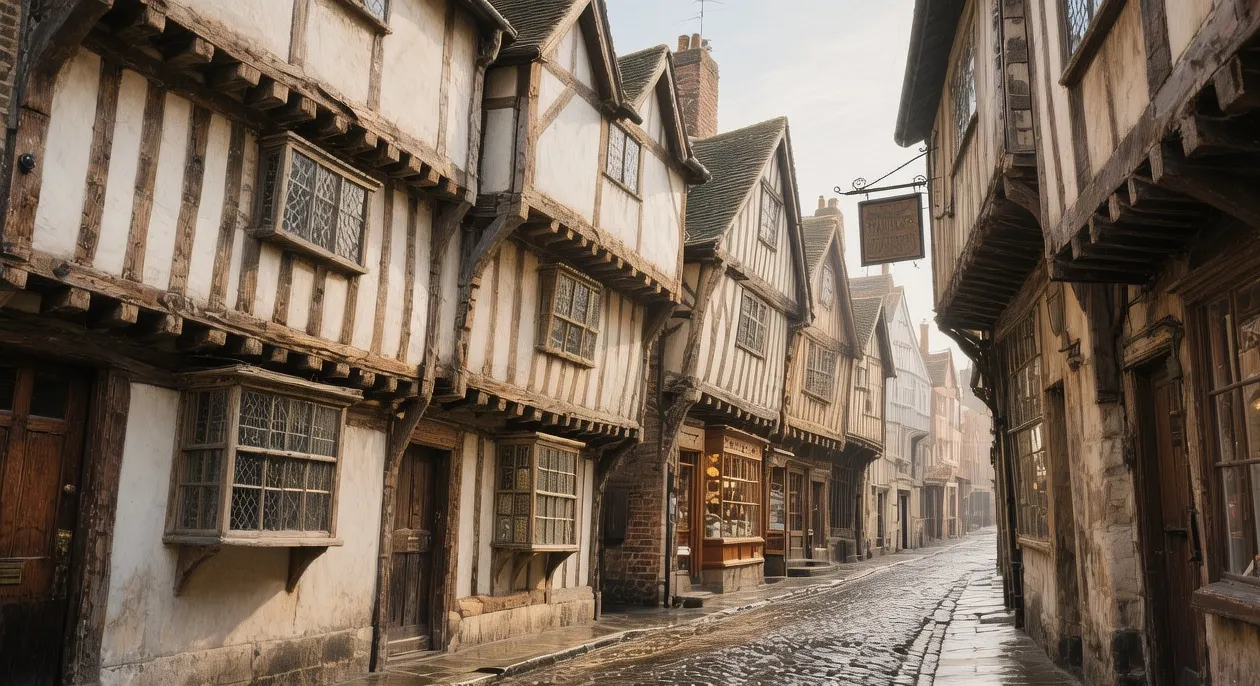
The Shambles, York Medieval Timber Meets Enchanted Alleyways
7:00 AM breaks over The Shambles—a narrow medieval street measuring just 150 meters long in the heart of York, England. The air carries the sweet scent of fresh pastries from corner shops, the earthy perfume of damp oak timbers, and the distant chime of York Minster's bells echoing across the city. Sunlight filters through the overhanging upper stories, which lean toward each other so dramatically that they nearly touch—creating a canopy of Tudor woodwork that blocks out the modern world. This is not a reconstruction; it is a living time capsule where buildings from 1350 still stand, their jettied floors projecting up to 2 meters over the cobbled street below. You hear the click of a shopkeeper's keys; the first customers of the day arrive. In 2026, as cities worldwide erase their history in favor of glass towers, The Shambles, York matters now more than ever. It remains a tactile connection to medieval commerce—a place where you walk the same stones as butchers and bakers from seven centuries ago, where the past isn't behind museum glass but alive in every warped beam and uneven floorboard. This is why you visit.
Why The Shambles Embodies Medieval Preservation
The Shambles isn't merely a picturesque street—it's Europe's best-preserved medieval shopping thoroughfare, a marvel of urban planning that solved fundamental problems of 14th-century commerce. The name derives from the Old English fleshammels (flesh-shelves), referring to the butcher stalls that once lined the street. In 1350, when the Black Death ravaged England, this street bustled with activity: butchers displayed meat on wide window sills, offal was discarded into the central gutter, and the narrow width—just 5 meters at its tightest point—allowed buildings to maximize street frontage while minimizing property taxes based on ground footprint. The architectural engineering is precise: timber frames constructed from English oak, with wattle and daub infill, support structures that have stood for nearly 700 years. The jettied upper stories—projecting outward on each floor—create a distinctive overhang that protected pedestrians from rain while allowing merchants to display goods above street level. In 1970, the street received Grade I listed building status, protecting 24 surviving medieval structures from demolition. Today, The Shambles supports over 40 independent shops, maintaining its commercial function while preserving historical integrity. The buildings' survival is remarkable: they weathered the English Civil War, Victorian redevelopment pressures, and two world wars. When you walk this cobbled lane, you traverse a layered history: Roman York beneath your feet, medieval commerce at eye level, and a contemporary commitment to heritage conservation that defines the future of historic urban centers.
The Best Time to Experience The Shambles
The Shambles reveals its true character during specific windows, though it operates as a public street year-round. The definitive experience occurs between May 15 and June 10. During this window, you'll experience average temperatures of 14–18°C (57–64°F), with daylight stretching until 9:30 PM—ample time for evening photography after the crowds disperse. The spring light filters beautifully through the narrow gap between buildings, creating dramatic contrasts between shadow and illumination. The tourist hordes of July haven't yet descended. For those seeking quieter browsing, weekday mornings (7:30–9:00 AM) offer a more intimate atmosphere with significantly fewer visitors; you can photograph the street before shop shutters rise.
Autumn—specifically September 20–October 10—provides a second peak experience, with temperatures cooling to 9–13°C (48–55°F) and the surrounding city turning gold. This is when you'll witness the York Literature Festival and harvest markets. However, avoid December 20–31 unless you enjoy navigating crowds: this Christmas period sees visitor numbers swell to 15,000 daily, with the street becoming impassable by midday and accommodation prices inflating by 50%. The Shambles Market's Christmas stalls attract massive crowds. For real-time events and crowd levels, verify current information at www.visityork.org before your visit. Always check the York City Council website for street closure notices during festivals.
Approximate Budget for a 7-Day Trip (2026)
York accommodates various budgets, though 2026 prices reflect post-pandemic tourism recovery and 3.5% UK inflation. The following breakdown assumes mid-range travel with comfortable accommodations, local dining, and comprehensive exploration including multiple heritage site visits. Prices are listed in British pounds (£), the local currency.
- Accommodation: £110–£180 per night for a double room in a traditional Georgian guesthouse or boutique hotel in York city center. Luxury properties like The Principal command premium rates (£220–£350), while YHA hostels offer better value (£40–£60 per bed).
- Food: £45–£65 per day. Breakfast (£10–£14) typically includes Yorkshire black pudding, local bacon, and free-range eggs. Lunch (£12–£18) at Shambles cafés: Yorkshire curd tart, or a pork pie with salad. Dinner (£25–£35) featuring regional specialties: venison stew, fresh river trout, or sticky toffee pudding.
- Transportation: London King's Cross to York train: £75–£110 return via LNER (2 hours). Local bus day pass: £5.50 (First York routes). Taxi from station to Shambles: £10. Car rental not recommended due to congestion charges and limited parking.
- Attractions: York Minster entry: £20. Jorvik Viking Centre: £19.50. York City Walls walk: Free. Shambles Market browsing: Free. Guided ghost tour: £15. Clifford's Tower: £10.
- Miscellaneous: Ordnance Survey Explorer Map OL2: £11.95. Local wool scarf: £35–£75. Shambles souvenir: £10–£30. Travel insurance: £30–£45 for the week.
Total estimated cost for 7 days: £1,350–£1,850 per person (based on double occupancy)
7 Essential Shambles Experiences
- Walk the street at dawn: Arrive at The Shambles at 7:00 AM before the shops open. The cobbles are damp from night air; the overhanging timbers create a tunnel effect. Photograph the empty street with soft morning light filtering through the gap between buildings. The silence is profound—no crowds, no chatter. Notice the uneven surface of the stones, worn smooth by 700 years of footsteps. Allow 30 minutes to absorb the atmosphere before the day begins.
- Visit The Shambles Market: Enter the covered market at the street's end (open 9:00 AM–5:00 PM). Over 75 stalls sell local produce, crafts, and street food. Sample Yorkshire cheese (£6 per 200g) or buy a handmade leather wallet (£35). The market operates under a modern steel-and-glass roof but maintains the spirit of medieval commerce. Speak to vendors about their crafts. Allow 45 minutes to browse thoroughly.
- Explore the Snickelways: Exit The Shambles and find the narrow alleyways (snickelways) branching off. These medieval passages—some just 1 meter wide—connect the main street to hidden courtyards. Walk down Coffee Yard, a cobbled lane leading to independent bookshops. The buildings here are even older, with some dating to 1300. Allow 20 minutes to wander these atmospheric lanes.
- Shop at independent stores: Enter one of the 40+ shops lining The Shambles. The Golden Fleece (established 1503) sells traditional Yorkshire gifts. The Shambles Sweet Shop offers handmade fudge (£8 per bag). Look for the tiny shop windows—originally designed for butchers to display meat. Purchase something locally made rather than mass-produced imports. Allow 1 hour for browsing.
- Climb to the first floor: Several shops offer upper-floor access with café seating. Ascend the narrow wooden stairs (often original) to experience the medieval layout. The low ceilings—just 2 meters high—and small windows recreate 14th-century living conditions. Order tea (£4.50) and look out over the street from above. The perspective reveals the architectural drama of the overhanging stories. Allow 30 minutes.
- Photograph the architectural details: Focus your camera on specific elements: the crooked doorframes, the exposed oak beams, the diamond-paned windows. The buildings lean at angles up to 15 degrees from vertical. Notice the different construction phases—some structures show Victorian repairs alongside medieval timbers. The best light for photography occurs between 10:00 AM–12:00 PM when the sun illuminates the street. Allow 45 minutes for detailed photography.
- Dine at a historic pub: End your visit at The Golden Fleece pub (open 11:00 AM–11:00 PM), York's smallest pub with seating for just 30 people. Order a pint of local ale (£6.50) in the low-beamed interior. The building dates to 1503 and retains its medieval character. Speak to the landlord about the street's history. The fireplace crackles even in summer. This is the traditional end to a Shambles exploration.
3 Hidden Gems Most Travelers Miss
- Coffee Yard: While thousands walk The Shambles daily, few venture into this cobbled courtyard accessed through a narrow archway. Access: Look for the passage near number 22 The Shambles. Open during shop hours (9:00 AM–5:00 PM). It's overlooked because the entrance is unmarked, but the yard contains independent bookshops and artisan workshops. Best visited: Mid-morning when the light streams through the buildings. No facilities; respect the residential properties above.
- St. Crux Churchyard: The medieval church that once dominated The Shambles was demolished in 1903, but the churchyard remains as a quiet garden. Access: Enter from Pavement, adjacent to The Shambles. Open dawn to dusk. It's overlooked because it lacks signage, but the gravestones date to 1600s and the space offers peaceful respite from crowds. Insider tip: Look for the memorial to the church's demolition. Benches available for rest.
- The Shambles Cellars: Beneath several buildings lie medieval undercrofts used for meat storage. Access: Book a "Shambles Cellars Tour" through York Archaeological Trust (+44 1904 642111, £12). It's overlooked because it requires advance booking, but the vaulted stone chambers reveal how butchers preserved meat before refrigeration. Best visited: Weekday afternoons when tours are less crowded. Temperature is constant at 10°C; bring a jacket.
Cultural & Practical Tips
- Respect the narrow street: The Shambles is just 5 meters wide at its tightest point. Do not stop in the middle of the street to take photos; step to the side against a building. This allows other visitors to pass. Peak crowds occur 11:00 AM–3:00 PM; visit outside these hours for easier movement.
- Photography etiquette: Photography is permitted on the public street, but ask permission before photographing inside shops or of shopkeepers. Some stores prohibit photography to protect merchandise. Tripods are discouraged due to space constraints. Handheld shots only; be mindful of other visitors.
- Wear appropriate footwear: The cobbled street is uneven and can be slippery when wet. Wear sturdy shoes with good grip—no high heels or smooth soles. The stones have been worn smooth by centuries of traffic. This is essential for safety, not just comfort.
- Learn these Yorkshire phrases: "Owt" (anything, pronounced "owt"), "Nowt" (nothing), and "Reyt" (right/correct). Locals appreciate the effort. When greeting, say "Ey up" (hello) rather than "Hi." It signals respect for local dialect and heritage.
- Weather preparation: The narrow street can be windy due to the funnel effect between buildings. Even on calm days, carry a windproof layer. The overhanging buildings provide shelter from rain but can create drips from the gutters. Check the forecast; York averages 150 rainy days per year.
- Accessibility information: The Shambles is not wheelchair accessible due to cobbled surfaces, narrow width, and steps into shops. Alternative viewing is available from Pavement at the street's end. Virtual tours are available online. Contact York Tourism at +44 1904 550099 for specific access queries.
- Support local economy: Purchase from independent shops rather than chain stores. Look for signs saying "Made in York" or "Handmade in Yorkshire." The street's survival depends on supporting small businesses. Avoid buying mass-produced souvenirs from non-local vendors.
Conclusion: Travel with Reverence, Not Just Recreation
The Shambles, York in 2026 asks something different of you than mere Instagram photography. This street—timber, resilient, ancient—has witnessed centuries of butchers, bakers, and merchants seeking livelihood, tourists seeking wonder, and historians seeking understanding. But it also sustains a fragile ecosystem of independent businesses fighting against homogenization. To travel here responsibly means understanding that you're not just visiting a backdrop for Harry Potter photos but entering a living medieval street that requires active preservation. Walk softly on these cobbles; they've carried plague victims, traders, and pilgrims for seven centuries. Choose the early morning visit over the crowded afternoon. Buy from the independent bookshop, not the online retailer. Respect the residents who still live above the shops. Let The Shambles, York change you, not just entertain you. In an age of urban redevelopment and digital detachment, this is how we ensure that 2026's visitors don't become the generation that loved this place to death. The street will still be here in 2126—if we treat it not as a theme park to consume but as a heritage to protect.