
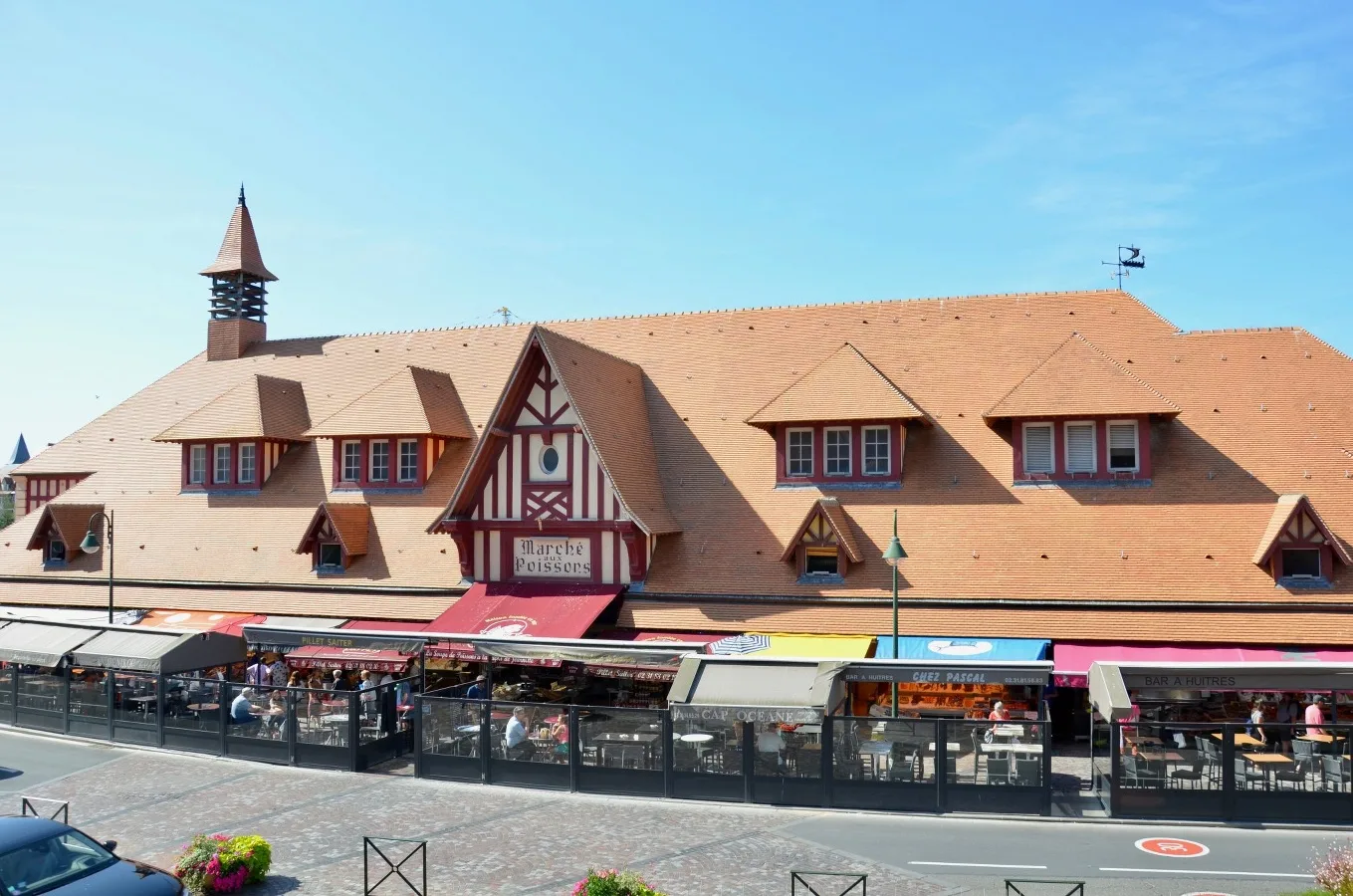
Trouville Fish Market Ocean Bounty Meets Norman Soul
The first light of dawn paints the sky in soft pinks and oranges as you step onto the Quai Fernand Moureaux. The air is sharp with the briny tang of the sea, mingled with the faint, clean scent of ice and the earthy aroma of damp wooden crates. Before you, the Marché au Poisson comes alive—a symphony of shouted prices, clattering buckets, and the rhythmic splash of water from the nearby harbor. Just meters away, the colorful hulls of the day’s returning fishing fleet bob gently against the dock, their crews unloading the night’s catch: glistening sole, iridescent mackerel, and plump, pink langoustines. This open-air market, operating since the mid-19th century, is the very heartbeat of Trouville-sur-Mer, a working port that has stubbornly resisted becoming just another seaside resort. In 2026, as we crave authenticity and connection to our food sources, the Trouville fish market offers a raw, beautiful, and utterly real encounter with the bounty of the English Channel.
Why Trouville Fish Market Embodies Authentic Maritime Heritage
The Trouville fish market is not a tourist performance; it is a vital, functioning link in a centuries-old maritime economy. Established in its current form in the 1850s alongside the town’s rise as a fashionable resort, the market was designed to serve both the local community and the influx of wealthy Parisians who demanded the freshest seafood for their tables [[4]]. Its genius lies in its directness: the market stalls sit mere meters from the quay where the small-scale fishing boats—many family-owned for generations—dock. This proximity ensures an unparalleled freshness that defines the Norman culinary experience. The market’s structure is simple yet effective: a long, open-air concrete platform with stainless steel counters kept cold by beds of crushed ice. Here, over 20 licensed vendors display their wares, which can include up to 50 different species depending on the season—from the prized Saint-Jacques (scallops) of winter to the delicate soles of summer. For the modern traveler, this market fulfills a deep need for transparency and connection. It solves the “problem” of anonymous consumption by putting you face-to-face with the fishermen, the merchants, and the source of your meal, offering a powerful lesson in sustainability and local pride.
The Best Time to Experience Trouville Fish Market
To witness the market at its most dynamic and well-stocked, you must arrive early on a Friday or Saturday morning between 8:00 and 10:30 AM. These are the peak days when the largest number of boats have returned from their overnight trips, ensuring the greatest variety and abundance of seafood [[9]]. The ideal window for a visit is during the late spring and early summer months of May 20–June 25, 2026. During this period, the weather is mild and stable, with daytime temperatures ranging from a comfortable 16°C to 20°C (61°F–68°F), and the market is bursting with seasonal specialties like turbot and sea bass [[9]]. You should avoid visiting on Sundays and Mondays, as the market is either closed or operates with very few stalls. The winter months, while atmospheric, can be wet and windy, with a more limited selection focused on hardier fish and shellfish. For the most current information on opening days and any weather-related closures, always check the official Trouville Tourism
Approximate Budget for a 7-Day Trip (2026)
This budget is calculated for a comfortable, mid-range cultural and culinary trip to Trouville in 2026, factoring in a 4% annual inflation rate as per INSEE standards. It emphasizes the town’s authentic, non-luxury charm compared to its neighbor Deauville.
- Accommodation: €90–€130 per night for a room in a charming 3-star hotel or a guesthouse in the heart of the old town, within a 5-minute walk of the fish market and the beach.
- Food: €50 per day. Breakfast (€8): a coffee and croissant at a local boulangerie. Lunch (€18): a simple but exquisite seafood platter or a bowl of moules-frites (mussels and fries) at a bistro near the port. Dinner (€24): a three-course meal at a traditional Norman restaurant featuring dishes like haddock au gratin or fresh scallops.
- Transportation: The easiest way to reach Trouville is by train from Paris (Gare Saint-Lazare to Trouville-Deauville station, a 2-hour journey). A one-way ticket costs around €30 if booked in advance. The town is compact and best explored on foot; no car is needed.
- Attractions: Visiting the fish market is free. A guided walking tour of Old Trouville costs €15. Entry to the Villa Montebello museum is €7. A short ferry ride across the Touques river estuary to Deauville is a fun splurge at €3.
- Miscellaneous: Allow €50 for souvenirs (e.g., a jar of local apple jelly, a hand-painted ceramic dish) and small experiences like buying a kilo of fresh shrimp from the market to cook yourself (€18).
Total Estimated Cost: €800–€1,050 for one person for 7 days.
5 Essential Trouville Fish Market Experiences
- Arrive Early for the Auction Atmosphere: Get to the market by 8:00 AM to see the most intense activity. Watch as local chefs in their whites haggle with vendors and expertly select their daily provisions. The energy is electric and utterly authentic.
- Taste a Freshly Shucked Oyster: Several stalls offer oysters on the spot. For €3-€5, you can enjoy half a dozen freshly shucked Normandy oysters, served with lemon and a wedge of bread. Eat them standing at the counter, looking out at the harbor.
- Chat with a Fisherman: Don’t be shy. Many of the vendors are the fishermen themselves or their families. Ask about their catch, their boat, or what’s in season. A simple “C’est votre bateau?” (Is that your boat?) can open a friendly conversation.
- Buy a Simple Seafood Lunch: Purchase a takeaway container of cooked shrimp, crab, or whelks directly from a stall. Find a bench on the Quai or on the nearby beach to enjoy your incredibly fresh, no-frills picnic.
- Visit the Market’s Back Side for the Full View: Walk around to the rear of the market stalls on Rue du Général Leclerc. From here, you get a perfect view of the entire market with the colorful fishing boats of the port as a backdrop—a photographer’s dream.
3 Hidden Gems Most Travelers Miss
- The Chapel of Notre-Dame-des-Anges: Perched on the cliff overlooking the port, this tiny, whitewashed chapel is a peaceful sanctuary. It’s missed because it’s a short climb up from the main street. Open daily; it offers a stunning panoramic view of the entire fish market and harbor below.
- Le Cercle de la Voile de Trouville: This historic sailing club, founded in 1868, has a small, members-only bar that sometimes welcomes visitors for a drink. Ask politely at the door. It’s a time capsule of old Trouville, filled with nautical charts and memorabilia.
- The Path Along the Touques River Estuary: A 15-minute walk east of the market, this quiet path follows the river to its mouth at the sea. It’s a favorite with local birdwatchers and offers a serene, natural counterpoint to the market’s bustle. Go at low tide for the best views.
Cultural & Practical Tips
- Bring cash in small denominations: While some larger stalls may take cards, many vendors prefer cash, especially for small purchases like a single oyster or a bag of shrimp.
- Learn a few key phrases: A polite “Bonjour, Madame/Monsieur” (bon-zhoor, mah-dam/muh-syuh) is essential before asking any questions. “Combien ça coûte?” (kohm-byen sah koot?) means “How much does it cost?”
- Photography is welcome, but ask first: The market is a public space, but the vendors are working. A quick smile and a “Je peux prendre une photo?” (zhuh puh prahn-druhn foh-toh?)—“Can I take a photo?”—is a sign of respect.
- Dress for the weather and the ground: The market area can be wet and slippery. Wear sturdy, closed-toe shoes. A light rain jacket is a must, even in summer, as the Normandy coast is famously changeable.
- Be prepared for the smell: This is a working fish market. The scent of the sea is strong and pervasive. It’s part of the authentic experience, but be aware if you are sensitive to it.
Conclusion: Travel with Curiosity, Not Just Appetites
In 2026, the Trouville fish market stands as a powerful antidote to the sanitized, globalized food system. It is a place where the journey from sea to plate is measured in meters, not miles, and where every purchase supports a local family’s livelihood. To visit here is not just to buy seafood, but to engage with a living culture of resilience and pride. By traveling with curiosity—with a willingness to ask questions, to learn names, and to appreciate the skill behind the simple act of selling fish—you become part of a sustainable cycle of respect. Your mindful presence honors the work of the fishermen and vendors, helping to preserve this vital institution for future generations. So, slow down. Listen to the rhythm of the port. Let the raw beauty of this market connect you to the true soul of Normandy.