
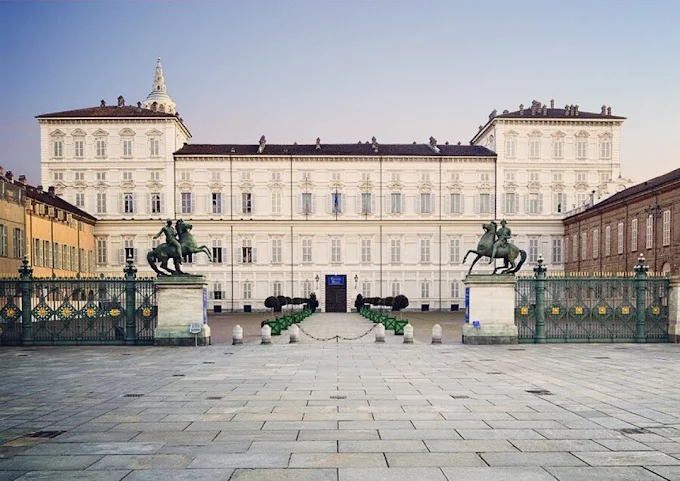
Turin Royal Palace Baroque Grandeur Meets Savoy Legacy
The late sun gilds the ochre façade of Turin’s Royal Palace—casting long shadows across Piazza Castello, where the scent of espresso and bicerin drifts from historic cafés. You hear the distant chime of the Palazzo Madama’s clock, the murmur of Italian families strolling beneath arcades, and the soft echo of footsteps on marble floors that once carried kings. Built as the seat of the House of Savoy—the dynasty that unified Italy—the palace stands as a testament to 300 years of royal ambition, political intrigue, and artistic patronage. Its 200,000-square-meter complex includes the Royal Armory, the Royal Library, and the sumptuous Royal Apartments, all centered around the magnificent Hall of the Guards with its frescoed ceiling by Domenico Guidobono. In 2026, as Turin evolves into a hub of innovation and culture, the Royal Palace remains its regal anchor—a UNESCO World Heritage site where history isn’t just preserved, but lived.
Why Turin Royal Palace Embodies Dynastic Power
The Turin Royal Palace isn’t just a museum—it’s the architectural heart of Italy’s unification. Commissioned in 1645 by Christine of France for her son, Duke Charles Emmanuel II, the palace was designed by architect Amedeo di Castellamonte to showcase Savoy power amid rival European courts. Over centuries, it expanded into a sprawling complex of 200,000 square meters, housing 18 royal residences across Piedmont. The palace itself features 40 opulent rooms, including the Throne Room with its crimson damask walls and silver throne, and the Royal Chapel adorned with lapis lazuli and gold leaf. Crucially, it solved a political need: to project legitimacy. When Victor Emmanuel II became Italy’s first king in 1861, Turin was the capital, and the palace served as the nation’s symbolic center. Today, it houses the Royal Armory—one of Europe’s finest, with over 5,000 weapons—and the Royal Library, home to Leonardo da Vinci’s self-portrait. As part of the “Residences of the Royal House of Savoy” UNESCO designation (1997), the palace exemplifies how architecture can shape national identity—a legacy meticulously preserved through ongoing restoration funded by Italy’s Ministry of Culture.
The Best Time to Experience Turin Royal Palace
To explore the palace in optimal light and manageable crowds, target the precise window of May 12–26, 2026. During these weeks, daytime temperatures range from a comfortable 17–23°C (63–73°F)—ideal for walking between royal residences and enjoying café culture in Piazza Castello [[24], [27]]. Mornings between 8:30–10:00 AM offer soft light that enhances gilded details in the Royal Apartments and near-empty galleries for contemplation. Alternatively, September 15–29, 2026 provides similar conditions with golden autumn light and fewer tourists. Avoid visiting during peak periods: all of July and August, when heat exceeds 30°C (86°F) and school groups fill the halls, and major holidays like Ferragosto (August 15) or Turin’s National Unity Day (March 17) [[29]]. For the most immersive experience, book the “Royal Secrets” guided tour (€8 extra)—offered at 11:00 AM and 3:00 PM—and access hidden corridors and private chambers rarely seen by the public. Always verify opening hours via the official Polo Reale website (palazzorealeditorino.it).
Approximate Budget for a 7-Day Trip (2026)
This budget reflects mid-range 2025 pricing adjusted for Italy’s projected 2026 inflation rate of 1.5% [[37]], offering a realistic estimate for a solo traveler based in Turin’s historic center.
- Accommodation: €770–€1,050 total (€110–€150 per night) for a boutique hotel or private apartment near Piazza San Carlo—central and steps from the Royal Palace.
- Food: €490 total (€70 per day). Breakfast at Caffè Torino (€5 for cappuccino and brioche); lunch of agnolotti del plin (€14); dinner at a family-run osteria (€45 for brasato al Barolo, tajarin pasta, and house Nebbiolo wine).
- Transportation: €55 total. Includes train from Milan (€15 round-trip); local bus pass (€15 for 7 days); and occasional taxi for luggage (€25).
- Attractions: €75 total. Royal Palace + Armory combo ticket (€15); Egyptian Museum (€18); Mole Antonelliana panoramic lift (€12); guided Savoy heritage walk (€20); and bicerin tasting at Caffè Al Bicerin (€4).
- Miscellaneous: €90 total. A high-quality print of the palace (€25); locally made gianduja chocolate (€20); leather journal from Libreria Internazionale (€30); and espresso at historic Caffè San Carlo (€4).
Total Estimated Budget: €1,480–€1,770
6 Essential Turin Royal Palace Experiences
- Enter the Royal Apartments at Opening: Arrive by 8:30 AM to experience the Throne Room and Hall of the Guards in near solitude. The morning light through tall windows illuminates frescoes and silk damask in their original splendor.
- Explore the Royal Armory: Descend to one of Europe’s greatest weapon collections—over 5,000 pieces including ceremonial swords, armor, and firearms used by Savoy kings from the 15th to 19th centuries.
- View Leonardo’s Self-Portrait: In the Royal Library, see the fragile red chalk drawing believed to be Leonardo da Vinci’s only self-portrait—displayed in climate-controlled darkness for preservation.
- Stroll the Royal Gardens: Behind the palace, these formal gardens feature geometric hedges, fountains, and citrus trees—rarely crowded and perfect for quiet reflection after the grand interiors.
- Attend the Changing of the Guard: On select Sundays at 10:00 AM, the Corazzieri (Presidential Guard) perform a ceremonial march in Piazza Castello—a nod to the palace’s enduring ceremonial role.
- Sip Bicerin Where It Was Invented: At Caffè Al Bicerin (est. 1763), taste the layered espresso-chocolate-cream drink that once fueled intellectuals like Nietzsche and Gramsci.
3 Hidden Gems Most Travelers Miss
- Palazzo Chiablese Courtyard: Just south of the Royal Palace, this 18th-century residence of Savoy princes hides a serene neoclassical courtyard with lemon trees—often empty even in high season.
- Libreria Internazionale: Tucked near Piazza Carignano, this historic bookstore specializes in art history and royal biographies. Its reading room overlooks a hidden garden—a favorite among scholars.
- Church of San Lorenzo: Designed by Guarino Guarini, this Baroque masterpiece features a stunning dome with a star-shaped lantern. Its interior is dramatically lit and rarely visited by mainstream tours.
Cultural & Practical Tips
- Book tickets online—at least 2 days ahead: Same-day entry often sells out in summer. Reserve timed slots via palazzorealeditorino.it to skip lines.
- Dress modestly: Shoulders and knees must be covered to enter the Royal Chapel. Security enforces this strictly during religious services.
- Allow 2–3 hours minimum: Rushing defeats the purpose. Focus on the Royal Apartments and Armory rather than trying to see everything.
- Learn key phrases: “Dov’è il Palazzo Reale?” (doh-VEH eel pah-LAH-tsoh reh-AH-leh?) for directions; “Grazie mille” (GRAHT-see-eh MEE-leh) for sincere thanks.
- Photography is restricted: No flash or tripods inside the Royal Library or chapel. In the apartments, photography is allowed without flash—respect signage.
Conclusion: Travel with Reverence, Not Just Recognition
In 2026, the Turin Royal Palace invites more than admiration—it calls for historical presence. Your €15 ticket funds the meticulous conservation of silk damask and gilded stucco that has survived revolutions and wars. Choosing a family osteria over a tourist café keeps euros in the community; tracing the grooves of centuries-old doorways connects you to monarchs who shaped a nation; sitting quietly in the Royal Gardens honors the silence that has echoed here since the 17th century. Slow down: taste wine pressed from local Nebbiolo grapes, listen to the wind in the courtyard palms, let the weight of history settle in your bones. By traveling with reverence—prioritizing depth over speed—you help ensure the Royal Palace remains not just a monument, but a living testament to Italy’s complex, regal soul. Let your visit be a quiet promise—and these walls will remember your respect long after you’ve left Piazza Castello.