
Santa Margherita Ligure Riviera Charm Meets Authentic Living
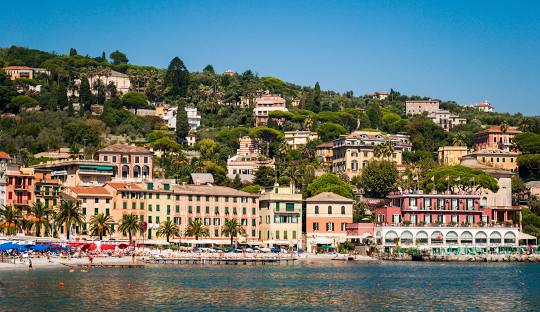
The late sun gilds the Ligurian coast—casting long shadows across Santa Margherita Ligure’s harbor, where fishing boats bob gently beside sleek yachts and the scent of basil and lemon drifts from hidden courtyards. You hear the clatter of espresso cups at waterfront cafés, the distant chime of church bells from the 17th-century Basilica of St. Margaret, and the murmur of Italian families gathering for evening passeggiata along the palm-lined promenade. Nestled between Portofino and Camogli on the Italian Riviera, this town of 10,000 residents has mastered the art of balance: elegant yet unpretentious, historic yet vibrant, luxurious yet rooted in daily life. Its harbor—just 200 meters wide—is framed by pastel-colored Liberty-style villas, medieval towers, and terraced hillsides draped in olive groves. In 2026, as overtourism transforms coastal gems into photo backdrops, Santa Margherita Ligure remains refreshingly real—a place where tourism serves the community, not the other way around.
Why Santa Margherita Ligure Embodies Riviera Authenticity
Santa Margherita Ligure isn’t just beautiful—it’s a resilient model of sustainable coastal living. Founded in the 13th century as a fishing and trading village, it grew into a prosperous hub for olive oil and wine, its wealth evident in the ornate Liberty (Art Nouveau) villas built during the Belle Époque. Unlike its glitzier neighbor Portofino, Santa Margherita never surrendered to exclusivity; instead, it preserved its working harbor, local markets, and artisan workshops. The town’s layout—narrow cobblestone caruggi (alleyways) leading to a crescent-shaped waterfront—encourages slow exploration on foot. Key landmarks include the 16th-century Castello di Santa Margherita, built to defend against Saracen raids, and the 17th-century Basilica of St. Margaret, housing relics of the town’s patron saint. Today, strict zoning laws prohibit high-rises and limit short-term rentals, ensuring that tourism enhances rather than displaces local life. This commitment to authenticity—where fishermen still unload their catch at dawn and nonnas make pesto by hand—makes Santa Margherita not a stage set, but a living, breathing Riviera town.
The Best Time to Experience Santa Margherita Ligure
To enjoy the harbor’s luminous beauty and manageable crowds, target the precise window of May 15–29, 2026. During these weeks, daytime temperatures range from a comfortable 19–25°C (66–77°F)—ideal for coastal walks, harbor swims, and exploring hillside trails [[24], [27]]. Mornings between 8:00–9:30 AM offer empty piazzas, calm water for photography, and the chance to watch fishermen sort their catch at the dock. Alternatively, September 12–26, 2026 provides similar conditions with golden light and fewer day-trippers. Avoid visiting during peak periods: all of July and August, when heat exceeds 30°C (86°F), ferry queues stretch for hours, and hotel rates double, and major holidays like Italian Ferragosto (August 15) [[29]]. For the most authentic experience, stay overnight—day visitors vanish by 6:00 PM, revealing the town’s quiet, residential soul. Always verify ferry schedules via the official Navigazione Libera del Golfo website (nlg.it).
Approximate Budget for a 7-Day Trip (2026)
This budget reflects mid-range 2025 pricing adjusted for Italy’s projected 2026 inflation rate of 1.5% [[37]], offering a realistic estimate for a solo traveler based in Santa Margherita Ligure.
- Accommodation: €770–€1,050 total (€110–€150 per night) for a boutique guesthouse or private apartment in the historic center—steps from the harbor and local markets.
- Food: €490 total (€70 per day). Breakfast at a café (€4 for cappuccino and cornetto); lunch of focaccia with pesto and farinata (€12); dinner at a family-run trattoria (€45 for trofie al pesto, grilled sea bass, and house Vermentino wine).
- Transportation: €65 total. Includes train from Milan or Genoa (€20 round-trip); local bus pass (€15 for 7 days); and occasional taxi for luggage (€30).
- Attractions: €65 total. Castello di Santa Margherita entry (€6); guided coastal hike to Portofino (€25); wine tasting at a local cantina (€20); and gelato from Gelateria Sottovento (€4).
- Miscellaneous: €90 total. A high-quality print from a local artisan shop (€25); locally made pesto kit (€20); leather sandals from Mercatino Coperto (€30); and aperitivo at Bar Centrale (€4).
Total Estimated Budget: €1,480–€1,770
6 Essential Santa Margherita Ligure Experiences
- Watch the Fishermen at Dawn: Arrive at the harbor by 7:30 AM to see local boats unload their catch—anchovies, sea bream, and octopus—sold directly to restaurants and residents.
- Climb to Castello di Santa Margherita: Ascend the 10-minute path to this 16th-century fortress for panoramic views of the harbor, the Ligurian coastline, and the emerald waters of Paraggi Bay.
- Dine on the Lungomare Promenade: At Ristorante La Piazzetta, enjoy a plate of spaghetti alle vongole while seated on the palm-lined waterfront—the same spot where locals have gathered for generations.
- Stroll the Caruggi Alleyways: Wander narrow lanes like Via Roma and Via San Giacomo to discover hidden courtyards, artisan workshops, and centuries-old fountains—each turn revealing layers of history.
- Take the Ferry to Portofino: Board the 15-minute public ferry (€10 round-trip) for a half-day visit. Return by sunset to enjoy Santa Margherita’s quieter, more authentic evening atmosphere.
- Attend an Evening Aperitivo Ritual: From 6:00–8:00 PM, join locals at Bar Centrale for a spritz with olives and focaccia—the Italian art of la passeggiata meets coastal ease.
3 Hidden Gems Most Travelers Miss
- Oratory of Santa Caterina: Tucked behind the main church, this 15th-century chapel features frescoes by local masters and is often empty even in high season—perfect for quiet reflection.
- Villa Durazzo Gardens: Just a 10-minute walk uphill, this 17th-century villa offers manicured gardens, citrus groves, and a serene fountain courtyard—rarely crowded despite its beauty.
- Gelateria Sottovento: Hidden down a side alley near the marina, this artisanal gelato shop uses local honey, basil, and lemon—flavors inspired by the Ligurian landscape.
Cultural & Practical Tips
- Walk, don’t drive: The historic center is pedestrian-only. Park outside town and explore on foot—cobblestone streets are narrow and steep.
- Respect residential life: These are working homes, not photo backdrops. Keep noise down after 10:00 PM, and never block doorways for selfies.
- Carry cash for small vendors: Many cafés, bakeries, and boutiques don’t accept cards. Tipping isn’t expected, but rounding up is appreciated.
- Learn key phrases: “Dov’è il porto?” (doh-VEH eel POR-toh?) for directions; “Grazie mille” (GRAHT-see-eh MEE-leh) for sincere thanks.
- Photograph responsibly: Drones require permits in protected zones. Early morning offers the best natural light without harsh midday glare.
Conclusion: Travel with Presence, Not Just Postcards
In 2026, Santa Margherita Ligure invites more than admiration—it calls for mindful presence. Your choice to dine at a family trattoria supports generational artisans; your stroll through the caruggi honors centuries of daily life; your early-morning harbor visit connects you to rhythms unchanged since the Middle Ages. Slow down: taste wine pressed from local grapes, listen to the rhythm of waves against ancient stone, watch the light shift on pastel walls as it has for centuries. By traveling with presence—prioritizing connection over content—you help ensure Santa Margherita remains not just a stop on the Riviera, but a living community where elegance and authenticity thrive together. Let your visit be a quiet promise: that beauty, carefully tended, can endure along this luminous shore.