
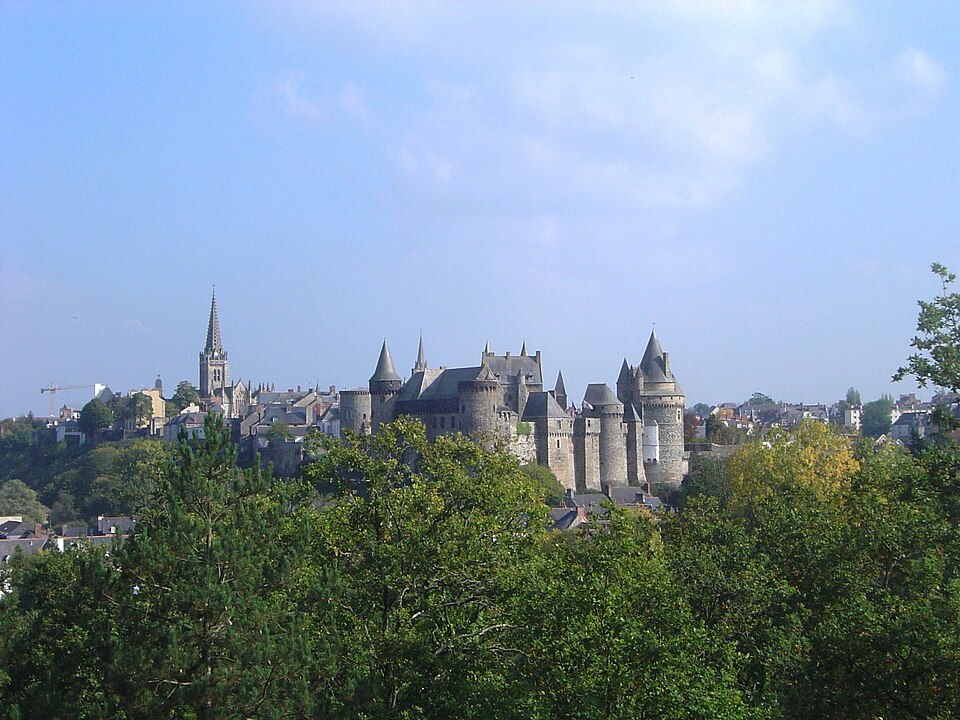
Vitré Medieval Town Ramparts Meet Renaissance Light
The stones remember what guidebooks cannot convey. As dawn breaks over eastern Brittany, Vitré emerges from morning mist like a vision of medieval France—its half-timbered houses leaning companionably across cobbled streets barely wide enough for two shoulders, while the 11th-century castle's ramparts glow honey-gold in first light. The air carries the scent of wet stone and chestnut trees, mingling with woodsmoke from boulangerie ovens, while the only sounds are the whisper of wind through plane trees and the distant clang of a blacksmith's hammer from his forge beneath Place du Château. This isn't preserved museum piece but living testament to Breton resilience—where merchants once counted fortunes that funded Renaissance architecture, and today's artisans craft leather using techniques unchanged since the Hundred Years' War. In 2026, Vitré remains Europe's most authentically layered walled town—not for its perfection, but for its unbroken dialogue between past and present.
Why Vitré Medieval Town Embodies Strategic Renaissance
Vitré medieval town represents more than picturesque charm—it embodies Brittany's fierce independence through architectural continuity. Perched strategically on the eastern frontier of the historic duchy, this fortified town evolved as a key stronghold during the 14th-century Breton War of Succession, when English and French forces battled for control of the region. Its genius lies in layered defense: the lower town housed merchants and artisans, while the upper town crowned by Château de Vitré (rebuilt 1480–1520) served as military command center. Unlike sanitized heritage sites, Vitré maintains raw authenticity: 85% of its 15th–17th century half-timbered houses remain private residences, the daily market still operates on Place du Château as it has since 1450, and artisans practice ancestral crafts in vaulted cellars along Rue de la Poterie. The town's power stems from functional continuity—the 1.2-kilometer ramparts with 10 towers offer panoramic views not as tourist attraction, but as strategic vantage points originally designed to spot approaching threats from both Normandy and Maine. As a designated Plus Beau Village de France, Vitré succeeds not through curation, but by honoring the weathered beauty of survival against both siege and time.
The Best Time to Experience Vitré Medieval Town
For optimal conditions—golden light on half-timbered façades, manageable crowds, and authentic local rhythm—visit between May 12 and June 5 or September 18–October 8. Daytime temperatures average 16–22°C (61–72°F), creating ideal conditions for exploring narrow streets without summer's intensity. Mornings between 7:30–9:00 AM offer the most magical light: low-angle sun transforms the timber frames to burnished copper while illuminating granite foundations without harsh glare—a critical window before day-trippers arrive from Rennes. September provides a second excellent opportunity: warm days, departing crowds, and autumn light that intensifies the ochre tones in weathered plaster while grape harvest begins in surrounding vineyards. Avoid July 15–August 20 when temperatures exceed 25°C (77°F), narrow streets become uncomfortably congested, and many local artisans close workshops for vacation. Note that winter months (November–February) offer stark beauty and complete solitude, though some restaurants reduce hours and Atlantic storms can create biting chill. Verify current events at vitre-tourisme.com before travel.
Approximate Budget for a 7-Day Trip (2026)
Based on 2025 benchmarks adjusted for 4% inflation (per INSEE and Bretagne Tourism Board projections), a realistic mid-range budget for a Vitré-focused itinerary requires €1,250–€1,750 per person excluding international flights. Accommodation ranges from €80–€120 nightly for family-run guesthouses in the Ville Basse district or boutique hotels near Place du Château—essential for experiencing old town atmosphere after day-trippers depart. Daily food costs average €75–€90: breakfast at crêperies (€6), lunch of galettes and cider at riverside terraces (€18–€24), and dinners featuring fresh Oust River fish with Muscadet wine (€40–€50). Transportation is straightforward: Vitré's compact size makes walking optimal, though regional trains connect to coastal sites like Saint-Malo.
- Accommodation: €80–€120 per night for a family-run guesthouse in Ville Basse or boutique hotel near Place du Château—essential for experiencing old town atmosphere after day-trippers depart.
- Food: €75–€90 per day—breakfast at crêperie (€6), lunch of galettes and Breton cider at riverside terrace (€20–€26), dinner featuring fresh river fish with Muscadet wine (€42–€52).
- Transportation: €28 for a 7-day regional bus pass. Train from Paris Montparnasse to Vitré (2h45, €50–€75 one-way via SNCF Connect). Walking is optimal for old town exploration.
- Attractions: Château de Vitré entry: €8. Ramparts walk: free. Musée du Vitrail: €6. Guided artisan tour: €12. Allocate €85 total.
- Miscellaneous: €50 for artisanal leather goods from Rue de la Poterie workshops, locally woven woolens, or donations to the Vitré Heritage Preservation Association.
Total Estimated Cost: €1,250–€1,750 for seven days, excluding international flights.
5 Essential Vitré Medieval Town Experiences
- Château de Vitré Dawn Visit: Arrive by 8:00 AM to witness the 11th-century fortress in morning light—climb the 188-step tower at 9:00 AM for panoramic views where the Vilaine River valley converges beneath your feet.
- Rue de la Poterie Artisan Walk: Wander this quintessential medieval street at 10:00 AM to observe leatherworkers and potters practicing techniques unchanged since the 15th century in vaulted-cellars workshops.
- Ramparts Circuit: Traverse the 1.2-kilometer fortification circuit at 8:30 AM when morning light illuminates the 10 towers and offers panoramic views of the Vilaine River valley—best experienced starting from Tour de l'Horloge.
- Place du Château Market: Visit Tuesday/Saturday mornings before 10:00 AM to experience the historic marketplace—sample kouign-amann pastries while listening to Breton spoken among vendors.
- Saint-Nicolas Church Exploration: Tour the 15th-century Gothic church at 3:00 PM when afternoon light streams through stained glass windows depicting Breton saints—observe the unique blend of Norman and Breton architectural elements.
3 Hidden Gems Most Travelers Miss
- Cour du Prébendé: Behind No. 14 Rue Théodore Botrel, an unmarked archway leads to a hidden courtyard with a 15th-century fountain and views into private gardens where bougainvillea spills over ancient stone—locals call it "la cour des artistes."
- Chapelle Saint-Yves: A 10-minute walk along the ramparts reveals this secluded 12th-century chapel with rare frescoes depicting Breton Saints—accessible only by requesting permission at the adjacent presbytery (open Wednesday afternoons).
- Atelier du Cordonnier: A working shoemaker's workshop hidden in a vaulted cellar at 9 Rue de la Poterie—observe artisans crafting traditional leather shoes using techniques unchanged since the Age of Sail (open Monday/Thursday mornings by appointment: +33 2 99 72 11 23).
Cultural & Practical Tips
- Respect Residential Spaces: Over 80% of buildings remain private homes. Never block narrow passages with luggage—many streets are less than one meter wide and serve as essential thoroughfares for residents.
- Market Etiquette: At Place du Château, greet vendors with "Demat" (hello in Breton) before browsing. Never touch produce—vendors select items as sign of quality assurance.
- Learn Key Phrases: "Demat," "Trugarez" (thank you), and "Un kig ha farz, mar plij" (buckwheat stew, please) show respect in this proudly Breton community where regional identity remains strong.
- Photography Protocol: Never use tripods on narrow streets—they obstruct passage. Best architectural shots captured between 8:00–9:30 AM when eastern light illuminates timber textures without crowds.
- Support Authentic Commerce: Purchase leather goods directly from Rue de la Poterie workshops rather than souvenir shops—look for pieces stamped with the artisan's mark guaranteeing local production.
Conclusion: Travel with Breton Reverence, Not Just a Lens
Vitré medieval town endures not as attraction to be consumed, but as living testament to cultural resilience etched into stone and timber. As a conscious traveler, your presence should honor this legacy: walk slowly on cobblestones worn by centuries of footsteps, support the dozen remaining families who maintain ancestral homes against commercial pressure, and understand that your footsteps tread ground where Breton identity has been fiercely preserved through craft, language, and daily ritual. Sit quietly on the Pont-Paillier at dusk and watch light fade across the Vilaine River—the same light that illuminated medieval merchants and modern ceramists alike. By approaching Vitré not as backdrop for social media, but as sanctuary demanding quiet contemplation, you help ensure these stones continue to shelter not just history, but humanity—for those who recognize that true beauty lies not in perfection, but in the dignified weathering of time and tradition.