
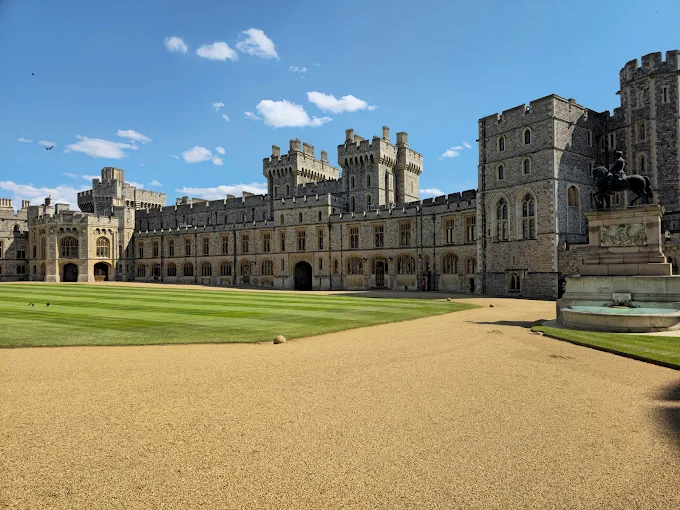
Windsor Castle Medieval Fortress Meets Royal State Grandeur
The bugle call echoes—a sharp, brass note that cuts through the crisp Berkshire air—as you stand before the Henry VIII Gate at 10:55 AM, watching the Union Flag snap against the gray stone. The scent of old mortar and manicured boxwood fills your lungs; the ground vibrates slightly with the approach of the Changing of the Guard. Founded by William the Conqueror in 1070, Windsor Castle spans 52,609 square meters of fortified land, making it the largest occupied castle in the world. You stand beneath the Round Tower, which rises 33 meters above the motte, while the State Apartments stretch 150 meters to the east, housing treasures worth billions. Every cobblestone tells a story: Norman soldiers patrolling the walls, Queen Victoria mourning in the mausoleum, and the 1992 fire that nearly consumed the private chapel. In 2026, as modern monarchies debate their relevance, visiting Windsor Castle means engaging with a living institution that balances private residence with public duty. This place matters now because it remains the spiritual home of the Sovereign, challenging visitors to confront the continuity of power while navigating the splendor of state ceremony.
Why Windsor Castle Embodies Royal Architectural Continuity
Windsor Castle solves the architectural problem of maintaining a defensive fortress while adapting it for modern royal residence—a feat achieved through 950 years of continuous modification. When William the Conqueror selected the chalk hill in 1070, he established a motte-and-bailey structure that evolved into the stone complex you see today. The Round Tower, rebuilt in 1820 by Jeffry Wyatville, sits atop an artificial mound 15 meters high, utilizing flint and stone to withstand siege warfare that is now obsolete. The State Apartments, damaged by fire in 1992, were restored over five years at a cost of £36.5 million, using traditional techniques to replace the oak roof structures and stained glass. Engineering-wise, the castle employs a private water supply and heating system upgraded in 2015 to reduce carbon emissions by 30%, ensuring the 500-year-old walls remain habitable. Today, the Royal Collection Trust manages the site, balancing the privacy of the King's weekend residence with public access to the State Rooms. This unique status ensures Windsor Castle remains not merely a museum but a working palace, blending medieval defense mechanisms with contemporary security in a manner few historic sites sustain.
The Best Time to Experience Windsor Castle
For optimal lighting and manageable crowds, plan your visit between May 15–June 20 or September 10–October 15, when temperatures range from 15–22°C (59–72°F) and daylight extends until 8:30 PM. Arrive precisely at 9:30 AM when doors open to beat the tour groups that typically converge by 11:00 AM; the morning light illuminates the East Terrace beautifully without the glare of midday sun. Evening visits are not permitted for tourists, but the Changing of the Guard occurs at 11:00 AM on select days—verify the schedule online. Avoid December 20–January 5 when holiday crowds bring peak congestion, pushing entry queues beyond 60 minutes despite timed tickets. Winter months (December–February) offer shorter lines but temperatures drop to 2–8°C (36–46°F), and the stone walls become uncomfortably cold. For special closures, verify the calendar at rct.uk/visit/windsor-castle before booking, as state occasions can close sections unexpectedly. Tuesday and Thursday mornings typically see the lowest visitor volume, allowing for quieter contemplation in St. George's Chapel.
Approximate Budget for a 7-Day Trip (2026)
London and Windsor remain premium destinations, but staying in Zone 1 near Paddington provides direct train access to the castle without excessive transport costs. These 2026 estimates assume a moderate travel style, accounting for approximately 3-4% annual inflation in UK hospitality and attraction pricing.
- Accommodation: £150–£350 per night for a double room in Paddington, Kensington, or Windsor town; budget hostels from £55/night in nearby Slough
- Food: £55–90 per day—breakfast £10–15 (café pastry or full English), lunch £15–25 (pub meal or castle café), dinner £30–50 (mid-range restaurant with wine); traditional Sunday roast £25
- Transportation: £8.10 daily cap for Zones 1-2 using contactless/Oyster; Heathrow Express £25 one-way; Train from London Waterloo to Windsor £25 return
- Attractions: Windsor Castle £33.00 adult, St. George's Chapel included, Eton College tour £20.00, Thames cruise £18.00, London Eye £32.00
- Miscellaneous: Souvenir guidebook £15, castle postcards £5, rain jacket (essential) £35, travel insurance £50 for week
Total for 7 days: £1,500–2,100 per person (excluding international flights)
7 Essential Windsor Castle Experiences
- State Apartments Tour: Walk the grand rooms used for state banquets. Open 9:30 AM–5:00 PM; the audio guide details the history of each tapestry. Look for the ornate ceilings in the Grand Reception Room and the paintings by Rubens.
- St. George's Chapel Visit: Enter the Gothic chapel where Henry VIII is buried. Located in the Lower Ward; open 10:00 AM–4:00 PM. The fan vaulting ceiling soars 20 meters high, and the stained glass glows in the afternoon light.
- Queen Mary's Dolls' House: Examine the 1:12 scale mansion built in 1924. Located in the State Apartments; the library contains miniature books written by authors like Conan Doyle. The electricity and plumbing still function, showcasing 1920s engineering.
- Changing of the Guard: Witness the ceremony in the Lower Ward. Occurs at 11:00 AM on Tuesdays, Thursdays, and Saturdays; arrive by 10:30 AM to secure a view. The band plays marches while the soldiers march in scarlet tunics.
- Long Walk Stroll: Traverse the 2.6-mile avenue leading to the castle. Open 24 hours; the view of the Round Tower from the George IV Gateway is iconic. The elm trees provide shade during summer afternoons.
- Semi-State Rooms Visit: View the private apartments open in winter. Open September–March; these rooms were restored after the 1992 fire. The intricate plasterwork and personal artifacts offer a glimpse into royal private life.
- Eton College Bridge View: Cross the Thames to photograph the castle from afar. Access via Windsor Bridge; the view from the Eton side frames the Round Tower against the sky. The river reflects the stone walls beautifully at sunset.
3 Hidden Gems Most Travelers Miss
- The Norman Gatehouse: This 14th-century entrance tower stands beneath the Round Tower. Access is visible from the courtyard; open during castle hours. Most tourists rush to the State Apartments, missing the original medieval portcullis groove still visible in the stone archway.
- The Frogmore Estate Gardens: Located within the Home Park, these gardens house the Royal Mausoleum. Access requires booking a special tour via the Royal Collection Trust; tours run select days in summer. The serene lakes and bridges offer a peaceful contrast to the busy castle wards.
- The View from Eton College Bridge: Stand on the bridge connecting Windsor to Eton for a panoramic view. Access is public; open 24 hours. Look for the reflection of the castle in the Thames at dusk; this angle is rarely photographed by visitors inside the grounds.
Cultural & Practical Tips
- Security screening: All visitors pass through airport-style security; prohibited items include large bags (nothing over 45×35×25cm), sharp objects, and tripods. Allow 30 minutes for security checks during peak summer hours (10:00 AM–1:00 PM).
- Photography rules: Exterior photography is permitted for personal use without flash. Interior photography is strictly prohibited in the State Apartments and Chapel to protect light-sensitive artifacts. Phones must be silenced and stored during tours.
- Dress code: Shoulders and knees should be covered when entering St. George's Chapel. Security may deny entry to those dressed inappropriately, so carry a scarf or light jacket for coverage.
- Local phrases: Learn "Mind the gap" (watch the step), "Cheers" (thanks), and "Queue here" (wait in line); Londoners appreciate visitors who respect pedestrian flow on the narrow castle pathways.
- Weather preparedness: The castle grounds are largely outdoors and exposed to wind; carry a compact umbrella (£10 from Boots pharmacy) and waterproof layers. Stone surfaces become slippery when wet—wear shoes with good grip.
- Accessibility: The castle offers step-free access via ramps and lifts; wheelchair users receive priority entry—contact access@rct.uk 48 hours ahead to arrange assistance. Some historic rooms have thresholds.
- Respectful behavior: Keep voices lowered in the Chapel and State Rooms; this is a working palace. Do not touch the artifacts or lean on the historic brickwork; the materials are centuries old and fragile.
Conclusion: Travel with Reverence, Not Just Checklists
Windsor Castle demands more than a snapshot with the Guard—it invites you to contemplate the weight of history resting on those Norman stone walls. When you walk the State Apartments in 2026, tracing the same floors worn by kings and queens, you're not just ticking a sightseeing box; you're witnessing the delicate balance between preserving heritage and acknowledging modern royal life. As overtourism pressures London's landmarks, visiting mindfully means respecting the residential nature of this institution, understanding that behind the ticket barriers, real people live and work within these walls. Walk slowly across the parquet floors, noticing how the light changes on the gilt ceilings; listen to the silence of the Chapel not as emptiness but as memory. Leave only footprints on the gravel, take only memories of royal grandeur, and carry forward the understanding that places like this endure because each generation chooses to honor them—not as theme parks, but as living testaments to duty, history, and the enduring human story.