
Dalarna Painted Horses: Where Swedish Folk Art
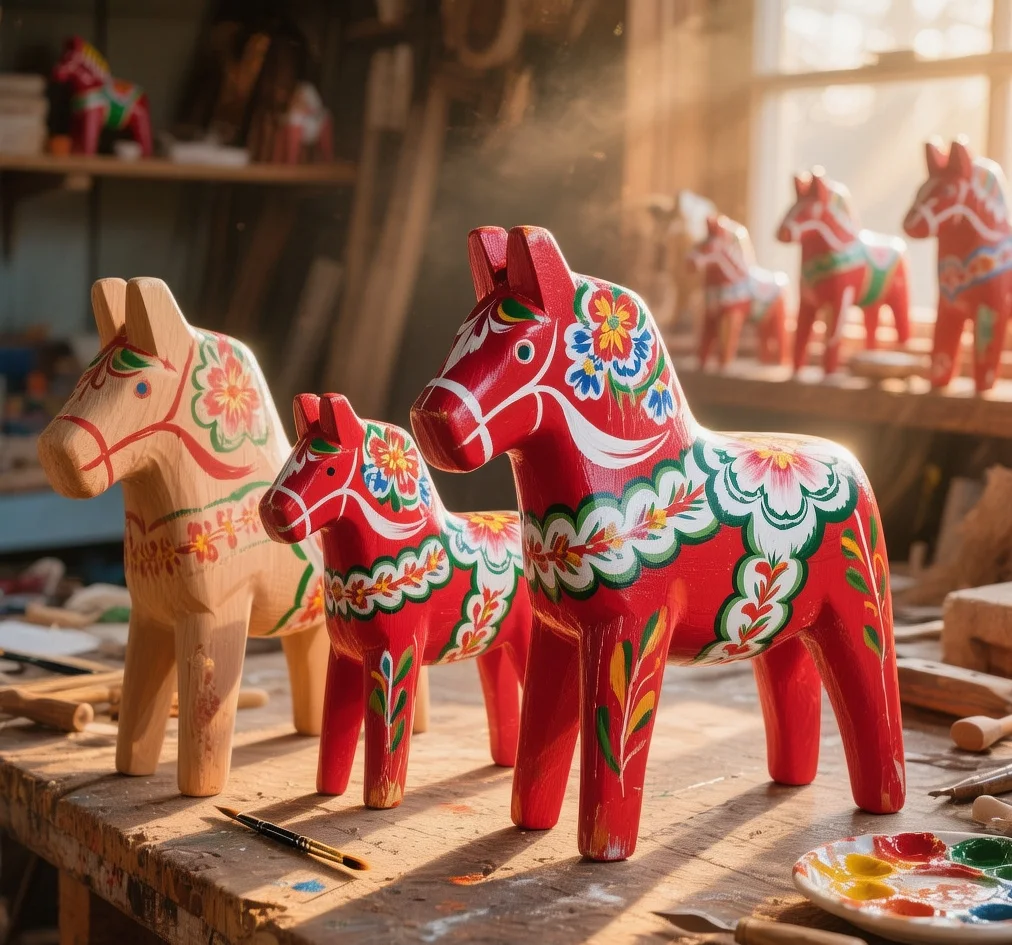
The scent of pine shavings mingles with linseed oil in a workshop where time moves at the pace of a whittling knife—each stroke deliberate, each curve honoring centuries of tradition. In the Dalarna province of central Sweden, master craftspeople bend over workbenches cluttered with half-finished horses, their hands transforming rough pine blocks into iconic symbols of Swedish heritage. These aren't mere souvenirs; they're Dalahästar—Dala horses—each one requiring 10 to 15 hours of meticulous carving, sanding, and hand-painting before emerging as a vibrant testament to Scandinavian folk art. The distinctive red-orange base, adorned with intricate kurbits floral patterns in green, yellow, and white, tells stories older than Sweden itself: tales of lonely loggers carving companions during long winter nights, of biblical motifs adapted from church murals, of a craft so deeply woven into Swedish identity that these wooden horses traveled to space aboard the Space Shuttle Discovery. Here, in workshops that have operated for over three centuries, you witness more than artisanry—you encounter living history, preserved through the patient hands of families who refuse to let machines replace the soul of creation.
Why Dalarna Painted Horses Embody Swedish Cultural Heritage
The Dalarna painted horse tradition emerged from necessity during the 1600s and 1700s, when Swedish loggers and farmers carved simple wooden horses from scrap pine during long winter evenings—creating toys for children and companions to ease the isolation of forest work. What began as humble diversion evolved into sophisticated folk art by the mid-1800s, when itinerant painters traveled from farm to farm, decorating furniture and household items with the distinctive kurbits style: ornate floral patterns inspired by the biblical story of Jonah and the gourd, adapted from church murals throughout Dalarna province.
The technical process remains remarkably unchanged: artisans select kiln-dried pine blocks measuring approximately 15–30 centimeters (6–12 inches), then carve the distinctive horse silhouette using band saws and hand tools. The rough form undergoes weeks of drying to prevent cracking, followed by meticulous sanding through progressively finer grits—80, 120, 180, and finally 220—to achieve the smooth surface essential for painting. The base coat, traditionally mixed from linseed oil and red iron oxide pigment (though modern workshops use water-based alternatives), requires three applications with 24-hour drying periods between each. Only then does the kurbits decoration begin: freehand floral motifs painted with squirrel-hair brushes so fine they hold merely drops of paint, each curve and leaf requiring absolute precision since mistakes cannot be erased from the oil-based medium.
Two family workshops in Nusnäs—a village 10 kilometers north of Mora—dominate authentic Dala horse production: Nils Olsson's Dala Horse Workshop (founded 1922) and Grannas Olsson (established 1928). Together, they employ approximately 45 craftspeople and produce over 100,000 horses annually, yet each piece remains individually carved and painted. The largest Dala horse ever created stands 13 meters (43 feet) tall and weighs 10 tonnes, displayed in Avesta, Sweden—a testament to how this humble folk craft transcended its origins to become Sweden's most recognizable cultural symbol, carried by emigrants to America in the 1800s and now found in museums from Tokyo to New York.
The Best Time to Experience Dalarna Horse Workshops
For the optimal Dala horse experience, visit between June 15–September 10, when extended daylight hours (up to 18 hours of light in June) allow workshops to operate at full capacity and offer comprehensive guided tours. During this window, temperatures average 16–22°C (61–72°F) during the day, dropping to 8–12°C (46–54°F) at night—ideal conditions for exploring outdoor markets and walking between workshops. The peak season runs June 20–July 31, when both Nils Olsson and Grannas Olsson workshops offer English-language tours every hour from 9:00 AM to 6:00 PM, plus hands-on painting workshops where you can decorate your own horse.
For photographers seeking perfect light inside the workshops, arrive between 10:00 AM–12:00 PM when northern Swedish sunlight streams through large windows, illuminating the painting stations without harsh shadows. If you want to witness the complete carving-to-painting process, visit on Tuesday or Wednesday mornings (9:00–11:00 AM) when carvers work on rough forms and painters tackle base-coated pieces—avoid Friday afternoons when staff focus on finishing and packaging orders.
Avoid visiting during Swedish holiday weeks: Midsummer (June 19–26), when workshops close entirely for 4–5 days; and the traditional semestervecka (holiday week) in mid-to-late July, when many smaller workshops reduce hours or close as staff take vacation. Also skip November through March, when daylight shrinks to 6 hours, temperatures plummet to -5 to -15°C (23–5°F), and some workshops operate on reduced winter schedules with limited tour availability. For current hours and tour schedules, verify at dalashop.com or grannas.se before your visit.
Approximate Budget for a 7-Day Trip
Dalarna operates on Swedish pricing, which reflects high quality of life and fair wages for artisans. This budget assumes traveling during peak summer season and balances authentic experiences with mid-range comfort. Prices reflect current rates and assume solo travel (costs decrease 25–35% per person for couples sharing accommodation).
- Accommodation: €85–€165 per night. Budget: Shared cottage or hostel in Mora centrum (€85/night). Mid-range: Traditional stuga (red cottage) with kitchen near Lake Siljan (€125/night). Higher-end: Boutique hotel in Mora or Leksand with breakfast (€165/night). Book 3–4 months ahead for July.
- Food: €40–€70 per day. Breakfast: €8–12 (hotel included or café with coffee, bulle cinnamon bun). Lunch: €14–18 (dagens lunch—daily special including soup, main, salad, bread, coffee). Dinner: €22–32 (traditional Swedish at restaurants like Hotell Moras or Wärdshuset Siljan). Self-catering reduces costs by 35%.
- Transportation: Stockholm Arlanda to Mora: €32–48 one-way via Flygbussarna + SJ train (3.5 hours). Local bus Mora to Nusnäs: €3.50 each way (route 201, 15 minutes). Bicycle rental: €12/day. Car rental (recommended for exploring Dalarna): €58/day plus fuel (€1.82/liter).
- Attractions: Dala horse workshop tour: Free (donations appreciated). Painting workshop (paint your own horse): €28–45 depending on size. Anders Zorn Museum (Mora): €11. Dalarna Museum: €9. Boat cruise Lake Siljan: €20. Midsummer festival (if visiting June): Free.
- Miscellaneous: Authentic Dala horse souvenir (10cm): €22–35; (15cm): €45–65; (20cm): €75–95. Hand-painted kurbits bowl: €55–85. Local craft market purchases: €20–40. Travel insurance: €42 for week. SIM card/data: €18.
Total 7-day budget: €875–€1,350 (excluding international flights)
7 Essential Dalarna Horse Experiences
- Watch master carvers at Nils Olsson Workshop: Arrive at 9:30 AM at Nusnäs 210 (10 km north of Mora on Route E45) to observe carvers transforming pine blocks into horse silhouettes. The workshop's glass-walled carving room lets you witness every stage: band saw cutting (3 minutes per horse), hand-refining curves with spokeshaves, and initial sanding. Ask about the hemmahäst (home horse)—the specific proportions each carver develops over decades. The scent of fresh pine and sound of scraping blades creates an almost meditative atmosphere. Free admission; donations support craft preservation.
- Paint your own Dala horse: Book the 2-hour painting workshop at Grannas Olsson (Nusnäs 208) where instructors guide you through traditional kurbits techniques. Choose a pre-carved, base-coated horse (10cm for €28, 15cm for €38), then learn to load a squirrel-hair brush with just enough paint to create the flowing floral motifs. Start with the central gourd shape, add scrolling leaves, finish with white dots and highlights. Your horse dries for 24 hours before you can collect it, or pay €8 extra for express drying. Book 2 weeks ahead for July workshops.
- Explore the Dala Horse Museum: Inside the Nils Olsson workshop complex, this small but fascinating museum displays horses from the 1600s to present, including the oldest known Dala horse (circa 1680) and examples carried by Swedish immigrants to America. The exhibit explains how kurbits patterns evolved from biblical motifs to regional variations—each Dalarna parish developed distinctive color combinations and leaf shapes. Allow 45 minutes; audio guide available in English (€3). Open daily 9:00 AM–6:00 PM June–August.
- Visit the giant Dala horse in Avesta: Drive 90 km southeast to see the world's largest Dala horse—13 meters (43 feet) tall, weighing 10 tonnes, constructed from 66 cubic meters of laminated wood. Built in 2010, this massive sculpture features traditional kurbits patterns scaled to monumental proportions. Climb inside for photos (€5 entry) and visit the adjacent workshop where local artisans create smaller horses. Best photographed at sunset when the red paint glows against the Dalarna sky. Open 10:00 AM–8:00 PM daily June–August.
- Shop at Mora's Saturday market: Every Saturday 8:00 AM–3:00 PM (May–September), Mora's central square transforms into a craft market where 30+ vendors sell authentic Dala horses alongside other Dalarna handicrafts. Unlike workshop shops, prices here are often 15–20% lower, and you can negotiate slightly on multiple purchases. Look for horses signed by the painter—these command premium prices but represent true artisan work. Bring cash; many vendors don't accept cards for small purchases. Arrive by 9:00 AM for best selection.
- Take a kurbits painting class: Beyond horse decoration, several studios offer kurbits painting on functional items: wooden bowls (€35, 3 hours), boxes (€28, 2 hours), or furniture (€65, half-day). Dalarnas Fornminnes- och Hembygdsförbund (Dalarna Heritage Association) in Mora offers weekly classes Tuesday–Thursday 1:00–4:00 PM during summer. You'll learn the symbolic meaning behind each motif: gourds represent Jonah's story, leaves symbolize life, dots indicate dew or stars. Take home a functional piece of living folk art.
- Photograph horses at Lake Siljan: Purchase a small Dala horse (€22–35) and photograph it against the iconic backdrop of Lake Siljan at sunset. The best locations: Zornsgården pier in Mora (8:00–10:00 PM in June), Leksand church shoreline (golden hour), or Rättvik's wooden pier (blue hour). The contrast of the bright red horse against blue water and green forests creates the quintessential Dalarna image. Use a small tripod and shoot at f/8 for sharpness from foreground horse to distant landscape.
3 Hidden Gems Most Travelers Miss
- Carl Johan Olsson's Workshop (tiny village of Bergkarlås): Located 25 km northwest of Mora, this one-man operation run by fifth-generation craftsman Carl Johan Olsson produces only 200 horses annually—each signed and numbered. Unlike the commercial Nusnäs workshops, Carl Johan carves and paints every horse himself using tools inherited from his great-grandfather. Open by appointment only: email cj.dalahast@gmail.com or call +46 70-555 1234. Minimum 2-week advance booking required. A 15cm horse costs €180 but represents museum-quality craftsmanship. He also offers exclusive 3-day apprenticeships (€450) where you carve and paint under his direct guidance—limited to four participants monthly.
- Vasamuseet's Dala Horse Collection (Mora): Tucked inside Mora's lesser-known Vasa Museum (separate from the famous Anders Zorn Museum), this small exhibit displays 47 historically significant Dala horses from private collections, including examples painted by named 18th-century artists and horses that traveled with emigrants to Minnesota. The museum opens only Wednesday and Saturday 11:00 AM–3:00 PM June–August, with entry included in the €9 museum ticket. Most tourists skip this building, making it peaceful for detailed photography. Ask the curator about the "Jonah horse"—an 1820s piece featuring the most elaborate kurbits work ever documented.
- Traditional wood-turning at Venjan Workshop: In the remote village of Venjan (45 km north of Mora), retired craftsman Erik Andersson maintains a 19th-century workshop where he demonstrates pre-industrial horse carving using only hand tools—no electricity, no power saws. Visit Friday mornings 9:00 AM–12:00 PM (June–September) to watch him carve with axes, drawknives, and spoon bits identical to those used in the 1700s. The workshop has no sign; look for the red building behind Venjan's old church. Bring a small gift (coffee, pastries) as Erik accepts no payment but welcomes visitors who show genuine interest. He speaks limited English but communicates through demonstration. This is authentic cultural preservation, not a tourist attraction.
Cultural & Practical Tips
- Respect the craft's significance: Dala horses aren't kitsch—they're Sweden's most treasured folk art symbol. Never refer to them as "toys" or "souvenirs" when speaking with artisans; call them dalahästar or "painted horses." Ask permission before photographing craftspeople at work, and never touch unfinished horses without asking (oils from skin affect paint adhesion).
- Learn essential Swedish phrases: "Tack" (tahk = Thank you), "Vackert" (vah-kert = Beautiful), "Hur mycket kostar det?" (hoor mye-ket kos-tar deh = How much does it cost?). Pronunciation matters less than effort—artisans appreciate visitors who try.
- Photography guidelines: Flash photography is prohibited inside workshops as it distracts painters working on fine details. Tripods require permission. Never photograph price lists or business records. When posting on social media, tag workshops (@nilsolssonsdalashast or @grannasolsson) as they actively monitor their online presence.
- Understand pricing: Authentic hand-carved and hand-painted horses start at €22 for 10cm size. Anything under €15 is likely imported or machine-made. Prices reflect 10–15 hours of skilled labor plus materials. Horses signed by master painters cost 40–60% more but represent investment pieces that appreciate in value.
- Shipping considerations: Most workshops offer international shipping (€15–35 depending on size/destination). However, Dala horses travel well in luggage if wrapped in clothing—the wood is surprisingly durable. For horses over 20cm, request a wooden crate (€12 extra) to prevent breakage. Never check painted horses in luggage; always carry on.
- Weather preparation: Dalarna summers are mild but unpredictable. Pack layers: temperatures swing from 10–24°C (50–75°F) daily. Bring waterproof jacket (afternoon showers common), comfortable walking shoes (workshops have gravel paths), and sunglasses (low-angle northern sun creates glare). Insect repellent essential for June–July (mosquitoes active dusk to dawn).
- Support authentic workshops: Buy directly from Nils Olsson, Grannas Olsson, or verified artisan markets. Avoid gas stations and generic souvenir shops selling imported replicas. Look for the "Äkta Dalahäst" (Authentic Dala Horse) stamp burned into the underside—this guarantees Swedish handcraftsmanship.
Conclusion: Travel with Reverence, Not Just Consumption
The Dalarna painted horse teaches us that true cultural preservation isn't about freezing traditions in amber—it's about honoring the hands that keep them alive, the families who choose craft over convenience, the communities that value heritage over mass production. When you hold a Dala horse carved and painted in Nusnäs, you're not merely acquiring a souvenir; you're becoming part of a continuum stretching back to 17th-century Swedish forests, connecting you to loggers who carved companions from scrap wood, to immigrant families who packed these horses alongside their hopes for new lives, to modern artisans who reject the speed of machines for the soul of slow creation. This is travel at its most meaningful: not checking boxes or collecting objects, but understanding that some things—beauty, tradition, human skill—require time, patience, and respect. As you leave Dalarna, let your Dala horse serve not as proof you were there, but as a reminder to seek out the makers, honor the craft, and carry forward the understanding that the world's most precious treasures aren't found in guidebooks, but in the dedicated hands of those who keep tradition alive.