
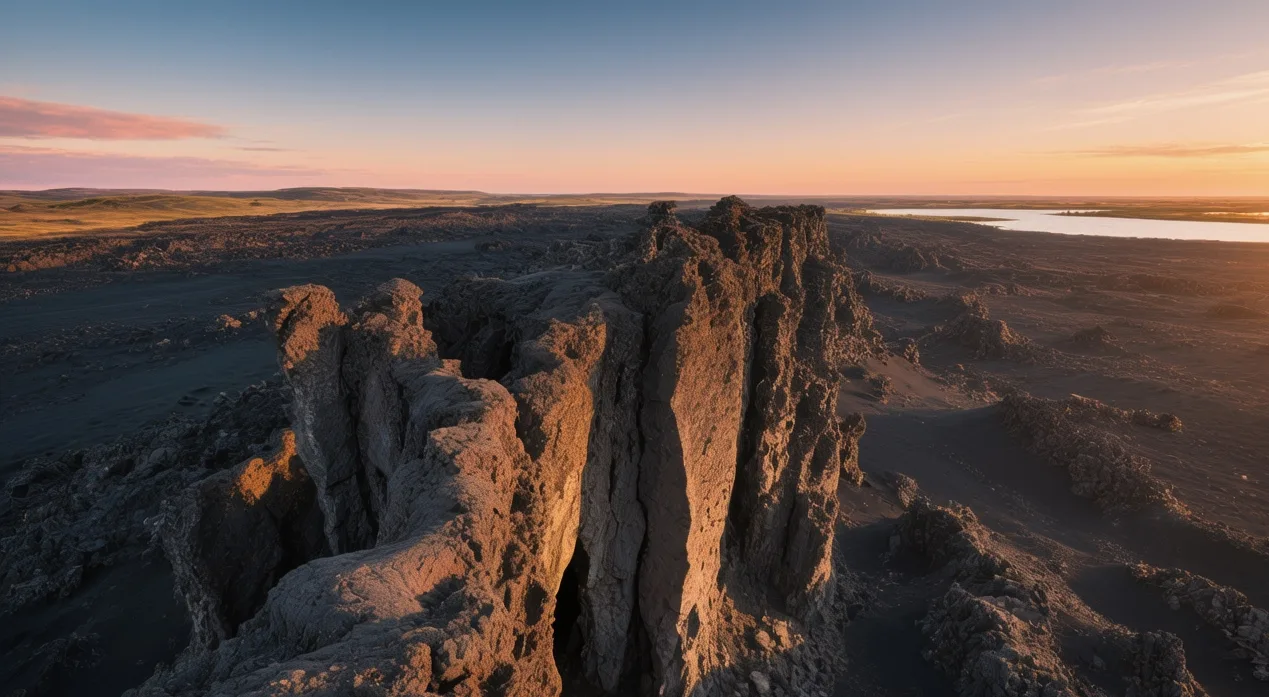
Dimmuborgir Ancient Lava Pillars Meet Icelandic Myth
The morning mist clings to blackened lava rock as the first rays of Arctic sun pierce through towering stone pillars—some reaching 10 meters high—that stand frozen in time like sentinels guarding a forgotten realm. Here, at Dimmuborgir, the earth's raw power carved a labyrinth of caves, arches, and spires 2,300 years ago when a massive lava lake drained away, leaving behind these haunting formations. The silence is profound—broken only by wind whistling through natural stone archways and the distant call of Arctic terns nesting in nearby Lake Mývatn. This isn't merely a geological curiosity; it's a place where Icelandic folklore comes alive, where the 13 Yule Lads are said to make their home, and where Game of Thrones filmed scenes that brought millions of viewers face-to-face with this otherworldly landscape. In 2026, as sustainable tourism reshapes how we explore fragile volcanic environments, Dimmuborgir matters more than ever—a reminder of nature's sculptural genius and a testament to Iceland's commitment to preserving its dramatic heritage while welcoming curious travelers.
Why Dimmuborgir Embodies Iceland's Volcanic Soul
Dimmuborgir—literally translating to "Dark Cities" or "Dark Fortresses"—represents one of Iceland's most spectacular examples of pseudokarst topography, formed during the Younger Laxárhraun lava flow approximately 2,300 years ago. When molten basalt erupted from nearby craters and pooled in this low-lying area, it created a vast lava lake that stretched across 18 square kilometers. As the surface cooled and solidified while liquid lava continued flowing beneath, the eventual drainage left behind these extraordinary pillars, caves, and collapsed chambers that define the landscape today.
The formations solved a fundamental geological puzzle: how rapidly cooling basalt creates complex three-dimensional structures. The lava here contained high levels of silica and gas, which expanded as it cooled, creating the honeycomb-like chambers and vertical columns that now draw photographers and geologists alike. Some pillars reach heights of 10 meters (33 feet), while the largest cave systems extend 50 meters underground, maintaining a constant temperature of 4°C (39°F) year-round—a natural refrigeration system that preserved organic material for archaeological discovery.
Beyond geology, Dimmuborgir fulfills a deeper cultural need: it anchors Icelandic identity in tangible, awe-inspiring landscapes. Since the 12th century, when Norse settlers first documented these "dark fortresses," the site has been woven into the national consciousness as a place where the veil between worlds grows thin. The area serves as headquarters for the 13 Yule Lads—Icelandic Christmas trolls who visit children in the 13 nights before Christmas—making it a living cultural site, not merely a geological one. In 1996, the area received formal protection under Iceland's Nature Conservation Act, ensuring that future generations can walk among these stone giants.
The Best Time to Experience Dimmuborgir
For optimal conditions, plan your visit between June 15 and August 20, when temperatures range from 10–15°C (50–59°F) during the day and the midnight sun provides nearly 24 hours of daylight—perfect for extended exploration without rushing. The golden hours between 10:00 PM and 2:00 AM offer surreal lighting as the sun hovers near the horizon, casting long shadows through the lava pillars in hues of amber and rose.
Shoulder season (May 1–June 14 and August 21–September 30) brings cooler temperatures of 5–10°C (41–50°F) but fewer crowds and the possibility of northern lights in late August. Winter visits (November–March) require serious preparation: temperatures drop to -5 to -10°C (14–23°F), daylight shrinks to 4–6 hours, and ice makes trails treacherous—though the stark beauty of snow-draped black lava creates unparalleled photography opportunities for experienced winter hikers.
Avoid visiting during Iceland's "thaw season" (April 1–30) when melting snow creates muddy, impassable trails and many access roads remain closed. The site is open year-round with no entrance fee, but the visitor center operates limited hours: 9:00 AM–6:00 PM (June–August), 10:00 AM–4:00 PM (May and September), and closes entirely October–April. Always verify current conditions at visitnorthiceland.is before departure, as volcanic activity in the region can temporarily close access.
Approximate Budget for a 7-Day Trip (2026)
Iceland remains one of Europe's pricier destinations, but strategic planning makes Dimmuborgir accessible. These 2026 estimates assume a mid-range travel style, accounting for Iceland's 4.2% inflation rate and current exchange rates (1 USD = 0.92 EUR). Prices reflect the North Iceland region, which runs 15–20% lower than Reykjavík.
- Accommodation: €120–€180 per night for guesthouses or farm stays in the Mývatn area (Reykjahlíð village offers best value); budget hostels from €65; luxury hotels €250+
- Food: €65–€85 per day—breakfast €15 (often included with lodging), lunch €20 (soup and bread at local cafés), dinner €35–€45 (lamb stew or Arctic char at restaurants like Vogafjós Farm Café)
- Transportation: Rental car essential: €75–€95/day for 4WD vehicle (required for F-roads); fuel €2.10/liter (approximately €120 for week); Reykjavík to Mývatn round-trip: 580 km; Route 1 (Ring Road) plus Route 848 to Dimmuborgir
- Attractions: Dimmuborgir free; Mývatn Nature Baths €35; Grjótagjá Cave free (access restricted); Hverir geothermal area free; guided lava cave tour €65
- Miscellaneous: Wool sweater souvenir €80–€120; thermal socks €25; travel insurance €45; parking fees minimal (€2–€5 at some sites)
Total estimated cost for 7 days: €1,450–€1,850 per person (excluding international flights)
7 Essential Dimmuborgir Experiences
- Walk the Kirkjuborg (Church Fortress) loop: This 1.2-kilometer marked trail takes 45 minutes and leads you through the most dramatic pillar formations. Start at the main parking area (65°37.824'N, 16°53.156'W) and follow orange markers through the "Cathedral"—a natural archway where acoustics create eerie echoes. Best photographed mid-morning when sunlight penetrates the eastern chambers.
- Explore the Yule Lads' Cave: Located 300 meters from the parking lot, this accessible cavern served as inspiration for Icelandic Christmas folklore. Inside, interpretive panels (in Icelandic and English) explain the 13 mischievous characters who descend from Dimmuborgir each December. Visit in late afternoon when fewer tour groups crowd the entrance.
- Hike to Höfði peninsula viewpoint: A 20-minute drive north brings you to this dramatic headland where Dimmuborgir's formations meet Lake Mývatn. The 2-kilometer coastal walk offers panoramic perspectives of the entire lava field. Bring binoculars—Arctic terns and harlequin ducks nest here from May through August.
- Photograph the "Elephant Rock" formation: This naturally eroded pillar resembles an elephant drinking from an invisible lake. Located on the eastern loop (marked with blue trail markers), it's most striking at sunset when warm light emphasizes the weathered texture. Allow 30 minutes from parking area.
- Join a twilight geology walk: From June 1–August 15, local guides lead 90-minute evening tours (€45 per person) explaining the volcanic processes that created these formations. Tours depart at 9:00 PM from the information center and include thermal blankets and hot chocolate—essential as temperatures drop even in summer.
- Visit the hidden lava tube: Ask at the visitor center about accessing Lúdentsborgir cave system—a 150-meter-long tunnel requiring a headlamp (rentals €10). The cave maintains 4°C year-round; wear warm layers even in July. Access requires signing a waiver and going with a guide.
- Experience the midnight sun from Dimmuborgir: On June 21 (summer solstice), the sun barely dips below the horizon. Position yourself at the highest pillar formation around 12:30 AM to witness the landscape bathed in perpetual golden light—a surreal experience that defines Arctic summer.
3 Hidden Gems Most Travelers Miss
- Skútustaðagígar pseudocraters: Located just 8 kilometers south of Dimmuborgir along Route 1, these explosion craters formed when lava flowed over wetland, creating steam explosions that left perfectly circular depressions. Most visitors drive past without stopping. Walk the 3-kilometer boardwalk trail (free, open 24/7) that winds between five major craters. Best visited at dawn when mist rises from the wetland floor and migratory birds are most active. Contact: skútustadir.is for bird migration schedules.
- Hverfjall/Hverfell crater rim hike: This massive tephra crater—1 kilometer wide and 140 meters deep—requires a 45-minute steep climb but rewards with 360-degree views of the entire Mývatn region including Dimmuborgir from above. Most tour buses don't stop here due to the physical demand. Access via Route 848, turn at signpost 15.7 km north of Mývatn Nature Baths. The gravel path is challenging; allow 2 hours round-trip. No facilities at trailhead—bring water.
- Reykjahlíð Church lava cellar: Beneath this 1930s wooden church sits a natural lava cave used for storage since settlement times. The priest offers informal tours (donation-based, approximately €10) at 3:00 PM on Tuesdays and Thursdays June–August. Contact the church office at +354 464-4545 to confirm. Inside, you'll see centuries-old storage niches carved into the rock and learn about how early Icelanders utilized these natural refrigeration chambers. Photography permitted without flash.
Cultural & Practical Tips
- Respect the folklore: Many Icelanders genuinely believe in the huldufólk (hidden people) said to inhabit Dimmuborgir. Never throw stones at formations or deface rocks—this isn't just environmental protection but cultural respect. Locals take this seriously; road construction has been rerouted multiple times to avoid disturbing supposed elf dwellings.
- Weather preparedness: North Iceland weather changes in minutes. Even in July, pack: waterproof jacket (non-negotiable), warm layers (fleece minimum), sturdy hiking boots with ankle support, hat and gloves. Check vedur.is for real-time forecasts. Wind speeds can exceed 20 m/s (45 mph), making exposed areas dangerous.
- Photography etiquette: Tripods permitted but don't block trails. Drone use requires special permit from Umhverfisstofnun (Icelandic Environment Agency)—apply at ust.is at least 14 days in advance. Commercial photography needs written permission. Respect other visitors by keeping shutter noise minimal in cave areas.
- Leave no trace: Carry out all trash—there are no bins on trails. Human waste: use facilities at parking area before hiking; no toilets on trails. Stay on marked paths to protect fragile moss that takes 50+ years to regrow.
- Local phrases: Learn these Icelandic essentials: Takk (tahk) = Thank you; Góðan daginn (go-than die-in) = Good day; Þetta er fallegt (thet-ta er fal-legt) = This is beautiful. Effort with language earns warm smiles.
- Emergency contacts: Dial 112 for all emergencies. Nearest hospital: Akureyri Hospital, 90 km south (+354 470-1000). Cell coverage is good at Dimmuborgir but spotty on surrounding trails. Download offline maps via Google Maps or Maps.me before arrival.
- Accessibility note: Main Kirkjuborg loop has uneven terrain and isn't wheelchair accessible. However, the Yule Lads' Cave area has a compacted gravel path suitable for mobility aids. Visitor center has accessible restrooms and parking. Contact visitnorthiceland.is for detailed accessibility maps.
Conclusion: Travel with Reverence, Not Just Checklists
Dimmuborgir demands more than a quick photo stop and a hashtag—it asks for your presence, your patience, your willingness to stand quietly among stones that have witnessed 23 centuries of Arctic wind and human wonder. As you walk these trails in 2026, remember that each footprint lands on ground sacred to both geological history and living culture. The lava pillars aren't merely Instagram backdrops; they're chapters in Earth's autobiography, written in molten rock and cooled into permanence.
Responsible travel here means moving slowly, speaking softly, and leaving only breath on the ancient stone. It means understanding that the Yule Lads' mythology isn't quaint folklore but a community's way of connecting children to landscape, of making the harsh volcanic terrain feel like home. When you purchase from local farms, hire North Icelandic guides, and follow marked trails, you participate in an economy that values preservation over exploitation.
So linger past the guidebook's recommended 45 minutes. Sit on sun-warmed basalt and watch clouds race across volcanic spires. Let the wind's song through stone archways remind you that some places aren't meant to be conquered or consumed—they're meant to be witnessed with humility, protected with intention, and carried in memory long after your boots have left the trail.