
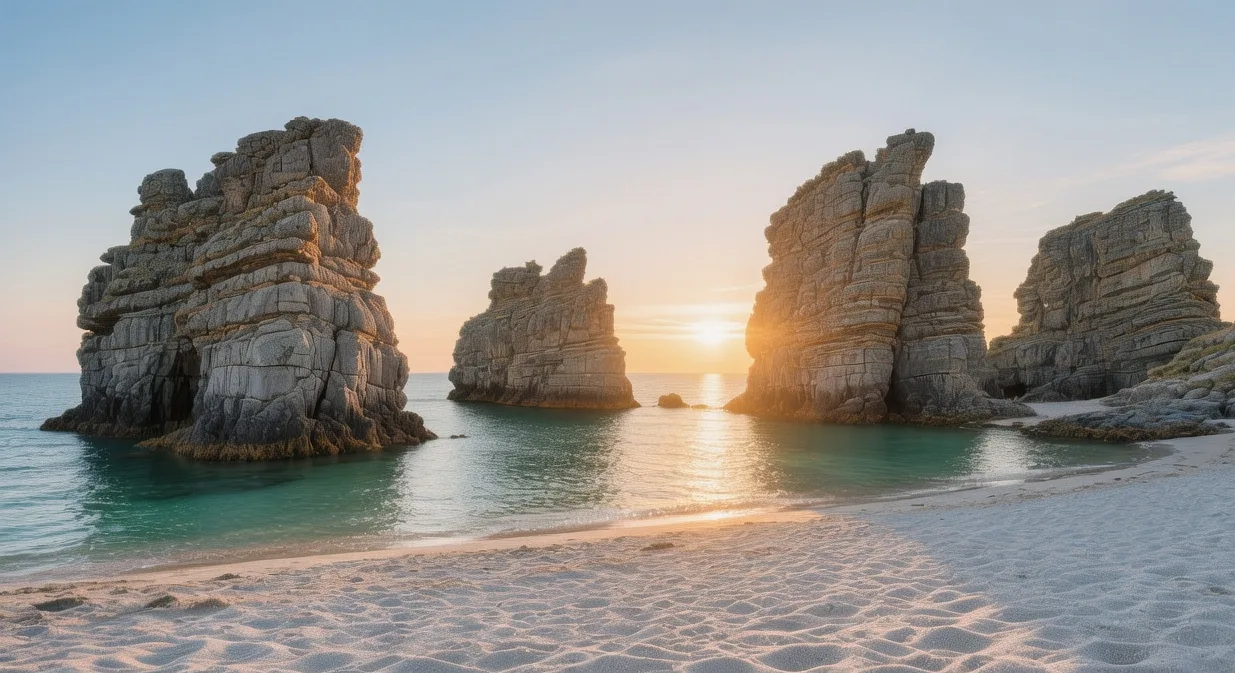
Fårö Island Beaches Quartz Sand Meets Bergman Legacy
The midnight sun hovers just above the horizon at 10:30 PM, casting a surreal golden glow across the white quartz sand that stretches for kilometers along the northern coast. You stand barefoot on the Fårö island beaches, feeling the fine grains—cool despite the lingering heat of a 20-hour day—while the Baltic Sea laps gently against the shore with a rhythmic hush. In the distance, ancient limestone rauks rise like silent sentinels from the water, weathered by wind and waves since the Silurian period over 400 million years ago. This is the landscape that captivated Ingmar Bergman, who filmed Scenes from a Marriage here in 1973, drawn by the stark beauty and isolating silence. The air smells of salt, wild thyme, and drying seaweed—a primal scent that hasn't changed since Viking sailors first navigated these waters. In 2026, as digital noise saturates every corner of modern life, the Fårö island beaches remain a sanctuary of analog silence—a place where the only notification is the shifting tide. This matters now: in an era of virtual experiences, standing on this ancient seabed offers something increasingly precious—the undeniable weight of physical continuity with a primordial world.
Why Fårö Island Beaches Embodies Nordic Coastal Wilderness
The Fårö island beaches stand as Scandinavia's most dramatic example of coastal geology, solving a critical natural puzzle: how wind, water, and time sculpt limestone into surreal formations known as rauks. Formed during the Silurian period approximately 425 million years ago, these sea stacks rise up to 30 meters high along the northern shore, created when softer surrounding rock eroded away leaving resistant limestone columns. The beaches themselves consist of pure quartz sand, washed clean by Baltic currents over millennia, creating stretches like Sudersand that extend 11 kilometers without interruption. This landscape solved a human need for isolation and inspiration; filmmaker Ingmar Bergman purchased a home here in 1960, recognizing that the stark light and empty horizons provided the perfect canvas for existential storytelling. The island covers 113 square kilometers, connected to mainland Gotland by a free ferry service that runs every 30 minutes during peak season. Unlike developed resort coastlines, 85% of Fårö's shoreline remains undeveloped, protected by strict building regulations that prevent hotels from dominating the view. The rauk fields at Langhammars are classified as a nature reserve, ensuring that visitors walk on designated paths to prevent erosion of the fragile limestone. Today, these beaches embody the Nordic relationship with nature: not conquering the landscape, but observing its slow, inevitable changes with humility and respect.
The Best Time to Experience Fårö Island Beaches
For the optimal Fårö island beaches experience, target June 15–July 10 for midnight sun conditions or August 15–September 15 for warmer water and fewer crowds. During these windows, daytime temperatures range from 18–23°C (64–73°F), perfect for walking the dunes without winter's biting chill. The water temperature peaks in August at 19°C (66°F), making it swimmable for those accustomed to Baltic conditions. Arrive between 9:00–11:00 PM in late June to experience the midnight sun hovering above the horizon without setting. Avoid July 15–August 10 when Swedish school holidays bring peak visitor numbers to Gotland, causing ferry queues up to 2 hours long and accommodation prices spiking 60%. Winter visits (November–March) offer atmospheric solitude but limited daylight—sunset occurs as early as 2:45 PM in December, and many services close. For current ferry schedules and weather forecasts, verify at www.destinationgotland.se before your visit. The ferry operates 24 hours during summer but reduces to hourly service in winter. Most cafés and shops operate daily 10:00 AM–6:00 PM (June–August) with reduced hours September–May.
Approximate Budget for a 7-Day Trip (2026)
Fårö is a premium Swedish destination, with prices reflecting its island status and seasonal demand. The following estimates reflect 2026 rates with approximately 4% annual inflation from 2024 baseline data, assuming a comfortable mid-range travel style with a mix of self-catering and local dining.
- Accommodation: €120–€200 per night for a double room in a cottage or guesthouse on Fårö; budget hostels from €55/night in Visby (mainland Gotland); luxury seaside villas average €300–€500/night
- Food: €55–€80 per day total
- Breakfast: €12–€18 (hotel buffet or café with coffee and saffron bun)
- Lunch: €18–€25 (dagens lunch—daily special with main, salad, bread, and drink)
- Dinner: €25–€45 (restaurant main course; try Gotlandic lamb or smoked fish)
- Transportation:
- Ferry Nynäshamn to Visby: €45–€85 one-way per person + €60 for car (Destination Gotland)
- Ferry Visby to Fårö: Free (car ferry runs every 30 minutes)
- Flight Stockholm to Visby: €90–€150 one-way (40 minutes)
- Bicycle rental: €16/day (essential for exploring Fårö)
- Car rental: €60/day (recommended for reaching remote beaches)
- Attractions:
- Bergman Center: €14 adults, free under 18
- Fårö Lighthouse tour: €8 adults
- Guided Rauk walk: €15 per person
- Gotland Museum (Visby): €12 adults, free under 19
- Beach access: Free
- Miscellaneous:
- Local crafts at market: €15–€60
- Fika (coffee + saffron bun): €7–€9
- Smoked fish at harbor: €14–€20
- Souvenir guidebook: €8
- Parking fees: Free most places
Total estimated cost for 7 days: €1,200–€1,700 per person (excluding international flights to Stockholm)
7 Essential Fårö Island Beaches Experiences
- Walk the Langhammars Rauk Field: Begin at the parking area off Road 146 and follow the wooden boardwalk 1 kilometer to the shore. The path winds through a forest of limestone sea stacks rising up to 30 meters high. Touch the rough, fossil-filled surface of the rauks—some contain visible crinoid stems from 400 million years ago. The walk takes 60 minutes round-trip. Best visited between 8:00–10:00 PM in June when the low sun casts long shadows through the stone formations. Stay on the boardwalk to protect the fragile vegetation.
- Swim at Sudersand Beach: Make your way to the southern coast where 11 kilometers of white quartz sand meet shallow, family-friendly water. The sand is so fine it squeaks underfoot—a phenomenon caused by pure quartz grains rubbing together. Facilities include changing rooms and a kiosk open 10:00 AM–6:00 PM (June–August). Water temperatures reach 19°C (66°F) in August. Bring a towel and sunscreen—there is minimal shade. This is the safest swimming spot on the island with lifeguards on duty during July.
- Visit the Bergman Center: Located in the old cinema building in Fårö Sund, this museum (€14 entry) explores Ingmar Bergman's life and work on the island. View original scripts, cameras, and personal items from films like The Passion of Anna. Open daily 10:00 AM–5:00 PM (June–August). The café serves excellent coffee and cinnamon buns. Allow 90 minutes for the exhibition. Audio guides are available in English, Swedish, and German. This provides cultural context to the landscape you are exploring.
- Climb Fårö Lighthouse: Ascend the 1865 lighthouse at the northern tip of the island for panoramic views. The tower stands 34 meters high with 136 steps to the top. Entry €8, open Tuesday–Sunday 11:00 AM–4:00 PM (June–September). From the gallery, you see the entire rauk field and the Baltic stretching to the horizon. The view encompasses the curvature of the earth on clear days. Bring a jacket—it is significantly windier at the top. This is the highest vantage point on Fårö.
- Cycle the Coastal Perimeter: Rent a bicycle (€16/day from Fårö Cykel) and ride the 40-kilometer loop around the island. The route is flat with dedicated bike paths separating cyclists from cars. Stop at small coves along the eastern shore where privacy is guaranteed. The ride takes 3-4 hours at a leisurely pace. Bring water and snacks—shops are sparse outside Fårö Sund. Best undertaken between 9:00 AM–4:00 PM to allow time for swimming stops. This is the best way to experience the island's scale.
- Watch Sunset at Smålands Huk: Position yourself at the southwestern tip of the island between 8:30–10:00 PM during summer. The sun sets over the water, casting the rauks in silhouette against a violet sky. The wind typically dies down at this hour, creating eerie silence. Bring a warm layer—temperatures drop quickly after sunset even in summer. This is the most photographed angle on the island, so arrive 20 minutes early to secure a spot without other tourists in your frame.
- Explore the Military History Bunkers: scattered along the northern coast are concrete bunkers from the Cold War era when Fårö was a restricted military zone. The area was opened to civilians in 2005. Look for the camouflaged structures hidden in the dunes near Langhammars. Do not enter unstable structures, but observe from outside. This adds a layer of 20th-century history to the ancient landscape. The contrast between natural rauks and man-made concrete is striking. Visit between 10:00 AM–4:00 PM for best visibility.
3 Hidden Gems Most Travelers Miss
- Ingmar Bergman's Grave: Located in the cemetery at Fårö Church, the simple grave of the filmmaker and his wife Ingrid is often overlooked by visitors focused on the beaches. The headstone is unmarked except for their names, reflecting Bergman's wish for privacy. Access is free during daylight hours (8:00 AM–8:00 PM summer). The church itself dates to the 12th century with medieval frescoes inside. This is a quiet spot for reflection away from the tourist crowds. Respect the sanctity of the cemetery—speak softly and do not photograph the grave directly.
- The Old Pilot Station Café: Tucked near the lighthouse, this seasonal café occupies a restored 19th-century pilot building. They serve homemade fish soup and cardamom buns using recipes unchanged for decades. Open Wednesday–Sunday 11:00 AM–5:00 PM (June–August), weather permitting. Cash only sometimes, so carry Swedish kronor. The owners speak limited English but welcome visitors warmly. This is where locals go for coffee, offering an authentic glimpse into island life beyond the tourist economy. Stop here after climbing the lighthouse for refreshments.
- Eastern Coast Secret Coves: While everyone flocks to the western rauks, the eastern shore features small pebble beaches accessible via unmarked farm tracks. Look for gaps in the vegetation between Road 146 and the sea. Access requires careful navigation—some paths cross private property, so respect signage. The water is clearer on this side due to less wave action. Visit during low tide for safe access. This spot is known locally but rarely appears in guidebooks, offering solitude away from the main viewing platforms. Bring water shoes for the pebbles.
Cultural & Practical Tips
- Respect the rauks: Climbing on the limestone formations is strictly prohibited to prevent erosion and damage to the geological site. Stay on marked paths—the vegetation around the rauks is fragile and recovers slowly from foot traffic. Rangers patrol periodically, and fines apply for violations. This is a protected nature reserve, not a playground.
- Wind preparation: Fårö is exposed and windswept—temperatures feel 5°C cooler than inland. Bring windproof layers even in summer. The Baltic moderates temperatures but creates unpredictable wind patterns. Average summer: 18–23°C (64–73°F); spring/autumn: 12–18°C (54–64°F). Rain is possible year-round—pack a waterproof jacket. Sun protection is essential in summer—there is no shade on the beaches.
- Essential Swedish phrases:
- "Hej" (hey) = Hello/Goodbye
- "Tack" (tahk) = Thank you
- "Ursäkta" (oor-shek-tah) = Excuse me
- "Var ligger...?" (var lig-er) = Where is...?
- "En kaffe, tack" (en kaf-fe tahk) = One coffee, please
- Photography guidelines: Photography is permitted throughout the public areas of the beaches. Drone use requires permission from the County Administrative Board—contact lansstyrelsen@lansstyrelsen.se in advance. Tripods are allowed but must not obstruct paths. Be mindful of other visitors when composing shots. Sunrise and sunset offer the best light without harsh shadows.
- Ferry booking: Book Destination Gotland ferries at least 2 months in advance for summer travel. Prices increase significantly closer to departure. Cars are expensive to bring (€60+ one-way); consider renting on the island if staying only in Visby. The ferry takes 3 hours from Nynäshamn. Flights are faster but weather-dependent. Check baggage limits carefully for both options.
- Mosquito protection: Gotland has mosquitoes in summer, especially near standing water in July. Bring repellent containing DEET or icaridin. They are most active at dawn and dusk. Wear long sleeves during evening walks. This is a natural part of the ecosystem but can be bothersome without protection. Local pharmacies sell effective repellent.
- Payment and connectivity: Sweden is nearly cashless—cards accepted everywhere, including small kiosks. Inform your bank of travel dates. Mobile coverage is good throughout Fårö (Telia/Tele2). Free WiFi available at the Bergman Center and most cafés. ATMs available in Fårö Sund but sparse elsewhere—carry some cash for market vendors.
Conclusion: Travel with Reverence, Not Just Tourism
The Fårö island beaches ask something different of you than the hurried checklist approach of modern travel. This is not a place to photograph and flee; it is a primordial landscape where limestone has risen from the sea over millennia, where the light still possesses the quality that captivated Bergman. When you walk among the rauks, feeling the wind sweep across the Baltic, remember that these stones stood here before humans arrived, and will remain long after we are gone. That continuity is fragile. Every unauthorized climb erodes the stone; every touched surface accumulates oils that accelerate decay; every disregard for the path damages the context that gives the landscape meaning. Travel here with reverence: stay on the marked trails, support the local businesses that maintain the island's character, speak softly, and leave only your footprints in the quartz sand. In return, Fårö offers something increasingly rare in our accelerated world—the chance to stand in deep time, to feel the weight of history not as a burden but as a gift, to understand that we are temporary custodians of beauty that must outlast us. This is why we travel: not to consume places, but to be transformed by them, to carry their stories forward with care and gratitude.