
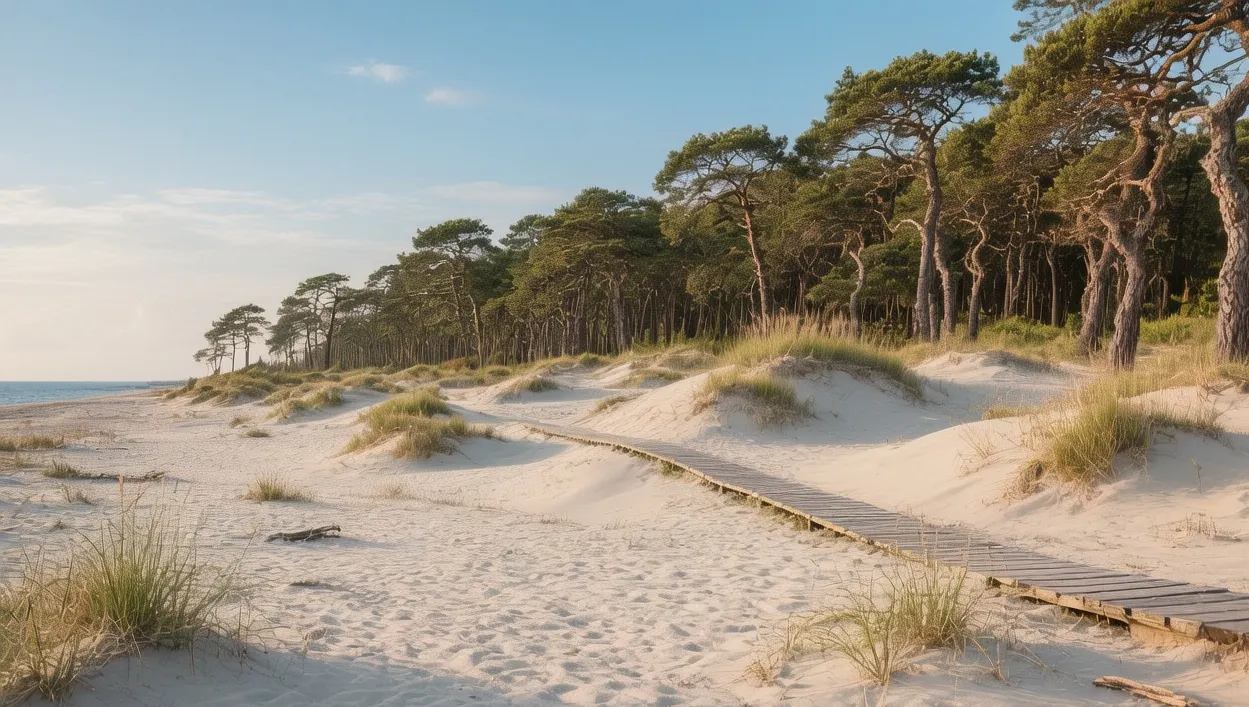
Gotska Sandön National Park Drifting Dunes Meet Baltic Silence
The wind whispers across the quartz sand at 3:00 AM, carrying the salty breath of the Baltic Sea through a forest of twisted pine trees that have grown sideways against the gale. You stand alone on Gotska Sandön National Park, Sweden's most remote island reserve, where the only light comes from the midnight sun hovering just above the horizon—a phenomenon possible only at 58° north latitude. The dunes shift slowly under your boots, moving meters each year in a geological dance that began when the ice retreated 10,000 years ago. There are no roads here, no cars, no permanent residents since the lighthouse keepers departed in 1964—only 36 square kilometers of primordial wilderness protected since 1909. In 2026, as digital connectivity saturates every corner of the inhabited world, this uninhabited speck in the Baltic offers something increasingly radical: true silence. This matters now: in an era of constant notification and virtual presence, standing on this shifting sand provides the undeniable weight of physical solitude that modern life has erased.
Why Gotska Sandön National Park Embodies Nordic Wilderness
Gotska Sandön National Park stands as Scandinavia's most stringent example of non-intervention conservation, solving a critical ecological need: preserving a dynamic coastal ecosystem without human manipulation. Established in 1909 as one of Sweden's first national parks, the island protects a unique landscape formed by post-glacial rebound and continuous sand deposition. The island measures approximately 9 kilometers long and 5 kilometers wide, featuring dunes that reach heights of 13 meters—the highest mobile sand dunes in Northern Europe. This landscape solves a scientific problem: it serves as a living laboratory for studying natural succession, where pine forests slowly bury themselves under drifting sand without human interference. The lighthouse, built in 1856 and standing 33 meters tall, remains the only significant structure, automated in 1964 when the last residents left. Unlike managed parks with groomed trails, 80% of the island has no marked paths, requiring visitors to navigate by compass and landmark. The park hosts one of the Baltic's largest grey seal colonies, with over 2,000 individuals hauling out on the southern beaches during molting season. This isolation embodies the Nordic concept of allemansrätten taken to its extreme: the right to access nature comes with the absolute responsibility to leave no trace. Today, the park represents a rare baseline of what the Baltic coastline looked like before industrialization, maintaining its ecological integrity through strict visitor quotas and seasonal closures.
The Best Time to Experience Gotska Sandön National Park
For the optimal Gotska Sandön National Park experience, target June 20–July 25 for midnight sun conditions or August 1–August 25 for seal watching and slightly calmer seas. During these windows, daytime temperatures range from 16–21°C (61–70°F), perfect for hiking the dunes without winter's biting chill. The midnight sun is visible from June 10–July 5, providing 24 hours of navigable light for exploration. Arrive between 10:00 PM–12:00 AM during late June to witness the sun touching the horizon without setting. Avoid September 15–May 30 when the ferry service ceases entirely due to rough Baltic conditions and the park closes for conservation. Winter visits are impossible for tourists as no transport operates. For current ferry schedules and park status, verify at www.naturvardsverket.se before your visit. The ferry operates daily from Fårösund (Gotland) during peak season, departing at 9:00 AM and returning at 5:00 PM. Day trips are possible, but overnight stays require booking cabins months in advance due to limited capacity. Weather can shift rapidly—fog rolls in within minutes, so always carry a compass.
Approximate Budget for a 7-Day Trip (2026)
Gotska Sandön is a high-logistics destination, with costs reflecting the remote island access and self-sufficiency required. The following estimates reflect 2026 rates with approximately 4% annual inflation from 2024 baseline data, assuming a comfortable expedition style with cabin accommodation and self-catering.
- Accommodation: €60–€100 per night for a simple cabin (managed by National Park); camping is free but requires permit; no hotels exist on the island
- Food: €40–€60 per day total (must bring all food from mainland)
- Breakfast: €8–€12 (oats, coffee, dried fruit brought from home)
- Lunch: €12–€18 (packed sandwiches, energy bars, water)
- Dinner: €20–€30 (dehydrated meals cooked on portable stove)
- Transportation:
- Ferry Nynäshamn to Visby: €45–€85 one-way per person + €60 for car
- Ferry Visby to Fårösund: €25 one-way (Bus 420 + local ferry)
- Ferry Fårösund to Gotska Sandön: €70 round-trip (M/S Fårösund)
- Bicycle rental on Gotland: €15/day (before crossing)
- Luggage transport on island: €20 per bag (tractor service)
- Attractions:
- National Park Entry: Free
- Lighthouse Tower Climb: €8 adults
- Guided Nature Walk: €25 per person (seasonal)
- Gotland Museum (Visby): €12 adults, free under 19
- Cabin Booking Fee: €15 administration
- Miscellaneous:
- Portable stove fuel: €15
- Water purification tablets: €10
- First aid kit: €20
- Souvenir guidebook: €8
- Emergency satellite messenger rental: €30
Total estimated cost for 7 days: €1,300–€1,800 per person (excluding international flights to Stockholm)
7 Essential Gotska Sandön National Park Experiences
- Hike the Great Dune Ridge: Begin at the harbor and walk north along the central dune ridge for 4 kilometers. The sand shifts underfoot, making progress slow—allow 2 hours one-way. The ridge offers panoramic views of the Baltic on both east and west sides. Wear high-top boots to prevent sand entry. Best undertaken between 8:00–10:00 AM when the wind is calmest. The view from the highest point (13 meters) reveals the island's narrow waist. This hike demonstrates the dynamic geology that defines the park.
- Visit the 1856 Lighthouse: Climb the 33-meter tall brick lighthouse near the harbor for the only elevated view on the island. Entry €8, open daily 10:00 AM–4:00 PM (June–August). The 136 steps are narrow and steep—not suitable for those with mobility issues. From the gallery, you see the entire island layout and the horizon stretching 40 kilometers. The keeper's house now serves as a small museum detailing maritime history. Allow 45 minutes for the climb and exhibition. This structure is the cultural heart of the island.
- Observe the Grey Seal Colony: Walk to the southern tip (Söderhällan) between August 1–August 25 during molting season. Use binoculars—maintain a distance of at least 100 meters to avoid disturbing the animals. Over 2,000 seals gather here, creating a unique auditory experience with their calls. The walk takes 90 minutes from the harbor. Best viewed between 6:00–8:00 PM when seals are most active on land. This is one of the best seal watching locations in the Baltic Sea.
- Explore the Pine Forest Succession: Wander through the inland forest where pine trees grow directly out of sand dunes. Notice how older trees are buried up to their branches by shifting sand—a process called sand burial. The forest covers 15 square kilometers of the island. Walk slowly to observe the unique ecosystem where lichens and mosses stabilize the sand. Best visited between 11:00 AM–2:00 PM when light filters through the canopy. This area shows nature reclaiming human structures over time.
- Watch the Midnight Sun: Position yourself on the western beach between 10:30 PM–12:30 AM during June. The sun dips toward the horizon but never fully sets, casting a golden glow across the white sand. The light quality is surreal—shadows disappear and colors saturate. Bring a warm layer—temperatures drop to 12°C (54°F) even in summer. This phenomenon occurs only between June 10–July 5. Experience the disorientation of timelessness that defines Arctic summer.
- Search for Shipwreck Remains: Scattered along the eastern shore are remnants of vessels wrecked on the shallow reefs. The most visible site is near Östra Hällen, where iron ribs protrude from the sand. Do not remove artifacts—this is a protected maritime grave. The walk takes 60 minutes from the harbor. Best visited during low tide when more structure is exposed. These wrecks tell the story of Baltic trade routes from the 18th and 19th centuries.
- Camp Under the Stars: If staying overnight, pitch your tent in designated areas away from the dunes to prevent erosion. The lack of light pollution makes this one of Sweden's best stargazing locations. The Milky Way is visible clearly on cloudless nights. Use a red-light headlamp to preserve night vision. Camping is free but requires registration at the harbor office. This experience connects you to the elemental rhythm of the island.
3 Hidden Gems Most Travelers Miss
- The Old Cemetery (Kyrkogården): Located 1 kilometer inland from the harbor, this small burial ground contains the graves of lighthouse keepers and shipwrecked sailors from the 1800s. The iron crosses are weathered but legible, offering a poignant connection to the island's inhabited past. Access via unmarked path north of the lighthouse (look for the stone wall). Open during daylight hours. Most day-trippers never walk this far inland. This site provides historical context often missing from the natural landscape. Respect the graves—do not touch the markers.
- The Freshwater Lens (Sötvattenkullen): In the center of the island lies a rare freshwater well formed by rainwater floating on saltwater underground. Located near coordinate 58.43°N, 19.15°E, accessible via compass navigation. The water is drinkable after purification but tastes slightly brackish. This geological feature supports the pine forest's survival. Visit between 10:00 AM–2:00 PM for best visibility. Most visitors stay on the coast, missing this hydrological miracle. Bring a container to fill if you need emergency water.
- The Eastern Shipwreck Bay: While most look west, the eastern shore near Östra Hällen features a concentrated collection of wreck debris washed ashore over centuries. Access via the eastern dune path (45-minute walk). The area is quieter than the harbor side. Visit during low tide for best visibility of submerged structures. This spot is overlooked because the ferry docks on the west. The contrast between natural dunes and industrial iron creates striking photography opportunities.
Cultural & Practical Tips
- Leave No Trace: Everything you bring must leave with you—including waste. There are no trash services on the island. Pack out all food wrappers, human waste (use provided toilets), and gear. This is a strict national park regulation. Violations result in fines and bans. Protect the fragile ecosystem for future visitors.
- Wind and Weather: Gotska Sandön is exposed—wind speeds average 25 km/h even in summer. Bring windproof layers and secure tent stakes firmly. Temperatures feel 5°C cooler than mainland Gotland. Average summer: 16–21°C (61–70°F). Rain is possible year-round—pack waterproof gear. Fog can reduce visibility to 10 meters—carry a compass.
- Essential Swedish phrases:
- "Hej" (hey) = Hello/Goodbye
- "Tack" (tahk) = Thank you
- "Ursäkta" (oor-shek-tah) = Excuse me
- "Var är...?" (var air) = Where is...?
- "Hjälp" (yelp) = Help
- Photography guidelines: Photography is permitted throughout the park. Drones require permission from the County Administrative Board—contact lansstyrelsen@lansstyrelsen.se in advance. Tripods are allowed but must not disturb vegetation. Be mindful of seals—do not approach for photos. Sunrise and sunset offer the best light without harsh shadows.
- Water safety: There is no potable water available on the island except at the harbor tap. Bring all drinking water or purification tools. The freshwater lens is not safe without treatment. Dehydration is a risk during windy hikes. Carry at least 3 liters per person per day. Fill bottles at the harbor before hiking.
- Ferry booking: Book the M/S Fårösund ferry at least 3 months in advance for summer travel. Capacity is limited to 100 passengers per day. Prices increase closer to departure. Cars are not allowed on Gotska Sandön. The ferry takes 2 hours from Fårösund. Check weather forecasts—trips cancel in high winds. Have a backup plan on Gotland.
- Emergency preparedness: Mobile coverage is sporadic (Telia works best). Carry a satellite messenger for emergencies. The nearest hospital is in Visby (2 hours by ferry + car). First aid kits available at the harbor office. Emergency number: 112 (works throughout EU). Inform someone on the mainland of your itinerary.
Conclusion: Travel with Reverence, Not Just Tourism
Gotska Sandön National Park asks something different of you than the hurried checklist approach of modern travel. This is not a place to photograph and flee; it is a primordial landscape where sand shifts over centuries, where the silence is heavy enough to hear your own heartbeat. When you walk among the dunes, feeling the wind sweep across the Baltic, remember that this island existed before maps drew its name, and will remain long after we are gone. That continuity is fragile. Every left wrapper pollutes the sand; every disturbed seal disrupts the colony; every disregard for the path accelerates erosion. Travel here with reverence: pack out your waste, stay on durable surfaces, respect the wildlife, and leave only your footprints in the quartz sand. In return, Gotska Sandön offers something increasingly rare in our accelerated world—the chance to stand in deep time, to feel the weight of isolation not as a burden but as a gift, to understand that we are temporary custodians of wilderness that must outlast us. This is why we travel: not to consume places, but to be transformed by them, to carry their stories forward with care and gratitude.