
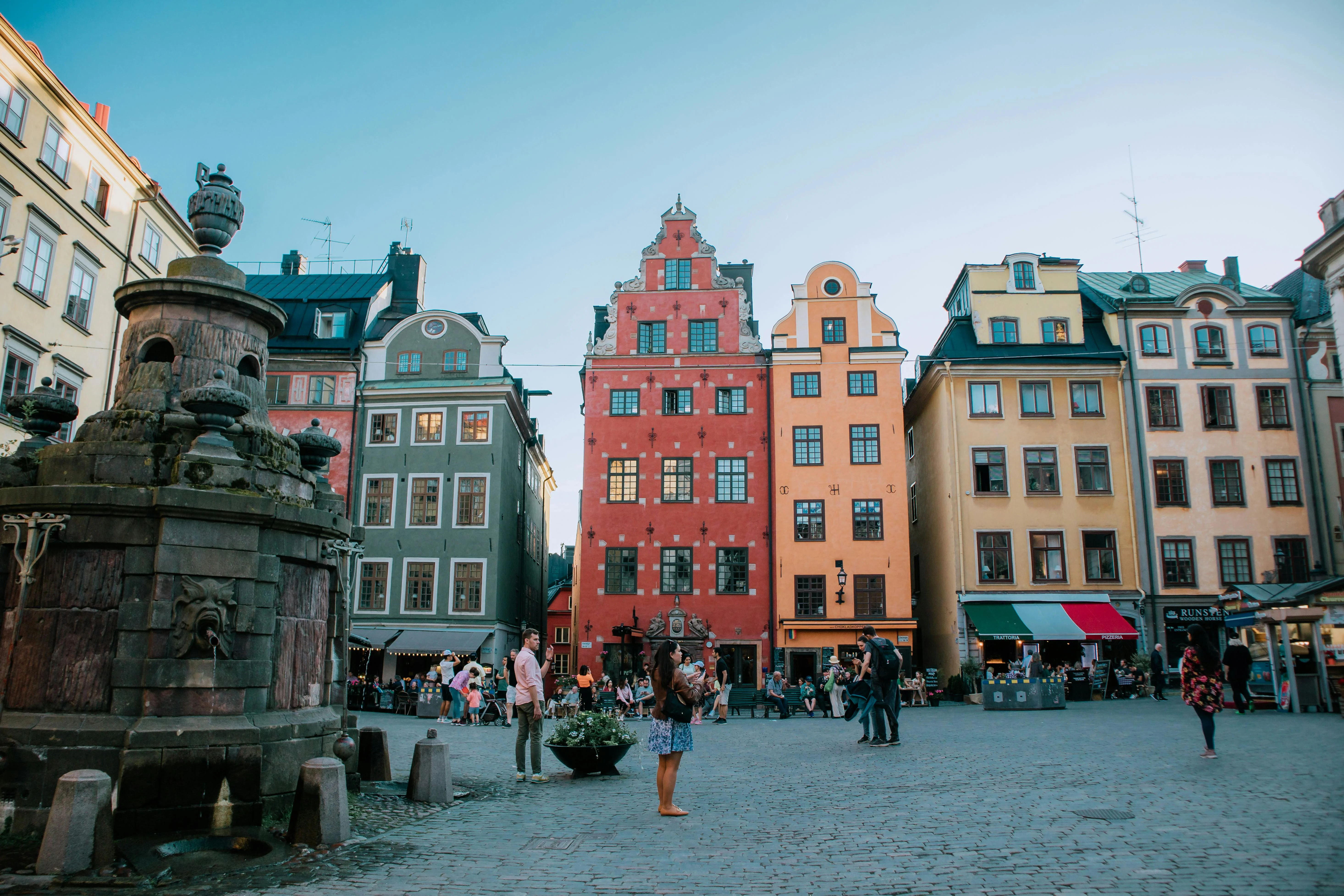
Gamla Stan Medieval Cobblestones Meet Scandinavian Light
The sound is the first thing you notice—the rhythmic click of your boots against centuries-old cobblestones, echoing softly between ochre and terracotta facades. It's 7:30 PM on a June evening, and the air carries the scent of roasted coffee beans, salty harbor water, and warm yeast from nearby bakeries. You stand in Stortorget, the main square of Gamla Stan, Stockholm's Old Town, where shadows lengthen across the 17th-century merchant houses that line the perimeter. Founded in 1252, this 35-hectare island cluster represents the birthplace of the Swedish capital, a labyrinth of narrow alleys—some barely 90 centimeters wide—preserved against the march of modern urbanization. The light here is unique; the midnight sun lingers until 10:00 PM, casting a golden glow on the Nobel Museum's façade and the Royal Palace's sandstone walls. In 2026, as cities worldwide homogenize into glass and steel, Gamla Stan remains a defiant monument to human scale and historical continuity. This is why you come now: to walk where kings walked, to touch stone laid by medieval masons, and to understand that preservation is an active choice against forgetting.
Why Gamla Stan Embodies Stockholm's Historical Soul
Gamla Stan isn't merely a tourist district—it's a living archaeological site where layers of Swedish history compress into a walkable urban fabric. Established officially in 1252 by Birger Jarl to protect Lake Mälaren from invaders, the Old Town served as the commercial and political heart of Sweden for over 400 years. The architecture reflects this longevity: German-influenced gabled houses from the 1600s stand beside Baroque palaces from the 1750s, all built on reclaimed land that originally consisted of three separate islets connected by infill. The National Heritage Board (Riksantikvarieämbetet) strictly regulates exterior modifications, ensuring that neon signs and modern cladding remain invisible from street level. This preservation solves a critical cultural problem: how to maintain a functioning city center without turning it into a sterile museum piece.
The technical engineering of the area is as impressive as its aesthetics. The narrowest alley, Mårten Trotzigs Gränd, measures only 90 centimeters (35 inches) at its tightest point, a deliberate design from the 16th century to maximize building plots within defensive walls. Beneath the cobblestones lies a complex network of 19th-century brick sewers and medieval foundations, monitored by structural engineers to prevent subsidence caused by groundwater fluctuations. Over 1.5 million visitors walk these streets annually, yet the residential population remains around 3,000 people, maintaining a living community rather than a commercial shell. In 2026, Gamla Stan fulfills a profound human need for connection to the past; in an era of digital ephemera, these stone walls offer tangible permanence. The area stands as a testament to urban resilience, surviving fires, wars, and modernization to remain the spiritual center of Stockholm.
The Best Time to Experience Gamla Stan
Timing your visit to Gamla Stan requires balancing Stockholm's dramatic seasonal light shifts with tourist density. The optimal window runs from May 15 to June 12 and August 20 to September 15, when daylight extends to 18 hours and temperatures average 15–22°C (59–72°F). For the quietest experience with optimal photography light, target June 1–10, arriving at the square between 7:00–8:30 AM. Morning visits allow you to capture the cobblestones before cruise ship passengers disembark at the nearby Stadsgården terminal. The soft northern light enhances the colorful building facades without creating harsh shadows.
Avoid the period from July 1 to July 20, when European school holidays create peak congestion; wait times for the Royal Palace can exceed 60 minutes, and restaurant queues stretch down the blocks. Winter visits (December–February) offer magical Christmas markets but limited daylight (6 hours) and colder temperatures averaging -3–2°C (27–36°F), making extended walking uncomfortable. For real-time event schedules and crowd alerts, check the official tourism site at visitstockholm.com. The Gamla Stan business association updates opening hours for smaller boutiques via their newsletter, which is crucial as some shops close on Sundays. Verify specific museum hours via their individual websites, as holiday schedules vary.
Weather in Stockholm can shift rapidly due to harbor exposure. If visiting in late autumn, dress in layers; the wind channeling through narrow alleys can drop perceived temperatures by 5°C. Late August offers the added bonus of the Stockholm Culture Festival, where stages set up in Stortorget host free performances, enhancing the atmosphere without increasing entry costs. Plan your evenings around sunset (9:30 PM in June) to see the buildings illuminated by artificial warm lighting against the twilight sky.
Approximate Budget for a 7-Day Trip (2026)
Visiting Stockholm requires budgeting for Northern European price levels, which have risen approximately 4.5% annually due to inflation (Statistics Sweden, 2025). The following estimates reflect 2026 pricing for a moderate travel style: comfortable mid-range accommodation, mix of casual dining and self-catering, and efficient public transport use. These costs assume a base in or near Gamla Stan with the Old Town as a primary focal point.
- Accommodation: €200–€380 per night. Hotels in Gamla Stan or Norrmalm average €300/night for a double room. Budget hostels near Central Station: €110/night for dorm beds. Airbnb apartments on Södermalm: €240–€380/night. Book 4–6 months ahead for summer dates.
- Food: €75–€110 per day. Breakfast: €18–€25 (coffee €6, smörgås open sandwich €10, fruit €5). Lunch: €25–€35 (husmannskost traditional plate €22, coffee €6). Dinner: €40–€60 (grilled salmon €38, local beer €11, dessert €12). Grocery shopping at ICA or Coop reduces daily food costs to €45–€60.
- Transportation: SL 72-hour Travelcard: €50 (covers buses, trams, metro). Airport Arlanda Express train: €35 round-trip. Djurgården Ferry from Slussen: €14 round-trip (included in some SL cards). Taxi from airport: €75–€95 (avoid unless necessary).
- Attractions: Royal Palace entry: €20 per adult (free for under 18). Nobel Museum: €16. Medieval Museum: €14. Stockholm Pass (3-day): €155 (includes Royal Palace). Guided walking tour: €45/person.
- Miscellaneous: Waterproof jacket rental: €30/week. Souvenirs: Dala horse (wood) €40, Swedish wool blanket €130, museum guidebook €28. Travel insurance: €55–€95 for 7 days. Coffee filter for room brewing: €18.
Total estimated cost for 7 days: €2,900–€4,200 per person (based on double occupancy; solo travel increases costs by 40%)
7 Essential Gamla Stan Experiences
- Watch the Changing of the Guard: This ceremony takes place at the Royal Palace courtyard at 12:15 PM on weekdays (1:15 PM weekends). Arrive by 11:45 AM to secure a spot near the front railing. The marching band plays traditional military music while soldiers in blue uniforms swap positions. The event lasts 45 minutes and is free to watch. It offers a living connection to the monarchy's history dating back to the 16th century. Bring a zoom lens; crowds make close photography difficult.
- Walk Mårten Trotzigs Gränd: Locate this famous alley near the Western Bank Hotel. It slopes downward from Västerlånggatan to Prästgatan. At its narrowest point, measure 90 centimeters (35 inches) wide. The cobblestones here are original from the 16th century, worn smooth by centuries of footsteps. Visit between 8:00–9:00 AM to avoid pedestrian bottlenecks. The acoustics amplify sound; speak softly to respect residents above. It is the perfect spot for a vertical composition photograph.
- Explore Stortorget Square: Stand in the center of Stockholm's oldest square, surrounded by merchant houses from the 1600s. Notice the different colored facades: ochre, red, and terracotta. Visit the Nobel Museum on the northern side (open Tuesday–Sunday, 11:00 AM–5:00 PM). Inside, view the collection of laureate artifacts and the massive chandelier made of light bulbs. Sit in the café courtyard for coffee. This is the historical heart where stock markets and executions once took place.
- Visit the Royal Palace Armory: Located within the Palace complex, this museum houses royal costumes and armor from the 1500s. Entry is included with the Palace ticket (€20). Look for King Gustav II Adolf's bloodied shirt from the Battle of Lützen (1632). The climate-controlled cases preserve textiles that would otherwise disintegrate. Allow 60 minutes for a thorough viewing. Audio guides are available in 10 languages. Photography without flash is permitted in most halls.
- Enjoy Traditional Fika: Participate in the Swedish coffee break ritual at Café Chokladkoppen near Stortorget. Order a kanelbulle (cinnamon bun) and a koppar kaffe (cup of coffee). Sit by the window to watch passersby. Fika is not just eating; it is a social pause mandated by culture. Prices average €15 per person. Do not rush; lingering is expected. This experience grounds you in local daily rhythm rather than tourist haste.
- Walk the Harbor Promenade: Exit Gamla Stan via the bridge to Skeppsholmen. Walk along the waterfront path facing the Old Town. From here, you see the full skyline including the Palace dome and church spires. Visit at sunset (9:30 PM in June) when buildings illuminate. Benches along the path offer spots to rest. The breeze off the water connects the indoor exhibits to the maritime reality. This perspective helps you visualize the island's defensive origins.
- Discover the Medieval Museum: Located beneath the streets near the bridge to Norrmalm. Entry fee €14. Open daily 10:00 AM–5:00 PM. The exhibits show excavated foundations from the 13th century preserved in situ. You walk on glass floors above actual archaeological digs. The humidity is controlled to protect wood artifacts. Allow 45 minutes. This underground perspective reveals the layers of city building hidden beneath the modern surface. It is climate-controlled, making it a good rainy-day option.
3 Hidden Gems Most Travelers Miss
- Sven Vintappares Gränd: While everyone visits Mårten Trotzigs Gränd, this parallel alley is quieter and equally atmospheric. Located between Köpmangatan and Storkyrkobrinken. It features original iron lanterns from the 1800s still functioning at night. Access is free and open 24 hours. Why it's overlooked: It lacks signage and is narrower, so tour guides skip it. Insider tip: Visit at twilight when the lanterns glow against the dark stone. It offers a more authentic sense of medieval confinement without the crowds.
- Storkyrkan Crypt: The Stockholm Cathedral usually draws crowds to the main nave, but the crypt tours are less known. Available by appointment only (+46 8 723 05 00). Cost €10 extra. You see burial sites of medieval bishops and old foundation stones. Access requires booking 48 hours in advance via the parish office. Why it's overlooked: Most visitors assume the church is just for Sunday service. Insider tip: Ask the guide to show the 14th-century fresco fragments hidden behind later plaster. They reveal original medieval pigments.
- Historic Restaurant Pelikan: Located just across the bridge on Södermalm, but historically tied to Old Town merchants. Opened in 1790. Order the köttbullar (meatballs) with lingonberry jam. Open daily 11:00 AM–10:00 PM. Why it's overlooked: Tourists eat in Gamla Stan proper where quality is lower. Insider tip: Sit in the back room where original wood paneling remains untouched. The beer list features local microbreweries not found in tourist traps. Reservations recommended for dinner via their website.
Cultural & Practical Tips
- Respect the fika culture: Swedes value coffee breaks as social rituals. Don't rush your café visit; lingering is expected. Order a kanelbulle (cinnamon bun) with your coffee. Pronunciation: FEH-kah. This pause reflects the Swedish value of lagom (balance/moderation). Rushing through meals is considered impolite in shared spaces.
- Photography guidelines: Flash photography is strictly prohibited inside churches and museums to protect artifacts. Tripods are not permitted on busy streets without a permit. Selfie sticks are banned in the Royal Palace. Commercial photography requires written permission from the city council. Respect other visitors; do not block narrow alleys for extended shots. Privacy is valued highly; ask before photographing residents.
- Queue etiquette: Swedes value orderly lines. Do not cut queues, even if they seem unstructured. Wait for your turn at ticket kiosks. If unsure, ask: "Var är kön?" (Var air kern?) = Where is the line? Pushing or crowding is frowned upon. Patience is viewed as a virtue in Scandinavian culture. Let people exit trains before you board.
- Weather preparedness: Stockholm weather is unpredictable. Pack: waterproof jacket, layers (temperatures vary 10°C daily), comfortable walking shoes (cobblestones are slippery when wet). Check smhi.se for marine forecasts. Even in summer, harbor winds can drop temperatures to 12°C (54°F). Carry a compact umbrella. Rain can start suddenly without warning.
- Language basics: While 90% of Swedes speak English, learning basics shows respect. "Tack" (Tahck) = Thank you; "Hej" (Hay) = Hello; "Ursäkta" (Ur-shock-tah) = Excuse me. Pronunciation is soft; avoid harsh consonants. Staff appreciate efforts to speak Swedish even if imperfect. It bridges the gap between tourist and guest.
- Accessibility information: Gamla Stan has many cobblestones which are difficult for wheelchairs. The Royal Palace has elevator access but some areas are stairs only. Wheelchairs are available for loan at the Tourist Center (free). Service dogs are permitted throughout. Restrooms in museums include accessible stalls. Verify specific needs via email: info@visitstockholm.com before arrival. Some alleys are too narrow for mobility devices.
- Payment systems: Sweden is nearly cashless. Most shops accept cards only; cash is not accepted at ticket kiosks. Ensure your credit card has a PIN code. Contactless payment (Apple/Google Pay) works everywhere. Inform your bank of travel to avoid blocks. Small purchases (€5) can be made by card. Carry minimal cash for emergencies only.
Conclusion: Travel with Reverence, Not Just Reservations
Gamla Stan doesn't need your selfie—it survived fires, wars, and modernization without social media validation. What it asks, what this medieval island demands, is something rarer than a tagged photo: your patience, your curiosity, your willingness to walk slowly on stone laid by hands long turned to dust. In 2026, as cities compete with virtual reality and digital distractions, Gamla Stan remains anchored in physical reality. This is the paradox of preservation: the more we touch, the more we risk; the more we observe, the more we understand. Come to Stockholm not just to check a box, but to witness the delicate balance between tourism and living history. The cobblestones will remain long after your film rolls are developed. But you—standing here, breathing the same air that surrounds these 17th-century facades—will carry a reminder that history is not dead, it is inhabited. That is the true currency of travel: not the places you've seen, but the history you've honored. Come to Gamla Stan. But come slowly, come quietly, come ready to listen to the stone.