
Vasa Museum Swedish Naval History Meets Maritime Preservation
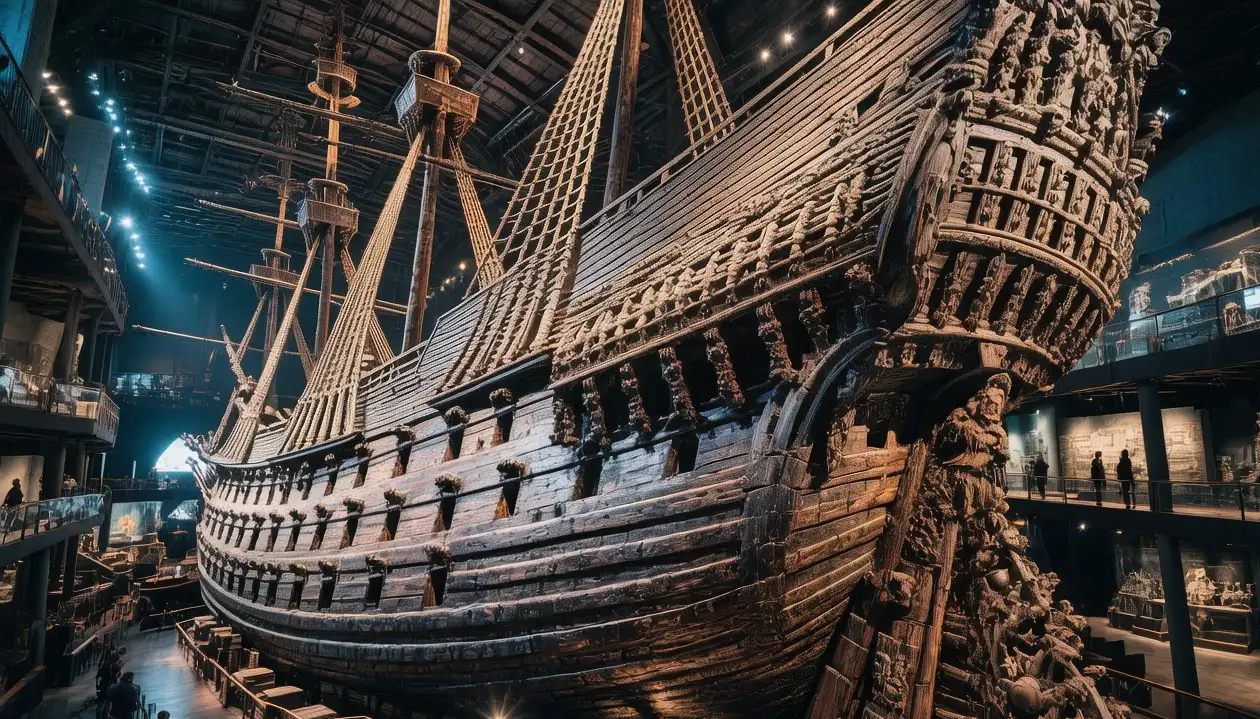
The air smells of aged oak and polyethylene glycol—a distinct, chemical sweetness mingling with the damp chill of the harbor outside. It's 9:15 AM on a crisp September morning, and the vast hall is quiet, save for the hushed whispers of early arrivals and the soft click of camera shutters. Then, you turn the corner, and there it is: Vasa, a 64-meter (210-foot) warship rising from the darkness like a ghost resurrected from the deep. She sank on her maiden voyage in 1628, plunging 32 meters (105 feet) into Stockholm Harbor, where she slept for 333 years before salvage engineers raised her in 1961. Now, she stands sentinel under the museum's copper roof, 98% of her original structure intact, adorned with over 700 carved sculptures depicting lions, demons, and Roman emperors. In 2026, as digital experiences replace physical wonder, the Vasa Museum remains a tangible connection to human ambition and failure. This is why you come now: to stand before a monument that survived fire, water, and time, and to understand that preservation is an act of defiance against oblivion.
Why Vasa Museum Embodies Swedish Maritime Identity
The Vasa Museum isn't merely a repository for an old ship—it's a forensic laboratory of 17th-century naval engineering and a testament to Scandinavian conservation science. Commissioned by King Gustav II Adolf in 1625, the Vasa was intended to dominate the Baltic Sea during the Thirty Years' War. However, top-heavy design flaws—caused by adding a second gun deck without widening the hull—led to catastrophic instability. On August 10, 1628, after sailing less than 1,300 meters, a gust of wind heeled the ship over; water rushed through open gun ports, and she sank within minutes, taking 30 lives with her. The museum solves a critical historical problem: how to display a waterlogged artifact without letting it disintegrate upon contact with air.
The technical achievement housed within this building is staggering. After recovery, conservators spent 17 years spraying the wood with polyethylene glycol (PEG), a wax-like substance that replaces water in the cellular structure to prevent shrinkage. Today, the climate control system maintains a constant 18–20°C (64–68°F) and 55–60% relative humidity to protect the timber from cracking. The building itself, designed by architects Måns Mansson and Marianne Dahlbäck, opened in 1990 specifically to accommodate the ship's height (49 meters from keel to mast top). Over 35 million visitors have walked these floors since opening, making it Scandinavia's most visited museum. In 2026, the Vasa Museum fulfills a profound need for authenticity; in an age of replicas, this is the actual wood, the actual cannon, the actual failure preserved for posterity.
The Best Time to Experience Vasa Museum
Timing your visit to the Vasa Museum requires balancing Stockholm's seasonal light with tourist density. The optimal window runs from May 15 to September 10, when daylight extends to 18 hours and temperatures average 15–22°C (59–72°F). For the quietest experience with optimal lighting for photography, target June 1–20 or August 20–September 10, arriving at the entrance between 9:00–10:00 AM when doors open. Morning visits allow you to view the ship's stern sculptures before tour groups congest the lower decks. The museum is located on Djurgården island, where summer evenings offer pleasant walks back to the city center.
Avoid the period from July 1 to July 20, when European school holidays create peak congestion; wait times for entry can exceed 90 minutes, and interior viewing platforms become bottlenecked. Winter visits (November–February) offer fewer crowds but limited daylight (6 hours) and colder temperatures averaging -1–4°C (30–39°F), making the walk from the city less enjoyable. For real-time queue information and opening hours, check the official website at https://www.vasamuseet.se/. The museum remains open year-round, but special conservation closures may occur during technical maintenance weeks in January. Verify current exhibition status via their info line at +46 8 519 548 00 before traveling.
Weather on Djurgården can be windier than central Stockholm due to harbor exposure. If visiting in late autumn, dress in layers; the walk from the Slussen tram stop takes 20 minutes along exposed waterfront paths. Late August offers the added bonus of the Stockholm Culture Festival, where surrounding streets host free performances, enhancing the overall experience without increasing museum entry costs.
Approximate Budget for a 7-Day Trip (2026)
Visiting Stockholm requires budgeting for Northern European price levels, which have risen approximately 4.5% annually due to inflation (Statistics Sweden, 2025). The following estimates reflect 2026 pricing for a moderate travel style: comfortable mid-range accommodation, mix of casual dining and self-catering, and efficient public transport use. These costs assume a base in Stockholm with the Vasa Museum as a primary focal point.
- Accommodation: €180–€350 per night. Hotels in Östermalm or Norrmalm average €280/night for a double room. Budget hostels near Cityterminalen: €95/night for dorm beds. Airbnb apartments on Djurgården: €220–€350/night. Book 4–6 months ahead for summer dates.
- Food: €65–€95 per day. Breakfast: €15–€20 (coffee €5, smörgås open sandwich €8, fruit €4). Lunch: €20–€30 (husmannskost traditional plate €18, coffee €5). Dinner: €35–€50 (grilled salmon €32, local beer €9, dessert €10). Grocery shopping at ICA or Coop reduces daily food costs to €40–€55.
- Transportation: SL 72-hour Travelcard: €45 (covers buses, trams, metro). Airport Arlanda Express train: €32 round-trip. Djurgården Ferry from Slussen: €12 round-trip (included in some SL cards). Taxi from airport: €65–€85 (avoid unless necessary).
- Attractions: Vasa Museum entry: €24 per adult (free for under 18). Skansen Open-Air Museum: €26. ABBA The Museum: €32. Royal Palace entry: €18. Stockholm Pass (3-day): €145 (includes Vasa).
- Miscellaneous: Waterproof jacket rental: €25/week. Souvenirs: Dala horse (wood) €35, Swedish wool blanket €120, museum guidebook €25. Travel insurance: €50–€90 for 7 days. Coffee filter for room brewing: €15.
Total estimated cost for 7 days: €2,600–€3,800 per person (based on double occupancy; solo travel increases costs by 40%)
7 Essential Vasa Museum Experiences
- View the ship from all six levels: The museum building wraps around the Vasa in six ascending galleries. Start at the bottom (Level 1) to see the hull's massive timber structure and recovered artifacts. Ascend gradually to Level 6 for a full-profile view of the entire ship. Spend 15 minutes on each level; the perspective shift reveals different details, from cannon ports below to intricate stern carvings above. The top level offers the only vantage point to see the full 64-meter length in one glance. Visit between 9:00–10:00 AM for unobstructed views.
- Examine the stern sculptures closely: The ship's stern features over 700 carved figures, originally painted in vivid colors. Traces of red, gold, and blue pigment remain visible under museum lighting. Focus on the central motif: the Swedish royal coat of arms supported by lions. Use the provided magnifying glasses on Level 4 to inspect wood grain and tool marks left by 17th-century craftsmen. These sculptures were intended to project power; today, they project artistic mastery. Photography without flash is permitted here.
- Watch the 19-minute documentary film: Located in the museum's cinema (shows every 30 minutes), this film details the salvage operation from 1959–1961. It features original footage of divers working in zero visibility at 32 meters depth. The narration explains the engineering challenges of lifting 1,000 tons of waterlogged wood without breaking it. Sit in the center rows for optimal audio. This context transforms the static ship into a dynamic story of human perseverance. Allow 30 minutes total for viewing and seating.
- Explore the Exhibition Hall artifacts: Surrounding the ship are displays of recovered personal items: clothing, tools, coins, and human remains. The most poignant exhibit displays the skeleton of a crew member with a pewter plate nearby—analysis suggests he was a senior officer. Touch screens allow you to rotate 3D models of artifacts. Spend 45 minutes here to understand the human cost of the sinking. The lighting is dim to preserve textiles; let your eyes adjust before viewing.
- Attend a guided ranger tour: Museum rangers conduct free English-language tours at 11:30 AM and 3:30 PM daily. These 45-minute sessions provide access to specific areas sometimes restricted to general admission. Rangers share unpublished stories about the conservation process and answer technical questions about wood preservation. Meet at the information desk on Level 2. Tips are appreciated but not required. This interaction adds depth beyond the static plaques.
- Walk the harbor perimeter outside: After exiting, walk 200 meters east along the Djurgården waterfront. From the outside, you can see the museum's distinctive copper roofs framing the harbor. This perspective helps you visualize the ship's original environment before sinking. Benches along the path offer spots to rest and reflect. In summer, street performers often play near the entrance. The breeze off the water connects the indoor exhibit to the maritime reality.
- Visit the conservation laboratory view: Through glass windows on Level 5, you can observe conservators working on smaller artifacts. This active lab demonstrates ongoing preservation efforts using modern technology like laser scanning. If no staff are visible, check the digital schedule for live demonstration times (usually 2:00 PM weekdays). This transparency shows that preservation is a continuous process, not a one-time event. Respect the glass barriers; do not tap on windows.
3 Hidden Gems Most Travelers Miss
- The Maritime Museum (Sjöhistoriska): Located 1.5 kilometers east of Vasa on Djurgården, this free museum receives 10% of Vasa's traffic. It covers Swedish naval history from the Viking Age to modern submarines. Access via Bus 44 from Central Station; open Tuesday–Sunday, 10:00 AM–5:00 PM. The model hall contains intricate ship models used for design planning in the 18th century. Why it's overlooked: Visitors often prioritize the famous ship over broader context. Insider tip: The rooftop café offers harbor views without the Vasa crowds.
- The Royal Palace Armory (Livrustkammaren): Situated in Gamla Stan, 3 kilometers west, this museum houses King Gustav II Adolf's bloodied shirt from the Battle of Lützen (1632). Open daily 10:00 AM–5:00 PM, entry €12. Access via Metro to Gamla Stan station. The collection connects directly to the Vasa's era, providing context for the king who commissioned the ship. Why it's overlooked: Most tourists focus on the Palace changing of the guard. Insider tip: Audio guides include detailed accounts of 17th-century warfare tactics.
- Café Vasa's Secret Menu: Inside the museum, the café offers a standard menu, but ask for the dagens soppa (soup of the day) which isn't always listed on the main board. Available 11:30 AM–2:00 PM, priced at €14. It's made from local root vegetables and served with sourdough. Why it's overlooked: Visitors rush to eat outside to save money. Insider tip: Sit by the window overlooking the harbor; it's the only place to eat with a view of the ship's exterior context. Restrooms here are cleaner than the main hall.
Cultural & Practical Tips
- Respect the fika culture: Swedes value coffee breaks as social rituals. Don't rush your café visit; lingering is expected. Order a kanelbulle (cinnamon bun) with your coffee. Pronunciation: FEH-kah. This pause reflects the Swedish value of lagom (balance/moderation). Rushing through meals is considered impolite in shared spaces.
- Photography guidelines: Flash photography is strictly prohibited inside the Vasa Museum to protect the wood from light damage. Tripods are not permitted on busy days. Selfie sticks are banned entirely. Commercial photography requires written permission from the communications department (+46 8 519 548 50). Respect other visitors; do not block viewing platforms for extended shots.
- Queue etiquette: Swedes value orderly lines. Do not cut queues, even if they seem unstructured. Wait for your turn at ticket kiosks. If unsure, ask: "Var är kön?" (Var air kern?) = Where is the line? Pushing or crowding is frowned upon. Patience is viewed as a virtue in Scandinavian culture.
- Weather preparedness: Stockholm weather is unpredictable. Pack: waterproof jacket, layers (temperatures vary 10°C daily), comfortable walking shoes (cobblestones are slippery when wet). Check smhi.se for marine forecasts. Even in summer, harbor winds can drop temperatures to 12°C (54°F). Carry a compact umbrella.
- Language basics: While 90% of Swedes speak English, learning basics shows respect. "Tack" (Tahck) = Thank you; "Hej" (Hay) = Hello; "Ursäkta" (Ur-shock-tah) = Excuse me. Pronunciation is soft; avoid harsh consonants. Staff appreciate efforts to speak Swedish even if imperfect.
- Accessibility information: The museum is fully wheelchair accessible via elevators to all six levels. Wheelchairs are available for loan at the information desk (free, first-come-first-served). Service dogs are permitted throughout. Restrooms on every level include accessible stalls. Verify specific needs via email: info@vasamuseet.se before arrival.
- Payment systems: Sweden is nearly cashless. The museum accepts cards only; cash is not accepted at ticket kiosks. Ensure your credit card has a PIN code. Contactless payment (Apple/Google Pay) works everywhere. Inform your bank of travel to avoid blocks. Small purchases (€5) can be made by card.
Conclusion: Travel with Reverence, Not Just Reservations
The Vasa Museum doesn't need your selfie—it survived 333 years underwater without social media validation. What it asks, what this wooden giant demands, is something rarer than a tagged photo: your patience, your curiosity, your willingness to stand quietly before a testament to human hubris and resilience. In 2026, as museums compete with virtual reality and digital distractions, Vasa remains anchored in physical reality. This is the paradox of preservation: the more we touch, the more we risk; the more we observe, the more we understand. Come to Stockholm not just to check a box, but to witness the delicate balance between decay and conservation. The ship will remain long after your film rolls are developed. But you—standing here, breathing the same air that surrounds this 17th-century relic—will carry a reminder that failure is part of history, and preservation is an act of love. That is the true currency of travel: not the places you've seen, but the history you've honored. Come to Vasa. But come slowly, come quietly, come ready to listen to the wood.