
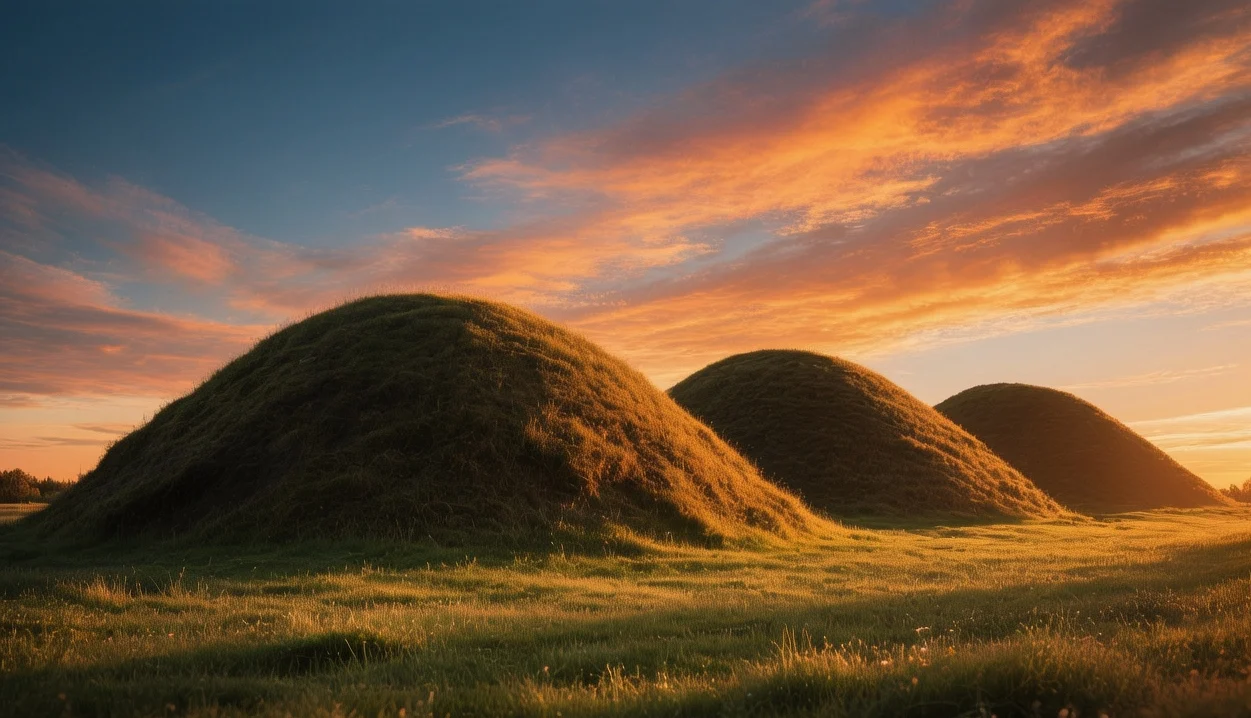
Gamla Uppsala Burial Mounds: Where Viking Earth Meets Swedish Sky
The wind sweeps across the grassy ridges at 8:00 PM, carrying the scent of wild thyme and damp soil from the three great monuments that dominate the horizon. You stand before the Gamla Uppsala burial mounds, feeling the weight of 1,500 years pressing against the present moment as the midnight sun lingers just above the treeline. These earthen giants rise 12 to 14 meters high, constructed layer by layer during the 6th century AD when this site served as the political and religious center of Svealand. The silence here is profound—broken only by the rustle of barley fields and the distant toll of the medieval church bell—a stark contrast to the bustling modern city of Uppsala just 5 kilometers south. This is not merely an archaeological site; it is the mythical home of the Yngling dynasty, the place where Odin was said to have ruled, and the spiritual anchor of pre-Christian Sweden. In an age where digital noise saturates every corner of modern life, the Gamla Uppsala burial mounds remain a sanctuary of tangible antiquity—a place where you can touch the same soil that covered Viking kings. This matters now: in an era of virtual experiences, standing on these ancient graves offers something increasingly precious—the undeniable weight of physical continuity with a vanished world.
Why Gamla Uppsala Burial Mounds Embodies Viking Heritage
The Gamla Uppsala burial mounds stand as Scandinavia's most potent symbol of the Vendel Period, solving a critical historical need: legitimizing royal power through monumental architecture visible from miles away. Constructed between 500–600 AD, the three largest mounds—known as East, West, and South—were built using a sophisticated engineering technique involving layers of turf, stone, and clay to prevent erosion and maintain their shape over centuries. Archaeological excavations in 1846 and 1874 revealed cremation remains, gaming pieces, and gold foil figures inside the mounds, confirming their status as royal tombs likely belonging to members of the Ynglinga dynasty. The site solved a spiritual problem: it established a permanent sacred geography where the living could communicate with the dead through blót sacrifices at the adjacent temple site. The largest mound measures approximately 60 meters in diameter at the base, requiring an estimated 15,000 cubic meters of earth to construct—a massive communal effort demonstrating the king's ability to mobilize labor. Unlike stone pyramids, these earthen monuments blend into the landscape, symbolizing a return to the earth rather than conquest over it. Today, the mounds embody the transition from pagan mythology to Christian kingdom, as the nearby 12th-century church was deliberately built on the site of the ancient temple to co-opt the sacred power. This integration of archaeology, mythology, and landscape makes the site unique in Northern Europe.
The Best Time to Experience Gamla Uppsala Burial Mounds
For the optimal Gamla Uppsala burial mounds experience, target June 15–July 10 for midnight sun conditions or August 15–September 15 for harvest atmosphere and golden light. During these windows, daytime temperatures range from 17–23°C (63–73°F), perfect for walking the grassy ridges without winter's biting chill. The midsummer celebration (June 21–24) offers a unique cultural experience with traditional dancing around the maypole near the mounds. Arrive between 7:00–9:00 PM during late June to witness the sun hovering above the horizon without setting, casting long shadows across the earthworks. Avoid November–February unless you seek winter solitude; daylight lasts only 6 hours, temperatures drop to -5–3°C (23–37°F), and the grassy paths can become icy and slippery. For current museum hours and event schedules, verify at www.raa.se (Swedish National Heritage Board) before your visit. The outdoor area is open 24 hours, but the museum operates daily 10:00 AM–5:00 PM (June–August) and 11:00 AM–4:00 PM (September–May). Guided tours depart at 1:00 PM daily during peak season, providing context you cannot get from signage alone.
Approximate Budget for a 7-Day Trip
Since Gamla Uppsala is a day trip from Uppsala, this budget reflects a 7-day regional trip based in Uppsala with daily access to the mounds. Prices reflect current rates with approximately 3.5% annual inflation, assuming a comfortable mid-range travel style.
- Accommodation: €95–€160 per night for a double room in central Uppsala (near Fyrisån); budget hostels from €45/night; upscale hotels average €220–€300/night
- Food: €50–€70 per day total
- Breakfast: €10–€15 (hotel buffet or café with coffee and smörgås)
- Lunch: €16–€22 (dagens lunch—daily special with main, salad, bread, and drink)
- Dinner: €24–€35 (restaurant main course; try Viking-inspired stew or Baltic fish)
- Transportation:
- Stockholm Arlanda Airport to Uppsala: €20 one-way via Flygbussarna (20 minutes)
- Local Bus 2 to Gamla Uppsala: €3.80 single ticket (20 minutes from center)
- Bicycle rental: €15/day (cycle path exists to Gamla Uppsala)
- Day trip to Stockholm: €25 round-trip train ticket (35 minutes)
- Attractions:
- Gamla Uppsala Museum: €10 adults, free under 19
- Guided Mound Tour: €12 per person
- Uppsala Cathedral: Free entry; tower climb €8
- Gustavianum Museum: €12 adults, free under 19
- Linnaeus Garden: €8 adults
- Miscellaneous:
- Local crafts at market: €15–€50
- Fika (coffee + cinnamon bun): €6–€8
- Souvenir guidebook: €8
- Museum shop artifacts: €10–€40
- Travel insurance: €30 for week
Total estimated cost for 7 days: €1,000–€1,450 per person (excluding international flights)
7 Essential Gamla Uppsala Burial Mounds Experiences
- Walk the King's Path (Kungsvägen): Begin at the museum parking lot and walk the historic avenue leading directly to the three large mounds. This path was used by medieval kings during the Eriksgata inauguration journey. The walk takes 15 minutes one-way. Stop at the base of each mound to appreciate the scale—they appear larger as you approach. Best undertaken between 8:00–10:00 AM when the light is soft and crowds are minimal. Touch the grassy surface to feel the texture of 1,500 years of growth. This approach builds anticipation before you climb.
- Climb the East Mound: Ascend the largest of the three royal mounds (Östhögen) for a panoramic view of the surrounding plains. The climb is steep but short (5 minutes), with worn steps created by centuries of visitors. From the top, you see the medieval church, the museum, and the modern city of Uppsala in the distance. The view encompasses the ancient horizon line unchanged since the Viking Age. Best visited at sunset (9:00 PM in June) for dramatic photography. Stand silently for 5 minutes to absorb the atmosphere.
- Explore the Gamla Uppsala Museum: Enter the modern museum building (€10 entry) to see artifacts excavated from the mounds, including gold foil figures, gaming pieces, and cremated bones. The exhibition uses augmented reality to reconstruct the ancient hall and temple. Open daily 10:00 AM–5:00 PM (June–August). Allow 90 minutes for a thorough visit. The audio guide is available in English and provides detailed historical context. This provides the archaeological evidence behind the myths you see outside.
- Visit the Medieval Church: Step inside the 12th-century stone church located just behind the mounds. The interior features medieval frescoes and a richly carved altarpiece from the 14th century. Entry is free during opening hours (9:00 AM–5:00 PM daily). Light a candle in the memorial chapel if you wish to honor the dead. The church was built on the site of the pagan temple, symbolizing the Christian takeover. This contrast between pagan mounds and Christian stone is unique.
- Attend Midsummer Celebrations: If visiting around June 21, join the traditional Midsummer celebration held in the field between the mounds and the church. Watch locals dance around the maypole wearing flower crowns. The event starts at 12:00 PM on Midsummer Eve. No ticket required—simply arrive and join the circle. This is when the ancient fertility rituals feel most potent, connecting modern tradition to prehistoric roots. Expect crowds, but the communal atmosphere is unforgettable.
- Search for the Disa Mound: Located slightly apart from the three royal mounds, this smaller mound is traditionally associated with the legendary Queen Disa. It is often overlooked by tourists focused on the larger trio. Access via the path behind the church (5-minute walk). The view from this mound looks directly toward the royal trio, offering a different perspective. Visit between 11:00 AM–2:00 PM for best light. This spot provides a quieter moment for reflection away from the main crowds.
- Cycle the Historical Landscape: Rent a bicycle in Uppsala and ride the 5 kilometers north to Gamla Uppsala via the dedicated cycle path. The route passes through barley fields and forest edges, mimicking the ancient approach to the sanctuary. The ride takes 25 minutes at a leisurely pace. Return via the same path before dusk. Bring water and snacks—shops are sparse near the mounds. This is the best way to experience the island's scale and isolation.
3 Hidden Gems Most Travelers Miss
- The Black Earth (Svartjord): Located 200 meters east of the mounds, this archaeological site reveals the remains of the actual settlement where people lived while the mounds were being built. Excavations show postholes from large halls and workshop areas. Access via the marked path behind the museum (open daily during museum hours). Most tourists stay on the main path, missing the domestic context of the site. This area explains how the elite lived versus the workers. Look for the informational panels explaining the hall reconstruction.
- The Runestone Avenue: Scattered around the churchyard are several runestones dating to the 11th century, often overlooked by visitors rushing to the mounds. The most famous is U 978, featuring intricate serpent carvings and Christian crosses. Access is free within the churchyard (open 9:00 AM–5:00 PM). These stones mark the transition from pagan to Christian symbolism. Visit between 10:00 AM–12:00 PM for best light on the carvings. This adds a layer of Viking Age history distinct from the earlier mounds.
- The Old Vicarage Garden: Tucked behind the church lies a walled herb garden maintained by the parish, containing plants used in medieval medicine and cooking. Access is sometimes restricted but open during summer weekends (Saturday 1:00–4:00 PM). The garden offers a quiet bench facing the mounds through a gap in the hedge. This is where parishioners find respite—a quiet space for reflection away from tourist crowds. Bring a book and enjoy the silence. Ask the church staff for permission if the gate is closed.
Cultural & Practical Tips
- Respect the graves: Walking on the mounds is permitted, but do not dig, remove stones, or disturb the vegetation. These are protected ancient monuments. Rangers patrol periodically, and fines apply for violations. This is a sacred site, not a playground. Help preserve it for future generations by following all signage.
- Weather preparation: The site is exposed and windsweat—temperatures feel 3°C cooler than in Uppsala city. Bring windproof layers even in summer. Average summer temperatures: 17–23°C (63–73°F); spring/autumn: 10–16°C (50–61°F). Rain is possible year-round—pack a waterproof jacket. The grass can be slippery after rain, so wear shoes with good traction.
- Essential Swedish phrases:
- "Hej" (hey) = Hello/Goodbye
- "Tack" (tahk) = Thank you
- "Ursäkta" (oor-shek-tah) = Excuse me
- "Var ligger...?" (var lig-er) = Where is...?
- "En kaffe, tack" (en kaf-fe tahk) = One coffee, please
- Photography guidelines: Photography is permitted throughout the outdoor area. Drones require permission from the County Administrative Board—contact lansstyrelsen@lansstyrelsen.se in advance. Tripods are allowed but must not obstruct paths. Be mindful of other visitors when composing shots. Sunrise and sunset offer the best light without harsh shadows.
- Accessibility: The paths around the mounds are grass and gravel, which can be challenging for wheelchairs. The museum is fully accessible with ramps and elevators. The church has a ramp entrance on the south side. Contact the museum at +46 18 16 90 00 for detailed accessibility maps. The mound climbs are not accessible to those with mobility limitations.
- Payment and connectivity: Sweden is nearly cashless—cards accepted everywhere, including the museum shop. Inform your bank of travel dates. Mobile coverage is excellent throughout Gamla Uppsala (Telia/Tele2). Free WiFi available at the museum café. ATMs available in Uppsala but sparse near the mounds—carry some cash for small purchases.
- Seasonal considerations: The outdoor area is open year-round, but the museum operates seasonally (May–September peak). October–April sees reduced hours. Midsummer (June) is the busiest time. Book accommodations in Uppsala 3-6 months in advance for summer visits. Winter visitors should verify opening hours before traveling—many businesses close early December–March.
Conclusion: Travel with Reverence, Not Just Tourism
The Gamla Uppsala burial mounds ask something different of you than the hurried checklist approach of modern travel. This is not a place to photograph and flee; it is a sacred landscape where kings were buried and gods were worshipped over a millennium ago. When you stand atop the East Mound, feeling the wind sweep across the plains, remember that someone stood here in 600 AD looking at the same horizon, encoding their power into earth. That continuity is fragile. Every unauthorized dig erodes the history; every touched stone accelerates decay; every disregard for the path damages the context that gives the monument meaning. Travel here with reverence: stay on the marked trails, support the museum that maintains the site, speak softly, and leave only your footprints in the grass. In return, Gamla Uppsala offers something increasingly rare in our accelerated world—the chance to stand in deep time, to feel the weight of history not as a burden but as a gift, to understand that we are temporary custodians of beauty that must outlast us. This is why we travel: not to consume places, but to be transformed by them, to carry their stories forward with care and gratitude.