
Sigtuna Oldest Town: Where Viking Stone Meets Swedish Soul
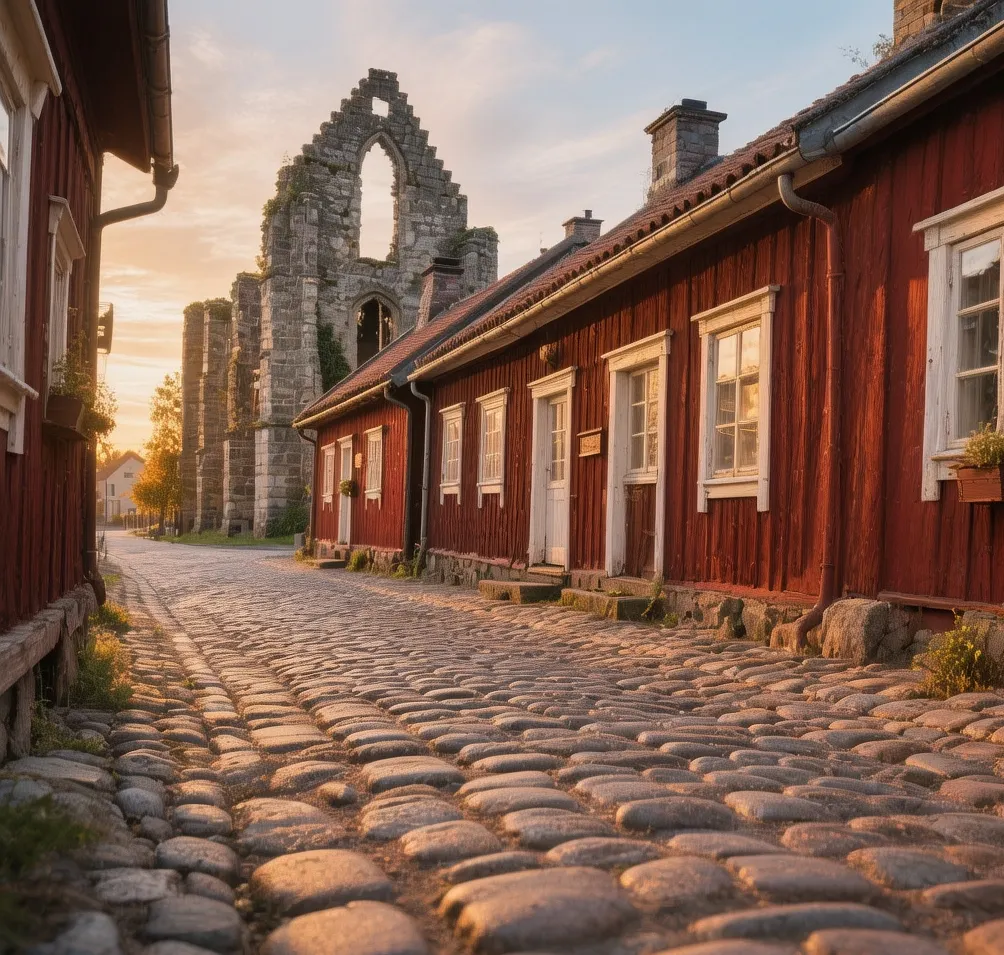
The morning mist lifts off Lake Mälaren at 7:00 AM, revealing cobblestone streets that have carried footsteps for over a millennium. You walk along Sigtuna oldest town, Sweden's first Christian settlement, where the scent of freshly baked cardamom buns drifts from century-old bakeries and the distant chime of church bells echoes across the water. Red-painted wooden cottages with white trim line narrow alleys just three meters wide, their foundations resting on Viking-era soil. Medieval church ruins—St. Lars and St. Olaf—stand as silent sentinels, their weathered stone walls telling stories of archbishops and merchants who once walked these same paths. This is not merely a historic district; it is the birthplace of Swedish urban life, where runestones carved with ancient runes mark the transition from pagan sagas to Christian chronicles. In an age where digital noise saturates every corner of modern life, Sigtuna oldest town remains a sanctuary of tangible continuity—a place where you can touch the same cobblestones that Viking traders trod. This matters now: in an era of fleeting attention spans, standing on these ancient streets offers something increasingly precious—the undeniable weight of physical connection to a foundational moment in Scandinavian history.
Why Sigtuna Oldest Town Embodies Swedish Heritage
Sigtuna oldest town stands as Scandinavia's most authentic example of early medieval urban planning, solving a critical historical need: establishing a Christian administrative center in a region transitioning from Viking Age tribal structures. Founded around the late 10th century as Sweden's first purpose-built town, Sigtuna was strategically positioned on the northern shore of Lake Mälaren, approximately 40 kilometers from modern Stockholm, to control trade routes between the Baltic Sea and inland settlements. The town's layout follows a deliberate grid pattern with streets measuring 3-4 meters wide—narrow enough to provide wind protection yet wide enough for merchant carts. Archaeological excavations have revealed over 28 runestones within the town limits, more per square kilometer than anywhere else in Sweden, documenting the names of early Christian converts and royal officials. The medieval church ruins, particularly St. Lars Church built from local limestone in the 12th century, demonstrate sophisticated Romanesque engineering with walls up to 1.2 meters thick and vaulted ceilings reaching 15 meters high. These structures solved a spiritual and political problem: they provided a permanent sacred geography where royal power and ecclesiastical authority could converge. Unlike many European towns that expanded beyond their medieval cores, Sigtuna's compact size—just 1.5 kilometers from end to end—preserves the intimate scale of early Scandinavian urban life. Today, the town embodies the delicate balance between preservation and living community: over 9,000 residents inhabit historic buildings while maintaining strict conservation guidelines that protect the town's archaeological integrity.
The Best Time to Experience Sigtuna Oldest Town
For the optimal Sigtuna oldest town experience, target May 20–June 25 for blooming gardens and long daylight, or September 5–October 15 for harvest atmosphere and golden light. During these windows, daytime temperatures range from 15–21°C (59–70°F), perfect for walking the cobblestone streets without summer's peak crowds. The famous Midsummer celebration (late June) offers traditional dancing and flower crowns in the town square—arrive between 11:00 AM–2:00 PM for the main festivities. Avoid July 10–August 10 when Swedish school holidays bring peak visitor numbers, causing narrow streets to feel congested and accommodation prices to spike 40-60%. Winter visits (November–February) offer atmospheric candlelit cafés but limited daylight—sunset occurs as early as 3:00 PM in December, and some seasonal shops close. For current event schedules and opening hours, verify at www.visitsigtuna.se before your visit. Most attractions operate daily 10:00 AM–5:00 PM (May–September) with reduced hours October–April. The Sigtuna Museum opens at 11:00 AM Tuesday–Sunday, while church ruins remain accessible 24 hours for quiet reflection.
Approximate Budget for a 7-Day Trip
Since Sigtuna is typically a day trip from Stockholm or Uppsala, this budget reflects a 7-day regional trip based in Sigtuna with comfortable mid-range travel style. Prices reflect current rates with approximately 3.5% annual inflation.
- Accommodation: €100–€170 per night for a double room in central Sigtuna (near Stora Gatan); budget guesthouses from €55/night; historic boutique hotels average €230–€320/night
- Food: €52–€72 per day total
- Breakfast: €11–€16 (hotel buffet or café with coffee and cinnamon bun)
- Lunch: €17–€23 (dagens lunch—daily special with main, salad, bread, and drink)
- Dinner: €24–€36 (restaurant main course; try Baltic herring or Swedish meatballs)
- Transportation:
- Stockholm Arlanda Airport to Sigtuna: €15 one-way via local bus (15 minutes)
- Stockholm Central to Sigtuna: €12 one-way via commuter train + bus (45 minutes)
- Local walking: Free (town is compact and pedestrian-friendly)
- Bicycle rental: €14/day (recommended for lakeside paths)
- Day trip to Uppsala: €18 round-trip train ticket (30 minutes)
- Attractions:
- Sigtuna Museum: €11 adults, free under 19
- Guided historic walking tour: €14 per person
- St. Lars Church ruins: Free entry
- Runestone trail map: €5
- Lake Mälaren boat tour: €22 adults
- Miscellaneous:
- Local crafts at antique shops: €20–€60
- Fika (coffee + pastry): €7–€9
- Souvenir runestone replica: €15–€35
- Museum guidebook: €9
- Travel insurance: €32 for week
Total estimated cost for 7 days: €1,050–€1,500 per person (excluding international flights)
7 Essential Sigtuna Oldest Town Experiences
- Walk the Historic Main Street (Stora Gatan): Begin at the town's eastern entrance and stroll the entire 1.2-kilometer length of Stora Gatan, Sweden's oldest continuously used street. The cobblestones—some dating to the 12th century—create a rhythmic sound underfoot. Stop at the red wooden cottages with white trim, many built in the 1700s, now housing antique shops and artisan studios. Best undertaken between 8:00–10:00 AM when morning light illuminates the facades and crowds are minimal. Touch the weathered wood to feel centuries of Scandinavian craftsmanship. This walk connects you to the town's commercial heart as it existed a millennium ago.
- Explore the St. Lars Church Ruins: Enter the atmospheric ruins of St. Lars Church, built from local limestone in the 1100s. The remaining walls rise 8 meters high, with arched window openings framing views of the town. Stand quietly in the nave where medieval worshippers once gathered. The site is free and open 24 hours, but visit between 4:00–6:00 PM when golden light filters through the stone arches. Allow 30 minutes to absorb the historical weight. This is where Sweden's early Christian community forged its identity.
- Follow the Runestone Trail: Purchase the €5 runestone map at the tourist office and locate the 28 ancient stones scattered throughout town. Each rune-carved boulder tells a story—memorials to travelers, declarations of faith, or records of royal service. The most famous, U 344, stands near the museum and features intricate serpent carvings. Best visited between 10:00 AM–2:00 PM for optimal light on the inscriptions. This self-guided trail transforms a casual walk into an archaeological adventure.
- Visit the Sigtuna Museum: Enter the modern museum building (€11 entry) to see artifacts excavated from the town's Viking and medieval layers: iron tools, silver coins, and fragments of runestones. The exhibition uses interactive displays to reconstruct daily life in early Sigtuna. Open Tuesday–Sunday 11:00 AM–5:00 PM. Allow 90 minutes for a thorough visit. The audio guide in English provides rich historical context. This provides the archaeological evidence behind the stones you see outside.
- Enjoy Fika by Lake Mälaren: Make your way to a lakeside café along Strandgatan for traditional Swedish fika. Order strong coffee and a warm cinnamon bun while watching boats glide across the water. The view encompasses the town's red rooftops against the lake's expanse. Best experienced between 3:00–5:00 PM when the light is soft. This ritual connects you to contemporary Swedish culture while surrounded by ancient history.
- Climb the Old Town Hall Tower: Ascend the modest tower of the 18th-century town hall for panoramic views. The climb takes just 40 steps but rewards with a 360-degree vista of church spires, red cottages, and Lake Mälaren stretching to the horizon. Entry €6, open daily 10:00 AM–4:00 PM (May–September). Best visited at sunset when the town glows amber. This vantage point reveals the town's compact, intentional layout.
- Attend the Medieval Market: If visiting in late summer, experience the annual medieval market held in the town square. Watch craftspeople demonstrate blacksmithing, weaving, and rune carving. Sample historical recipes like spiced mead and barley bread. The event runs Saturday–Sunday 11:00 AM–6:00 PM (late August). No ticket required—simply arrive and immerse yourself. This brings the town's founding era to vivid life.
3 Hidden Gems Most Travelers Miss
- The Secret Garden Behind St. Olaf's: Tucked behind the ruins of St. Olaf's Church lies a walled herb garden maintained by local volunteers, containing plants used in medieval medicine and cooking. Access via the small gate on Olsgatan (open daily 9:00 AM–5:00 PM summer). The garden offers a quiet bench facing the church ruins through a gap in the hedge. This is where parishioners find respite—a peaceful space for reflection away from tourist crowds. Bring a book and enjoy the silence. Ask volunteers about the historical uses of each plant.
- The Viking Harbor Trail: Located 800 meters east of the town center along the lakeshore, this unmarked path follows the ancient harbor where Viking longships once docked. Look for informational panels explaining the harbor's engineering—wooden pilings and stone breakwaters designed to protect vessels from Baltic storms. Access via the footpath near the marina. Best visited at low tide when more historical features are exposed. This spot reveals Sigtuna's maritime origins often overlooked by visitors focused on the town center.
- The Antique Bookshop Cellar: In the basement of a red cottage on Stora Gatan, a family-run bookshop specializes in historical Scandinavian literature and rare maps. The low-ceilinged cellar, with original stone walls and wooden beams, feels like stepping back in time. Open Wednesday–Saturday 11:00 AM–4:00 PM. The owners speak limited English but welcome curious visitors. Ask to see their collection of 19th-century travelogues about Sigtuna. This is where history enthusiasts discover treasures not found in standard souvenir shops.
Cultural & Practical Tips
- Respect historic structures: Do not climb on church ruins or remove stones from archaeological sites. These are protected monuments. Rangers patrol periodically, and fines apply for violations. This is a living heritage site, not a playground. Help preserve it for future generations by following all signage.
- Weather preparation: Sigtuna's lakeside location means temperatures feel 2-3°C cooler than inland. Bring windproof layers even in summer. Average summer temperatures: 16–22°C (61–72°F); spring/autumn: 10–17°C (50–63°F). Rain is possible year-round—pack a waterproof jacket. Cobblestones become slippery when wet, so wear shoes with good traction.
- Essential Swedish phrases:
- "Hej" (hey) = Hello/Goodbye
- "Tack" (tahk) = Thank you
- "Ursäkta" (oor-shek-tah) = Excuse me
- "Var ligger...?" (var lig-er) = Where is...?
- "En kaffe, tack" (en kaf-fe tahk) = One coffee, please
- Photography guidelines: Photography is permitted throughout public areas. Drones require permission from the County Administrative Board—contact lansstyrelsen@lansstyrelsen.se in advance. Tripods are allowed but must not obstruct narrow streets. Be mindful of residents when composing shots. Golden hour (5:00–7:00 PM in summer) provides the best light without harsh shadows.
- Accessibility: Cobblestone streets can be challenging for wheelchairs. The Sigtuna Museum is fully accessible with ramps. Most shops have step-free access, but some historic buildings retain original thresholds. Contact the tourist office at +46 8 592 592 00 for detailed accessibility maps.
- Payment and connectivity: Sweden is nearly cashless—cards accepted everywhere, including small kiosks. Inform your bank of travel dates. Mobile coverage is excellent throughout Sigtuna (Telia/Tele2). Free WiFi available at the museum and most cafés. ATMs available in town center but carry some cash for market vendors.
- Seasonal considerations: Many attractions operate seasonally (May–September peak). October–April sees reduced hours. Midsummer (late June) is the busiest time. Book accommodations 2-4 months in advance for summer visits. Winter visitors should verify opening hours before traveling—many businesses close early December–March.
Conclusion: Travel with Reverence, Not Just Tourism
Sigtuna oldest town asks something different of you than the hurried checklist approach of modern travel. This is not a place to photograph and flee; it is a living landscape where cobblestones worn smooth by centuries of footsteps still guide your path today. When you stand before the St. Lars ruins, feeling the wind sweep across Lake Mälaren, remember that someone stood here a millennium ago looking at the same horizon, encoding their hopes into stone and faith. That continuity is fragile. Every unauthorized touch erodes the mortar; every disregarded sign weakens the protection; every failure to support local preservation accelerates the decay. Travel here with reverence: walk gently on the ancient stones, support the local businesses that maintain the town's character, speak softly in the ruins, and leave only your footprints in the grass. In return, Sigtuna offers something increasingly rare in our accelerated world—the chance to stand in deep time, to feel the weight of history not as a burden but as a gift, to understand that we are temporary custodians of beauty that must outlast us. This is why we travel: not to consume places, but to be transformed by them, to carry their stories forward with care and gratitude.