
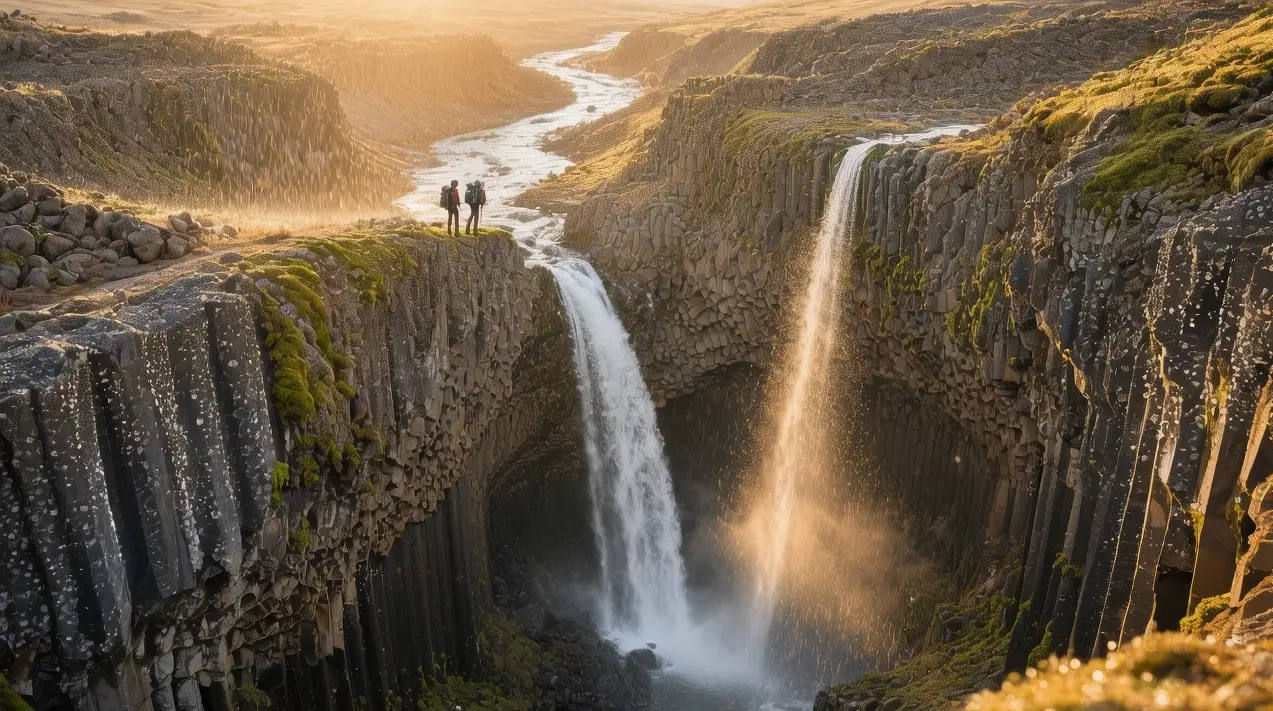
Glymur Waterfall Thundering Cascades Meet Hvalfjörður Wilderness
The cold hits you first—a biting glacial wind funneling through the valley walls as you tighten your pack straps. It's 9:15 AM on a July morning, and the air smells of wet moss, volcanic stone, and ancient pine. You stand at the edge of the Botnsá river, watching the water churn white over smooth black stones, knowing that beyond this barrier lies Glymur Waterfall, Iceland's second-highest cascade plunging 198 meters (650 feet) into a amphitheater of basalt. For decades, this was the highest known waterfall in the country—a title held until 2007—yet it remains the most accessible giant, demanding a price of sweat and caution before revealing its beauty. The hike requires crossing knee-deep glacial melt, scrambling through a lava tunnel, and climbing 350 meters in elevation over loose scree. In 2026, as Iceland's most popular sites buckle under crowds, Glymur remains a filter: it keeps the casual spectator away and rewards the committed traveler with solitude. This is why you come now: to earn your view, to feel the mist on your face, and to understand that some wonders refuse to be handed to you freely.
Why Glymur Waterfall Embodies Iceland's Wild Spirit
Glymur Waterfall isn't merely a geological feature—it's a testament to the raw power of the Hvalfjörður fjord system, carved by millennia of glacial retreat and volcanic activity. The waterfall feeds from the Botnsá river, which drains Lake Hvalvatn, located 6 kilometers upstream in a caldera formed during the Pleistocene epoch. The drop itself occurs where the river meets the softer sedimentary layers of the valley floor, eroding the rock faster than the hard basalt cap above, creating that iconic overhang that allows hikers to walk behind the cascade's upper tiers. While Morsárfoss in Vatnajökull technically surpasses Glymur in height (228 meters), Glymur retains cultural significance as the historic champion, featured in Icelandic folklore and photography since the early 20th century.
The hike to Glymur solves a fundamental need for modern travelers: the desire for authentic exertion. In an era of boardwalks and bus stops, the 7-kilometer round-trip trail demands physical engagement. You must navigate the river crossing without a bridge, where water temperatures hover near 4°C (39°F) even in summer. The trail passes through Jarðhúsaskarð, a lava tunnel formed during an eruption approximately 3,000 years ago, connecting the lower valley to the upper plateau. This geological tunnel serves as a natural gateway, marking the transition from birch woodland to alpine tundra. The Icelandic Forest Service (Skógræktin) maintains the trail markers, but no handrails exist; no safety nets hang over the cliff edges. This lack of engineering intervention preserves the wilderness character, ensuring that only those prepared for Arctic conditions witness the falls. In 2026, this authenticity is rare currency.
Beyond the physical challenge, Glymur fulfills a psychological need for awe. The acoustic profile of the waterfall—a low-frequency rumble that vibrates through the canyon walls—creates a sensory immersion that photographs cannot capture. Standing on the ridge opposite the falls, you look down into a void where eagles nest and Arctic foxes hunt. The Icelandic Environment Agency records approximately 15,000 annual visitors to Glymur, a fraction of the 2 million visiting Iceland overall. This lower density allows the ecosystem to recover; vegetation along the trail shows signs of regeneration after overgrazing in the 1990s. Glymur represents a balance: accessible enough to reach in a day trip from Reykjavík, remote enough to feel untouched.
The Best Time to Experience Glymur Waterfall
Timing your visit to Glymur Waterfall is critical for safety and enjoyment, as the trail is strictly seasonal due to river levels and snow cover. The optimal window runs from June 20 to August 25, when the glacial melt stabilizes and daylight extends to 20 hours. During this period, daytime temperatures average 10–15°C (50–59°F), making the river crossing manageable with waterproof gear. For the best light and fewest crowds, target July 10–August 5, arriving at the trailhead between 8:00–9:30 AM. Morning visits offer calmer winds and softer illumination on the waterfall's face, whereas afternoons often bring fog rolling in from Hvalfjörður.
Avoid the period from September 15 to June 15. During these months, the river crossing becomes dangerous due to increased precipitation and glacial surge, and the trail above the tree line accumulates snow that obscures path markers. The Icelandic Association for Search and Rescue (ICE-SAR) reports 3–5 incidents annually involving hikers attempting Glymur outside the summer window. Winter access is technically possible but requires mountaineering equipment (crampons, ice axe) and expert guidance; independent hiking is strongly discouraged. For real-time trail conditions and river levels, check safetravel.is and the Icelandic Met Office at en.vedur.is before departure. The Hvalfjörður Tourist Information Center (+354 430 3030) updates trail status daily during peak season.
Weather in Hvalfjörður changes rapidly; wind speeds can exceed 20 m/s (45 mph) without warning. If the forecast predicts rain, postpone your hike—the river depth can rise 30 centimeters within an hour, making crossing impossible. Late July offers the warmest water temperatures (still cold, but less shocking) and the most stable footing on the scree slopes. Plan your return to reach the river crossing before 6:00 PM; visibility drops quickly in the valley floor even during the midnight sun period.
Approximate Budget for a 7-Day Trip (2026)
Visiting Glymur Waterfall typically forms part of a broader Iceland itinerary, requiring a rental vehicle and base accommodation in Reykjavík or Borgarfjörður. The following estimates reflect 2026 pricing, accounting for Iceland's average 4.5% annual inflation rate (Statistics Iceland, 2025) and seasonal summer premiums. These costs assume a moderate adventure travel style: mid-range accommodation, mix of self-catering and dining, and a 4WD rental suitable for F-roads if extending beyond Glymur.
- Accommodation: €180–€320 per night. Reykjavík guesthouses (101 District) average €220/night for a double room with private bathroom. Camping at Hvalfjörður Campground: €25 per person/night (facilities include showers). Budget hostels in Borgarfjörður: €95/night for dorm beds. Book 3–5 months ahead for July dates.
- Food: €70–€100 per day. Breakfast: €15–€20 (coffee €5, skyr €6, rúgbrauð bread €4). Lunch: €25–€35 (lamb soup €18, fish wrap €16, coffee €5). Dinner: €40–€60 (grilled cod €42, local beer €12, dessert €10). Grocery shopping at Bónus supermarkets reduces daily food costs to €40–€55.
- Transportation: 4WD rental (7 days): €190–€280/day (includes gravel protection). Fuel: €2.25/liter (approximately €200 for a 7-day ring road segment covering 1,000 km). Reykjavík to Glymur trailhead (Route 47): 45 kilometers one-way. Bus tour from Reykjavík: €145/person (includes guide).
- Attractions: Glymur hiking trail: FREE (no permit required). Hvalfjörður Whale Museum: €14/person. Viðey Island ferry: €22 round-trip. Blue Lagoon entry (add-on): €95–€135. Parking at Glymur trailhead: FREE (donation box available).
- Miscellaneous: Waterproof hiking boots rental: €40/week. Thermal base layers purchase: €90–€160. Souvenirs: wool sweater (lopapeysa) €200, volcanic glass jewelry €55–€140, local honey €25. Travel insurance: €50–€90 for 7 days. River crossing dry bag: €35.
Total estimated cost for 7 days: €2,800–€4,100 per person (based on double occupancy; solo travel increases costs by 35%)
7 Essential Glymur Waterfall Experiences
- Cross the Botnsá river safely: The first major challenge occurs 1.5 kilometers into the hike. Locate the designated crossing point marked by stone cairns; do not attempt to cross upstream where the current accelerates. Unbuckle your backpack's waist strap so you can shed it if you fall. Use trekking poles for stability; the riverbed is slick with algae. Water depth averages 60 centimeters (24 inches) in July. Wear waterproof hiking boots or bring sandales for the crossing, changing into dry socks immediately after. The shock of 4°C water lasts only 30 seconds—keep moving.
- Walk through the lava tunnel: Approximately 2.5 kilometers from the trailhead, you'll encounter Jarðhúsaskarð, a natural lava tube forming a dark archway through the mountain ridge. The tunnel is 40 meters long and completely unlit; bring a headlamp even in summer. The floor is uneven basalt rock; watch your step. Inside, the temperature drops 5°C cooler than outside, and the silence is absolute. This geological feature marks the boundary between the lower birch forest and the upper alpine zone. Pause at the exit to let your eyes adjust to the bright valley beyond.
- Stand on the opposite ridge viewpoint: The classic photograph of Glymur is taken from the ridge opposite the falls, not from the base. After ascending 350 meters via switchbacks, you'll reach a plateau at 450 meters elevation. Position yourself near the large flat rock at coordinates 64.4150° N, 21.7850° W. From here, you look down into the canyon, framing the waterfall against the distant Hvalfjörður fjord. Visit between 10:00 AM and 2:00 PM for optimal lighting; early morning leaves the falls in shadow. The wind here is strong—secure loose hats and camera straps.
- Explore the upper cave behind the falls: For experienced hikers, a narrow path leads behind the upper section of the waterfall. This requires scrambling over wet rocks and requires excellent balance. Do not attempt this if the rock is slick from rain. The cave offers a unique perspective: viewing the water thundering past you into the void below. Spend no more than 10 minutes here; the mist saturates clothing quickly. Wear a waterproof shell jacket with a hood. This area is unstable; respect all warning signs regarding rockfall.
- Picnic at Lake Hvalvatn: If you have energy remaining after viewing the falls, continue 2 kilometers upstream to the source lake. The terrain flattens into a mossy plain dotted with blueberries and crowberries (in season). Find a sheltered spot near the outlet stream; the water is drinkable after filtration. Eat lunch here around 1:00 PM when the sun is highest. The silence at the lake contrasts sharply with the roar of the falls below. You may spot Arctic char swimming in the shallow edges. Leave no trace: pack out all food wrappers.
- Identify Arctic flora: The hike traverses three distinct vegetation zones. Lower section: Downy birch (Betula pubescens) and rowan trees. Middle section: Moss carpets (over 40 species) and wild thyme. Upper section: Arctic poppy and mountain avens. Bring a magnifying glass to examine the moss structures near the lava tunnel. The Icelandic Institute of Natural History documents over 200 plant species in the Hvalfjörður valley. Do not pick flowers; many are protected under conservation law. Photograph them instead.
- Watch for wildlife at dusk: Return to the ridge viewpoint between 9:00–10:00 PM in late July. The midnight sun provides enough light to spot wildlife without disturbing them. White-tailed eagles nest on the cliff ledges; look for their distinctive 2-meter wingspan soaring on updrafts. Arctic foxes hunt lemmings in the scree fields below. Use binoculars (10x42 minimum); do not approach closer than 100 meters to nesting birds. The acoustic landscape shifts at dusk: the waterfall sounds deeper as wind dies down.
3 Hidden Gems Most Travelers Miss
- Hvalfjörður Whale Museum: Located in the old whaling station at Saurbær, 15 minutes from the Glymur trailhead. Most hikers drive past this small building (open June–August, 1:00–5:00 PM, admission €14). The museum houses skeletal remains of fin whales and historical logs from the 1940s whaling era. Guide Þórsteinn Jónsson offers personal tours detailing the fjord's ecological transition from hunting ground to sanctuary. Contact +354 430 3030 to confirm opening hours. The adjacent café serves fresh fish soup using recipes from the station's original cookhouse.
- Þjófafoss Waterfall: Located 8 kilometers north of Glymur in a separate valley, this 60-meter cascade receives fewer than 500 visitors annually. Access requires driving Route 46 then turning onto a gravel track (Route 462) for 4 kilometers; 4WD required. The hike is only 1.5 kilometers round-trip but involves steep elevation. The waterfall plunges into a narrow canyon where basalt columns form perfect hexagonal patterns. Visit at low tide if accessing from the fjord side. No facilities exist; bring water and waste bags. The silence here is profound compared to Glymur's popularity.
- Secret Hot Spring at Hvalfjörður Shore: Not the commercial pools, but a natural geothermal seep on the fjord's northern shore near Melar. At low tide (check tide times at safn.is/tides), walk 600 meters east from the small boat harbor to find warm water (36–40°C / 97–104°F) bubbling through black sand. Locals have dug shallow soaking pools here for generations. Bring a towel and arrive at sunset; you'll likely have this spot alone. No facilities exist—practice Leave No Trace principles strictly. Do not use soap in the natural pools.
Cultural & Practical Tips
- Respect the landvættir (land spirits): Icelandic folklore suggests spirits inhabit waterfalls and rocks. Never throw stones into Glymur's pools or move rocks from the site. The Icelandic Folklore Society documents stories of landvættir protecting Hvalfjörður. Disturbing the site is considered bad luck and disrespectful to local heritage. Stay on marked trails to protect vegetation that holds cultural significance.
- Master essential Icelandic phrases: "Góða göngu" (GO-tha GO-nku) = good hike; "Takk fyrir" (TAHKk freer) = thank you; "Hjálp" (HYOWLP) = help; "Kalt" (KALT) = cold. While most Icelanders speak English, attempting Icelandic shows respect for the land you're traversing. Pronunciation tip: Icelandic "ll" sounds like "tl" blended together.
- Photography etiquette: Tripods are permitted but cannot block the narrow trail sections during peak hours (11:00 AM–3:00 PM). Drone use requires written permission from the Environment Agency of Iceland (ust.is)—apply 30 days in advance. Commercial photography needs a €250 permit. Never photograph other hikers without consent; privacy is valued highly in Nordic culture. Use polarizing filters to cut glare from the mist.
- Weather preparedness: Hvalfjörður weather changes every 20 minutes. Pack: waterproof jacket (Gore-Tex minimum), waterproof hiking pants, fleece mid-layer, wool base layers (no cotton), hat and gloves even in summer, sunglasses (glare from water is intense). Check the Icelandic Met Office app hourly—wind speeds above 15 m/s (34 mph) make the ridge exposure dangerous.
- River crossing safety: This is the highest risk point on the trail. If the water appears milky-white (glacial flour), expect near-freezing temperatures. Maximum safe depth: 70 centimeters (knee height). If water rises above this due to rain, turn back. Do not attempt to cross alone; form a group of three for stability. Dry bags for electronics are mandatory; waterproof cases often fail under pressure.
- Wildlife awareness: White-tailed eagles nest on cliffs from May 1–July 31. They dive-bomb intruders within 100 meters of nests. Carry a walking stick and wave it above your head if attacked. Never touch or approach chicks; parents will abandon them if they smell human scent. Puffins nest nearby but rarely at Glymur itself; look for them on the fjord coastline.
- Payment systems: The Glymur trail is free, but donation boxes exist at the trailhead for maintenance (cash only, ISK or €). Most Hvalfjörður businesses accept cards, but carry 10,000 ISK (€65) in cash for emergencies. Icelandic banks charge 3% foreign transaction fees; use cards from banks with no international fees. Fuel stations in the area are automated; require PIN-enabled credit cards.
Conclusion: Travel with Reverence, Not Just Reservations
Glymur Waterfall doesn't need your Instagram post—it has thundered into this canyon for 10,000 years, indifferent to human documentation. What it asks, what the Hvalfjörður wilderness demands, is something rarer than a perfect photograph: your full presence, your willingness to get wet and cold, your commitment to leave no trace beyond footprints that the next rain will wash away. In 2026, as Iceland grapples with the paradox of sharing its beauty while preserving its soul, Glymur remains a test. Will you rush through, checking a box, or will you sit on that wet rock for an extra hour, letting the mist soak your jacket while you watch light shift across the canyon? The waterfall will continue whether you come or not. But you—standing here, feeling that primal awe vibrate through your bones—will carry something back to your ordinary life that no souvenir shop can sell. That is the true currency of travel: not the places you've been, but the person you become while witnessing them. Come to Glymur. But come slowly, come quietly, come ready to be changed by the cold water and the ancient stone.