
Goðafoss Waterfall Norse Legends Meet Arctic Power
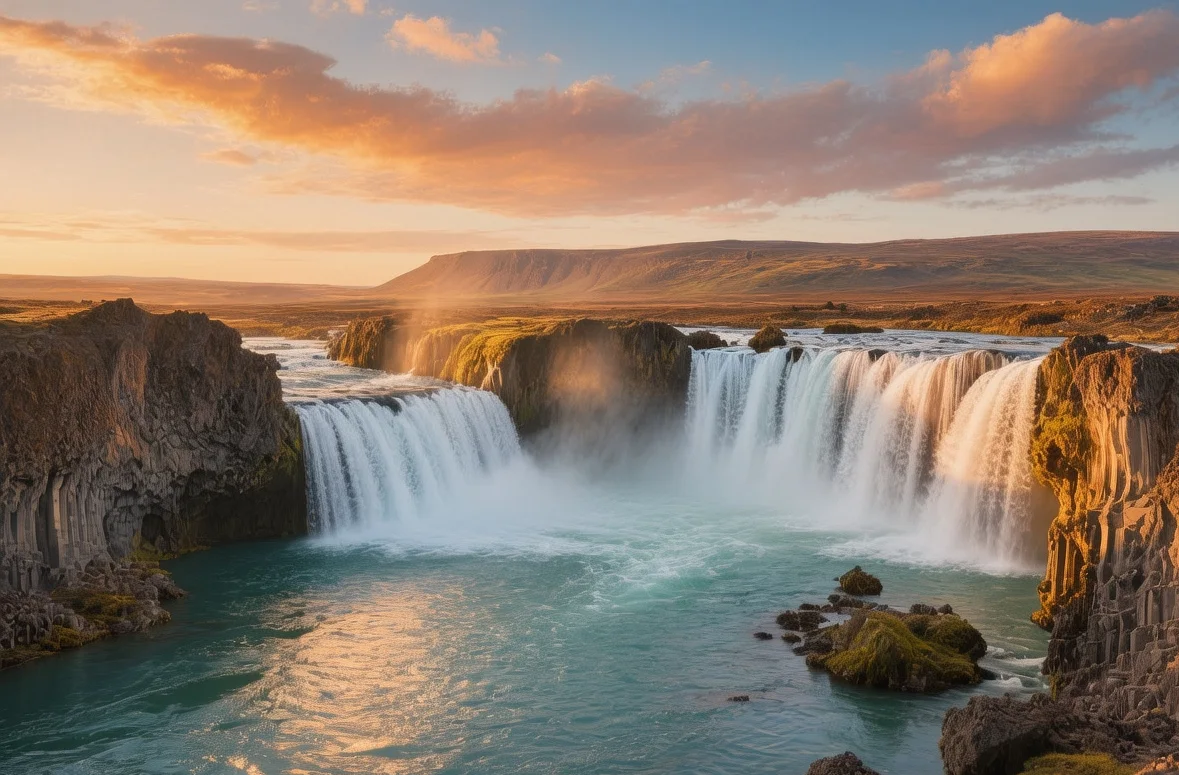
The roar hits you first—a thunderous cascade of water plunging 12 meters into the turquoise depths below, sending mist dancing into the crisp Arctic air. Here, at Goðafoss waterfall, the Skjálfandafljót River splits around a dramatic basalt horseshoe, creating a spectacle that has mesmerized travelers since Norse settlers first documented the site over a millennium ago. It is early morning—around 6:30 AM—and the low sun casts prismatic rainbows through the spray, illuminating the rust-colored cliffs that frame this natural cathedral. The water temperature hovers near 4°C (39°F) year-round, fed by glacial melt from the highlands, while the flow rate averages 100 cubic meters per second during summer months. This isn't merely a scenic stop; it is a place where history crystallized in 1000 AD when the lawspeaker Þorgeir Ljósvetningagoði threw the idols of Norse gods into these waters, marking Iceland's conversion to Christianity. In 2026, as mass tourism reshapes Iceland's landscape, Goðafoss matters more than ever—a sacred site demanding reverence, a geological wonder requiring protection, and a living testament to the moment when mythology yielded to faith.
Why Goðafoss Waterfall Embodies Iceland's Spiritual Heritage
The Goðafoss waterfall—literally translating to "Waterfall of the Gods" or "Waterfall of the Goði" (Norse chieftain-priest)—represents one of Iceland's most significant cultural landmarks, bridging the pagan past with the Christian present. The name itself solves a historical puzzle: whether it refers to the Norse deities cast into the abyss or to Þorgeir himself, who served as goði of the Ljósavatn district. Historical records from the Íslendingabók and Kristni saga document this pivotal moment around 1000 AD, when the Althing assembly voted to adopt Christianity, and Þorgeir, a pagan priest himself, made the pragmatic decision to prevent civil war by throwing his sacred idols into the falls.
Beyond symbolism, the waterfall fulfills a geological need carved by the last Ice Age approximately 10,000 years ago. The Skjálfandafljót River, stretching 178 kilometers from the interior highlands to Skjálfandi Bay, carved this 30-meter-wide (98 feet) horseshoe through layers of basaltic lava flows. The waterfall drops in two stages: the eastern cascade plunges 12 meters (39 feet) while the western section creates a broader 10-meter descent. The rock composition consists primarily of tholeiitic basalt, formed during the Tertiary period, which has eroded into the distinctive curved amphitheater visible today.
Modern engineering respects this heritage: in 1996, the area received protection under Iceland's Nature Conservation Act, and a viewing platform was constructed in 2015 to prevent erosion from the 500,000+ annual visitors. The site serves as a cultural anchor, reminding Icelanders and visitors alike that landscape and identity are inseparable. Walking these paths, you tread ground where a nation's soul was decided—where water became the vessel for transformation, carrying away old gods to make space for new beliefs.
The Best Time to Experience Goðafoss Waterfall
For optimal conditions and dramatic photography, plan your visit between June 10 and August 20, when temperatures range from 10–16°C (50–61°F) during the day and the midnight sun provides extended golden hours. The best lighting occurs between 10:00 PM and 1:00 AM during the summer solstice period, when the low-angle sun creates spectacular rainbows in the mist. During these months, Route 1 remains fully accessible, and parking facilities operate at full capacity with restroom facilities open from 8:00 AM to 10:00 PM.
Shoulder season (May 1–June 9 and August 21–September 30) brings cooler temperatures of 5–10°C (41–50°F) and fewer crowds, but weather becomes unpredictable with occasional snow squalls even in late May. Winter visits (November–March) offer a completely different experience: temperatures drop to -5 to -15°C (14–5°F), and the waterfall partially freezes, creating stunning ice formations along the basalt cliffs. However, daylight shrinks to 4–6 hours, and road conditions can deteriorate rapidly with ice and snow.
Avoid visiting during storm warnings issued by the Icelandic Meteorological Office, as high winds can make the viewing platforms dangerous. The site is open 24 hours with no entrance fee, but facilities close in winter. Always verify road conditions at road.is and weather forecasts at vedur.is before departure, as the Goðafoss waterfall area can experience sudden weather changes year-round.
Approximate Budget for a 7-Day Trip (2026)
North Iceland offers moderate pricing compared to Reykjavík, though remote location increases some costs. These 2026 estimates assume a mid-range travel style, accounting for Iceland's projected 3.6% inflation rate and current exchange rates (1 USD = 0.92 EUR). Prices reflect the Akureyri/Mývatn region, which serves as the base for visiting Goðafoss.
- Accommodation: €120–€180 per night for guesthouses or farm stays in Akureyri or Reykjahlíð; budget hostels from €65; luxury hotels €240+
- Food: €60–€80 per day—breakfast €12 (often included), lunch €18 (soup and bread at local cafés), dinner €30–€40 (lamb or fish at restaurants like Strúkur or Vogafjós)
- Transportation: Rental car essential: €75–€95/day for 2WD vehicle (sufficient for Route 1); fuel €2.10/liter (approximately €110 for week); Akureyri to Goðafoss round-trip: 90 km; Route 1 (Ring Road) plus Route 848
- Attractions: Goðafoss free; Mývatn Nature Baths €35; Hverir geothermal area free; Dettifoss viewpoint free; guided North Iceland tour €85
- Miscellaneous: Icelandic wool sweater €90–€130; waterproof gear rental €25; travel insurance €45; parking fees minimal (€0–€3 at some sites)
Total estimated cost for 7 days: €1,400–€1,800 per person (excluding international flights)
7 Essential Goðafoss Waterfall Experiences
- Walk the main viewing platform: This accessible boardwalk (65°40.950'N, 17°33.150'W) offers the safest and most comprehensive view of the horseshoe cascade. The walk from parking takes 3 minutes and is wheelchair accessible. Best photographed mid-morning when sunlight illuminates the eastern cliff face and creates rainbows in the mist.
- Explore the west bank trail: A 15-minute walk along the riverbank provides a different perspective, showing the waterfall from downstream. The path is uneven gravel; wear sturdy boots. This angle reveals the full 30-meter width and the power of water carving basalt. Best visited late afternoon for warm light on rust-colored cliffs.
- Photograph the rainbow effect: Position yourself on the eastern viewing area between 10:00 AM and 2:00 PM when the sun angle creates the most vivid rainbows in the spray. Use a polarizing filter to enhance colors and reduce glare. The mist can soak your camera, so bring a protective cover or plastic bag.
- Experience the winter freeze: Visit between December and February to see ice formations clinging to the basalt columns. The waterfall never fully freezes due to water volume, but spectacular ice sculptures form along the edges. Temperatures drop to -10°C (14°F); dress in thermal layers and wear crampons for icy paths.
- Read the historical marker: Located near the parking area, the information board details the 1000 AD conversion story in Icelandic, English, and German. Take time to understand the cultural significance before viewing the falls. This context transforms a scenic stop into a pilgrimage site.
- Watch the midnight sun illuminate the falls: On June 21, the sun sets around 12:15 AM. Position yourself at the western viewpoint to see the waterfall bathed in perpetual golden light. The mist glows amber and rose; temperatures drop after 11:00 PM, so wear warm layers even in summer.
- Listen to the thunder: Stand quietly at the railing and close your eyes. The Goðafoss waterfall produces a deep, resonant roar that vibrates through the basalt bedrock. This auditory experience connects you to the raw power that shaped Iceland's spiritual history. Best experienced early morning when wind is calm.
3 Hidden Gems Most Travelers Miss
- Upstream river walk: Follow the Skjálfandafljót River 500 meters upstream from the main parking area for a secluded viewpoint where the river narrows before the falls. Access via unmarked path on the east side; look for weathered wooden posts. This spot offers intimate views without crowds. Best visited midday when water clarity is highest. No facilities—bring water and pack out trash.
- Basalt column cave: Located 200 meters downstream on the west bank, a small overhang formed by columnar jointing provides shelter and unique photo angles looking back at the falls. Access requires scrambling over loose rocks; not suitable for children. The cave is dry and offers protection during rain showers. Best visited low tide (check river levels at vedur.is). Bring a headlamp for interior photography.
- Old farm ruins at Hjalteyri: Drive 8 kilometers south to this historic settlement where Iceland's first Catholic bishop, Jón Ögmundsson, established a school in 1106. The ruins sit on a hill overlooking the river valley. Open daylight hours; no entry fee. Most tour buses skip this for waterfalls. The site offers context for the Christian conversion story. Contact: Akureyri tourist office at +354 460-1000 for historical details.
Cultural & Practical Tips
- Respect the sacred site: Many Icelanders view Goðafoss as hallowed ground. Do not throw coins, stones, or objects into the water—this disrespects both the historical significance and the fragile ecosystem. The waterfall is not a wishing well; it is a monument to national transformation.
- Stay on marked paths: The basalt rock becomes extremely slippery when wet from spray. Falling risks serious injury on sharp volcanic rock. Fines for trespassing in protected areas can reach €400. Respect barriers—they protect both visitors and the fragile vegetation recovering from decades of foot traffic.
- Weather preparedness: North Iceland weather changes rapidly. Even in July, pack: waterproof jacket (essential), warm layers (fleece minimum), sturdy hiking boots with grip, hat and gloves. Check vedur.is for real-time forecasts. Wind speeds can exceed 20 m/s (45 mph), making the mist feel like horizontal rain.
- Photography etiquette: Tripods permitted but don't block pathways for other visitors. Drone use requires special permit from Umhverfisstofnun (Icelandic Environment Agency)—apply at ust.is at least 14 days in advance. The mist can damage equipment; use protective filters and lens cloths.
- Local phrases: Learn these Icelandic essentials: Takk (tahk) = Thank you; Góðan daginn (go-than die-in) = Good day; Fallegt foss (fal-legt foss) = Beautiful waterfall. Effort with language earns warm smiles from locals.
- Emergency contacts: Dial 112 for all emergencies. Nearest hospital: Akureyri Hospital, 45 km west (+354 470-1000). Cell coverage is excellent at Goðafoss parking area. Download offline maps via Google Maps or Maps.me before arrival.
- Accessibility note: Main viewing platform is fully wheelchair accessible with paved paths and railings. Restroom facilities include accessible stalls. The west bank trail is not accessible. Contact visitnorthiceland.is for detailed accessibility maps before traveling.
Conclusion: Travel with Reverence, Not Just Checklists
Goðafoss demands more than a quick photo stop and a hashtag—it asks for your presence, your patience, your willingness to stand quietly before water that has witnessed a nation's transformation. As you walk these paths in 2026, remember that each footprint lands on ground sacred to both geological history and human faith. The waterfall isn't merely an Instagram backdrop; it is a chapter in Iceland's autobiography, written in cascading water and carved basalt.
Responsible travel here means moving slowly, speaking softly, and leaving only breath on the ancient stone. It means understanding that the story of Þorgeir isn't quaint folklore but a community's defining moment, a decision that shaped a millennium of culture. When you purchase from local farms, hire North Icelandic guides, and follow marked trails, you participate in an economy that values preservation over exploitation.
So linger past the guidebook's recommended 20 minutes. Sit on sun-warmed basalt and watch rainbows form in the mist. Let the thunder of falling water remind you that some places aren't meant to be conquered or consumed—they're meant to be witnessed with humility, protected with intention, and carried in memory long after your boots have left the parking lot.