
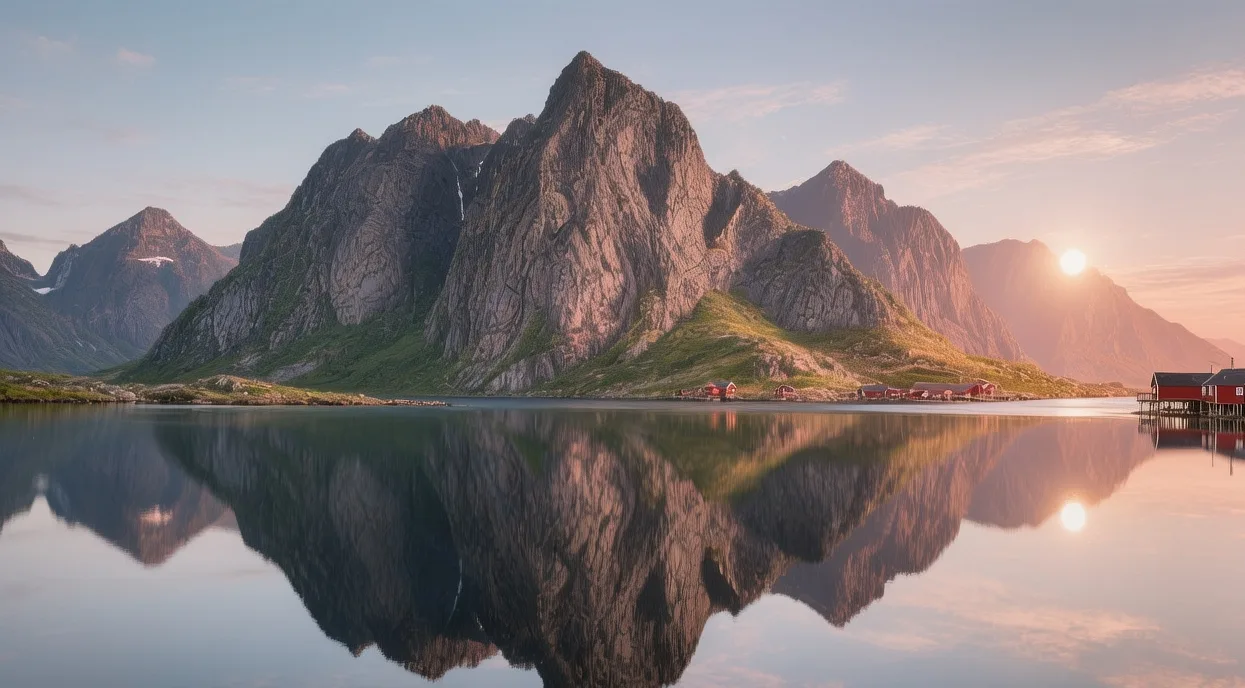
Lofoten Islands Arctic Peaks Meet Viking Fishing Heritage
The light does not fade—it merely shifts, turning from gold to lavender as the clock ticks past 11:00 PM on June 21. You stand on the quay in Reine, surrounded by the iconic red rorbuer (fishermen's cabins) that cling to the rocky shore like barnacles. The air smells of salt and drying cod; the silence is broken only by the lap of water against wooden pilings and the distant cry of a white-tailed eagle. This archipelago—stretching 150 kilometers above the Arctic Circle at the 68th parallel—hosts a landscape so dramatic it seems engineered rather than formed: granite peaks rising 1,000 meters directly from the sea, connected by the E10 highway that weaves across bridges and tunnels like a silver thread. It is 2026, and the Lofoten Islands stand at a critical juncture. Climate change warms the North Atlantic faster than almost anywhere else, altering fish migrations; overtourism threatens the fragile tundra; yet the ancient rhythm of the cod fishery, sustained since the 11th century, persists. You are not just visiting a destination; you are witnessing a resilient ecosystem where human history and Arctic wilderness collide—and where your presence matters now more than ever.
Why Lofoten Islands Embodies Arctic Wilderness
The Lofoten Islands are not merely scenic; they are geological anomalies. The mountain range, known as the Lofoten Wall, consists of Precambrian granite estimated at 2.5 billion years old, thrust upward during the Caledonian orogeny 400 million years ago. What makes this place unique is the proximity of these peaks to the Gulf Stream, which keeps winter temperatures surprisingly moderate—averaging -2°C (28°F) instead of the -20°C (-4°F) typical for this latitude. This climatic contradiction solved a vital historical problem: it allowed for year-round fishing settlements in an otherwise uninhabitable zone. Since the Viking Age (circa 800 AD), fishermen have harvested Atlantic cod here, drying them on wooden racks (hjell) where the cold, dry wind preserves the protein without salt.
By the 1800s, the Lofoten fishery became Norway's economic engine, employing 30,000 seasonal fishermen annually. The infrastructure built to support this industry—the rorbuer, the warehouses, the chapels—defines the cultural landscape today. In 2026, these structures serve a dual purpose: preserving heritage while accommodating sustainable tourism. The archipelago covers 1,227 square kilometers across six main islands, connected by 5 bridges and 2 subsea tunnels, including the 7,230-meter-long Børfjord tunnel. This engineering marvel ensures accessibility while minimizing surface disruption to reindeer grazing lands. The Lofoten Islands embody a rare balance: a working industrial landscape that functions as a protected natural sanctuary, where commercial fishing quotas (managed by the Norwegian Directorate of Fisheries) strictly limit catches to prevent stock collapse, ensuring the ecosystem survives for future generations.
The Best Time to Experience Lofoten Islands
For the definitive Arctic experience, plan your visit between June 10 and July 5—the peak midnight sun window when daylight persists 24 hours, temperatures range from 12–18°C (54–64°F), and hiking trails are snow-free. During this period, the best photography light occurs between 10:00 PM and 1:00 AM, when the sun hovers just above the horizon, casting long, golden shadows across the peaks. For Northern Lights hunters, the optimal window shifts to September 25 to October 15, when solar activity peaks, darkness returns after 8:00 PM, and temperatures hover around 5–10°C (41–50°F). The aurora borealis is visible on approximately 70% of clear nights during this window.
Avoid traveling between January 10 and February 10 unless you seek polar night conditions: the sun does not rise, temperatures drop to -5°C (23°F), and many tourist facilities close for maintenance. Road conditions on the E10 can become hazardous due to ice and avalanches; several mountain passes close without warning. For current road status,
Approximate Budget for a 7-Day Trip (2026)
Lofoten is one of Norway's more expensive destinations due to its remote location and high demand. The following budget assumes a mid-range travel style: staying in traditional rorbuer or quality guesthouses, eating a mix of self-catered meals and local seafood, renting a car for essential mobility, and participating in guided activities. Prices reflect 2026 estimates with a 3.5% inflation adjustment based on 2025 Statistics Norway (SSB) data for Nordland county.
- Accommodation: €150–€250 per night for a double room in a historic rorbu (Reine or Nusfjord); budget hostels start at €60/night; camping cabins €80/night
- Food: €70–€90 per day: breakfast €12 (included at most lodgings), lunch €20 (fish soup or shrimp sandwiches), dinner €40–€50 (fresh cod or lamb stew with local beer)
- Transportation: €320 total: rental car €75/day (5 days, essential for E10 exploration), fuel €95 (400 km total driving), ferry Moskenes–Bodø €60 round-trip with car, local bus route 300 (€15 day pass, limited frequency)
- Attractions: €110 total: Lofoten War Museum (Lofoten Krigsmuseum) €18, guided sea kayak tour €55, Lofoten Aquarium €22, guided fishing trip €45, gallery entries €15
- Miscellaneous: €90: souvenirs (dried cod €20, wool sweater €50, artisan jewelry €20), rain gear rental €10, emergency buffer €10
Total for 7 days: €1,450–€1,720 per person (based on double occupancy)
6 Essential Lofoten Islands Experiences
- Hike Reinebringen for the Panorama: Begin at 6:00 AM (in summer) to avoid crowds on the 450-meter climb. The trail starts near the Reine ferry dock and takes 1.5 hours round-trip. The final ascent involves steep stone steps (1,200 total), requiring sturdy boots. From the summit, you see the iconic view: red cabins clustered around the harbor, framed by jagged peaks and turquoise water. The light at 11:00 PM in June renders the scene surreal—shadows disappear, and the water turns to mirror glass. Bring windproof layers; temperatures at the summit are 5°C cooler than sea level.
- Stay in a Historic Rorbuer: Book a cabin at Nusfjord Arctic Resort (established 1860) or Svinøya Rorbuer in Svolvær. These wooden structures, originally built for seasonal fishermen, now feature modern amenities while retaining original details: exposed beams, wood-burning stoves, and waterfront views. Spend an evening cooking fresh cod purchased from the local fisherman's wharf (€15/kg). The experience immerses you in the archipelago's working history—you sleep where generations of fishermen rested between shifts.
- Drive the E10 Coastal Highway: Rent a car and drive the 150-kilometer stretch from Å to Svolvær. Allow 4 hours minimum, stopping at viewpoints like Rambergstranda and Skagsanden. The road crosses the Fredvang Bridges (opened 1974) and dives through the Nappstraumen Tunnel (1,840 meters). In winter, watch for reindeer crossing signs—they have right of way. The drive offers constant visual shifts: from sandy beaches to vertical cliffs. Pull over at designated zones only; parking on the shoulder is fined €100.
- Visit the Lofoten War Museum: Located in Kabelvåg, this museum opens at 10:00 AM daily (May–September). Spend 90 minutes exploring exhibits on the 1941 Operation Claymore raid, when British commandos destroyed German oil facilities. The museum houses original artillery guns, a restored torpedo bunker, and personal accounts from residents who lived through the occupation. The outdoor exhibition includes a 105mm coastal battery positioned to defend the harbor. Guides share stories of local resistance fighters—essential context for understanding the islands' strategic importance.
- Sea Kayak Among the Islands: Book a 3-hour guided tour departing at 9:00 AM from Henningsvær (€55). Paddle through calm fjords, approaching sea eagle nests (minimum 100-meter distance required by law). The guide provides dry suits and safety briefing. You'll glide past underwater kelp forests and spot harbor seals sunning on rocks. The silence of kayaking allows you to hear the water and wildlife without motor noise. Tours operate May 15–September 30, weather permitting. No prior experience needed; tandem kayaks available for beginners.
- Watch the Midnight Sun from Haukland Beach: Arrive at 10:30 PM in late June. This white-sand beach, backed by dramatic peaks, offers one of the best vantage points for the sun dipping toward the horizon without setting. Bring a thermos of coffee and a warm blanket. The sand retains heat from the day, making it comfortable to sit even at night. Swim if you dare—the water temperature averages 14°C (57°F) in summer. This moment—standing on an Arctic beach at midnight, bathed in golden light—defines the Lofoten experience.
3 Hidden Gems Most Travelers Miss
- Unstad Beach Surf School: While most visitors hike, few know that Unstad hosts the world's northernmost surf school (established 2003). Located on the western coast, accessible via a steep 15% grade road (drive carefully), this beach offers consistent Atlantic swells. Rent a 5mm wetsuit, hood, and boots (€60/day) from Unstad Arctic Surf. The best waves occur during autumn storms (September–October). Why it's overlooked: it requires a detour off the main E10, and the water is cold. Insider tip: The sauna overlooking the beach opens at 4:00 PM—perfect for warming up after a session. Check swell forecasts at windguru.cz before visiting.
- Henningsvær Kunstgallerier: This cluster of five art galleries in the fishing village of Henningsvær features works by local Arctic artists. Open daily 10:00 AM–6:00 PM (June–August), the galleries occupy converted fish-drying warehouses. Look for the sculpture garden on the hillside behind the village, accessible via a steep 10-minute walk from the harbor. The view from the sculpture terrace rivals Reine but with zero crowds. Why it's missed: most tour buses skip Henningsvær for Reine. Insider tip: Visit the Lofoten Spirit distillery nearby for a free tasting of Arctic aquavit (open 12:00–5:00 PM, +47 76 09 10 50).
- Kjerkfjorden Hidden Beach: Accessible only by foot or kayak, this secluded cove near Moskenes requires a 45-minute hike from the E10 parking area (look for the unmarked trailhead near the cemetery). The beach features black sand and vertical cliffs that amplify sound—clap your hands to hear the echo. Tide times matter: visit 2 hours before high tide for maximum beach space. Check tide tables at hav.no. Why it's overlooked: no signage and requires moderate fitness. Insider tip: Bring a waterproof bag for your phone; waves can splash high during incoming tide. No facilities exist here—pack out all trash.
Cultural & Practical Tips
- Respect the Right of Access: Norway's Allemannsretten (Right to Roam) allows camping on uncultivated land for up to 2 nights, provided you stay 150 meters from houses. Do not camp on cultivated land (fenced fields) or near reindeer grazing areas (marked with signs).
- Learn three Norwegian phrases: Takk (tahk—thank you), Unnskyld (oon-shuld—excuse me), and Ha det bra (hah deh bra—goodbye). Locals appreciate the effort, though 95% speak fluent English.
- Photography guidelines: Drone flights require permission from the Norwegian Civil Aviation Authority (apply at luftfartstilsynet.no). Drones are prohibited near bird cliffs and military installations. Respect privacy—do not photograph into rorbu windows. Tripods are permitted on public land.
- Weather preparedness: Weather changes rapidly; pack layers (wool base, fleece mid, waterproof outer). Even in July, temperatures can drop to 8°C (46°F) with wind chill. Rain occurs on 200 days annually. Waterproof boots are essential for hiking.
- Driving etiquette: Speed limits are strictly enforced (80 km/h on open roads, 50 km/h in villages). Use pull-outs to let faster local traffic pass. Watch for moose and reindeer, especially at dawn and dusk. Winter tires are mandatory November–April.
- Accessibility note: Major villages (Svolvær, Leknes) have wheelchair-accessible paths, but hiking trails are generally steep and uneven. The Lofoten War Museum has ramp access. Request the accessible travel guide at visitlofoten.com.
- Emergency contacts: Medical emergencies: 113. Police: 112. Tourist information: +47 76 09 10 50. Nearest hospital: Lofoten Sykehus (Svolvær), 24-hour emergency. Coastguard: 120. Mobile coverage is good on E10 but spotty on remote hikes.
Conclusion: Travel with Respect, Not Just Sightseeing
The Lofoten Islands demand more than your admiration; they require your stewardship. This landscape—carved by ice, sustained by fish, and inhabited by resilient communities—is not a theme park but a living ecosystem where every footprint matters. When you visit in 2026, remember that the red cabins are homes, the beaches are nesting grounds, and the roads are lifelines for residents who endure winter darkness so you can enjoy summer light. The cod stocks that built this archipelago are vulnerable; the tundra that recovers slowly from erosion is fragile. So travel slowly. Buy local fish from the wharf, not imported frozen meals. Stay on marked trails to protect the vegetation. Listen to the stories of the fishermen who still rise at 4:00 AM to check their nets.
In an era of instant gratification and checklist tourism, Lofoten asks you to pause—to watch the light change for an hour without lifting your camera, to feel the cold wind without rushing indoors, to understand that you are a guest in a place that has survived millennia without you. Travel with respect, and you ensure that the Lofoten Islands remain not just a photograph in your portfolio, but a thriving sanctuary where Arctic wilderness and human heritage continue to coexist. The mountains will stand long after we are gone; let us ensure they remain wild enough to deserve their fame.