
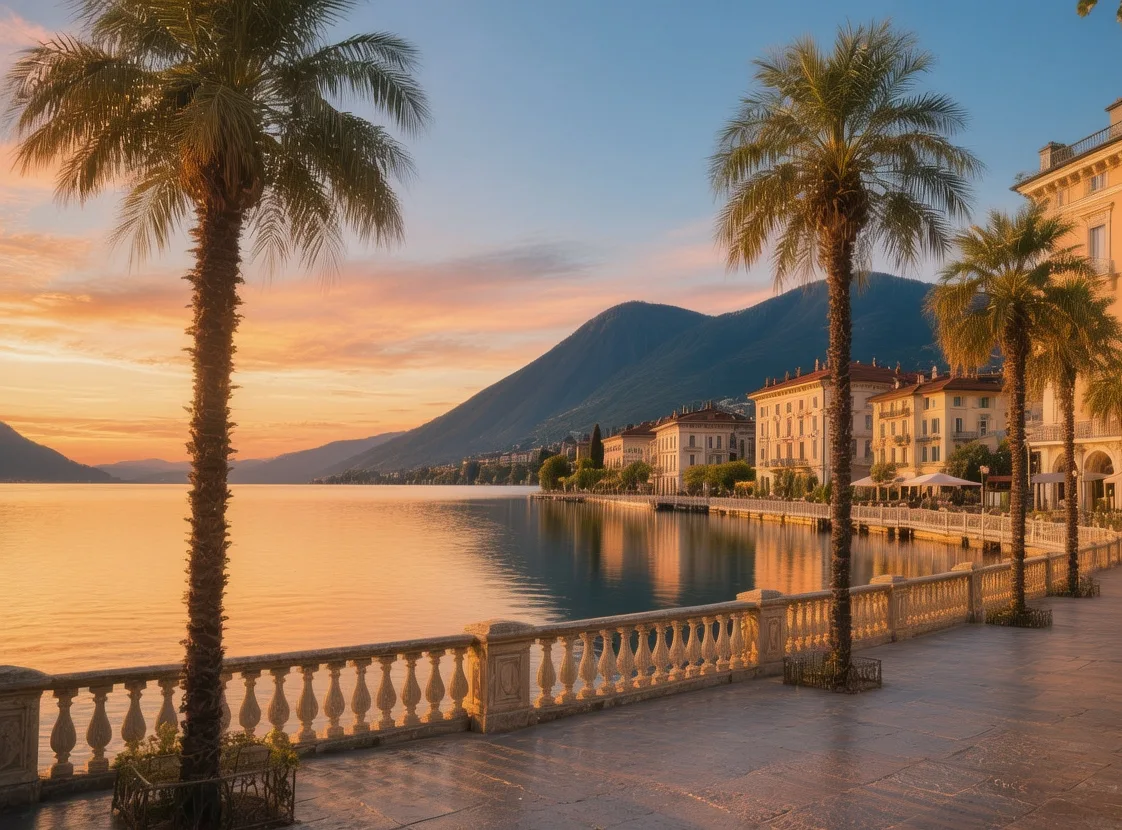
Lugano Lakeside Mediterranean Light Meets Alpine Precision
The water laps gently against the stone quay—warm enough to touch even in the evening, carrying the scent of blooming oleander and distant espresso. You stand on the Piazza della Riforma, where the shadows of 19th-century arcades stretch across the cobblestones, watching the sun dip behind Monte San Salvatore to paint the 49-square-kilometer expanse of Lake Lugano in shades of burnt orange and violet. The air here is distinctively different from the German-speaking north; it carries the cadence of Italian conversation mixed with the rhythmic precision of Swiss train departures. Since the first pleasure steamers began navigating these waters in 1848, the lakeside has served as a sanctuary for artists, writers, and dreamers seeking the unique alchemy of Alpine protection and Mediterranean warmth. In 2026, as travel becomes increasingly transactional, the Lugano lakeside remains a testament to the art of lingering—a place where the palm trees sway to a slower rhythm, demanding that you put away the itinerary, order a second coffee, and let the light dictate the pace of your day.
Why Lugano Lakeside Embodies Swiss-Italian Harmony
The Lugano lakeside represents a rare geopolitical and cultural fusion, solving the historical tension between northern efficiency and southern languor through a unique regional identity known as Ticino. Annexed to the Swiss Confederation in 1512, the region retained its Italian language and customs while adopting Swiss infrastructure and stability. The lakeside promenade, expanded significantly during the Belle Époque boom of 1880–1910, utilizes local granite and porphyry stone to create walkways that withstand both summer heat and winter frost without cracking. The iconic palm trees lining the shore—over 300 specimens of Washingtonia robusta and Phoenix canariensis—were planted in the early 20th century to market Lugano as the "Riviera of the North," a branding strategy that successfully attracted European aristocracy.
Beyond aesthetics, the lakeside fulfills a cultural need for accessible luxury in a mountainous region. The water temperature, moderated by the surrounding peaks, rarely drops below 7°C (45°F) in winter and reaches 24°C (75°F) in August, allowing for a longer swimming season than neighboring alpine lakes. The navigation network, operated by Società Navigazione del Lago di Lugano, connects 15 villages along the shore, functioning as both public transport and tourist attraction. Today, the infrastructure balances preservation with access: electric boats now supplement diesel vessels to reduce noise pollution, while heritage laws protect the 19th-century hotels that define the skyline. This living heritage proves that a destination can modernize without losing the romantic soul that made it famous in the first place.
The Best Time to Experience Lugano Lakeside
For optimal conditions combining swimmable water temperatures, blooming gardens, and manageable tourist density, visit between May 20–June 15 or September 5–September 25. During these windows, daytime temperatures range from 20–26°C (68–79°F), while evenings cool to 14–18°C (57–64°F). The ideal time to walk the promenade is 8:00–9:30 AM, when the light is soft, the lake is calm, and the locals are just beginning their day.
Winter visits (December–February) offer a stark beauty with snow-capped peaks, but temperatures drop to 2–8°C (36–46°F), and some boat services operate on reduced schedules. The Festa della Salute in November brings local color, while summer peak season (July 20–August 15) brings temperatures up to 28°C (82°F) but also crowds that occupy every bench along the shore. The lake breeze (la breva) provides relief, but restaurants require reservations weeks in advance.
Avoid these periods: August 1 (Swiss National Day creates fireworks congestion), November 1–15 (annual maintenance shutdowns for several boat lines), and late October (fog season reduces visibility to under 100 meters). For real-time water temperatures and boat schedules, verify conditions at lugano.ch or check the navigation company at snl.ch for seasonal operating hours.
Approximate Budget for a 7-Day Trip (2026)
This budget estimate reflects mid-range travel preferences for a solo traveler or couple, based on 2026 pricing adjusted for Switzerland's 2.5% annual inflation rate (Swiss Federal Statistical Office data). Lugano is one of Switzerland's more expensive cities, but the quality of life and dining justifies the cost for many visitors.
Accommodation:
• Budget hostel (dorm bed): CHF 65–CHF 90 per night (Youth Hostel Lugano, 20-minute bus ride from center)
• Mid-range hotel (3-star, lakeside): CHF 240–CHF 340 per night (Hotel Bristol or Hotel Lugano Dante)
• Upscale boutique (4-star, panoramic views): CHF 450–CHF 650 per night (Villa Principe Leopoldo or Grand Hotel Villa Castagnola)
Food: CHF 85–CHF 125 per day
• Breakfast: CHF 22–CHF 32 (hotel buffet with Swiss muesli and Italian pastries)
• Lunch: CHF 32–CHF 48 (lakeside restaurant risotto or pizza al taglio)
• Dinner: CHF 55–CHF 80 (traditional polenta e brasato or fresh lake fish)
• Coffee/gelato: CHF 9–CHF 15
Transportation:
• Swiss Travel Pass (8 days, 2nd class): CHF 432 (covers trains, buses, boats, museums)
• Ticino Ticket (free with hotel): includes local buses and boat discounts
• Airport transfer (Milan Malpensa to Lugano): CHF 35 bus or CHF 50 train
• Local bus (Line 1, 2): CHF 3.80 per ride (free with Ticino Ticket)
Attractions:
• Lake Lugano Boat Cruise: CHF 28 (free with Swiss Travel Pass)
• Monte Brè Funicular: CHF 30 (50% off with Swiss Travel Pass)
• LAC Museum: CHF 20 (free with Swiss Travel Pass)
• Swissminiatur: CHF 25 (free with Ticino Ticket)
• Guided Old Town Walking Tour: CHF 40
Miscellaneous:
• Souvenirs (Chocolate, wine, ceramics): CHF 100–CHF 500
• Travel insurance (7 days): CHF 55–CHF 85
• SIM card/data (Swisscom 10GB): CHF 45
• Emergency fund: CHF 200
Total estimated cost (mid-range): CHF 2,800–CHF 3,600 for 7 days
Budget traveler option: CHF 1,500–CHF 1,800
Luxury experience: CHF 6,500–CHF 11,000+
7 Essential Lugano Lakeside Experiences
1. Historic Paddle Steamer Cruise: Board the Gotthard at Lugano Paradiso at 10:40 AM for the journey to Gandria. The 1956 engine hums beneath the wooden deck as you pass villas and olive groves. Sit on the upper deck for unobstructed Alpine views. The journey takes 1 hour 15 minutes one-way. Cost: CHF 28 (free with Swiss Travel Pass). Bring a windbreaker; it is cooler on the water.
2. Parco Ciani Morning Walk: Arrive by 8:00 AM to secure a spot on the lakeside benches. The park features 150-year-old trees and manicured lawns sloping to the water. Rent a pedal boat for CHF 25 per hour. The facility includes a café serving cornetti. Open daily 6:00 AM–10:00 PM. Entry: Free. Towels available for rent at nearby lidos.
3. Monte Brè Panorama View: Take the funicular from Cassarate at 9:00 AM. The viewing platform overlooks the entire lake length and the Italian border. The hike down to Brè village takes 1 hour. Open 24 hours. Train cost: CHF 30 (50% off with Swiss Travel Pass). Best visited: Clear mornings for visibility.
4. Gandria Village Visit: Disembark at Gandria and hike the Olive Tree Path (Sentiero dell'Ulivo). The 4-kilometer trail clings to the mountainside above the water. The view back toward Lugano is panoramic. Open daily dawn to dusk. Free entry. Allow 90 minutes for the walk and village exploration.
5. LAC Culture Center: Visit the lakeside cultural center at 2:00 PM. The architecture by Ivano Gianola features a dramatic cantilever over the water. Exhibitions cover art and music. The rooftop terrace offers coffee with a view. Entry: CHF 20 (free with Swiss Travel Pass). Allow 90 minutes.
6. Wine Tasting in Morcote: Visit the lakeside village of Morcote at 4:00 PM. Several vineyards offer tastings of Merlot grown on the slopes. The soil is rich in minerals. Contact +41 91 646 51 11 for appointments. Tasting cost: CHF 25 per person. Open Tuesday–Saturday 2:00 PM–6:00 PM.
7. Christmas Market Boat Ride: Visit between December 1–23 for the special evening cruise. The boat is decorated with lights and serves mulled wine (vin brulé). The shoreline villages glow in the darkness. Temperatures hover around 5°C. Best viewed at 6:00 PM when darkness falls. Cost: CHF 45 adults. Book 2 weeks in advance.
3 Hidden Gems Most Travelers Miss
• Church of Santa Maria degli Angeli: Located near the train station, this 16th-century church houses a masterpiece fresco by Bernardino Luini. Most visitors head straight to the lake without noticing the facade. Access: 5-minute walk from Lugano FLP station. Open daily 8:00 AM–6:00 PM. Free entry. Insider tip: The Crucifixion fresco is considered one of the finest in Switzerland.
• Cantine di Gandria: A cluster of historic stone cellars carved into the rock above Gandria village. Used for wine storage, they are now atmospheric restaurants. Access: Hike up from Gandria village (20 minutes). Open May–October. Reservation required. Insider tip: Order the local Merlot and polenta; the view over the lake is unmatched.
• Parco Scherrer: A private botanical garden in Morcote often overlooked for the main lake promenade. Access: Take boat to Morcote, then 10-minute walk. Open April–October 10:00 AM–6:00 PM. Entry: CHF 12. Best visited: Early morning for birdwatching. The collection includes rare Asian and American species.
Cultural & Practical Tips
• Language etiquette: The region speaks Italian. Learn these phrases: "Buongiorno" (bwon-JOR-no) for hello, "Grazie mille" (GRAT-see MEE-leh) for thank you very much, "Il conto" (eel CON-toh) for the bill. English is widely spoken in hotels but Italian is appreciated in shops.
• Boat ticket validation: If using paper tickets, validate before boarding at the blue machines. Digital tickets via SBB Mobile app are scanned by inspectors. Fines for fare evasion are CHF 100. Keep tickets until you exit the station.
• Photography guidelines: Tripods are permitted on public quays but not on moving boats (they block aisles). Drone usage requires FOCA authorization and is rarely granted over the lake. Respect privacy; do not photograph sunbathers without consent.
• Weather considerations: The Föhn wind can raise temperatures 10°C rapidly but creates rough water. Check the SNL weather hotline (+41 91 623 23 23) before booking cruises. Even in summer, evenings cool to 15°C (59°F). Carry a light jacket.
• Water safety: Swimming outside designated lidos is allowed but risky due to boat traffic. Wear a bright swim cap. Never swim near the harbor entrances where currents are strong. Life rings are available at most public quays.
• Tipping customs: Service charges are included in prices. Rounding up is appreciated. For a CHF 47 meal, paying CHF 50 is appropriate. For tour guides, tip 5–10% if service was exceptional. Never tip excessively.
Conclusion: Travel with Presence, Not Just Checklists
The Lugano lakeside stretches 49 kilometers not merely to be crossed, but to be contemplated—a ribbon of glacial history that connects the urban pulse of Ticino with the silent grandeur of the Alps. As you stand on the quay in 2026, watching the paddle steamer vanish into the haze, remember that this water has quenched the thirst of generations and reflected the lights of countless evenings. Responsible travel means respecting the water quality, using public transport to reach the shores, and understanding that the silence of the olive groves is a fragile resource worth protecting. Slow down. Dip your hands in the cool water. Watch the light change on the surface. Leave no trace on the shoreline paths. This lake will endure long after your visit ends, carrying the stories of future generations who seek connection with the elements. Carry forward not just photographs, but a deeper appreciation for the balance between enjoying natural wonders and preserving them for those who will walk these quays in 2126.