
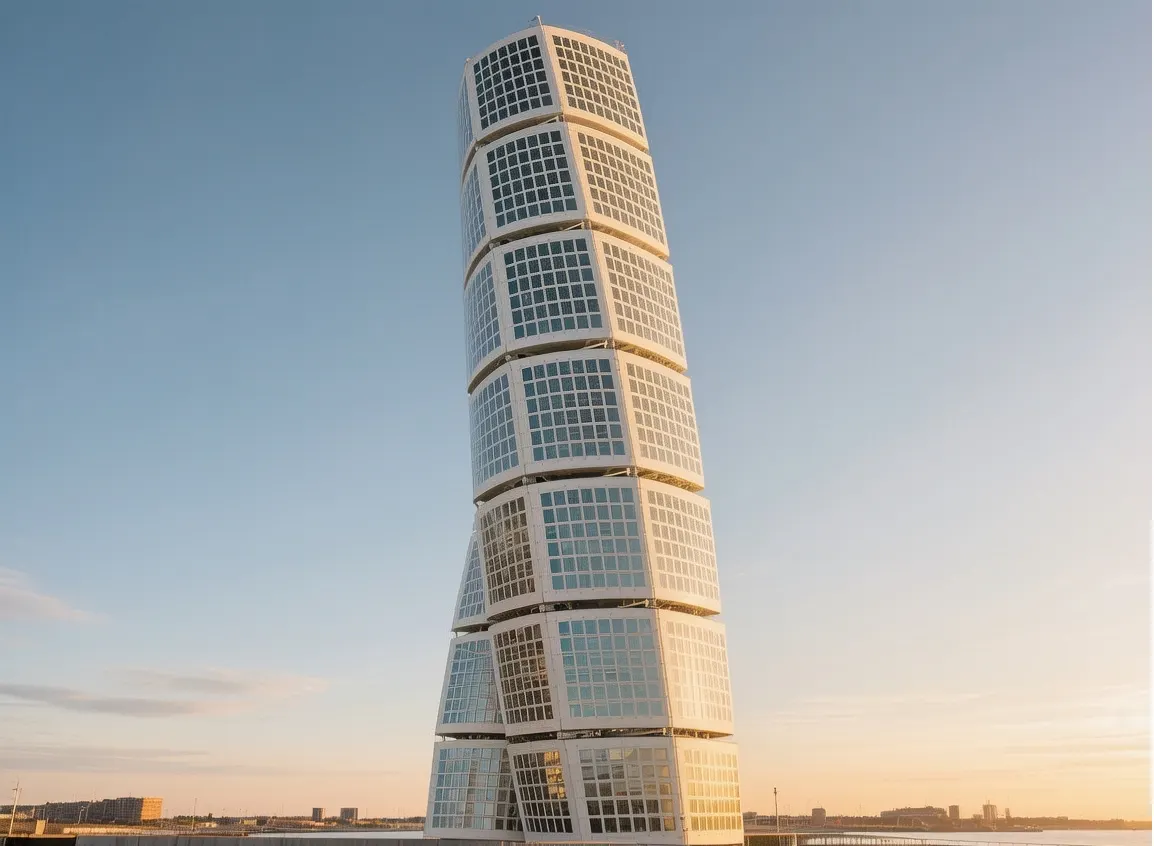
Malmö Turning Torso Twisting Steel Meets Scandinavian Sky
The wind whips off the Öresund strait, carrying the salty tang of the Baltic and the distant hum of trains crossing the bridge. It's 5:30 PM on a crisp August evening, and the low sun catches the white concrete façade, making the structure glow like a polished bone against the deepening blue. You stand at the base of the Malmö Turning Torso, craning your neck to follow the 90-degree twist that defines its silhouette. Rising 190 meters (623 feet) into the sky, this 54-story marvel dominates the Västra Hamnen skyline, a stark contrast to the low-rise brick history of the rest of the city. Completed in 2005 by Santiago Calatrava, it remains Northern Europe's second-tallest residential building. In 2026, as cities worldwide struggle with identity crises between heritage and modernity, this tower stands as a bold declaration of post-industrial transformation. This is why you come now: to witness engineering that defies gravity, to walk the parks that soften its steel edge, and to understand that architecture is not just shelter—it is a statement of ambition frozen in concrete.
Why Malmö Turning Torso Embodies Modern Ambition
The Malmö Turning Torso isn't merely a skyscraper—it's the anchor of Malmö's transition from a shipbuilding hub to a knowledge-based economy. When the last ship left the Kockums yard in 1986, the city faced an existential crisis; the Turning Torso, proposed in 1999 and completed in 2005, solved the psychological need for a new symbol. Designed by Spanish architect Santiago Calatrava, the structure mimics a twisting human spine, composed of nine cubes rotating 90 degrees from base to top. The engineering is formidable: a reinforced concrete core supports the weight, while a steel exoskeleton handles the wind load, allowing the building to sway safely up to 50 centimeters (20 inches) in strong gales. This technical feat solved the problem of building high on Malmö's soft clay soil, requiring 30-meter deep piles to reach bedrock.
Culturally, the tower represents the bridge between Sweden and Denmark. Visible from Copenhagen, it serves as a beacon across the 16-kilometer Öresund Bridge, physically linking the two nations. Over 1 million visitors view the structure annually, though access to the interior is restricted as it is primarily private residences. In 2026, the Malmö Turning Torso fulfills a profound role in urban identity; it proves that Scandinavian design can embrace verticality without losing human scale. The surrounding Västra Hamnen district, once toxic industrial land, is now a climate-neutral neighborhood powered by wind and geothermal energy. This integration of high-tech living with sustainability ensures the tower remains relevant not just as an icon, but as a functional piece of a green city. It stands as a testament to the belief that the future must be built, not just imagined.
The Best Time to Experience Malmö Turning Torso
Timing your visit to the Malmö Turning Torso requires balancing Sweden's dramatic seasonal light shifts with weather conditions. The optimal window for photography runs from May 15 to August 20, when daylight extends to 18 hours and temperatures average 17–23°C (63–73°F). For the most dramatic images, target June 20–July 5, arriving at the viewing point between 8:00–9:30 PM. Evening visits allow you to capture the tower illuminated against the twilight sky, with the Öresund Bridge lights twinkling in the distance. The soft northern light enhances the white concrete textures without creating harsh shadows.
Avoid the period from November 1 to February 15, unless you seek moody, atmospheric shots. Winter brings limited daylight (6 hours) and colder temperatures averaging -2–4°C (28–39°F). Strong winds from the strait can make standing outside uncomfortable, and cloud cover often obscures the tower's peak. For real-time weather and wind warnings, check the official website at smhi.se. The Malmö Tourism Board updates visitor information via their info line at +46 40 34 10 00 before traveling. Verify specific event schedules in Västra Hamnen via their individual websites, as summer concerts vary.
Weather in Malmö can be windier than Stockholm due to coastal exposure. If visiting in late autumn, dress in layers; the wind channeling between buildings can drop perceived temperatures by 5°C. Late August offers the added bonus of the Malmö Festival, where stages set up near the harbor host free performances. Plan your visit around the sunset (9:00 PM in June) to maximize the visual spectacle of the tower against the colored sky.
Approximate Budget for a 7-Day Trip (2026)
Visiting Malmö requires budgeting for Southern Swedish price levels, which have risen approximately 4.5% annually due to inflation (Statistics Sweden, 2025). The following estimates reflect 2026 pricing for a moderate travel style: comfortable mid-range accommodation, mix of casual dining and self-catering, and efficient public transport use. These costs assume a base in Malmö with the Malmö Turning Torso as a primary focal point.
- Accommodation: €160–€320 per night. Hotels in City Center average €260/night for a double room. Budget hostels near Central Station: €90/night for dorm beds. Airbnb apartments in Västra Hamnen: €200–€320/night. Book 4–6 months ahead for summer dates.
- Food: €65–€100 per day. Breakfast: €16–€22 (coffee €5, smörgås open sandwich €9, fruit €5). Lunch: €22–€32 (husmannskost traditional plate €20, coffee €5). Dinner: €35–€55 (grilled herring €35, local beer €9, dessert €9). Grocery shopping at ICA or Coop reduces daily food costs to €40–€55.
- Transportation: Skånetrafiken 72-hour Pass: €40 (covers buses, trains). Öresundståg to Copenhagen: €25 round-trip. Airport Sturup bus: €25 round-trip. Taxi from airport: €60–€80 (avoid unless necessary).
- Attractions: Turning Torso viewing (public areas): FREE. Malmöhus Castle entry: €14. Moderna Museet: €18. Malmö City Card (3-day): €130 (includes transport). Guided architecture tour: €35/person.
- Miscellaneous: Waterproof jacket rental: €25/week. Souvenirs: Glass art €40, Swedish wool blanket €120, guidebook €25. Travel insurance: €50–€90 for 7 days. Ferry to Denmark: €30.
Total estimated cost for 7 days: €2,600–€3,900 per person (based on double occupancy; solo travel increases costs by 40%)
7 Essential Malmö Turning Torso Experiences
- View from the Public Park: The best vantage point is the green space at the base. Arrive at 10:00 AM. The grass is manicured and slopes toward the water. You see the full 190-meter height without obstruction. Spend 30 minutes walking around the perimeter. The angle changes the twist perspective. It is free and accessible 24 hours. Photography is excellent from the benches. Bring a wide-angle lens to capture the scale.
- Walk the Västra Hamnen Promenade: Start at the tower and walk north toward the bridge. The path is 2 kilometers long. You pass modern sustainable housing prototypes. The air smells of salt and cut grass. Visit between 11:00 AM–3:00 PM for best light. The sound of waves laps against the stone edge. It offers context for the tower's environment. It is a good spot for jogging or cycling.
- Photograph the Öresund Bridge: From the tower's base, look west. The bridge stretches 16 kilometers to Denmark. Use a zoom lens to capture the traffic. Visit at sunset when lights turn on. The contrast between the vertical tower and horizontal bridge is striking. Spend 20 minutes framing the shot. It symbolizes the connection between nations. The wind is strong here; secure your hat.
- Visit the Nearby Mosque: The Malmö Mosque is located 1 kilometer east. Access via bus line 3. Open daily 9:00 AM–5:00 PM. Free entry. You see a contrast of architectural styles. The minarets frame the tower in photos. Spend 30 minutes exploring the grounds. It offers cultural diversity context. Respect dress codes when entering. It is often overlooked by tourists.
- Eat at the Harbor Kiosk: Located near the bathing area. Open 11:00 AM–7:00 PM in summer. Order grilled sausages with bread. Cost €10. Sit on the wooden deck overlooking the water. The smell of charcoal smoke fills the air. It offers a casual dining experience. Watch the swans swim nearby. It is cheaper than restaurant dining. Do not leave trash on the tables.
- Swim at Ribersborg Beach: Located 1 kilometer west of the tower. Access via the coastal path. Open 24 hours. Free entry. You swim in the cold Baltic Sea. The water temperature averages 17°C (63°F) in August. Dive carefully; check depth first. The view of the tower from the water is unique. Bring a towel and dry bag. It is a quintessential Swedish summer activity. Respect private changing areas.
- Take the Architecture Tour: Guided walks depart from the Tourist Center. Cost €35. Duration 90 minutes. You learn about the engineering challenges. The guide explains the twist mechanics. Visit at 2:00 PM daily in summer. It offers technical depth beyond visuals. The group size is limited to 20. Reservations recommended via website. It provides access to some restricted viewpoints.
3 Hidden Gems Most Travelers Miss
- The Sustainable Housing Exhibits: Located in the blocks north of the tower. Access via the public paths. Open daily 10:00 AM–4:00 PM. Free entry. You see experimental eco-friendly apartments. Why it's overlooked: Tourists focus on the skyscraper. Insider tip: Look for the solar panel displays on the roofs. It offers future living context often missed. The gardens are open to the public. Respect the residents' privacy.
- The Old Water Tower: Located 500 meters south in the park. Access via the main path. Open 24 hours. Free entry. You see a brick structure from 1900. Why it's overlooked: It is smaller than the Torso. Insider tip: Climb the base for a different angle of the Torso. It offers historical contrast to the modern steel. The brickwork is detailed and photogenic. It is a quiet spot for reflection.
- Sunset Bench at the Pier: Located at the end of the southern pier. Access via the coastal walk. Open daily sunrise to sunset. Free entry. You sit directly over the water. Why it's overlooked: It requires a 10-minute walk. Insider tip: Visit at 9:00 PM in June for midnight sun glow. It offers silence away from the tourist crowds. The sound of water is calming. Bring a warm layer for the wind.
Cultural & Practical Tips
- Respect the fika culture: Swedes value coffee breaks as social rituals. Don't rush your café visit; lingering is expected. Order a kanelbulle (cinnamon bun) with your coffee. Pronunciation: FEH-kah. This pause reflects the Swedish value of lagom (balance/moderation). Rushing through meals is considered impolite in shared spaces.
- Photography guidelines: Flash photography is prohibited inside nearby museums. Tripods are permitted on public land but not in private lobbies. Drones require permission from the Transport Agency. Respect privacy; do not photograph residents in the tower. Golden hour light is best for concrete facades. Protect gear from salt spray. Use waterproof bags.
- Queue etiquette: Swedes value orderly lines. Do not cut queues at bus stops. Wait for your turn at ticket kiosks. If unsure, ask: "Var är kön?" (Var air kern?) = Where is the line? Pushing or crowding is frowned upon. Patience is viewed as a virtue. Let people exit trains before you board.
- Weather preparedness: Malmö weather is unpredictable. Pack: waterproof jacket, layers (temperatures vary 10°C daily), sturdy shoes (paths are paved). Check smhi.se for marine forecasts. Even in summer, sea breezes can drop temperatures to 13°C (55°F). Carry a compact umbrella. Rain can start suddenly without warning.
- Language basics: While 90% of Swedes speak English, learning basics shows respect. "Tack" (Tahck) = Thank you; "Hej" (Hay) = Hello; "Ursäkta" (Ur-shock-tah) = Excuse me. Pronunciation is soft; avoid harsh consonants. Staff appreciate efforts to speak Swedish even if imperfect. It bridges the gap between tourist and guest.
- Accessibility information: The area has paved paths suitable for wheelchairs. Some grassy areas are soft. Wheelchairs are available at the Tourist Center (free). Service dogs are permitted throughout. Restrooms in nearby cafés include accessible stalls. Verify specific needs via email: info@malmo.se before arrival. The pier is flat and accessible.
- Payment systems: Sweden is nearly cashless. Shops accept cards only; cash is not accepted at most registers. Ensure your credit card has a PIN code. Contactless payment (Apple/Google Pay) works everywhere. Inform your bank of travel to avoid blocks. Small purchases (€5) can be made by card. Carry minimal cash for emergencies only.
Conclusion: Travel with Vision, Not Just Views
The Malmö Turning Torso doesn't need your Instagram post—it has stood against the Baltic winds for over two decades without social media validation. What it asks, what this concrete spiral demands, is something rarer than a tagged photo: your vision, your curiosity, your willingness to look up until your neck aches. In 2026, as cities compete with virtual reality and digital distractions, the Torso remains anchored in physical reality. This is the paradox of architecture: the more we build, the more we dream; the more we reach, the more we understand. Come to Malmö not just to check a box, but to witness the delicate balance between engineering and art. The tower will remain long after your film rolls are developed. But you—standing here, breathing the same air that surrounds this twisting giant—will carry a reminder that the future is not distant, it is built. That is the true currency of travel: not the places you've seen, but the ambition you've honored. Come to the Torso. But come thoughtfully, come openly, come ready to look at the sky.