
Mount Pilatus Dragon Legends Meet Alpine Granite
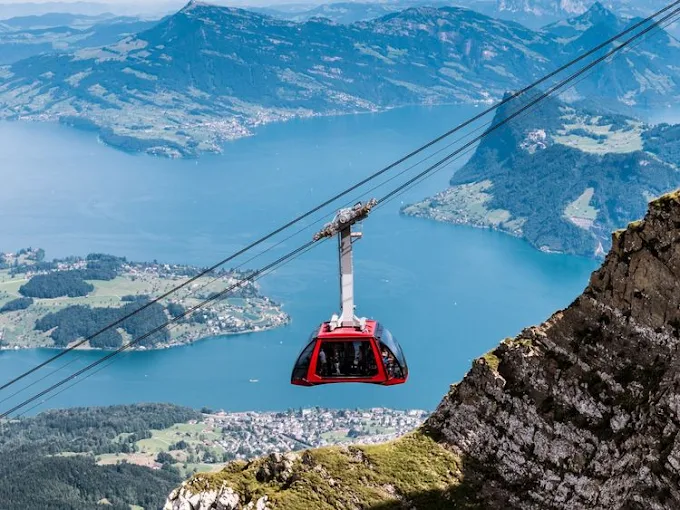
The air grows thin and crisp as the cogwheel railway climbs its final approach—grinding against steel rails at a 48% gradient, the steepest in the world. You stand on the observation deck at 2,132 meters (7,000 feet), watching morning mist dissolve beneath your boots to reveal Lake Lucerne sprawling like a fractured sapphire across the Swiss plateau. The wind here carries a distinct chill, even in summer, whispering through the jagged granite spires that give the mountain its dragon-like silhouette. Below, the historic Pilatus Railway cars—painted cream and red—cling to the mountainside like toys against the vast geological theater of the Emmental Alps. This isn't merely a viewpoint; it's a summit steeped in myth, where medieval legends claim Pontius Pilate's body was washed ashore, and dragons were said to guard hidden treasures. In 2026, as overtourism compresses Europe's natural wonders into crowded checkpoints, Mount Pilatus remains a sanctuary of scale—a place where the earth rises dramatically to meet the sky, demanding respect, patience, and a willingness to surrender to the slow, rhythmic ascent of true alpine exploration.
Why Mount Pilatus Embodies Swiss Alpine Engineering
Mount Pilatus stands as a testament to human determination against geological impossibility. The Pilatus Railway, opened on June 4, 1889, solved the critical problem of accessing this isolated summit without destructive road construction through protected alpine terrain. Engineer Eduard Locher designed the unique double-rack system that allows trains to climb gradients up to 48%—nearly twice the steepness of standard cogwheel railways—by engaging horizontal gears rather than vertical ones. This engineering marvel prevents the locomotive from sliding backward on the sheer rock face, a safety innovation that has operated continuously for over 135 years without a single fatal accident.
Beyond mechanics, the mountain fulfills a cultural need for connection between the urban lowlands and the wild high Alps. The "Golden Round Trip"—combining boat, cable car, railway, and bus—creates a continuous loop around the lake and mountain, integrating transportation with tourism since 1956. The summit complex houses the Pilatus Kulm Hotel, operating since 1890, which provides accommodation at an altitude where few structures can withstand the winter snow loads of 10 meters. The mountain's name itself derives from the Latin Pileatus (cloud-capped), reflecting its meteorological significance as a weather predictor for Central Switzerland. Today, the infrastructure balances preservation with access: solar panels power the summit stations, while the historic railway remains coal-free yet mechanically authentic, proving that modern sustainability can coexist with 19th-century engineering heritage.
The Best Time to Experience Mount Pilatus
For optimal visibility and operational reliability, visit between June 10–June 25 or September 5–September 20. During these windows, you avoid the peak summer crowds while enjoying stable weather patterns. Summit temperatures range from 8–15°C (46–59°F) during the day, while Lucerne at the base enjoys 18–24°C (64–75°F). The ideal departure time from Lucerne is 8:00–9:00 AM, ensuring you reach the summit before afternoon clouds typically gather around the peak after 2:00 PM.
Winter operations (November–March) are limited due to snow and maintenance; the cogwheel railway closes, leaving only the cable car from Kriens operational. Winter temperatures plummet to -5–5°C (23–41°F) at the summit, with wind chill making it feel significantly colder. While snow-covered landscapes offer dramatic photography, fog inversion layers often obscure the lake view entirely. Summer peak season (July 15–August 15) brings temperatures up to 18°C (64°F) at the top but also queues exceeding 90 minutes for the railway.
Avoid these periods: August 1 (Swiss National Day fireworks create congestion), December 24–January 2 (holiday closures and reduced schedules), and late October (annual maintenance shutdowns for the railway). For real-time webcam views and operating status, verify conditions at pilatus.ch or check the Swiss Meteo Office at meteoswiss.admin.ch for alpine weather warnings before departure.
Approximate Budget for a 7-Day Trip (2026)
This budget estimate reflects mid-range travel preferences for a solo traveler or couple, based on 2026 pricing adjusted for Switzerland's 2.5% annual inflation rate (Swiss Federal Statistical Office data). Switzerland remains one of Europe's premium destinations, but the Swiss Travel Pass offers significant value for extensive exploration including Mount Pilatus.
Accommodation:
• Budget hostel (dorm bed): CHF 55–CHF 75 per night (Youth Hostel Lucerne, near train station)
• Mid-range hotel (3-star, Lucerne old town): CHF 210–CHF 290 per night (Hotel des Balances or similar)
• Upscale boutique (4-star, lake view): CHF 380–CHF 550 per night (Bürgenstock Resort or Palace Hotel)
Food: CHF 75–CHF 110 per day
• Breakfast: CHF 18–CHF 25 (hotel buffet with Swiss muesli and cheeses)
• Lunch: CHF 28–CHF 38 (mountain restaurant Rösti or sandwich at summit)
• Dinner: CHF 45–CHF 65 (traditional fondue at Wirtshaus Galliker or Old Swiss House)
• Coffee/pastry: CHF 8–CHF 12
Transportation:
• Swiss Travel Pass (8 days, 2nd class): CHF 432 (covers trains, buses, boats, 50% off most mountain railways)
• Lucerne Visitor Card (free with hotel): includes local buses and museum discounts
• Airport transfer (Zürich to Lucerne): covered by Swiss Travel Pass or CHF 34 one-way train
• Mount Pilatus Golden Round Trip: CHF 108 full fare (50% off with Swiss Travel Pass = CHF 54)
Attractions:
• Mount Pilatus Summit Access: Included in Golden Round Trip
• Swiss Museum of Transport: CHF 42 (free with Swiss Travel Pass)
• Lion Monument: Free
• Chapel Bridge: Free
• Guided Lucerne Walking Tour: CHF 30
Miscellaneous:
• Souvenirs (Swiss knife, chocolate, cowbell): CHF 60–CHF 150
• Travel insurance (7 days): CHF 50–CHF 80
• SIM card/data (Swisscom 10GB): CHF 45
• Emergency fund: CHF 150
Total estimated cost (mid-range): CHF 2,450–CHF 3,100 for 7 days
Budget traveler option: CHF 1,200–CHF 1,500
Luxury experience: CHF 5,000–CHF 7,500+
7 Essential Mount Pilatus Experiences
1. The Golden Round Trip: Begin at Lucerne Bahnhofquai at 8:00 AM with a boat cruise to Alpnachstad (1 hour 15 minutes). Transfer to the historic cogwheel railway for the steep ascent to Pilatus Kulm (30 minutes). Descend via aerial cableway and gondola to Kriens, then bus back to Lucerne. This circular route ensures varied perspectives: water-level views, steep railway engineering, and panoramic cable car vistas. Total journey time: 5–6 hours. Cost: CHF 108 full fare.
2. Sunrise at Pilatus Kulm: Book an overnight stay at the Pilatus Kulm Hotel to witness sunrise from the summit. Wake at 5:30 AM (June–August) to watch the alpenglow paint the Bernese Oberland peaks pink while the lake below remains in shadow. The hotel restaurant serves early breakfast at 6:30 AM. This experience avoids all day-trip crowds. Cost: Hotel rooms from CHF 350 per night including summit access.
3. Dragon Path Hike: From the summit station, follow the marked "Dragon Path" (Drachenweg) to the Tomlishorn peak. This 1.5-kilometer ridge walk takes 45 minutes and features informational panels about the mountain's legends. The path includes metal staircases bolted into granite and offers vertigo-inducing views into the valley below. Wear sturdy hiking boots; the trail is exposed. Free with summit access.
4. Fräkmüntegg Adventure: Take the gondola down one stop to Fräkmüntegg (1,650 meters). Here you find the longest summer toboggan run in Central Switzerland (1,350 meters) and a rope park. The aerial walkway offers 360-degree views without the summit crowds. Open May–October, 9:00 AM–5:00 PM. Toboggan run cost: CHF 15 per person.
5. Historic Railway Cab View: Request permission from the conductor to sit in the front cabin of the cogwheel train (subject to availability). You witness the rack mechanism engaging the rails and the brake systems operating on the 48% gradient. The mechanical sounds and vibrations provide a sensory connection to the 1889 engineering. Best photographed during the ascent from Alpnachstad. No extra cost.
6. Summit Panorama Restaurant: Dine at the Pilatus Kulm Restaurant at 1:00 PM when day-trippers are descending. Order the Kalbsgeschnetzeltes (veal in cream sauce) while sitting on the terrace. The elevation affects cooking times, making traditional Swiss dishes taste distinctively heartier. Reserve via +41 41 329 11 11. Main courses: CHF 35–CHF 48.
7. Winter Cable Car Experience: Visit between December 15–March 15 for the winter cable car operation from Kriens. The heated cabins glide over snow-covered forests, offering a quiet contrast to summer bustle. The summit features winter hiking trails and sledding options. Temperatures are cold; dress in layers. Cable car round-trip: CHF 64 (50% off with Swiss Travel Pass).
3 Hidden Gems Most Travelers Miss
• Tomlishorn Peak: While most visitors stay at the main Kulm complex, the true highest point is Tomlishorn (2,132 meters), a 15-minute hike away. A metal ladder leads to the absolute summit cross with unobstructed views of the Eiger, Mönch, and Jungfrau. Most tourists miss this because it requires walking past the hotel. Access: Follow yellow hiking signs from Pilatus Kulm. Best visited: 10:00 AM when crowds thin. No fee.
• Matthorn Chapel: Located on the lower slopes near Kriens, this small 17th-century chapel is rarely visited by summit-bound tourists. It features original baroque frescoes and offers a quiet perspective of the mountain from below. Access: Bus #1 from Lucerne to "Kriens, Dorf," then 20-minute uphill walk. Open daily 8:00 AM–6:00 PM. Free entry. Insider tip: Visit during evening vespers for choir practice on Sundays.
• Alpnachstad Railway Museum Corner: At the base of the cogwheel railway, a small display case near the ticket office houses original 1889 engineering drawings and Locher's prototype gear models. Most passengers rush to board without looking. Access: Arrive 20 minutes before departure. Open during railway operating hours. Contact: +41 41 329 11 11 for guided group explanations. Free viewing.
Cultural & Practical Tips
• Weather volatility: Alpine weather changes within minutes. The Föhn wind can drop temperatures 10°C rapidly. Always carry a windproof jacket even in July. Check the summit webcam before departing Lucerne. If clouds cover the peak, postpone your trip—visibility is the primary value.
• Queue management: During peak season (July–August), queues for the cogwheel train exceed 60 minutes. Purchase tickets online 24 hours in advance to secure a time slot. Swiss Travel Pass holders still need to reserve a seat during peak times (CHF 10 reservation fee).
• Photography etiquette: Tripods are permitted on observation decks but not inside train carriages (they block aisles). Drone usage is strictly prohibited without FOCA authorization. Respect other visitors' views; do not monopolize railing space for extended shoots during busy periods.
• Language basics: The region speaks Swiss German. Learn these phrases: "Grüezi" (GRÜE-tsi) for hello, "Bergbahn" (BERG-bahn) for mountain railway, "Aussicht" (OWS-icht) for view, "Danke vilmal" (DAHN-keh feel-mahl) for thank you very much. English is widely spoken at ticket counters.
• Altitude awareness: At 2,132 meters, some visitors experience mild altitude sensitivity. Ascend slowly, stay hydrated, and avoid strenuous hiking immediately upon arrival. The railway ascent is rapid; if you feel dizzy, sit down in the summit restaurant until acclimatized.
• Sustainability practices: Pilatus-Bahnen AG aims for carbon neutrality by 2030. Use public transport to reach Alpnachstad or Kriens rather than driving. Dispose of waste in designated recycling bins at the summit—there are no landfills on the mountain. Respect wildlife; do not feed alpine choughs (birds).
Conclusion: Travel with Reverence, Not Just Checklists
Mount Pilatus rises 2,132 meters not merely to be conquered, but to be witnessed—with humility before the granite forces that shaped it over millennia. As you stand on the Tomlishorn summit in 2026, watching clouds drift beneath your feet while the cogwheel railway hums below, remember that this mountain has survived ice ages, legends, and industrialization without losing its soul. Responsible travel means choosing the train over the helicopter, waiting for clear weather rather than forcing a foggy visit, and understanding that the silence of the high Alps is a fragile resource worth protecting.
Slow down. Let the railway climb at its engineered pace. Speak softly on the observation deck. Leave no trace on the Dragon Path. This mountain will stand long after your footprints fade into the scree. Carry forward not just a summit selfie, but a deeper respect for the balance between human access and natural preservation. True exploration isn't about reaching the top fastest; it's about arriving with eyes open, heart quiet, and a commitment to ensure that the dragons of Pilatus—real or mythical—remain undisturbed for the next generation of travelers who seek refuge in the clouds.