
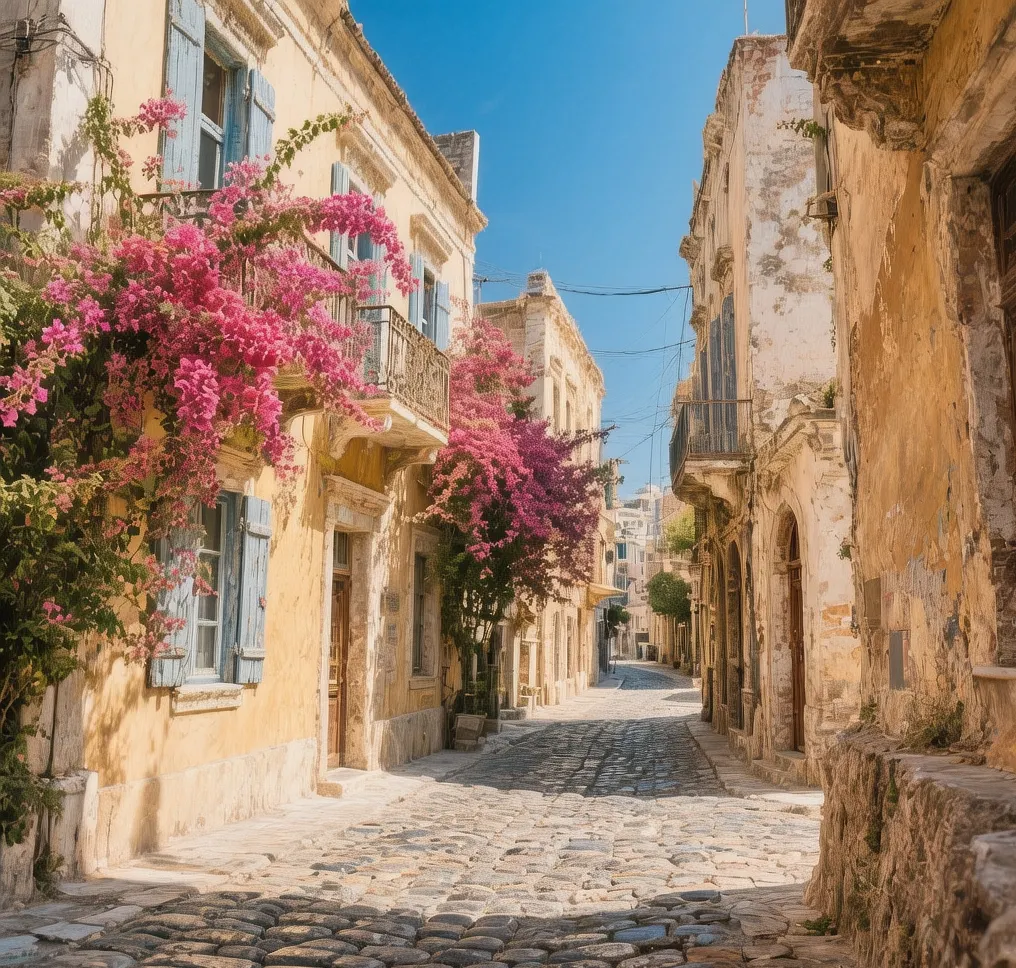
Rethymno Old Town: Where Venetian Arches Meet Ottoman Balconies
The late afternoon sun spills across the labyrinthine streets of Rethymno old town as you wander beneath weathered stone arches, where the air carries the intoxicating blend of sea salt, wild jasmine, and the faint mineral tang of ancient limestone buildings. Before you unfolds a living tapestry of Mediterranean history—a pedestrian quarter spanning approximately 40 hectares where Venetian loggias stand beside Ottoman fountains, where colorful neoclassical facades reflect in calm harbor waters, and where narrow cobblestone alleys—some barely 2 meters wide—twist and turn in deliberate patterns designed to confuse invaders centuries ago. The only sounds are the gentle lap of waves against the harbor quay, the distant chime of church bells echoing through stone corridors, and the soft footsteps of travelers discovering this architectural palimpsest. This extraordinary enclave—constructed primarily between the 13th and 19th centuries during successive Venetian and Ottoman rule—solves a fundamental human need: the desire to experience layered history where architecture, culture, and daily life converge into something magical. Standing on these ancient stones as light illuminates carved wooden balconies, you understand: Rethymno old town matters because it offers a rare encounter with cultural synthesis—a place where East meets West, where past meets present, and where every weathered facade whispers stories of merchants, artisans, and dreamers who shaped this timeless Cretan jewel.
Why Rethymno Old Town Embodies Cultural Synthesis
The Rethymno old town represents one of the Mediterranean's most successful examples of architectural layering—a historic quarter that solved the fundamental challenge of creating a functional urban center while accommodating successive civilizations that left their indelible imprint. Originally developed as a significant settlement during the Minoan period, Rethymno flourished under Venetian rule (1204–1645) when the iconic Fortezza fortress was constructed between 1573 and 1580 to protect the harbor, then expanded under Ottoman administration (1645–1898) with the addition of mosques, hammams, and administrative buildings, creating a unique architectural dialogue where Gothic arches frame Islamic minarets and neoclassical facades overlook Byzantine foundations.
The old town's visual impact stems from precise urban planning: the pedestrian core features over 120 preserved Venetian buildings with distinctive arched doorways, wooden balconies (sachnisi), and stone courtyards, while Ottoman elements include the Neratze Mosque (built 1590, now housing the Municipal Gallery) and the Rimondi Fountain (1629) with its three lion-head spouts. The narrow street network—designed with defensive considerations in mind—creates intimate microclimates where temperatures run 3–5°C cooler than exposed areas, while the harbor's horseshoe shape (approximately 200 meters across) provides natural protection for fishing vessels and pleasure craft. The Fortezza fortress, measuring 230 meters long by 140 meters wide with walls rising 8–10 meters high, demonstrates Venetian military engineering that influenced coastal defense design across the Mediterranean.
Today, Rethymno old town fulfills multiple roles: it serves as a living residential quarter with approximately 3,000 inhabitants, a cultural landmark that anchors Crete's visual identity, and a contemplative space where visitors confront the enduring human capacity for cultural adaptation. The ongoing preservation efforts by the Greek Ministry of Culture—using traditional materials and techniques to maintain historic facades while upgrading infrastructure for modern life—ensure that this iconic quarter continues to inspire while honoring its layered heritage. Every glance across these cobblestone streets connects you to generations of artisans, scholars, and families who believed that beauty and function could coexist—a reminder that cultural synthesis has deep, remarkable roots in the Cretan experience.
The Best Time to Experience Rethymno Old Town
Timing transforms a visit to Rethymno old town from pleasant stroll to immersive encounter with Mediterranean history. The optimal windows stretch from May 18–June 12 and September 15–October 20, when temperatures hover between 18–25°C (64–77°F), atmospheric clarity allows exceptional viewing of architectural details, and visitor numbers remain manageable enough for unhurried exploration of the labyrinthine streets. During these shoulder seasons, you'll experience comfortable conditions for walking the cobblestone pathways while capturing photographs in the soft, directional light that reveals the textured limestone and vibrant building facades.
Arrive precisely at 7:00–9:00 AM when the old town awakens—this golden hour delivers cooler temperatures, minimal crowds, and the most atmospheric light filtering through narrow alleyways. The pedestrian quarter operates as a public space 24 hours, but the most authentic experiences occur during early morning when locals open shops and evening (6:00–8:00 PM) when tavernas fill with residents sharing dinner. Winter months (November–February) offer profound solitude and dramatic storm-washed skies that create atmospheric photography conditions, though temperatures drop to 10–14°C (50–57°F) with increased rainfall that can make the ancient stones slippery.
Avoid July 15–August 31 unless absolutely necessary: temperatures regularly exceed 30°C (86°F), humidity climbs above 70%, and cruise ship excursions create crushing crowds along the harbor, making leisurely exploration nearly impossible. Also skip Greek Orthodox Easter week and major public holidays when domestic tourism swells visitor numbers..
Approximate Budget for a 7-Day Trip
Crete offers exceptional value for travelers seeking profound cultural experiences combined with Mediterranean beauty. The following breakdown reflects mid-range travel—comfortable boutique accommodations in Rethymno old town or nearby coastal villages, authentic Cretan taverna dining, and comprehensive exploration of Rethymno and greater central Crete—based on current pricing for a single traveler.
- Accommodation: €60–€140 per night in Rethymno old town or harbor area (€420–€980 total). Budget studios start at €35; luxury sea-view suites run €180+.
- Food: €30–€50 per day total. Breakfast: €4–€7 (Greek coffee €2, bougatsa pastry €1.50, fresh fruit €3). Lunch: €9–€16 (Greek salad €6, dakos €8, grilled octopus €14). Dinner: €16–€28 (lamb kleftiko €15, fresh fish €19, Cretan wine €4/glass, dessert €5).
- Transportation: €110 total. Ferry from Athens: €45–€75 one-way (€90–€150 round-trip). Local bus day pass: €8. Car rental: €30/day. Occasional taxi rides: €10–€20 each.
- Attractions: €55 total. Fortezza fortress entry: €4. Historical and Folk Art Museum: €3. Archaeological Museum: €4. Day trip to Preveli Beach: €20. Old town walking tour: free.
- Miscellaneous: €90 total. Water/snacks €3/day, handmade pottery €30–€70, local honey €10, old town souvenirs €12, tips €18.
Total: €1,100–€1,600 for 7 days (excluding international airfare and Athens-Crete ferry)
7 Essential Rethymno Old Town Experiences
- Wander the cobblestone alleys at sunrise: Begin at 7:00 AM when the old town is quiet and follow the narrow pathways from the harbor toward the Fortezza. Morning light filters through stone arches, illuminating carved wooden balconies and vibrant bougainvillea. The 40-hectare pedestrian quarter offers constantly shifting perspectives as you explore. Allow 60 minutes for this foundational exploration; wear sturdy shoes with grip for the uneven limestone.
- Explore the Fortezza fortress: Enter the Venetian citadel at 9:00 AM when morning light reveals the massive stone walls and panoramic harbor views. The fortress measures 230 by 140 meters with walls rising 8–10 meters high; allow 45 minutes to explore the ramparts, Ottoman mosque ruins, and exhibition spaces. The elevated position offers 360-degree views of Rethymno, the Cretan mountains, and the Libyan Sea.
- Photograph the Rimondi Fountain at golden hour: Position yourself at this 1629 Venetian masterpiece at 6:30–7:30 PM when the setting sun casts warm light across the three lion-head spouts and ornate stone carvings. The fountain's Renaissance details—featuring Corinthian columns and mythological reliefs—create stunning compositions against the colorful old town backdrop. Use a wide-angle lens (24mm) to capture the full architectural harmony.
- Dine at a harbor taverna: Reserve a waterfront table for sunset dinner at one of the charming restaurants lining the old harbor. Order traditional Cretan meze: dakos (barley rusk with tomato and feta, €8), grilled octopus (€14), and local lamb kleftiko (€15). Request a table near the water's edge for the best ambiance while watching fishing boats return to harbor.
- Visit the Historical and Folk Art Museum: Located in a restored Venetian mansion near the harbor, this compact museum displays traditional Cretan costumes, jewelry, and household items that illuminate daily life across centuries. Allow 30 minutes to appreciate the collection; the English-language audio guide (€2) provides essential context for understanding Rethymno's cultural evolution.
- Trace the Venetian loggias: Follow the pathway along the harbor's eastern edge to view the distinctive arched colonnades built by Venetian merchants in the 16th century. These covered walkways—featuring 15-meter-long stone arches—demonstrate medieval engineering that created shaded commercial spaces while protecting goods from sun and rain. Visit between 10:00 AM–12:00 PM when natural light reveals the stone craftsmanship most clearly.
- Experience the old town at blue hour: Remain in the labyrinthine streets for 20–30 minutes after sunset—the sky often produces its most ethereal colors during this transition. The colorful facades silhouette beautifully against the deepening blue sky while lanterns begin to glow in shop windows. Use a tripod for long exposures that capture both the illuminated architecture and the fading light.
3 Hidden Gems Most Travelers Miss
- The Ottoman Hammam Ruins: Tucked behind the old town's eastern edge, the partially restored 17th-century Turkish bathhouse reveals Rethymno's Islamic heritage through its distinctive domed architecture and original stone basins. The structure's ventilation system and heating channels demonstrate sophisticated Ottoman engineering. Access: Located 150 meters east of the main harbor; visible from the street, interior access by guided tour only (Tuesday and Thursday at 11:00 AM, contact +30 28310 28221). Most visitors focus on the harbor and miss this intimate glimpse into Ottoman daily life. Allow 15 minutes to appreciate the architectural details from the exterior.
- The Venetian Loggia Courtyard: Behind the harbor's northern waterfront, a restored 16th-century Venetian merchant residence features a hidden courtyard with original stone arches, a central fountain, and climbing jasmine that creates a peaceful oasis away from tourist crowds. The courtyard's acoustics amplify whispered conversation—a feature designed for private business discussions. Access: Enter through the unmarked doorway near the Municipal Gallery; open daily 10:00 AM–6:00 PM; free admission. Best visited at 4:00–6:00 PM when afternoon light filters through the arches most dramatically.
- The Old Town's Artisan Workshops: Scattered throughout the labyrinthine streets, small family-run workshops continue traditional Cretan crafts: pottery firing in wood-burning kilns, leatherworking using centuries-old techniques, and icon painting with natural pigments. These living traditions offer authentic encounters with Rethymno's cultural heritage. Access: Follow signs for "Traditional Crafts" from the harbor; workshops open 9:00 AM–2:00 PM and 5:00–8:00 PM. Best visited between 10:00 AM–12:00 PM when artisans are most active. Respect working spaces by asking permission before photographing and supporting craftspeople through purchases.
Cultural & Practical Tips
- Photography etiquette: Personal photography is permitted throughout the old town. Respect private property—many courtyards and balconies belong to residents. The best light for architectural photography occurs during the first and last hours of daylight; avoid shooting directly into the sun to prevent lens flare on stone surfaces. Use a polarizing filter to enhance sky colors and reduce glare on limestone.
- Footwear and terrain: The old town features uneven cobblestones, loose gravel, and occasional steps. Wear sturdy, closed-toe shoes with excellent grip—avoid sandals or smooth-soled footwear. The narrow alleyways can be windy; secure hats and loose clothing.
- Hydration essentials: Carry at least 1.5 liters of water per person for old town exploration; there are limited vendors along narrow pathways. Fill bottles at public fountains near the harbor—Crete tap water is safe and excellent quality.
- Local phrases: Kalimera (kah-lee-MEH-rah) = Good morning; Kalispera (kah-lee-SPER-ah) = Good evening; Efharisto (ef-hah-REE-stoh) = Thank you; Parakalo (pah-rah-kah-LOH) = Please/You're welcome; Yassou (YAH-soo) = Hello. Using these greetings earns warm smiles from Rethymno's hospitality-focused residents.
- Crowd management strategy: Popular viewpoints become crowded 90 minutes before sunset. Arrive early to secure positioning, or choose alternative angles from the Fortezza ramparts for equally stunning views with fewer people. Bring a light layer—winds increase significantly at the exposed harbor after sunset.
- Weather awareness: Rethymno's coastal location is exposed to strong meltemi winds, especially July–August. Secure hats, loose clothing, and camera equipment. Check wind forecasts before planning sunset viewing; gusts can exceed 40 km/h. Winter visits may experience sudden rain—cobblestones become extremely slippery when wet.
- Respectful tourism: Rethymno old town's beauty depends on preservation. Stay on marked paths to prevent erosion of ancient stones. Do not climb historic buildings or attempt to enter restricted residential areas. Support local artisans and tavernas rather than international chains.
Conclusion: Travel with Presence, Not Just Checklists
The Rethymno old town demands more than a hurried photograph and a quick checkmark—it asks for your presence, your patience, your willingness to stand on ancient cobblestones and let the story of cultural synthesis unfold gradually. When you watch the sun paint the Venetian arches in colors no pigment can replicate, or feel the sea breeze carry the scent of wild jasmine through narrow alleyways, you participate in a moment as old as Mediterranean culture itself. This is not passive tourism; it is active communion with a landscape shaped by history, architecture, and time.
Responsible travel here means understanding that this iconic quarter is fragile: every footprint on unmarked paths accelerates erosion, every discarded item mars the pristine vistas, every disrespectful action diminishes the experience for those who follow. Walk gently. Speak softly. Take only images; leave only gratitude. Support conservation efforts by respecting site guidelines and choosing eco-conscious accommodations that honor Rethymno's delicate balance between tourism and preservation.
This is not a backdrop to be consumed but a meditation to be experienced—a place where architectural heritage and daily life converge to create something transcendent. Slow down. Sit on a sun-warmed stone. Watch light change across carved balconies. Let Rethymno reveal its story gradually, as weathered stone reveals its history to patient observers. The old town will still stand tomorrow, but your opportunity to encounter it with wonder and respect exists only in this moment. Choose presence over haste, connection over completion, and carry not just photographs but a deeper appreciation for the enduring power of cultural synthesis and human adaptation to natural forces.