
Spinalonga: Where Fortress Stones Meet Haunting History
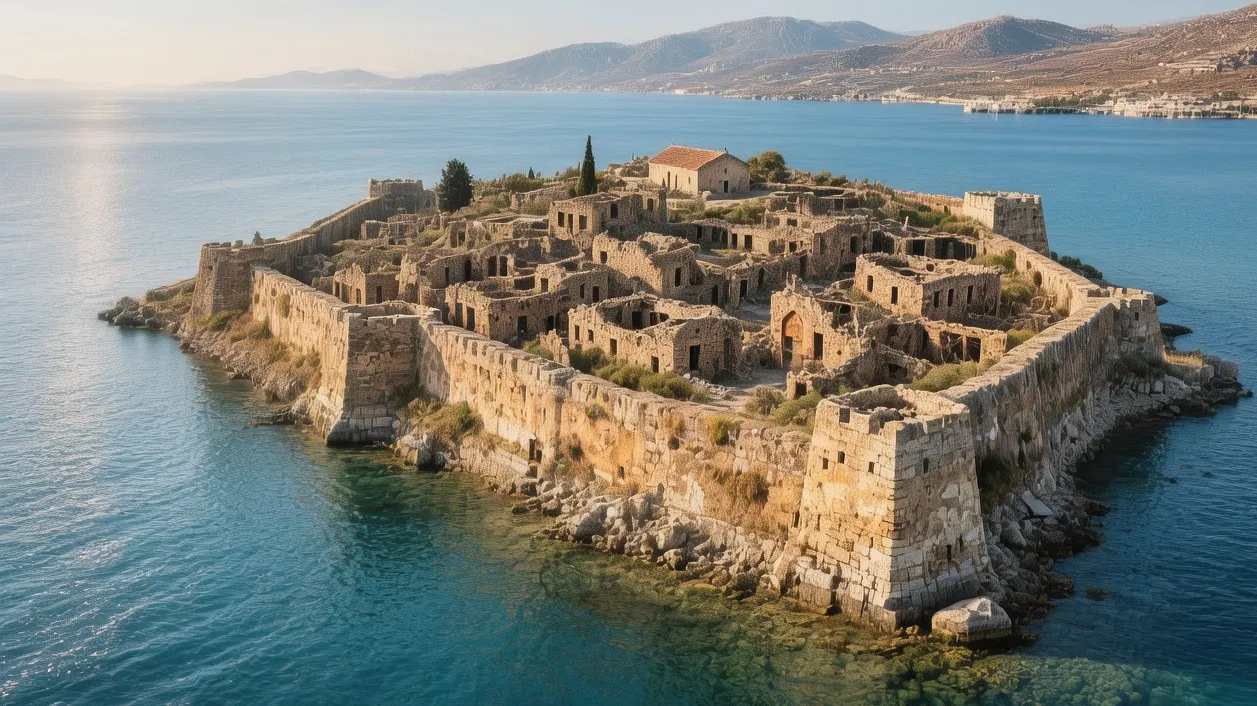
The morning sun spills across the weathered limestone of Spinalonga as you step onto the ancient quay, where the air carries the crisp scent of sea salt, wild thyme, and the faint mineral tang of sun-warmed Venetian stone. Before you unfolds a small island approximately 850 meters long by 450 meters wide—a fortified enclave where massive defensive walls rise 10 meters above the turquoise waters of Mirabello Bay, where abandoned stone buildings stand silent testimony to centuries of human stories, and where narrow pathways wind between cypress trees and crumbling facades. The only sounds are the gentle lap of waves against the harbor, the distant cry of seabirds circling the fortress ramparts, and the soft footsteps of travelers moving respectfully through this layered landscape of memory. This extraordinary site—once a Venetian stronghold, later a place of isolation and resilience—solves a fundamental human need: the desire to confront history in its most tangible form, where architecture, geography, and human experience converge into something profoundly moving. Standing on these ancient stones as light illuminates weathered archways, you understand: Spinalonga matters because it offers a rare encounter with the complexity of human endurance—a place where fortress engineering, medical history, and natural beauty collaborate to create an experience that transcends ordinary tourism and awakens deep reflection on compassion, community, and the enduring power of place.
Why Spinalonga Embodies Human Resilience
The Spinalonga island represents one of the Mediterranean's most poignant examples of adaptive architecture—a fortified enclave that solved the fundamental challenge of creating defensible maritime positions while later accommodating profound human needs for care, community, and dignity during challenging times. Originally constructed as a Venetian fortress beginning in the late 16th century to protect Crete's eastern coast, the island's massive stone walls—measuring up to 10 meters in height and 3 meters in thickness—were engineered with sophisticated bastions, cannon emplacements, and water cisterns that could sustain a garrison during extended sieges. The fortress's pentagonal design, with walls following the island's natural contours, demonstrates military engineering that influenced coastal defense architecture across the Venetian maritime empire.
Spinalonga's historical significance extends beyond military architecture: in the early 20th century, the island served as a sanctuary for individuals affected by Hansen's disease, transforming from a place of isolation into a community where residents created gardens, social structures, and cultural traditions that honored human dignity despite challenging circumstances. The stone buildings—constructed primarily from local limestone with wooden beams and tile roofs—were adapted over time to serve residential, medical, and communal functions, demonstrating how architecture can evolve to meet changing human needs. The island's natural features—including freshwater springs, sheltered harbors, and elevated vantage points—provided practical resources that supported both military and residential uses across centuries.
Today, Spinalonga fulfills multiple roles: it serves as a historical landmark preserving layers of Cretan heritage, an educational resource for understanding medical and social history, and a contemplative space where visitors confront the enduring human capacity for resilience and compassion. The ongoing conservation efforts by the Greek Ministry of Culture—using traditional materials and techniques to preserve fragile stonework while maintaining safe access pathways—ensure that this extraordinary site continues to inspire while honoring the stories of those who lived, worked, and found community within its walls. Every step along these ancient pathways connects you to generations of soldiers, administrators, caregivers, and residents who believed that dignity and hope could flourish even in challenging circumstances—a reminder that human spirit has deep, remarkable roots in the face of adversity.
The Best Time to Experience Spinalonga
Timing transforms a visit to Spinalonga from historical tour to immersive encounter with layered heritage. The optimal windows stretch from May 18–June 12 and September 15–October 20, when temperatures hover between 18–25°C (64–77°F), atmospheric clarity allows exceptional viewing of the fortress details and surrounding seascape, and visitor numbers remain manageable enough for contemplative exploration of the island's pathways and buildings. During these shoulder seasons, you'll experience comfortable conditions for walking the approximately 2-kilometer circuit of the island while capturing photographs in the soft, directional light that reveals the textured limestone and the fortress's architectural details.
Arrive precisely at 9:00–10:00 AM on the first boat from Plaka or Elounda—this early departure delivers cooler temperatures for exploring the exposed island, minimal crowds on narrow pathways, and the mental freshness needed to appreciate the site's historical significance. Boat excursions operate daily from nearby harbors during the visiting season, with departures approximately every 30 minutes; the 10–15 minute crossing offers stunning views of Crete's eastern coastline. The island site operates from 8:00 AM year-round, closing at 8:00 PM during summer months and 5:00 PM in winter, with last entry 30 minutes before closing. Winter months offer profound solitude and dramatic storm-washed skies that create atmospheric photography conditions, though temperatures drop to 10–14°C (50–57°F) and boat service may be reduced due to weather.
Avoid July 15–August 31 unless absolutely necessary: temperatures regularly exceed 30°C (86°F), the exposed island offers minimal shade despite cypress trees, and cruise ship excursions create midday crowds that diminish the site's contemplative atmosphere. Also skip periods of strong meltemi winds when boat service may be suspended for safety. For the most current information on boat schedules,
Approximate Budget for a 7-Day Trip
Crete offers exceptional value for travelers seeking profound cultural experiences combined with Mediterranean beauty. The following breakdown reflects mid-range travel—comfortable boutique accommodations in Elounda, Agios Nikolaos, or nearby villages, authentic Cretan taverna dining, and comprehensive exploration of Spinalonga and greater eastern Crete—based on current pricing for a single traveler.
- Accommodation: €70–€160 per night in Elounda, Agios Nikolaos, or coastal villages (€490–€1,120 total). Budget studios start at €45; luxury sea-view suites run €220+.
- Food: €35–€60 per day total. Breakfast: €5–€9 (Greek coffee €2.50, bougatsa pastry €2.50, fresh fruit €4). Lunch: €10–€19 (Greek salad €8, dakos €10, grilled octopus €16). Dinner: €18–€32 (lamb kleftiko €17, fresh fish €21, Cretan wine €5/glass, dessert €6).
- Transportation: €125 total. Ferry from Athens: €45–€75 one-way (€90–€150 round-trip). Car rental for eastern Crete: €35/day. Spinalonga boat excursion: €12 round-trip. Local bus day pass: €8.
- Attractions: €70 total. Spinalonga island entry: €8. Boat tour to Spinalonga: €12. Archaeological Museum of Agios Nikolaos: €6. Day trip to Vai Palm Beach: €25. Guided historical tour: €20 (optional).
- Miscellaneous: €105 total. Water/snacks €4/day, handmade pottery €40–€90, local honey €13, historical guidebooks €15, tips €22.
Total: €1,250–€1,850 for 7 days (excluding international airfare and Athens-Crete ferry)
7 Essential Spinalonga Experiences
- Walk the fortress ramparts at sunrise: Arrive on the first boat at 9:00 AM and follow the pathway to the upper fortress walls. Morning light illuminates the massive stone bastions from the east, revealing the sophisticated military engineering and panoramic views of Mirabello Bay. Allow 30 minutes to explore the ramparts; the elevated position offers 360-degree views of Crete's coastline and the surrounding islands.
- Explore the abandoned residential quarter: Wander the narrow pathways between stone buildings that once housed the island's residential community. Notice the adapted architecture: wooden balconies, stone courtyards, and small gardens that demonstrate how residents created dignity and beauty within challenging circumstances. Visit between 10:00–11:00 AM when natural light reveals architectural details most clearly.
- Contemplate the harbor entrance: Stand at the fortified harbor where boats once delivered supplies, administrators, and residents. The stone quay and defensive structures demonstrate how the island's geography was engineered for both protection and access. Notice how the harbor's natural shelter combines with Venetian engineering to create a functional maritime space. Spend 15 minutes reflecting on the journeys that began and ended at this historic quay.
- Photograph the fortress at golden hour: Position yourself at the island's western viewpoint at 6:30–7:30 PM when the setting sun casts warm light across the weathered limestone walls. The low angle creates dramatic shadows that emphasize the fortress's architectural details and the surrounding seascape. Use a wide-angle lens (24mm) to capture the full scale, or focus on details like the textured stonework and cypress silhouettes.
- Visit the memorial spaces: Locate the commemorative areas that honor the island's complex history with respectful interpretation. These spaces provide context for understanding the human stories associated with Spinalonga while maintaining dignity for those who lived here. Allow 20 minutes for quiet reflection; the interpretive materials offer thoughtful perspectives on resilience, community, and compassion.
- Walk the coastal pathway: Follow the approximately 2-kilometer circuit around the island's perimeter, where the path alternates between fortress walls, natural coastline, and residential areas. The walk reveals how geography, architecture, and human adaptation intersect across the small island. Visit between 2:00–4:00 PM when afternoon light reveals the limestone textures and sea colors most vividly.
- Experience the island at blue hour: If your boat schedule allows, remain on Spinalonga for 20–30 minutes after sunset—the sky often produces ethereal colors that transform the fortress silhouette. The cooling stone and gentle waves create a meditative atmosphere ideal for reflection. Use a tripod for long exposures that capture both the illuminated architecture and the fading light over Mirabello Bay.
3 Hidden Gems Most Travelers Miss
- The Northern Garden Terraces: On the island's sheltered northern slope, restored stone terraces once supported vegetable gardens that provided fresh produce for residents. The terraces demonstrate sustainable agricultural practices adapted to the island's limited soil and water resources. Access: Follow the pathway from the residential quarter toward the northern coast; allow 10 minutes extra. Best visited at 4:00–5:00 PM when afternoon light illuminates the stonework and surrounding vegetation. Most visitors focus on the fortress and miss this intimate glimpse into daily life and resourcefulness.
- The Water Cistern System: Near the fortress center, a partially visible network of stone cisterns and channels demonstrates sophisticated water management engineering that sustained the island's population across centuries. The system collected rainwater and natural springs, distributing it through gravity-fed channels to residential and functional areas. Access: Located near the central pathway; visible from the main route. Visit between 11:00 AM–1:00 PM when natural light reveals the stonework details most clearly. This often-overlooked feature demonstrates how engineering solutions supported human resilience in challenging environments.
- The Eastern Viewpoint: At the island's eastern tip, a small elevated platform offers panoramic views of Crete's eastern coastline, the village of Plaka, and the open Aegean Sea. The vantage point provides geographical context for understanding Spinalonga's strategic importance and natural beauty. Access: Follow the coastal pathway to the eastern end; allow 5 minutes extra. Best visited at 5:00–6:30 PM when golden hour light illuminates both the island and the mainland. Bring binoculars to spot wildlife and appreciate the seascape's full scale.
Cultural & Practical Tips
- Respectful exploration: Spinalonga is a site of historical significance and human memory; speak softly, avoid touching fragile stonework, and stay on marked pathways to protect archaeological layers. Photography is permitted without flash; tripods require advance permission from site staff (+30 28410 91401).
- Footwear and terrain: The island features uneven stone pathways, loose gravel, and occasional steps. Wear sturdy, closed-toe shoes with excellent grip—avoid sandals or smooth-soled footwear. The exposed location offers minimal shade; wear a wide-brimmed hat and apply sunscreen regularly.
- Hydration essentials: Carry at least 1.5 liters of water per person; there are limited vendors on the island itself. The nearest cafés are in Plaka or Elounda. Fill bottles before departing—Crete tap water is safe and excellent quality.
- Local phrases: Kalimera (kah-lee-MEH-rah) = Good morning; Efharisto (ef-hah-REE-stoh) = Thank you; Parakalo (pah-rah-kah-LOH) = Please/You're welcome; Signomi (see-GNO-mee) = Excuse me. Using these greetings earns warm smiles from boat staff and Cretan locals.
- Boat logistics: Spinalonga is accessible by boat from Plaka (10-minute crossing) or Elounda (15-minute crossing). Boats depart approximately every 30 minutes during peak season; confirm return times with staff upon arrival. The crossing can be choppy in windy conditions; those prone to seasickness may wish to prepare accordingly.
- Weather awareness: Spinalonga is completely exposed to Aegean winds and sun. Check weather forecasts before visiting; strong meltemi winds can suspend boat service. Summer temperatures on the island can feel 5–7°C hotter than mainland Crete due to minimal shade; plan exploration for morning hours.
- Accessibility considerations: The island features uneven terrain not suitable for wheelchairs or strollers. Visitors with mobility challenges may view select areas from the harbor vicinity; contact the site office in advance for specific accommodations (+30 28410 91401).
Conclusion: Travel with Reverence, Not Just Checklists
The Spinalonga island demands more than a hurried photograph and a quick checkmark—it asks for your reverence, your reflection, your willingness to stand where history unfolded in stone and story and let the weight of human experience settle around you. When you trace the fortress walls with your eyes or contemplate the adapted buildings that sheltered community and care, you participate in a dialogue across time: the ongoing conversation about how societies respond to challenge with both engineering and compassion. This is not passive tourism; it is active engagement with history, humanity, and the enduring power of place.
Responsible travel here means understanding that Spinalonga's preservation depends on careful stewardship: every footprint off marked paths risks damaging irreplaceable stonework, every touch accelerates deterioration of ancient surfaces, every careless action diminishes the experience for future generations. Walk gently. Speak softly. Take only images; leave only gratitude. Support ongoing conservation by purchasing official tickets and respecting site guidelines that protect this historical treasure for scholars and seekers yet to come.
This is not a ruin to be consumed but a testament to be experienced—a place where time collapses and you stand alongside those who built, lived, and hoped within these walls. Slow down. Sit on a sun-warmed stone. Watch light move across ancient limestone. Let Spinalonga reveal its story gradually, as weathered stone reveals its history to patient observers. The island will still stand tomorrow, but your opportunity to encounter it with wonder and respect exists only in this moment. Choose reverence over haste, understanding over completion, and carry not just photographs but a deeper appreciation for the enduring power of human resilience and the profound lessons that places like this offer to those who listen.