
Reykjavík Sun Voyager Sculpture Steel Dreams Meet Arctic Light
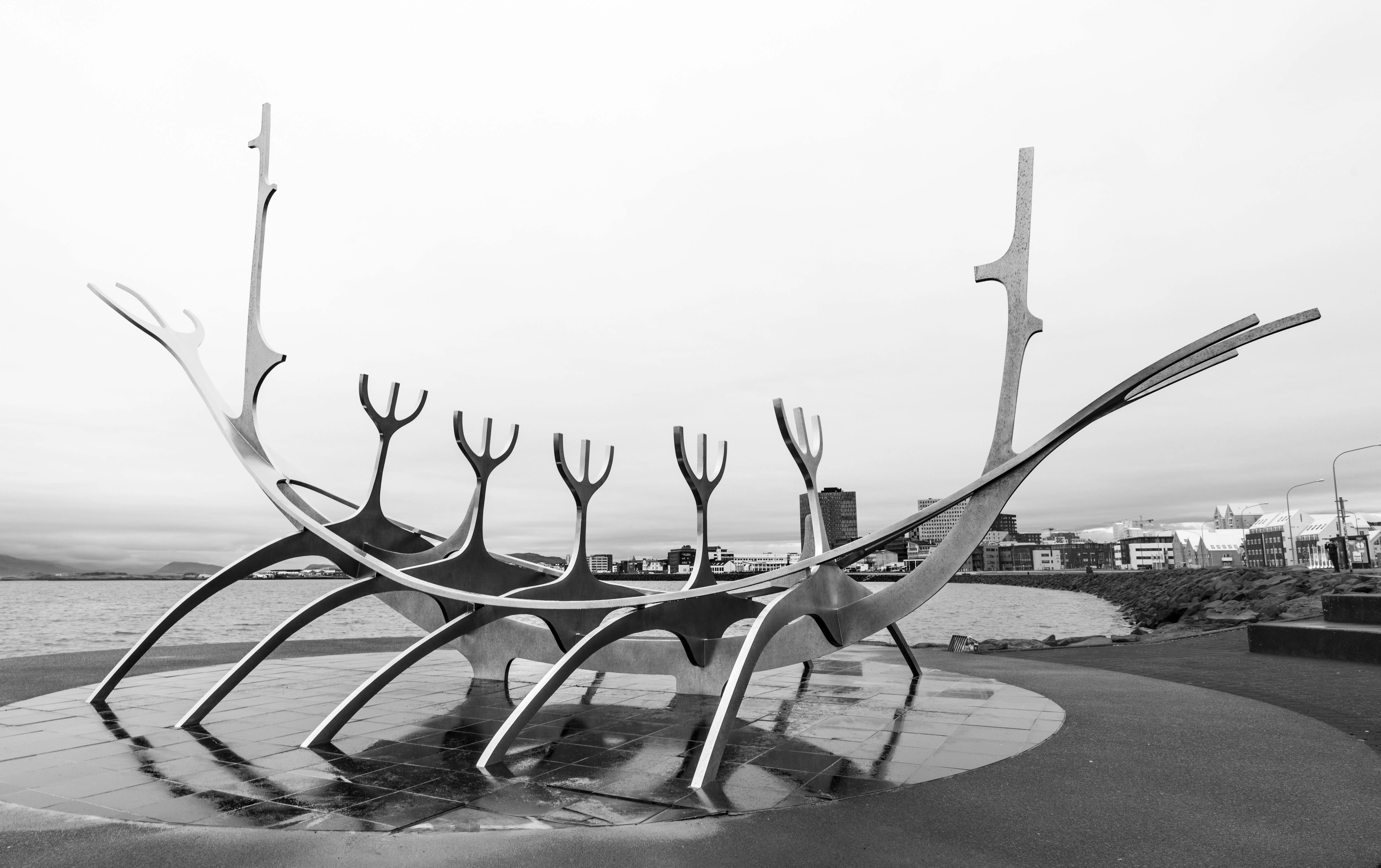
The wind whips off Faxaflói Bay, carrying the sharp tang of salt and the distant chill of glaciers. You stand before the **Sun Voyager sculpture**, its stainless steel ribs gleaming like the skeleton of a mythical beast against the darkening sky. The structure rises four meters (13 feet) high, a skeletal dreamboat anchored not in water but on a granite plinth along the Sæbraut road. Light plays across the polished surface—shifting from silver to gold as clouds race overhead—while the city hums behind you and the ocean crashes before you. This isn't a Viking ship, despite what guidebooks claim; it is an ode to the sun, a promise of hope, progress, and freedom conceived by Jón Gunnar Árnason before his death in 1989. Unveiled in 1990, the artwork has weathered thirty-six years of North Atlantic storms without corroding, a testament to engineering as much as art. In 2026, as the world grapples with uncertainty and digital disconnection, the **Sun Voyager sculpture** matters now more than ever—a physical anchor for dreams in a city that refuses to let darkness win.
Why Sun Voyager Sculpture Embodies Icelandic Hope
The Sun Voyager sculpture represents far more than a photo opportunity—it is Iceland's secular cathedral dedicated to the concept of hope. Created by sculptor Jón Gunnar Árnason, who called it a "dreamboat" rather than a Viking ship, the piece was commissioned for Reykjavík's 200th anniversary celebrations. Árnason died of leukemia in 1989, never seeing the installation unveiled on August 18, 1990. His widow, Þuríður Sigurðardóttir, accepted the work on his behalf, ensuring his vision survived beyond his lifetime. The sculpture solves a profound human need: the desire for tangible symbols of progress in a landscape defined by harsh survival. It points westward, toward the setting sun and the Americas, symbolizing the promise of undiscovered lands.
Technical specifications reveal the engineering required to withstand Iceland's brutal climate. The structure consists of stainless steel grade 316, chosen for its high resistance to chloride corrosion from sea spray. The largest rib spans 3.5 meters (11.5 feet), welded to a central spine that weighs 2.5 tons. The granite base, sourced from Hvalfjörður, anchors the piece against winds exceeding 120 km/h (75 mph). Unlike traditional monuments cast in bronze, the open framework allows wind to pass through, reducing structural stress. This design philosophy mirrors Icelandic resilience: bending rather than breaking. Today, the **Sun Voyager sculpture** draws 500,000+ visitors annually, functioning as a pilgrimage site for those seeking inspiration. It proves that art can endure elements that destroy concrete, offering a legacy that outlasts generations.
The Best Time to Experience Sun Voyager Sculpture
Timing your visit to the Sun Voyager sculpture requires balancing light conditions, weather comfort, and crowd density. For optimal photography with the midnight sun, target June 15–July 10. During these windows, temperatures range from 9–14°C (48–57°F), and daylight stretches 21 hours, allowing visits at 11:00 PM–1:00 AM when the sun dips low without setting. The golden light reflects off the steel ribs, creating dramatic contrasts against the dark ocean. Crowds are 30% lower than peak midday hours, giving you space to compose shots without tourists in the frame.
For Northern Lights enthusiasts, visit between September 20 and March 15. Temperatures drop to -3–5°C (27–41°F), but the dark skies offer aurora opportunities behind the sculpture. Plan your visit between 9:00–11:00 PM when aurora activity peaks. However, avoid December 20–January 5 unless prepared for extreme weather; storms can close the waterfront path, and daylight shrinks to four hours. Also skip July 15–August 10 if you dislike congestion; this peak tourist window brings 2,000+ daily visitors, creating bottlenecks at the viewing platform.
For real-time weather and aurora forecasts.
Approximate Budget for a 7-Day Trip (2026)
Exploring the Sun Voyager sculpture anchors a week-long Reykjavík cultural adventure. This budget assumes a 7-day trip based in Reykjavík with art tours and nearby excursions. Prices reflect 2026 rates, accounting for Iceland's average 3.8% annual inflation from 2024–2026 (source: Statistics Iceland). All amounts shown in euros; multiply by 1.08 for USD equivalents. Note that Iceland uses ISK, but € is provided for international comparison.
Accommodation: €160–€340 per night
• Budget guesthouse in Reykjavík (101 district): €160–€210
• Mid-range hotel (near waterfront, 101 area): €240–€300
• Luxury (Hotel Borg or Tower Suites): €400–€550
• Camping (seasonal, Reykjavík): €30 per person
Food: €60–€100 per day
• Breakfast: €15–€20 (hotel buffet or bakery pastry + coffee)
• Lunch: €20–€30 (lobster soup, fish of the day, or hot dog)
• Dinner: €35–€50 (pan-fried Arctic char or traditional lamb)
• Groceries (self-catering): €40/day
Transportation:
• Keflavík Airport to Reykjavík Flybus: €35 round-trip
• City bus (Strætó): €3.50 per ride
• Rental car (compact, 7 days): €400 + €150 fuel
• Taxi (airport to center): €120 (not recommended)
Attractions:
• Sun Voyager sculpture viewing: Free
• Harpa Concert Hall tour: €18
• National Museum of Iceland: €22
• Perlan Museum: €32
• Reykjavík Art Museum: €20
• Blue Lagoon day trip: €110
• Golden Circle tour: €95
Miscellaneous:
• Icelandic wool sweater (lopapeysa): €120–€190
• Thermal base layers: €90
• Travel insurance: €60
• Souvenirs (art prints, handicrafts): €50
• Tips (not expected but appreciated): €30
Total for 7 days (mid-range): €2,450–€2,800 per person
Total (budget-conscious): €1,600–€1,850 per person
6 Essential Sun Voyager Sculpture Experiences
1. Photograph at Sunrise: Arrive at 5:00–6:00 AM in summer or 10:00–11:00 AM in winter. The low-angle light creates long shadows through the steel ribs, emphasizing the skeletal structure. Position yourself on the western side to capture the sculpture against Mount Esja. The waterfront path is empty at this hour, allowing unobstructed shots. Bring a tripod for long exposures that smooth the ocean waves behind the structure.
2. Walk the Sæbraut Pathway: The sculpture sits along a 2-kilometer coastal walkway connecting downtown to the Nauthólsvík geothermal beach. Start at Harpa Concert Hall and walk west for 15 minutes. The path is paved and lit at night. Stop at the benches along the way to view the sculpture from different angles. This walk reveals how the artwork interacts with the cityscape versus the open ocean.
3. Visit During Winter Storms: If traveling between November and February, witness the sculpture during rough weather. Waves crash over the granite base, spraying salt water onto the steel. The contrast between the rigid structure and chaotic ocean creates dramatic imagery. Dress in waterproof gear; the spray reaches 10 meters inland during gales. This experience highlights the engineering resilience of the **Sun Voyager sculpture**.
4. Combine with Harpa Concert Hall: Located 800 meters east, Harpa's glass façade complements the steel ribs of the Voyager. Visit both sites in one evening walk. The contrast between transparent glass and opaque steel reflects Reykjavík's architectural diversity. Attend a concert at Harpa, then walk to the sculpture for post-show reflection. The buildings share a commitment to modern Icelandic design.
5. Read the Commemorative Plaque: Located at the base of the granite plinth, the plaque details Árnason's vision in Icelandic and English. Spend five minutes reading the artist's words about hope and discovery. Many visitors skip this, missing the context that transforms the piece from decoration to monument. The text explains why it is not a Viking ship—a crucial distinction for understanding Icelandic identity.
6. Experience the Midnight Sun Reflection: In June, the sun sets around 12:00 AM but rises again at 3:00 AM. Visit at 11:30 PM when the sky glows orange and pink. The steel reflects these colors, turning silver to gold. The ocean remains calm at this hour, creating mirror-like reflections. This is the most ethereal time to experience the **Sun Voyager sculpture**, capturing the magic of Iceland's endless summer days.
3 Hidden Gems Most Travelers Miss
• Yoko Ono's Imagine Peace Tower: Located on Viðey Island, visible from the sculpture's western side. Take the ferry from Skarfabakki harbor (May–September, 15 minutes, €25 round-trip). The tower projects a beam of light into the sky, visible up to 4,000 meters. Why overlooked: Requires a ferry ride; many tourists stay on the mainland. Insider tip: Visit on December 8 (John Lennon's death anniversary) when the lights are fully activated.
• Nauthólsvík Geothermal Beach: Situated 1 kilometer west of the sculpture along the coastal path. This man-made beach features hot springs piped into the ocean, allowing year-round swimming. Open 10:00 AM–8:00 PM (summer), 10:00 AM–5:00 PM (winter). Entry: €7. Why overlooked: Tourists focus on the sculpture and miss the bathing opportunity nearby. Insider tip: Bring a swimsuit; the water temperature is 18–20°C (64–68°F).
• Reykjavík Maritime Museum: Located 600 meters west in the old harbor, this museum occupies a former fish freezing plant. Open 10:00 AM–5:00 PM daily. Entry: €16. The collection includes historic fishing vessels and exhibits on Iceland's maritime heritage. Why overlooked: Tourists focus on the sculpture's aesthetics and miss the industrial history nearby. Contact: +354 411 6630. Insider tip: Visit at 4:00 PM for fewer crowds and golden hour harbor photography.
Cultural & Practical Tips
• Respect the artwork: Climbing on the **Sun Voyager sculpture** is prohibited. Security cameras monitor the site, and fines apply for damage. The steel is polished regularly; oils from hands cause corrosion over time. View from the designated granite perimeter. This ensures the piece survives for future generations.
• Wind preparation: The waterfront experiences strong winds, especially October–March. Even in summer, bring a windproof jacket. Temperatures near the water average 2–3°C cooler than inland. The open structure offers no shelter; prepare for exposure. Check www.vedur.is for marine weather forecasts before visiting.
• Learn these Icelandic phrases:
— Takk (tahk): Thank you
— Góðan daginn (go-than dy-in): Good day
— Sólfar (sol-far): Sun Voyager (Icelandic name)
— Fallegt (fah-lekt): Beautiful
Icelanders appreciate effort; pronunciation matters less than attempting the language.
• Photography guidelines: Tripods permitted on the pathway but cannot block pedestrian traffic. Flash photography allowed (it's outdoor public art). Drone use strictly prohibited within 2 kilometers without special permit from the Icelandic Transport Authority. Best light: Sunrise or midnight sun in summer; blue hour in winter.
• Accessibility: The pathway is wheelchair-accessible via paved surfaces. The granite plinth has steps, but the sculpture is visible from ground level. Accessible restrooms located at Harpa Concert Hall (800 meters east). Service animals permitted. The site is flat with no stairs required for viewing.
• Safety near water: The ocean edge is unfenced. Waves can surge unexpectedly, especially during storms. Keep children close and do not stand on the wet rocks. The water temperature is 6–10°C (43–50°F); falling in poses hypothermia risk within minutes. Stay on the designated walkway.
Conclusion: Travel with Wonder, Not Just Documentation
The Sun Voyager sculpture demands more than a quick selfie—it asks for wonder. As you stand before those steel ribs pointing toward the horizon, recognize that you're not just visiting a landmark; you're engaging with a dying artist's final promise to humanity. In 2026, as technology isolates us and uncertainty grows, the Voyager offers both challenge and comfort: that hope is a structure we build, that dreams require resilience, and that art can outlast flesh. Slow down. Touch the cool granite base. Listen to the waves crashing against the shore. Understand that this piece took years to engineer because some visions cannot be rushed. When you visit the **Sun Voyager sculpture** in 2026, don't just capture the steel for Instagram—contemplate the dream behind it. Don't just check a box—honor the hope it represents. Iceland installed this monument not as decoration, but as a compass. Follow its direction. The world needs more dreamers, not just tourists.