
Leksand Summer Festivals: Where Ancient Midsummer Traditions Meet Dalarna's Crystal Waters
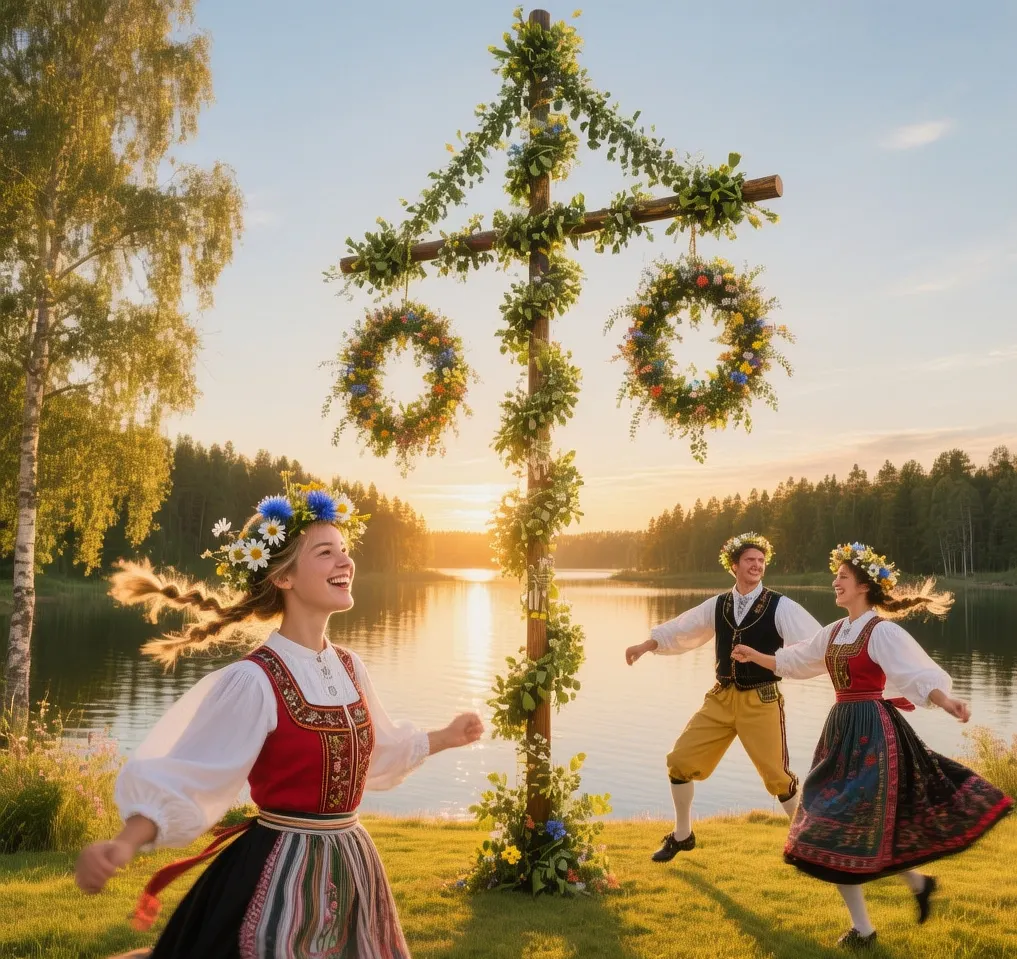
The golden light of a Swedish summer evening stretches endlessly across Lake Siljan as flower-crowned figures gather on emerald meadows—the air thick with the scent of wildflowers, freshly cut grass, and woodsmoke from distant grills. This is Leksand in June, where time seems to pause between the eternal twilight hours, and centuries-old rituals unfold with the precision of a well-rehearsed symphony. The maypole stands sentinel at the center of it all, wrapped in birch leaves and wildflowers, waiting for the first notes of the spelmanslag—traditional folk musicians—to signal the start of dancing that will continue well past midnight. Children in embroidered folk costumes chase each other through fields of daisies while elders share stories passed down through generations, their voices carrying across water that has witnessed these celebrations since before recorded history. Here, in this lakeside town of roughly 6,000 souls in Sweden's Dalarna province, summer festivals aren't merely tourist attractions—they're living expressions of cultural identity, community bonds, and humanity's ancient celebration of light's triumph over darkness.
Why Leksand Embodies Swedish Midsummer Authenticity
Leksand's summer festival tradition stretches back over four centuries, making it one of Sweden's most authentic and continuously celebrated midsummer destinations. The town's location on the shores of Lake Siljan—Sweden's sixth-largest lake at 354 square kilometers—provided the perfect setting for agricultural communities to gather and celebrate the summer solstice, that pivotal moment when daylight stretches to nearly 18 hours in this latitude (60°N). Unlike commercialized festivals elsewhere, Leksand's celebrations remain deeply rooted in hembygd (homeland) traditions, with local families passing down specific dances, songs, and costume-making techniques through unbroken lineages.
The festival solved a fundamental human need: marking seasonal transitions in a landscape where winter's darkness once threatened survival. When the maypole—called midsommarstång or majstång—is raised on Midsummer's Eve (always the Friday between June 19–25), it represents far more than a photo opportunity. This cross-shaped structure, traditionally decorated with birch branches and flowers gathered at dawn, served as a fertility symbol and community gathering point for agricultural societies dependent on successful harvests. The specific dances performed—the små grodorna (little frogs) dance being most famous—preserve movement patterns documented in 17th-century church records.
What sets Leksand apart is the Leksandsdräkt, one of Sweden's most elaborate and historically significant folk costumes. Dating to the 1700s, this distinctive outfit features a red bodice with intricate silver brooches, a white linen blouse, and a striped wool skirt in specific patterns that historically indicated the wearer's marital status and parish. Over 2,000 residents own and wear these authentic costumes during festivals—representing one of the highest per-capita traditional dress participation rates in Scandinavia. The town's Anders Zorn connection (the famous Swedish painter who documented these traditions in the late 1800s) further cemented Leksand's status as the guardian of Dalarna's cultural heritage.
The Best Time to Experience Leksand Summer Festivals
For the quintessential Leksand festival experience, plan your visit between June 19–26, with Midsummer's Eve (June 20–26, depending on the year) and Midsummer's Day being the absolute peak. The main celebration occurs on the Friday evening and Saturday of this period, when the town transforms into a living museum of Swedish tradition. Temperatures during this window average 18–22°C (64–72°F) during the day, dropping to a crisp 10–13°C (50–55°F) at night—though the sun barely sets, creating an ethereal golden-hour glow that persists from 8:00 PM until 4:00 AM.
For optimal photography and fewer crowds, arrive on Thursday evening (June 18–24) to witness the flower-gathering expeditions at dawn (4:30–7:00 AM), when locals head into forests and meadows to collect birch branches, wildflowers, and grasses for decorating the maypole and homes. The actual maypole raising happens at 6:00 PM on Friday, followed by continuous dancing until midnight. Saturday brings additional folk music performances at Leksands kyrka (church) at 2:00 PM and traditional games throughout the afternoon.
Avoid visiting during Sweden's semestervecka (holiday week) in mid-July when many businesses close and locals travel away—paradoxically making the town quieter but less authentic. Also skip late August when temperatures drop to 12–16°C (54–61°F) and daylight shrinks to 14 hours, diminishing that magical solstice atmosphere. For current festival dates and programming, verify at visitleksand.se/midsommar each spring, as specific event times shift slightly year to year.
Approximate Budget for a 7-Day Trip
Leksand operates on Swedish pricing, which means quality comes at a premium—but strategic choices can keep costs reasonable. This budget assumes traveling during peak festival season (late June) and balances authentic experiences with mid-range comfort. Prices reflect 2024–2025 rates and assume solo travel (costs decrease 20–30% per person for couples).
- Accommodation: €95–€180 per night. Budget: Hostel or shared cottage in Leksand centrum (€95/night). Mid-range: Lakeside stuga (traditional cottage) with kitchen (€140/night). Higher-end: Boutique hotel room with Siljan view (€180/night). Book 4–6 months ahead for festival dates.
- Food: €45–€75 per day. Breakfast: €8–12 (hotel included or café with coffee, smörgås open-faced sandwich). Lunch: €15–20 (dagens lunch—daily special at local restaurants, typically soup, main course, salad, bread, and coffee). Dinner: €25–35 (traditional husmanskost like gravlax, köttbullar, or fresh lake fish at Restaurang Siljan or similar). Self-catering reduces costs by 40%.
- Transportation: Stockholm Arlanda Airport to Leksand: €35–55 one-way via Flygbussarna to Mora then bus 201 (2.5 hours total). Local transport: €0 (walkable town) or €3.50 per bus ride. Bicycle rental: €15/day. Car rental (if exploring Dalarna): €65/day plus fuel (€1.85/liter).
- Attractions: Midsummer festival events: Free (donations welcome). Leksands Konstmuseum: €8. Anders Zorn Museum in nearby Mora: €12. Boat cruise on Lake Siljan: €22. Folk music workshop: €18. Traditional costume photo experience: €25.
- Miscellaneous: Handwoven Dala horse souvenir: €35–85. Local craft market purchases: €20–50. Travel insurance: €45 for week. SIM card/data: €20.
Total 7-day budget: €950–€1,400 (excluding international flights)
7 Essential Leksand Festival Experiences
- Raise the Maypole at dusk: Join hundreds of locals at Leksands IP (sports field) at 6:00 PM on Midsummer's Eve as the community collectively lifts the 8-meter tall midsommarstång using traditional rope-pulling techniques. The pole crashes into its base with a thud that vibrates through the ground, followed by spontaneous cheers and the first strains of "Små Grodorna." Position yourself near the northeastern corner for the best view of both the raising and the subsequent circle dances that form immediately after.
- Dance in traditional costume: Rent a simplified Leksandsdräkt from Leksands Hembygdsförening (Heritage Association) for €30 and join the community dances. The basic steps are taught at 5:00 PM before the maypole raising—arrive early to learn the polska, schottis, and waltz variations. Locals welcome participation; they care more about enthusiasm than perfection. The sensation of wool against skin, silver brooches catching light, and moving in synchronized circles creates an embodied connection to centuries of tradition.
- Gather flowers at dawn: Wake at 4:30 AM on Midsummer's Eve and follow locals into the birch forests surrounding Lake Siljan. Bring baskets (or borrow from your accommodation) to collect seven different types of wildflowers—traditionally placed under your pillow to dream of your future spouse. The forest floor at this hour is cool and damp, carpeted with lily of the valley, daisies, clover, and Queen Anne's lace. This quiet, meditative practice contrasts beautifully with the evening's festivities.
- Savor the traditional smörgåsbord: At 7:00 PM on Midsummer's Eve, join the community feast featuring pickled herring in five preparations, gravlax with mustard sauce, boiled new potatoes with dill, sour cream, chives, grilled salmon, and strawberry cream cake for dessert. The meal is traditionally accompanied by snaps (aquavit) and beer. Restaurants like Wärdshuset Siljan offer festival menus for €45, or join a community table for €35.
- Listen to spelmanslag at sunrise: On Midsummer's Day (Saturday), arrive at Leksands kyrka by 5:00 AM to hear traditional folk musicians play as the sun climbs over Lake Siljan—the acoustic resonance in the 18th-century stone church, combined with the soft light filtering through stained glass, creates a transcendent experience. The musicians play nyckelharpa (keyed fiddle), fiddle, and accordion, performing melodies unchanged since the 1600s.
- Craft your own Dala horse: Visit Nusnäs Dalahästar (20 minutes north in Mora) for a hands-on workshop where you carve and paint your own wooden horse using traditional kurbits floral patterns. The 2-hour session costs €42 and includes all materials. These iconic red horses with ornate detailing originated in Dalarna during the 1600s and represent Sweden's most recognizable craft export.
- Sail Lake Siljan at twilight: Board the historic steamship Stångens at 9:00 PM on Midsummer's Eve for a 90-minute sunset cruise (though the sun barely dips below the horizon). From the water, you witness the shoreline dotted with bonfires, hear folk music drifting across the lake, and see maypoles silhouetted against the perpetual twilight. Tickets: €22, available at the dock or online.
3 Hidden Gems Most Travelers Miss
- Insjön's Antique Market (15 km south): While everyone crowds Leksand's main festival, the neighboring village of Insjön hosts a parallel celebration at its sprawling antique market—the largest in Scandinavia. Open Saturday 8:00 AM–6:00 PM during Midsummer weekend, this 30,000-square-meter venue features over 400 vendors selling everything from vintage folk costumes to hand-forged ironwork. Take bus 201 from Leksand centrum (€3.50, 20 minutes). The hidden treasure: Brittas Antik stall #247, where owner Britta Johansson specializes in 18th-century Dalarna textiles and can authenticate costume pieces.
- Tällberg's Clifftop Ceremony (12 km north): This tiny lakeside village hosts an intimate, non-touristy Midsummer celebration on a dramatic limestone cliff overlooking Siljan. The event begins at 4:00 PM on Midsummer's Eve with a church service in the 13th-century stone chapel, followed by a community picnic. Access: Drive or bike the scenic lakeside route (marked cycling path). Contact tallbergsbyalag@gmail.com 2 weeks ahead to confirm public welcome—usually yes, but this remains a local-first event. The cliff provides spectacular acoustics for folk singing.
- Leksands Konsthantverk Workshop (hidden alley behind main street): Tucked down Smedjegatan 3, this working studio houses three master craftspeople who create traditional silver jewelry, wool textiles, and woodenware using techniques unchanged for 200 years. Open Tuesday–Saturday 10:00 AM–5:00 PM during festival week. Watch silversmith Erik Lindqvist create the distinctive Leksand brooch designs, or try a 30-minute weaving lesson on a 19th-century loom (€15). Most festival visitors never discover this alley, making it peaceful even during peak crowds.
Cultural & Practical Tips
- Respect the costume tradition: The Leksandsdräkt isn't a costume—it's a culturally significant garment worn with pride by families who've owned theirs for generations. Never touch someone's costume without permission, and don't request photos unless they're in a designated photo area. If renting, treat it with reverence: no food or drink while wearing it, and return it immaculately clean.
- Learn essential Swedish phrases: "Glad Midsommar" (glad mid-som-mar = Happy Midsummer), "Tack" (tahk = Thank you), "Skål" (skohl = Cheers). Pronunciation matters less than effort—locals appreciate attempts at their language.
- Photography etiquette: Flash photography is prohibited during church services and certain traditional ceremonies. Always ask before photographing individuals in costume—a nod and smile usually suffices, but respect a "nej tack" (no thank you). Drone use requires municipal permit; contact leksand.kommun@leksand.se two weeks ahead.
- Prepare for variable weather: Even in June, temperatures can swing from 8–25°C (46–77°F) within hours. Pack layers: wool base layer, waterproof jacket, warm hat, and sturdy walking shoes. The ground is often damp from morning dew or evening rain—avoid white shoes and delicate fabrics.
- Understand alcohol customs: Snaps (aquavit) is consumed ceremonially during meals, not as casual drinking. Follow the toastmaster's lead: stand when toasting, make eye contact, drink in one gulp (small glasses), and sit immediately after. Systembolaget (state liquor store) is the only place to purchase alcohol above 3.5%; it's closed Sundays and holidays, so plan ahead.
- Embrace the sleepless night: With only 2–3 hours of twilight between sunset and sunrise, many visitors struggle to sleep. Bring a quality sleep mask, book accommodation with blackout curtains, or embrace the phenomenon—join the all-night dancing, then nap in the afternoon. Your body will adjust within 48 hours.
- Book accommodations immediately: Leksand has only 12 hotels and approximately 200 rental cottages. For Midsummer weekend, book 6–9 months in advance. Alternative: Stay in Mora (30 km north) or Rättvik (20 km south) and commute by bus (routes 201 and 202 run hourly during festival weekend).
Conclusion: Travel with Reverence, Not Just Spectacle
Leksand's summer festivals offer far more than picturesque maypoles and Instagram-worthy folk costumes—they present a living invitation to slow down, to participate rather than observe, to understand that some traditions survive not because they're marketed well, but because they fulfill something deep in the human spirit. When you stand in that circle of dancers, your hand clasped with strangers who moments before were unknown to you, moving in patterns perfected over centuries, you're not watching Swedish culture—you're temporarily becoming part of its continuum. This is travel at its most meaningful: not collecting destinations like souvenirs, but allowing place and tradition to reshape your understanding of community, continuity, and celebration. As you leave Leksand, the challenge isn't to capture the perfect photograph, but to carry forward the lesson these festivals teach—that in our rush toward the new, we sometimes need to return, again and again, to the ancient rhythms that remind us who we are. The maypole will be dismantled after Midsummer's Day, stored away until next June, but the connections forged in those golden hours—that's what endures.