
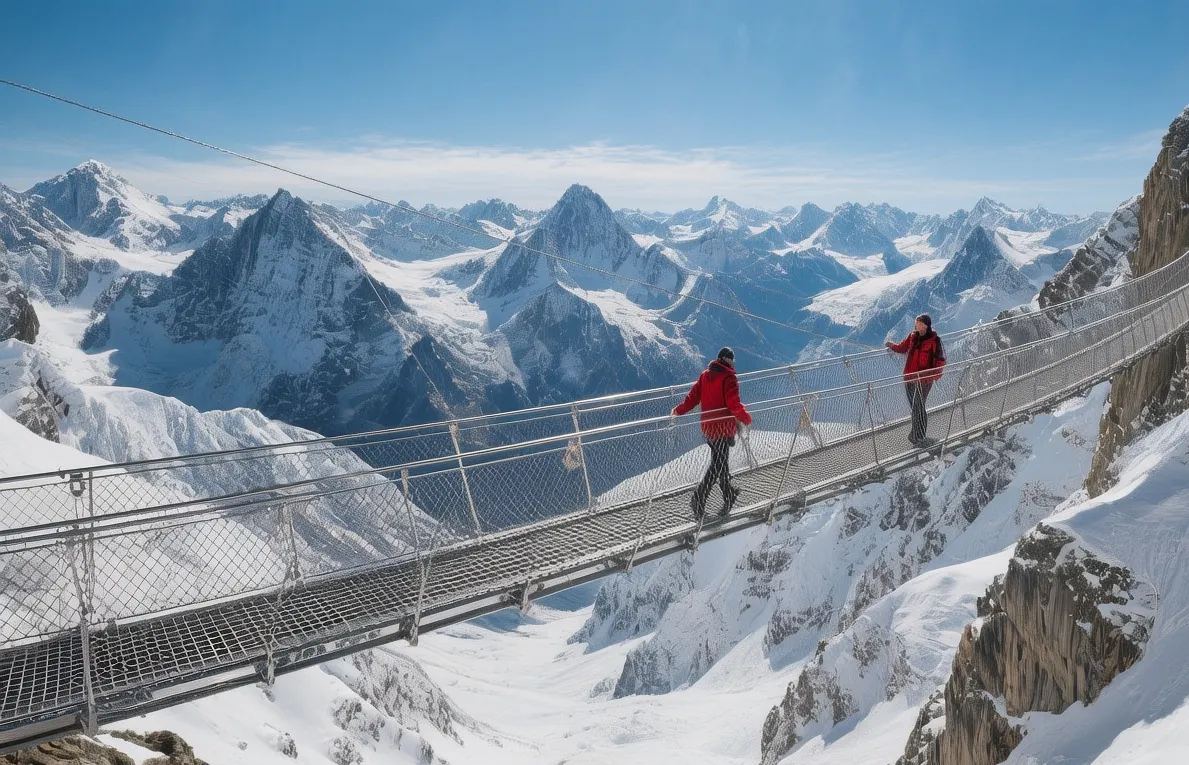
Titlis Cliff Walk Engineering Defies Gravity Amid Alpine Giants
The metal grate beneath your boots vibrates slightly as wind whips through the suspension cables—100 meters below, the glacier-carved valley floor disappears into mist, while above, the summit of Mount Titlis pierces the sky at 3,238 meters (10,623 feet). You stand on Europe's highest suspension bridge, opened in 2012, feeling the structure sway gently in the alpine breeze as it cantilevers 200 meters along the sheer cliff face. The air here is thin—30% less oxygen than at sea level—and carries the sharp scent of ice and ancient rock. To your left, the rotating Titlis Rotair cable car ascends like a mechanical jewel against granite; to your right, the Eternal Snowfield stretches toward the horizon, a frozen expanse that has existed for millennia. Each step forward demands courage as you traverse the 100-meter-long walkway suspended 105 meters above the rock face, with nothing but steel mesh between you and the abyss. In 2026, as adventure tourism transforms into adrenaline checklist culture, the Titlis Cliff Walk remains a testament to human audacity—a place where engineering meets raw nature, where visitors confront their vertigo not for social media validation, but for the profound realization of scale that only high-altitude exposure can deliver.
Why Titlis Cliff Walk Embodies Alpine Engineering
The Titlis Cliff Walk represents a triumph of modern engineering over extreme alpine conditions. Constructed in 2012 by the Titlis Bergbahnen AG, this structure solved the critical challenge of providing accessible high-altitude thrills without compromising safety in an environment where temperatures plummet to -20°C (-4°F) and wind speeds regularly exceed 100 km/h. The bridge's design incorporates 16 steel suspension cables anchored deep into the granite cliff face, with each cable capable of supporting 45 tons—far exceeding the maximum load of visitors.
Beyond spectacle, the Cliff Walk fulfills a cultural need: democratizing access to extreme alpine environments that were once the exclusive domain of mountaineers. At 3,041 meters elevation, it holds the distinction of being Europe's highest suspension bridge, surpassing even the famous Alpine attractions in France and Austria. The structure's cantilevered design extends 200 meters along the mountain's eastern face, with the most dramatic section projecting 105 meters outward from the cliff, creating an illusion of walking on air.
The engineering specifications are remarkable: the walkway uses anti-slip metal grating that allows snow and ice to fall through rather than accumulate; the handrails stand 1.4 meters high and are reinforced to withstand lateral forces of 3 kN per meter; the entire structure weighs 450 tons yet appears to float against the rock face. Construction required 18 months of planning and execution, with workers rappelling from the summit to drill anchor points into the granite—a process complicated by weather windows that averaged only 120 days per year. Today, the Cliff Walk serves 300,000+ annual visitors, proving that extreme engineering can coexist with mass accessibility while maintaining the raw thrill of high-altitude exposure.
The Best Time to Experience Titlis Cliff Walk
For optimal conditions combining clear visibility, manageable crowds, and stable weather, visit between June 15–July 5 or September 10–September 25. During these windows, summit temperatures range from 2–8°C (36–46°F), while Engelberg at the base enjoys 15–22°C (59–72°F). The ideal departure time from Engelberg is 8:00–9:00 AM, ensuring you reach the summit before afternoon clouds typically obscure visibility after 2:00 PM.
Winter operations (November–March) offer a different experience: temperatures drop to -15 to -5°C (5–23°F) at the summit, with the Cliff Walk remaining open unless wind speeds exceed 80 km/h. The frozen landscape creates dramatic photography opportunities, but fog inversion layers frequently obscure the valley below. Summer peak season (July 20–August 15) brings temperatures up to 10°C (50°F) at the top but also queues exceeding 45 minutes for the Rotair cable car.
Avoid these periods: August 1 (Swiss National Day creates massive crowds), December 20–January 5 (holiday period with limited daylight and frequent closures due to storms), and late October (annual maintenance shutdowns for the cable car system). For real-time webcam views and operating status, verify conditions at titlis.ch or check the Swiss Meteo Office at meteoswiss.admin.ch for alpine weather warnings before departure.
Approximate Budget for a 7-Day Trip (2026)
This budget estimate reflects mid-range travel preferences for a solo traveler or couple, based on 2026 pricing adjusted for Switzerland's 2.5% annual inflation rate (Swiss Federal Statistical Office data). Switzerland remains one of Europe's premium destinations, but strategic planning with the Swiss Travel Pass offers significant value for extensive exploration including Mount Titlis.
Accommodation:
• Budget hostel (dorm bed): CHF 55–CHF 75 per night (Youth Hostel Engelberg, 10-minute walk from station)
• Mid-range hotel (3-star, Engelberg center): CHF 190–CHF 270 per night (Hotel Terrace or Hotel Engelbergerhof)
• Upscale boutique (4-star, mountain view): CHF 350–CHF 520 per night (Hotel Bellevue-Terminus or Alpenhotel Engelberg)
Food: CHF 70–CHF 100 per day
• Breakfast: CHF 16–CHF 24 (hotel buffet with Swiss muesli and cheeses)
• Lunch: CHF 25–CHF 35 (mountain restaurant at Titlis or Engelberg café)
• Dinner: CHF 40–CHF 60 (traditional fondue at Restaurant Chäslade or Hotel Terrace)
• Coffee/pastry: CHF 7–CHF 11
Transportation:
• Swiss Travel Pass (8 days, 2nd class): CHF 432 (covers trains, buses, 50% off Titlis cable car)
• Engelberg Visitor Card (free with hotel): includes local buses and discounts
• Airport transfer (Zürich to Engelberg): covered by Swiss Travel Pass or CHF 36 one-way train
• Titlis Cable Car Round Trip: CHF 96 full fare (50% off with Swiss Travel Pass = CHF 48)
Attractions:
• Titlis Cliff Walk: Included in cable car ticket
• Titlis Ice Flyer Chairlift: CHF 25 (included in some packages)
• Glacier Cave: CHF 12 (included in cable car ticket)
• Swiss Museum of Transport: CHF 42 (free with Swiss Travel Pass)
• Guided Engelberg Walking Tour: CHF 28
Miscellaneous:
• Souvenirs (Swiss knife, chocolate, cowbell): CHF 50–CHF 120
• Travel insurance (7 days): CHF 48–CHF 75
• SIM card/data (Swisscom 10GB): CHF 42
• Emergency fund: CHF 150
Total estimated cost (mid-range): CHF 2,200–CHF 2,850 for 7 days
Budget traveler option: CHF 1,100–CHF 1,400
Luxury experience: CHF 4,500–CHF 7,000+
7 Essential Titlis Cliff Walk Experiences
1. First Ascent on Cliff Walk: Arrive at the Titlis station by 9:00 AM to experience the Cliff Walk before crowds peak. Enter from the Glacier Cave exit and walk the full 200-meter length slowly, pausing at the cantilevered section 105 meters above the valley. The morning light illuminates the Susten Pass to the west. Allow 30 minutes for photos. The metal grate creates a slight vibration underfoot—breathe through it. Free with cable car ticket.
2. Titlis Rotair Cable Car Journey: Board the world's first rotating cable car at Engelberg-Titlis Talstation for the 30-minute ascent. The cabin rotates 360 degrees during the journey, providing panoramic views of the Uri Alps. Sit on the right side for views of the Spannort massif. The cable car gains 1,800 meters in elevation, passing three stations. Departure every 30 minutes from 8:30 AM. Cost: CHF 96 round-trip (50% off with Swiss Travel Pass).
3. Glacier Cave Exploration: Descend 15 meters into the glacier through a tunnel carved into the ice. The cave maintains a constant temperature of -3°C (27°F) year-round and features ice sculptures and geological displays. The walk takes 15 minutes and connects directly to the Cliff Walk entrance. Dress warmly—jackets available for rent at CHF 5. Included with cable car ticket.
4. Ice Flyer Chairlift: Take the Ice Flyer chairlift from the summit station to the glacier plateau at 3,020 meters. This open-air chairlift operates year-round and provides access to snow tubing and glacier hiking. The 7-minute ride offers unobstructed views of the hanging glaciers. Winter operation: 9:00 AM–4:00 PM. Cost: CHF 25 round-trip (included in some combination tickets).
5. Summit Restaurant Dining: Dine at the self-service Restaurant Titlis at 1:00 PM when crowds thin. Order the Käseschnitzel (cheese-crusted veal) or vegetarian Rösti while sitting on the sun terrace. The elevation affects taste perception—food is seasoned more heavily. Prices are high but expected at this altitude. Main courses: CHF 28–CHF 42. Reserve outdoor seating for best views.
6. Snow Tubing Adventure: Available November–May on the glacier plateau. The 180-meter snow tube run takes 90 seconds and reaches speeds of 30 km/h. Safety equipment provided. This activity appeals to families and thrill-seekers alike. Operation: 10:00 AM–4:00 PM, weather permitting. Cost: CHF 15 per run or CHF 35 for 5 runs. Age minimum: 4 years.
7. Photography at Golden Hour: Return to the Cliff Walk between 5:00–6:30 PM (June–August) or 3:30–5:00 PM (September–October) for golden hour photography. The low sun angle creates dramatic shadows across the glacier and illuminates the cliff face in warm tones. Most day-trippers have departed by this time. The last cable car descends at 5:45 PM (winter) or 6:45 PM (summer). No extra cost.
3 Hidden Gems Most Travelers Miss
• Trübsee Alpine Lake: While most visitors rush to the summit, the mid-station lake at 1,800 meters offers serene reflections of the Titlis massif. Access: Exit the cable car at Trübsee station and walk 10 minutes clockwise around the lake. The path features wooden boardwalks and picnic areas. Best visited: 10:00 AM or 4:00 PM when lighting is optimal. Free access; cable car ticket required. Insider tip: Wild swimming is permitted in summer (water temperature: 12°C/54°F).
• Engelberg Abbey Library: Located in the valley, this 12th-century Benedictine monastery houses a baroque library with 40,000 volumes and original 1730s frescoes. Most Titlis visitors skip Engelberg town entirely. Access: 5-minute walk from Engelberg train station. Open: Monday–Saturday 9:00 AM–12:00 PM and 2:00–5:00 PM. Guided tours: CHF 8, available at 3:00 PM daily. Contact: +41 41 639 32 32. The library's ceiling frescoes depict the life of St. Benedict.
• Brunni Cable Car viewpoint: An alternative to Titlis, the Brunni cable car (operated separately) reaches 1,850 meters with panoramic views of Titlis itself. Fewer crowds, lower cost, and excellent hiking trails. Access: 10-minute bus ride from Engelberg station to Brunni base station. Operating hours: 8:30 AM–5:00 PM. Cost: CHF 32 round-trip (not covered by Swiss Travel Pass). Contact: +41 41 637 11 11. The restaurant terrace offers the best photo angle of Titlis Cliff Walk from below.
Cultural & Practical Tips
• Altitude sickness prevention: At 3,041 meters, some visitors experience mild altitude symptoms. Ascend gradually, stay hydrated, and avoid alcohol before visiting. If you feel dizzy or nauseous, descend immediately. The cable car can evacuate you to Engelberg in 30 minutes. Carry water and snacks.
• Weather dependency: The Cliff Walk closes when wind speeds exceed 80 km/h or during thunderstorms. Check the webcam at titlis.ch before departing Engelberg. Afternoon storms are common in summer; morning visits are safest. The structure is designed for extreme conditions but safety takes precedence.
• Photography etiquette: Tripods are permitted but must not block the walkway (minimum 1.5 meters clearance required). Selfie sticks are prohibited on the Cliff Walk due to wind hazard. Drone usage requires FOCA authorization and is rarely granted. Respect other visitors' space—limit photo sessions to 2–3 minutes during peak hours.
• Language basics: The region speaks Swiss German. Learn these phrases: "Grüezi" (GRÜE-tsi) for hello, "Bergbahn" (BERG-bahn) for mountain railway, "Aussicht" (OWS-icht) for view, "Danke vilmal" (DAHN-keh feel-mahl) for thank you very much. English is widely spoken at ticket counters and restaurants.
• Appropriate footwear: The metal grate can be slippery when wet or icy. Wear closed-toe shoes with good traction—hiking boots recommended but not required. High heels and flip-flops are dangerous and discouraged. In winter, the walkway is cleared but ice can form; microspikes available for rent at CHF 10.
• Accessibility information: The Cliff Walk is wheelchair-accessible with assistance, though the metal grate may cause vibration discomfort. The Titlis Rotair cable car accommodates wheelchairs. The Ice Flyer chairlift is not accessible. Contact Titlis Bergbahnen at +41 41 639 77 77 at least 48 hours in advance for accessibility arrangements.
Conclusion: Travel with Courage, Not Just Checklists
The Titlis Cliff Walk extends 105 meters into empty space not to test your bravery, but to recalibrate your perspective—to remind you that human engineering, however impressive, remains subordinate to the geological forces that carved this valley over millions of years. As you stand suspended between granite and sky in 2026, feeling the wind whip through the suspension cables, remember that this structure represents not domination over nature, but a fragile dialogue between human ambition and alpine reality. Responsible travel means respecting the mountain's power, dressing appropriately for conditions, following safety protocols without complaint, and understanding that the Cliff Walk remains open only because engineers continuously monitor every bolt and cable.
Slow down. Feel the metal grate beneath your feet. Listen to the wind singing through the cables. Look beyond the camera screen to witness the actual panorama—the glaciers, the peaks, the valleys stretching toward horizons that existed long before you and will remain long after. This bridge will outlast your visit, carrying thousands of others who seek the same visceral reminder of scale. Carry forward not just a photograph proving you walked here, but a deeper humility about your place in the alpine world. True adventure isn't about conquering heights; it's about allowing the mountain to reveal its majesty while you stand, briefly and gratefully, suspended in awe.