
Troldhaugen Composer Legacy Meets Norwegian Fjord Silence
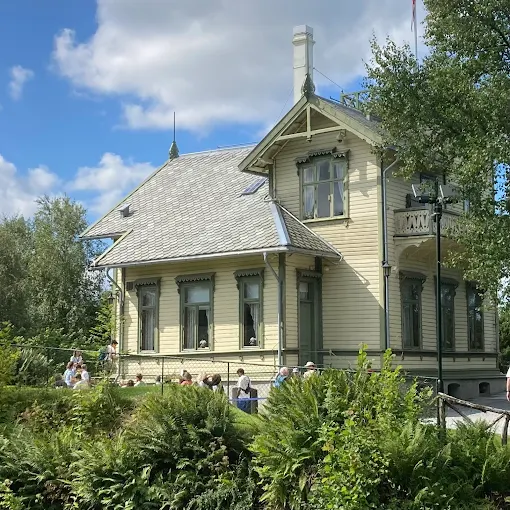
The grand piano sits silent now, yet the air inside the wooden villa still vibrates with the ghost of Peer Gynt—a resonance trapped in the grain of pine beams installed in 1885. Outside, Lake Troldhaugvannet mirrors the sky, its surface broken only by the occasional ripple of a trout or the glide of a swan navigating the 200-meter shoreline. You stand on the veranda, 15 kilometers (9 miles) south of Bergen's city center, where the scent of damp earth and spruce needles mixes with the faint, lingering aroma of pipe tobacco that once belonged to Edvard Grieg himself. The light here is specific—filtered through birch leaves, casting dappled shadows on the red-painted clapboard that has weathered over 140 winters. In 2026, as digital noise drowns out contemplation globally, Troldhaugen matters because it preserves a sanctuary of soundlessness; it reminds us that creativity requires space, that music grows from silence, and that some homes are not just structures but instruments played by the wind and the water surrounding them.
Why Troldhaugen Embodies Norwegian Musical Heritage
Troldhaugen—meaning "Troll Hill"—is not merely a museum; it is the physical manifestation of Norway's cultural awakening during the late 19th century. When Edvard Grieg and his wife Nina purchased the land in 1885, they sought refuge from the criticism of Copenhagen and the bustle of Bergen; what they built was a Swiss-style chalet constructed of native pine, featuring a distinctive dragon-head motif on the gables that echoes Viking stave churches. The main villa spans 280 square meters (3,014 square feet), containing original furniture, manuscripts, and the composer's Broadwood piano, preserved exactly as left in 1907. However, the true heart of the estate lies 100 meters down the slope: the composing hut, built in 1891. This tiny 12-square-meter structure features thick stone walls and a single window facing the lake, designed specifically to isolate Grieg from domestic distractions so he could hear the landscape's rhythm.
The site solves a fundamental preservation need: how to protect intangible heritage (music) within tangible structures (buildings). In 1995, the Grieg Museum opened underground—a modern concrete and glass extension designed by architect Knut Berg that houses 5,000+ artifacts without disturbing the historic landscape. This engineering feat ensures climate control for delicate manuscripts while keeping the visual profile low. Today, Troldhaugen fulfills the role of a cultural anchor, drawing 150,000 visitors annually who seek to understand how a man weighing less than 50 kilograms (110 pounds) could compose music heavy enough to define a nation. It stands as a testament to nasjonalromantikk (national romanticism), proving that art is rooted in place. In 2026, as heritage sites face commercialization pressures, Troldhaugen remains steadfast—a protected zone where the only ticket required is patience.
The Best Time to Experience Troldhaugen
For the quintessential experience combining music, weather, and accessibility, target June 15–August 20. During this window, daily summer concerts occur at 12:00 PM and 3:00 PM in the villa's music hall, featuring pianists performing Grieg's Lyric Pieces on the original 1892 Steinway. Temperatures range from 15–22°C (59–72°F), allowing you to walk the grounds without heavy coats. The light is optimal for photography between 8:00–10:00 PM during the summer solstice period, when the sun barely dips below the horizon, casting a perpetual golden glow over the lake.
For introspective solitude, visit October 10–November 15. The summer crowds vanish, leaves turn amber and rust, and the estate feels privately yours. Temperatures drop to 4–9°C (39–48°F), and rain is frequent—perfect for imagining Grieg composing during stormy autumns. The museum remains open, though concerts cease after September 30. Winter visits (December–March) are possible but limited; the villa closes for conservation during January, though the museum remains open Tuesday–Sunday.
Avoid July 1–15 if you dislike bus tours: this period coincides with peak cruise ship arrivals in Bergen, meaning 10–15 tour buses may descend between 10:00 AM–2:00 PM. Queue times for the villa tour can exceed 45 minutes. Also avoid May 17 (Constitution Day) as the site closes for private family celebrations. For real-time concert schedules and opening hours, verify at www.griegmuseum.no or call +47 55 92 29 00. Weather in Bergen is volatile; check Yr.no hourly forecasts before departing the city.
Approximate Budget for a 7-Day Trip (2026)
Bergen remains a premium destination, though Troldhaugen offers reasonable value compared to private concerts elsewhere. This budget assumes mid-range travel with 3-4% inflation adjustment from 2024 baselines. Prices are estimated in Euros (€) for international clarity, though local currency is Norwegian Krone (NOK).
- Accommodation: €140–€220 per night for a double room in a 3-star hotel in Bergen Sentrum or Nordnes. Budget hostels (Anker Hostel): €45–€65 per bed. Luxury options (Hotel Norge): €300–€480 per night.
- Food: €65–€95 per day per person
- Breakfast: €12–€18 (hotel buffet with smoked salmon, eggs, brunost)
- Lunch: €18–€28 (museum café sandwich €22, fish soup €26, or grocery picnic €15)
- Dinner: €35–€55 (restaurant main: lamb €40, cod €38, pasta €28; add €12 for wine)
- Transportation:
- Bus Line 20 (Bergen to Troldhaugen): €6 one-way, €12 day pass
- Bergen Airport Flybussen: €14 one-way, €24 round-trip
- Local tram/bus 7-day pass: €55
- Taxi from city center: €45–€60 one-way (not recommended for budget)
- Attractions:
- Troldhaugen Museum + Villa + Concert: €24 adults, €12 children (6–18)
- Bryggen Museum: €14
- KODE Art Museums: €20
- Fløibanen Funicular: €22 round-trip
- Guided Grieg walking tour: €30
- Miscellaneous:
- Souvenirs: Grieg CD €18, sheet music book €25, wooden troll €20
- Troldhaugen Café waffle: €8
- Travel insurance (7 days): €35–€55
- eSIM data plan: €15–€25
Total for 7 days (mid-range, per person, double occupancy): €1,480–€1,850
Budget travelers can reduce costs to €900–€1,150 by staying in hostels, cooking dinners, and using only public buses. Luxury seekers should budget €3,000+ for private transfers, fine dining at Enhjørningen, and private piano recitals.
6 Essential Troldhaugen Experiences
- Attend a Midday Concert: Schedule your visit to coincide with the 12:00 PM or 3:00 PM concert (June–August only). Arrive 20 minutes early to secure seating in the music hall, where acoustics remain untouched since 1885. Listen for the resonance of the original Steinway Model B; the sound is warmer, softer than modern instruments. Afterward, musicians often mingle in the foyer—ask about the piece they played. This live element transforms the museum from static display to living heritage.
- Enter the Composing Hut: Walk the 100-meter path down to the small stone building by the water. Step inside the 12-square-meter room where Grieg wrote Holberg Suite. Notice the single window framing the lake; sit on the wooden bench and close your eyes. Listen for the water lapping against the shore—the same sound that accompanied his creativity. Do not touch the manuscript facsimiles; the air here is preserved for conservation. Spend at least 10 minutes in silence to absorb the isolation he sought.
- Tour the Main Villa: Join the guided tour (included in ticket) to access rooms closed to independent walkers. See the dining room where Ibsen once visited; view Nina Grieg's bedroom with original textiles; examine Edvard's study with his inkwell still on the desk. Guides provide context about daily life—how they heated the house with wood stoves, how mail arrived by boat. Photography is prohibited inside to protect artifacts, so focus on observation rather than documentation.
- Walk to the Mausoleum: Follow the marked forest path 400 meters uphill from the villa to the final resting place of Edvard and Nina Grieg. The mausoleum is built into the mountainside, facing west toward the setting sun. It is quiet here—often empty even in summer. Pay respects silently; this is a sacred space for Norwegians. The view from the grave overlooks the entire estate, offering perspective on why Grieg chose this hill above all others.
- Explore the Modern Museum: Descend into the 1995 underground extension designed by Knut Berg. View the permanent exhibition detailing Grieg's life, European tours, and influence on impressionist music. Interactive listening stations allow you to compare different recordings of Piano Concerto in A Minor. The climate-controlled archive displays rotating manuscripts—check the weekly schedule for specific items on display. The café here offers the best view of the lake through floor-to-ceiling glass.
- Stroll the Grounds at Dusk: After the museum closes (5:00 PM in summer), the grounds remain accessible until sunset. Walk the perimeter of Lake Troldhaugvannet (1.2 km loop). Watch the reflection of the villa shimmer as light fades. This is the only time you experience the landscape without crowds or commentary. Bring a flashlight for the return path; the forest trail is unlit. It is during this quiet hour that the "Troll Hill" name feels most appropriate—magical, slightly mysterious, entirely yours.
3 Hidden Gems Most Travelers Miss
- The Old Boat House: Located at the far northern edge of the lake, hidden behind reeds, sits the original wooden boat house used by the Grieg family. It is not marked on the main tourist map. Access via the small path behind the composing hut (look for the faded blue arrow). The door is locked, but you can peer through the windows to see the original rowboat bench. It is overlooked because most visitors stay near the villa. Best visited early morning when mist rises off the water, creating a ghostly atmosphere perfect for contemplation.
- Grieg's Favorite Bench: On the uphill trail to the mausoleum, 150 meters before the grave, a specific stone bench sits off the main path (coordinates 60.3650°N, 5.3950°E). Family letters suggest Edvard sat here to read poetry aloud to Nina. It faces east, catching the first light. Most tourists rush past to the grave. Stop here. Read a page of a book or simply watch the birds. It offers the same view Grieg enjoyed without the solemnity of the tomb. No signage marks it; look for the worn stone smooth from use.
- The Archive Listening Room: Inside the modern museum, ask the front desk staff if the "Archive Listening Room" is open. This small room (capacity 4 people) allows access to rare recordings not available on public displays. It requires a staff member to unlock and is often closed unless requested. Available Tuesday–Thursday, 11:00 AM–2:00 PM. You can hear historical recordings from 1903 featuring Grieg himself playing piano rolls. It is a rare auditory connection to the past that 95% of visitors never experience because they don't ask.
Cultural & Practical Tips
- Respect the Silence: Troldhaugen is a place of contemplation. Speak softly in the villa and composing hut. Loud conversations are frowned upon by staff and locals. This is not a typical attraction; it is a memorial home. Treat it with the reverence of a library or church.
- Footwear Matters: The grounds include gravel paths, grass, and forest trails. Wear sturdy walking shoes, not heels or flip-flops. In winter, paths can be icy; micro-spikes are recommended if visiting December–March. The walk to the mausoleum involves a steep incline.
- Useful Phrases:
- "Takk" (tahk) = Thank you
- "Unnskyld" (oon-shool) = Excuse me
- "Hvor er konserten?" (voor ehr kon-ser-ten) = Where is the concert?
- "Er dette Griegs piano?" (ehr deh-teh Griegs pee-ah-no) = Is this Grieg's piano?
- Photography Rules: Photography is permitted outdoors and in the modern museum. It is strictly prohibited inside the historic villa and composing hut to protect artifacts from flash damage and respect the privacy of the space. Store your camera in your bag before entering the villa. Staff will enforce this politely but firmly.
- Weather Preparedness: Bergen rains 230 days a year. Even in summer, bring a waterproof jacket. The walk from the bus stop (Troldhaugen stop) to the museum is 10 minutes outdoors. Umbrellas are useful in the grounds but must be closed inside buildings. Dress in layers; temperatures drop near the water.
- Bus Schedule Awareness: Bus Line 20 runs every 20 minutes on weekdays, every 30 minutes on weekends. The last bus back to Bergen city center departs at 11:45 PM (summer) or 9:45 PM (winter). Miss the bus, and a taxi costs €50+. Check the Skyss app for real-time departures before leaving the museum.
- Accessibility: The modern museum and café are fully wheelchair accessible. The historic villa has steps and is not accessible for wheelchairs; a virtual tour is available inside the museum for those unable to climb stairs. The composing hut is accessible via a steep path; assistance is available upon request at the front desk.
Conclusion: Travel with Reverence, Not Just Checklists
Troldhaugen does not demand your speed; it asks for your stillness. In 2026, as tourism becomes increasingly transactional—snap, post, move on—this wooden villa on the edge of a quiet lake offers a counter-rhythm. It invites you to sit where a composer sat, to hear what he heard, to understand that greatness often grows in small, quiet rooms away from the applause. Travel here not to tick a box on a Bergen itinerary but to honor the silence that made the music possible. Leave the flash photography in your bag; leave the rush at the bus stop. Walk slowly to the grave; listen to the water against the stone hut. When you return to the city, carry this quiet with you. For in the end, Troldhaugen teaches us that the most profound journeys are not measured in kilometers, but in moments of connection—between past and present, between sound and silence, between the visitor and the home that remembers.