
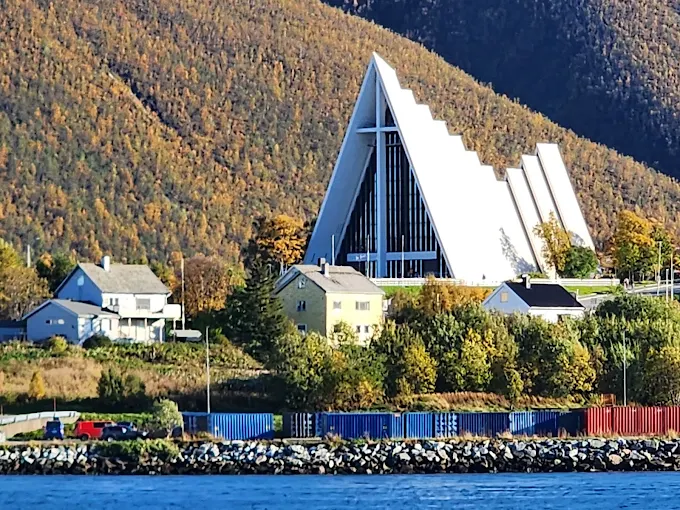
Tromsø Arctic Cathedral Modern Geometry Meets Arctic Light
The air bites at your cheeks—minus 8°C (18°F)—as you stand on the frozen grass of the churchyard at 6:45 PM. It is mid-February, and the sky above Tromsøya is a canvas of indigo, punctured only by the sharp, white triangles of the Tromsø Arctic Cathedral glowing against the dark. You hear the low hum of the city across the strait, the crunch of snow under your boots, and the distant bell tolling the hour from the 35-meter tower. This concrete sanctuary, consecrated on November 19, 1965, rises from the earth like an iceberg or a fisherman's tent, depending on who you ask. It is 2026, and the aurora borealis swirls overhead in ribbons of green and violet, reflecting off the stained glass mosaic behind the altar. You are not just observing a building; you are standing inside a masterpiece of modern ecclesiastical engineering that has weathered sixty years of Arctic storms. In an age of digital distraction, this place matters now because it demands silence, reverence, and a willingness to look up at something greater than yourself.
Why Tromsø Arctic Cathedral Embodies Modern Sacred Architecture
The Tromsø Arctic Cathedral is not merely a church; it is a symbol of post-war Norwegian identity and resilience. Designed by architect Jan Inge Hovig following a competition in 1958, the structure solved a critical aesthetic and functional problem: how to create a landmark that reflected the harsh beauty of the North without mimicking traditional stave churches. The result is a triangular concrete construction, weighing over 2,000 tons, with a main span of 47 meters. The east-facing wall features a massive stained glass mosaic created by Victor Sparre in 1972, composed of 100 tons of glass pieces that depict Christ returning in the light of the Arctic dawn. This mosaic, measuring 16 meters in height, transforms sunlight during the midnight sun season and artificial light during the polar night into a spiritual spectacle.
What distinguishes this site is the engineering required to withstand the environment. The concrete was reinforced to handle temperature fluctuations ranging from -20°C to +25°C annually. The acoustics inside the 600-seat nave are calibrated for choral music, utilizing the hard concrete surfaces to amplify sound without electronic assistance. In 2026, the Tromsø Arctic Cathedral serves both as a parish church for the local community and a cultural hub for visitors. The preservation effort, managed by the Tromsø Parish Council, ensures the concrete remains sealed against moisture intrusion—a constant battle in this humid coastal climate. This interplay between brutalist materials and ethereal light creates a unique atmosphere where architecture does not shelter you from nature, but frames it. You walk through a space designed to make you feel small against the vastness of the Arctic sky.
The Best Time to Experience Tromsø Arctic Cathedral
For the quintessential Arctic experience, plan your visit between October 15 and March 15—the peak Northern Lights window when darkness persists for 18 hours, temperatures range from -5–5°C (23–41°F), and the cathedral lights contrast sharply against the night sky. During this period, the best photography light occurs between 5:00 PM and 8:00 PM, when the blue hour lingers, bathing the concrete in deep indigo tones. For Midnight Sun seekers, the optimal window shifts to May 20 to July 20, when the sun remains above the horizon, temperatures hover around 10–15°C (50–59°F), and the glass mosaic glows with natural light from behind. The sun reaches its lowest point at 1:30 AM, creating a golden twilight that lasts for hours.
Avoid traveling between November 1 and November 20 unless you seek pure darkness: this is the polar night transition period where it is neither fully dark nor light, often accompanied by heavy rain and slush. Road conditions on the Tromsø bridge can become hazardous due to ice storms. For current aurora forecasts, verify at gi.alaska.edu and weather forecasts at yr.no. The shoulder season (April 1–May 10) offers a compelling alternative: fewer crowds, returning daylight, and prices 15% lower than peak winter, though snow may be melting into slush. Always check concert schedules at Tromsø Arctic Cathedral online, as Monday evening concerts are seasonal (October–April).
Approximate Budget for a 7-Day Trip (2026)
Tromsø is one of Norway's more expensive destinations due to its remote location and high demand. The following budget assumes a mid-range travel style: staying in city center hotels or guesthouses, eating a mix of self-catered meals and local seafood, using public transport, and participating in guided activities. Prices reflect 2026 estimates with a 3.5% inflation adjustment based on 2025 Statistics Norway (SSB) data for Troms og Finnmark county.
- Accommodation: €160–€260 per night for a double room in Tromsø Sentrum; budget hostels start at €80/night; camping cabins €100/night
- Food: €80–€100 per day: breakfast €15 (included at most lodgings), lunch €25 (fish soup or reindeer stew), dinner €50–€60 (fresh cod or lamb with local beer)
- Transportation: €150 total: airport express bus Flybussen €25 round-trip, local bus day pass €12 (routes 20/21 to cathedral), rental car optional €70/day, taxi €40
- Attractions: €150 total: Cathedral entry €10, guided Northern Lights tour €120, Polaria Aquarium €25, Fjellheisen Cable Car €30, museum entries €15
- Miscellaneous: €100: souvenirs (wool sweater €60, troll figurine €20, local aquavit €20), thermal gear rental €10, emergency buffer €10
Total for 7 days: €1,340–€1,640 per person (based on double occupancy)
6 Essential Tromsø Arctic Cathedral Experiences
- Attend the Monday Evening Concert: Begin at 6:00 PM (October–April) inside the main nave. The 45-minute performance features local choirs singing Arctic hymns accompanied by the cathedral's unique acoustics. The sound resonates off the concrete walls, creating an immersive auditory experience. Tickets cost €15 and are purchased at the door. The concert ends at 6:45 PM, allowing you to step outside into the night while the building is still illuminated. Bring warm layers; the concrete radiates cold even when heated. This experience immerses you in the spiritual heritage of the region.
- View the Victor Sparre Mosaic: Position yourself at the back of the nave at 12:00 PM (in summer) or during evening lights (in winter). Spend 15 minutes examining the 16-meter high glass artwork depicting Christ and the Arctic light. The colors shift from blue to gold depending on the external light source. The mosaic was installed in 1972 and restored in 2010. Don't miss the details of the fish symbols hidden in the glasswork. The building itself dates to 1965, preserving the modernist heritage of the city.
- Walk the Churchyard Cemetery: Located behind the cathedral, the cemetery opens at 8:00 AM daily. Spend 30 minutes walking among the graves of local fishermen and community leaders. Look for the grave of the church's architect, Jan Inge Hovig. The view back toward the cathedral from the cemetery offers a unique perspective of the tower against the sky. Many graves feature ironwork from the 19th century. Ask permission before photographing specific headstones.
- Cross the Tromsø Bridge: Walk the pedestrian path on the bridge connecting Tromsøya to the mainland. Start at 5:00 PM for the best light. The 1,036-meter bridge offers the classic postcard view of the cathedral framed by the city lights. The light at 6:00 PM in February renders the scene surreal—shadows disappear, and the concrete glows white. Bring windproof layers; temperatures on the bridge are 3°C cooler than the city. Watch for traffic; stand on the pedestrian walkway only.
- Photograph the Northern Lights: Arrive at 9:00 PM in late February. The open space in front of the cathedral offers one of the best vantage points for the aurora dipping toward the horizon. Bring a thermos of coffee and a warm blanket. The snow reflects the green light, making the ground glow. Shoot if you dare—the cold drains batteries quickly. This moment—standing before a modern icon under ancient lights—defines the Tromsø experience.
- Visit the Gift Shop: Located in the cathedral basement, open 10:00 AM–4:00 PM. Spend 20 minutes exploring books on Arctic theology and local crafts. Look for prints of the Sparre mosaic. The shop supports the maintenance of the building. Many items are handmade by local artisans. Ask the staff about the history of the concrete mix used in construction.
3 Hidden Gems Most Travelers Miss
- The Perspectivet Museum: While everyone visits the cathedral, the Perspectivet Museum, located 1 kilometer away in a historic wooden warehouse, is equally iconic. Located at Strandtorget 1, this spot offers context on Tromsø's multicultural history. Access is via bus route 20 (open 11:00 AM–4:00 PM). Best visited at 2:00 PM when guided tours start. Why it's overlooked: most visitors drive straight into the cathedral without exploring the waterfront. Insider tip: Look for the exhibit on the 19th-century seal hunters. Watch for low doorways; ceilings are 1.9 meters high.
- Tromsøysundet Waterfront Path: Just 500 meters west of the cathedral lies a secluded walking path along the strait. This spot hosts unique views of the harbor and passing Hurtigruten ships. Open daily 24 hours. The wooden boardwalk contrasts beautifully with the concrete cathedral. Why it's missed: most tourists stop at the cathedral and skip the western edge. Insider tip: Visit the coffee shop on the waterfront for homemade waffles (€8). The view back toward the cathedral from here is unique and less crowded.
- Elverhøy Church at Sunset: Accessible only by foot or bus, this historic wooden church near the university requires a 15-minute bus ride from the city center (look for the stop "Elverhøy"). The church features white wood and vertical cliffs that amplify sound. Service times matter: visit outside Sunday 11:00 AM for quiet reflection. Check opening times at kirken.no. Why it's overlooked: no signage and requires moderate fitness. Insider tip: Bring a waterproof bag for your phone; waves can splash high during incoming tide. No facilities exist here—pack out all trash.
Cultural & Practical Tips
- Respect the Sacred Space: The Tromsø Arctic Cathedral is an active church. Keep voices low during prayer times. Do not enter during services unless seated quietly at the back. Dress modestly; shoulders and knees should be covered.
- Learn three Norwegian phrases: Takk (tahk—thank you), Unnskyld (oon-shuld—excuse me), and Ha det bra (hah deh bra—goodbye). Locals appreciate the effort, though 95% speak fluent English.
- Photography guidelines: Drone flights require permission from the Norwegian Civil Aviation Authority (apply at luftfartstilsynet.no). Drones are prohibited near the cathedral without special permit. Respect privacy—do not photograph worshippers. Tripods are permitted in the churchyard only.
- Weather preparedness: Weather changes rapidly; pack layers (wool base, fleece mid, waterproof outer). Even in July, temperatures can drop to 5°C (41°F) with wind chill. Rain occurs on 220 days annually. Waterproof boots are essential for walking.
- Transport etiquette: Bus tickets must be purchased via the Troms Billett app before boarding. Cash is not accepted on buses. Routes 20 and 21 stop directly at the cathedral. Watch for moose and reindeer, especially at dawn and dusk. Winter tires are mandatory November–April.
- Accessibility note: The cathedral has ramp access and wheelchair seating in the nave. The cemetery paths are gravel and may be difficult in winter. Request the accessible travel guide at visittromso.com.
- Emergency contacts: Medical emergencies: 113. Police: 112. Tourist information: +47 77 60 20 00. Nearest hospital: UNN Tromsø (5 km), 24-hour emergency. Coastguard: 120. Mobile coverage is excellent in the city center.
Conclusion: Travel with Reverence, Not Just Sightseeing
The Tromsø Arctic Cathedral demands more than your admiration; it requires your stewardship. This landscape—framed by concrete, sustained by light, and inhabited by resilient communities—is not a theme park but a living sanctuary where every footprint matters. When you visit in 2026, remember that the pews are for prayer, the acoustics are for hymns, and the lights are for guidance for residents who endure winter darkness so you can enjoy the aurora. The concrete that holds the roof up is vulnerable to moisture; the peace inside is fragile. So travel slowly. Buy local crafts from the shop, not imported souvenirs. Stay on marked paths to protect the cemetery. Listen to the stories of the choir members who still sing at 6:00 PM to honor the tradition.
In an era of instant gratification and checklist tourism, Tromsø asks you to pause—to watch the light change on the mosaic for an hour without lifting your camera, to feel the cold wind without rushing indoors, to understand that you are a guest in a place that has served its community for decades. Travel with reverence, and you ensure that the Tromsø Arctic Cathedral remains not just a photograph in your portfolio, but a thriving sanctuary where Arctic wilderness and human heritage continue to coexist. The concrete will stand long after we are gone; let us ensure it remains sacred enough to deserve its fame.