Alentejo Cork Forests: Where Ancient Bark Meets Mediterranean Biodiversity
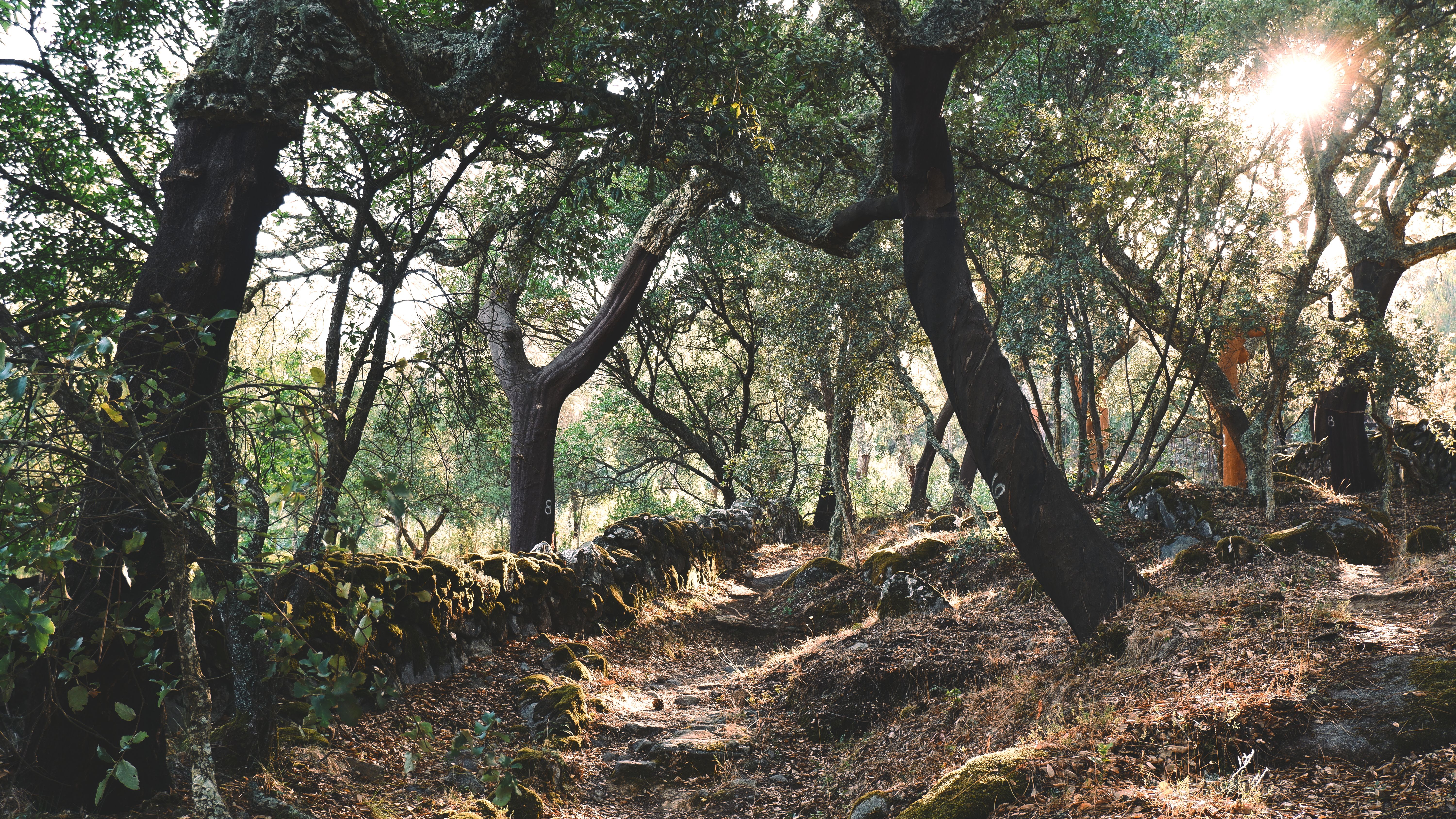
Alentejo Cork Forests: Where Ancient Trees Meet Sun-Dappled Plains
Walking beneath the canopy at ten in the morning, sunlight filters through broad evergreen leaves. The ground lies carpeted with wild lavender and rockrose. Trunks stand tall and rugged, some stripped of their thick cork bark to reveal smooth, deep-red wood beneath. A cork oak takes twenty-five years before its first harvest. Each tree yields bark once every nine years. You walk through a landscape shaped by centuries of careful stewardship. No entry fee applies. These forests stretch across vast swathes of Alentejo, quiet and unspoiled, waiting for those who leave the main roads behind.
Why Alentejo Cork Forests Matters
These woodlands — known as montado — form one of Europe's most unique agricultural and ecological systems. Cork oaks grow scattered across open plains, interspersed with stone pines, holly oaks, and pasture. They support more than two hundred bird species along with rare mammals, reptiles, and plants. The bark harvest has sustained rural communities for generations. Portugal produces roughly half the world's cork, and Alentejo holds the finest stands. Yet the forests face real threats. Changing economics leads some owners to replace ancient trees with faster-growing timber or crops. Wildfires burn hotter when undergrowth builds up. Many stands show signs of ageing without young trees replacing them. The landscape feels timeless, but its future remains uncertain.
The Best Time to Experience Alentejo Cork Forests
Visit from mid-April through June, or mid-September through October. Air temperature sits between 18°C and 26°C (64°F to 79°F). Wildflowers carpet the forest floor in spring. Harvest season runs roughly July through August, when skilled workers strip the bark with traditional axes. Summer brings 28°C to 34°C (82°F to 93°F) and dry heat. Shade beneath the oaks feels wonderful, but walking at midday becomes uncomfortable. Winter brings cooler days around 12°C to 18°C (54°F to 64°F) and occasional rain. Go early in the morning. Light slants low between trunks and softens the rough bark into warm gold. By afternoon, haze settles across the plains and detail fades.
Approximate Budget for a 7-Day Trip
Estimates cover one person exploring Alentejo's cork forests and historic villages independently.
- Accommodation: €40–€85 per night; €280–€595 total. Stay in small villages rather than large towns. Rural guesthouses sit right beside forest and cost less.
- Food & Drink: €12–€24 daily; €84–€168 total. Eat where locals eat. Village taverns serve hearty meals with wine at fair prices.
- Transport: Rental car €22–€40 daily; €154–€280 total. Essential. Cork forests lie off main roads. Public transport rarely reaches them.
- Attractions: Forest access free. Interpretation centres and guided walks €4–€8. Cork museum €5. Budget roughly €20–€35 total.
- Miscellaneous: Water, snacks, cork products; €5–€10 daily; €35–€70 total.
Total estimated cost: €493 to €1,148
"Premium cork tours" and souvenir packages charge €40–€60 per person. You see the same trees and buy identical products available in village shops for a fraction of the price. Drive yourself and visit any grove you like for free.
Essential Alentejo Cork Forests Experiences
- Walk through harvested and unharvested groves. Compare rough dark-brown bark against smooth red wood. Notice how the trees were stripped — carefully, by hand, without felling. The bark regenerates over nine years, thicker and richer each time.
- Watch harvesters at work in summer. Visit between July and August. Skilled workers swing axes with precision. They slice the bark without damaging the living layer beneath. Skip if visiting off-season; the groves look quieter but show no harvest activity.
- Stand beneath ancient trees. Some oaks stand two hundred years old or more. Their trunks grow massive and deeply furrowed. They have survived drought, fire, and generations of harvest. Standing beside them feels humbling.
- Listen to birdsong at dawn. Arrive before sunrise. Woodpeckers, hoopoes, and rare eagles call across the canopy. The forest wakes slowly. You hear no traffic, no machinery — only wind through leaves.
- Walk the shaded paths at midday. In summer, temperatures drop five to seven degrees beneath the canopy. The forest feels like a natural sanctuary. Light filters through in shifting patches that dance across the ground.
- Visit a cork workshop in the afternoon. See how bark boils, presses, and transforms into flooring, stoppers, or fashion goods. The material feels soft, warm, and entirely unique.
Hidden Gems Most Travelers Miss
- Road between Évora and Estremoz. Follow the quieter N381 instead of the main highway. Ancient cork oaks line both sides for twenty kilometres. You drive through a living cathedral without paying a cent.
- Forest trails near Portel. Signposted paths loop through mature groves. Stone ruins and old wells sit hidden among trees. Almost no visitors walk here.
- Montado near Monsaraz. Walk down from the village toward the lake. Cork oaks spread across the hillside. The view stretches across the water and into Spain. Sunset turns the trunks deep copper.
- The famous "cork-themed" visitor centre near Évora charges premium entry. Most exhibits explain what you can see and understand simply by walking into any grove. Many visitors find it overrated.
Cultural & Practical Tips
- Stay on tracks. The ground beneath cork oaks supports fragile plants. Trampling destroys the undergrowth that protects tree roots. Walk gently.
- Do not peel or damage bark. Even small scars ruin nine years of growth. These trees sustain families and ecosystems. Respect every trunk.
- Carry water and supplies. Villages sit far apart. Groves offer shade but no shops. In summer, heat builds fast once you step beyond the canopy.
- Visit in the morning. Afternoon haze blurs the landscape. Heat rises and wildlife retreats. Dawn until mid-morning shows the forest at its best.
Essential Visitor Information
Location & Access: Central and southern Alentejo. Main areas span Évora, Estremoz, Portel, Monsaraz, and Serpa. By car: explore along regional roads N381, N255, and N371. By bus: limited service between towns; rarely reaches forest locations directly. Rental car strongly recommended.
Tickets & Booking: All forest access free. Interpretation centres €4–€8. Guided walks €10–€15. Harvest demonstrations free to watch; ask permission before photographing workers.
Operating Hours: Forests always accessible. Interpretation centres generally 10:00 to 17:00, closed Mondays. Harvest roughly July–August; weather dependent.
Visit Duration: Minimum two days. Allow four to five days to explore different groves, visit villages, and walk trails at relaxed pace.
Family Suitability: Flat, open ground suitable for all ages. Shade provides excellent protection. No facilities deep in forest; prepare accordingly.
Timing: Best seasons April–June and September–October. Best time: early morning before heat and haze build. Midday offers best shade in summer.
Highlights: Harvested red trunks, ancient oak groves, wildflower floor, dawn birdwatching, traditional cork processing, sunset copper light.
Nearby & Day Trip: Évora historic centre 30–45 minutes. Monsaraz village and lake 40 minutes. Estremoz marble town 30 minutes. Elvas fortified border town one hour; excellent full-day excursion.
Conclusion: Travel with Respect, Not Just Curiosity
Alentejo Cork Forests represent a living heritage. These trees sustain wildlife, soil, and people. They have stood here for centuries. Walk softly. Stay on paths. Admire the harvest without touching the bark. Understand that every stopper, every piece of cork, required nine years of growth. Would you rush past these ancient giants on your way to somewhere else, or slow down and walk beneath their shade?
Post a Comment