Wadden Sea National Park: Where Tidal Wilderness Meets Migratory Wonder
Wadden Sea National Park: Where Tidal Flats Meet Wild Migration
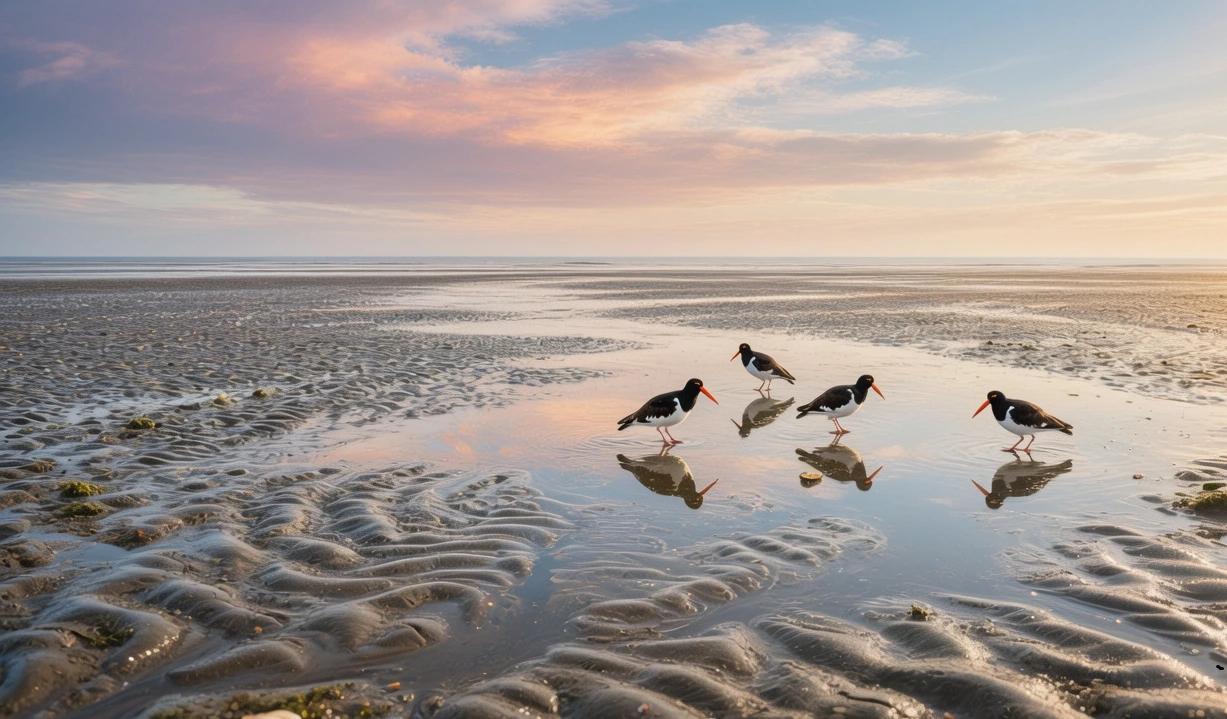
I step onto the mudflat just past nine in the morning. The tide has receded, leaving miles of glistening sand and shallow pools. I paid nothing to walk the shore. The guided tidal crossing cost 110 DKK per person. The drive from Ribe took twenty minutes. I pulled on waterproof boots and stepped carefully. The ground holds firm but soft. Gulls glide low. Thousands of small birds dart across the mudflats. They move as one, shifting shape against the sky. The air smells of salt and damp earth. No buildings break the horizon. This is one of the wildest stretches of coast in Northern Europe. It feels vast, ancient, and entirely alive.
Why Wadden Sea National Park Matters
The Wadden Sea stretches along the southwest coast of Denmark, bordering Germany and the Netherlands. It is the largest unbroken system of intertidal sand and mudflats in the world. Tides govern everything here — twice daily, water advances and retreats, exposing and covering vast areas. This creates one of Earth's most productive ecosystems. Millions of birds use it as a stopover on migration between Arctic and Africa. Seals haul out on sandbanks. Specialized plants and creatures live nowhere else. The area holds UNESCO World Heritage status. It also bears deep cultural history — communities have lived with and from the tides for centuries. Old dykes, fishing traditions, and coastal settlements reflect a long relationship with this shifting land.
It is not a place you can simply wander freely. Tides are powerful and unpredictable. Walking alone without a guide is dangerous — the water returns faster than you might expect. Large areas feel empty and exposed. In summer, biting insects appear near the marshes. The weather changes rapidly; fog can roll in and obscure all landmarks in minutes. Some visitors find the openness overwhelming. There are no grand buildings or scenic viewpoints — the beauty lies subtle and close to the ground.
The Best Time to Experience Wadden Sea National Park
Late March through early June offers spectacular bird migration. Millions of waders pass through on their way north. Daytime temperatures sit between 8°C and 15°C (46°F–59°F). The air stays crisp and clear. Autumn, from mid-July to early October, brings the return journey — even greater numbers gather to feed before flying south. Temperatures hover around 12°C–18°C (54°F–64°F). Both seasons feel lively and full of life.
Summer months bring longer days and milder weather — 15°C to 21°C (59°F–70°F) — but fewer birds. Winter is quiet and stark. The flats empty of migrants; seals remain visible on sandbanks. Days are short and cold — 2°C to 6°C (36°F–43°F) — but the stillness can feel profound. Always check tide tables before traveling. Low tide windows vary daily; some crossings are only possible for a few hours.
Approximate Budget for a 7-Day Trip
- Accommodation: 3,850 DKK – 6,300 DKK. Guesthouse or B&B in Ribe or Esbjerg sits lower. Coastal holiday cottage runs 800–1,100 DKK per night. Staying in Ribe places you close to the tidal center and historic charm.
- Food & Drink: 1,750 DKK – 2,940 DKK. Lunch at a harbor café costs 105–185 DKK. Dinner with fresh local seafood runs 195–310 DKK per person. Buying bread, cheese, and smoked fish from local markets cuts food spending nearly in half.
- Transport: 910 DKK – 1,680 DKK. Train from Copenhagen to Ribe or Esbjerg 350–480 DKK one way. Local buses connect towns and trailheads. Car rental from Esbjerg starts around 360 DKK daily plus fuel — recommended for reaching remote sections.
- Attractions & Entry: 440 DKK – 770 DKK. Park access free. Guided tidal walks 110–150 DKK per person. Bird sanctuary and seal observation areas carry small fees.
- Miscellaneous: 560 DKK – 910 DKK. Covers waterproof boot rental, binocular rental, snacks, and local guide donations.
Total estimated budget: 7,510 DKK – 12,600 DKK per person for 7 days.
One thing to watch: organized tours carry premium rates. A guided tidal crossing costs far more than just walking the shoreline near Ribe at low tide. For many visitors, the simpler shore experience feels just as rewarding and costs nothing.
Essential Wadden Sea National Park Experiences
- Walk a guided tidal flat crossing. Step out onto the seabed itself. The guide explains the tides, wildlife, and history. You walk where water flows deep just hours later. Never attempt this alone — skip if you have limited mobility or dislike being far from solid ground.
- Watch bird migration at low tide. Thousands of waders feed on the exposed mud. They swirl in massive flocks when disturbed. Binoculars help enormously. Arrive as the tide recedes — birds gather closest then.
- Visit the seal banks. At low tide, harbor and grey seals rest on exposed sandbars. They watch quietly from a distance. Stay back — disturbing them causes stress and can separate mothers from pups.
- Explore the salt marshes. Grassy meadows flood at high water. Special flowers, insects, and nesting birds live here. Boardwalks protect fragile vegetation. Walk slowly and look closely — life happens on a small scale.
- Walk the dykes at sunset. Low light stretches across water and mud. The horizon glows gold. Few people remain out here. The scale of the landscape unfolds fully. It feels peaceful and timeless.
- Learn at the Wadden Sea Centers. Exhibits explain tides, wildlife, and conservation simply. They prepare you for what you will see outdoors. The centers feel modern and engaging — worth visiting before your first walk.
Hidden Gems Most Travelers Miss
- The old shore path south of Ribe. Fewer guided groups come this way. The flats stretch wide and empty. You find small pools, shells, and tracks left by birds and mammals. Go only with tide knowledge or stay close to the dykes.
- Overrated spot: the main viewpoint platform near the visitor center. Every group stops here. Walk ten minutes west along the dyke. The same view opens with no crowd.
- The night sky over the marshes. Away from town lights, the Milky Way appears clearly. The flats reflect faint light. It feels vast and quiet. Check moon phases — dark skies show best when the moon is thin or below horizon.
- Spring wildflowers in the salt meadows. Special plants turn the marshes pink, yellow, and purple in late May. Most visitors come for birds and walk straight past. The display lasts just two weeks.
- The small harbor at low tide. Boats sit on the mud, propped on stilts. It looks strange and picturesque. Fishermen work on their vessels. It offers a quiet glimpse of daily life tied to the tides.
Cultural & Practical Tips
- Always check tide times before setting out. The water returns fast. Several people have been trapped. Local centers post tables daily. If in doubt, stay on higher ground or join a guided walk.
- Never walk the flats alone. Guides know the channels and shifting paths. What looks like firm sand can turn into deep mud. What looks like a short way back can grow long as water rises.
- Wear waterproof boots or wellies. The ground stays damp. You will step in mud and shallow water. Trainers soak through quickly and become heavy. Long trousers keep legs free of scratches and insects.
- Bring binoculars. Most birds and seals stay at a distance. Even simple ones make the experience richer. They can be rented at visitor centers if you do not own a pair.
- Do not chase or approach wildlife. Keep your distance. Flocks that fly away burn precious energy they need for migration. Seals that flee into water leave their young.
- Pack layers and windproof clothing. The coast feels exposed year-round. Even sunny days turn breezy and cooler than inland forecasts suggest. A hat stays useful in every season.
Essential Visitor Information
Location & Access: Wadden Sea National Park, southwest Jutland — Ribe, Esbjerg, Varde. Three ways to arrive: train to Ribe or Esbjerg then local bus or taxi; car via west coast routes — parking available at trailheads and centers; guided tour pickup from nearby towns.
Tickets & Booking: Park and shoreline access free. Guided tidal walks 110–150 DKK adult. Visitor centers 50–80 DKK. Booking ahead strongly recommended for guided tours, especially in migration seasons.
Operating Hours: Outdoor areas accessible year-round. Visitor centers typically 10:00 AM–4:00 PM; closed Mondays outside peak season. Tidal windows change daily — always check locally.
Visit Duration: Minimum 2–3 hours for a shore walk. 1 full day lets you do a guided crossing and visit a center. 2–3 days suits relaxed exploration of different sections.
Family Suitability: Good. Flat terrain suits strollers on dykes and boardwalks. Tidal walks need sturdy footwear and steady footing. Visitor centers offer indoor activities. Keep children close — water rises fast.
Timing: Best season: late April–May or September–October. Best time: falling tide — birds feed closest then. Early morning stays quietest.
Highlights: Guided tidal flat crossing, migratory bird flocks, seal sandbanks, salt marsh wildflowers, sunset over exposed mudflats.
Nearby & Day Trip: Ribe medieval town 20 minutes. Esbjerg 30 minutes. Legoland Billund 1 hour 15 minutes. North Sea beaches 45 minutes north.
Conclusion: Travel with Depth, Not Just Sight
The Wadden Sea does not shout. It moves slowly, quietly, to a rhythm older than any road or building. The tide comes in. The tide goes out. Birds pass through. Life continues without fanfare. Walk gently. Watch patiently. Respect the power of the water. When you leave, you will carry something deeper than photos — a sense of belonging to something vast and enduring. What will you remember most when the tide turns?
Post a Comment