Peñíscola Castle Town Medieval Stone Meets Mediterranean Azure
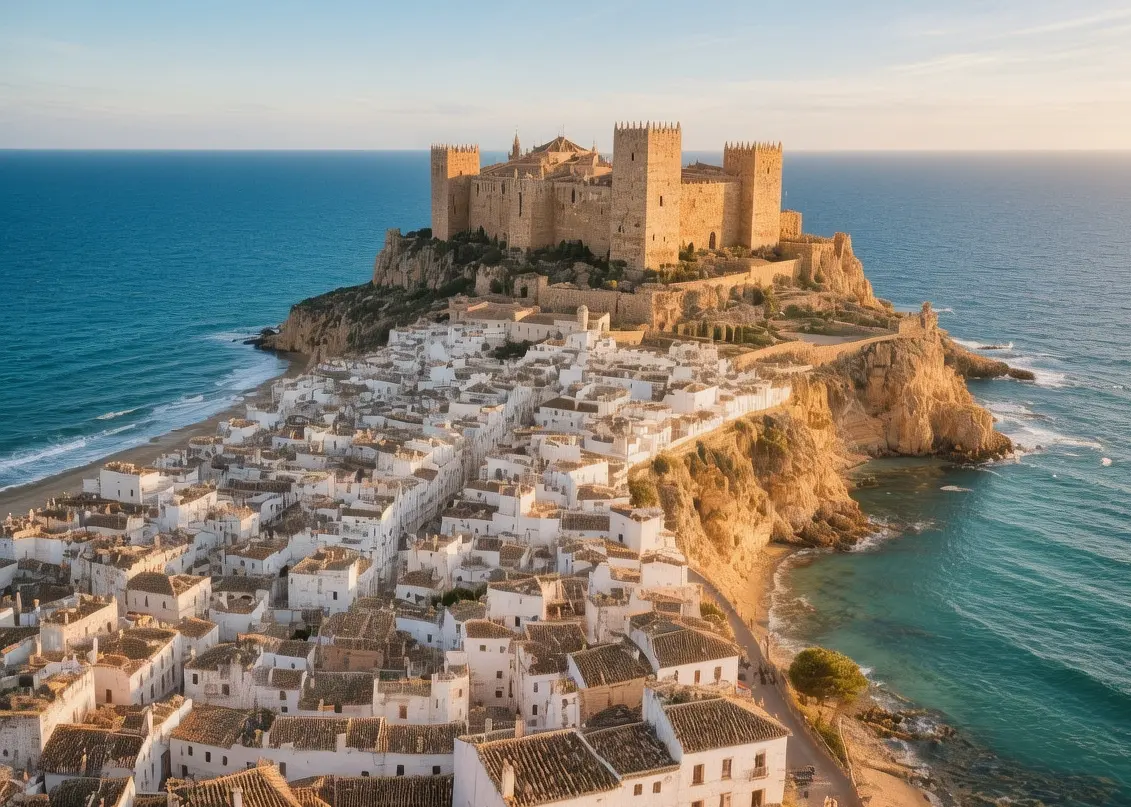
Castell de Peníscola: Where Stone Walls Meet Blue Mediterranean Waters
I stand at the northern gate just after ten in the morning. The sun hits the limestone and turns it warm gold. Salt air drifts up from the sea below. A group moves past me, all looking down at phones instead of at the masonry. Admission costs five euros. I run a finger along a groove worn smooth by centuries of hands. The wind carries the sound of waves against rock far below. This place does not need to perform. It simply endures.
Why Castell de Peníscola Matters
The fortress sits on a rocky headland that juts nearly a kilometer out into the Mediterranean. It began as an Arab stronghold in the tenth century. Later it became a seat for the Knights Templar, then a royal residence, then a defensive point that changed hands through many conflicts. Every layer of stone holds a different chapter of this coast’s story. It has watched ships sail past for a thousand years. It has stood through storms and sieges and quiet summers alike.
That said, parts feel over-restored. Some sections have smooth, pale stone that looks fresh from a builder’s yard, and they clash sharply with the weathered, darker work around them. It can be hard to tell what is original and what is a modern rebuild. The signage is sparse and uneven too. You will find yourself guessing at dates and names more often than you should.
The Best Time to Experience Castell de Peníscola
Mid-September through late October works best. Days stay warm but not oppressive. Temperatures hover around 22°C to 26°C (72°F to 79°F). Crowds thin out after the summer rush. You can walk the outer walls without jostling for space.
July and August see highs of 30°C to 33°C (86°F to 91°F). The site is fully exposed. There is almost no shade. Lines stretch long by mid-morning. Winter brings milder days at 12°C to 16°C (54°F to 61°F), and strong winds that can cut visits short. Spring from April to June is pleasant, though rain comes more often than you might expect. Arrive before 10:30 AM whenever you go. You will have the place quieter, and the light hits the stone at its kindest angle.
Approximate Budget for a 7-Day Trip
All figures are per person, in euros.
- Accommodation: 420 – 560. A clean double room within walking distance of the old town. Expect higher rates directly facing the sea.
- Food: 210 – 280. Simple lunch and dinner, plus coffee and pastries. Many places serve good, filling meals at fair prices.
- Transport: 70 – 110. Local buses, short taxi rides, and fuel if you rent a car. Parking near the castle costs extra.
- Attractions: 35 – 50. Entry to the fortress plus two or three smaller sites nearby.
- Miscellaneous: 60 – 90. Drinks, small supplies, occasional unexpected fees.
- Total: 795 – 1,090
The waterfront restaurants directly below the castle charge nearly double what places five minutes inland ask for similar food. The view costs you a lot. Walk two streets back, and you will eat just as well for much less. The official guided tour also feels overpriced at eighteen euros. The audio guide included with standard entry covers almost all the same ground.
Essential Castell de Peníscola Experiences
- Walk the outer ramparts. Go all the way around the headland. You see the sea on every side. The drop below is steep, so watch your step.
- Climb the main keep. Steps are narrow and uneven. The view from the top stretches north toward Tarragona and south toward Valencia.
- Step into the former chapel. It stands quiet and plain inside. Light falls through high windows in the afternoon. It holds a stillness hard to find elsewhere here.
- Follow the lower wall path. It runs close to the water. You pass old defensive openings once used to watch for ships. Skip this if waves run high—the path can get wet and slippery.
- Explore the inner courtyards. They hold shade and breeze even on hot days. Sit on one of the stone benches and let the place settle on you.
- Check the small museum rooms. They hold artifacts found during restoration work. Labels are short, but the objects themselves tell clear stories.
Hidden Gems Most Travelers Miss
- The western terrace at sunset. It faces away from the main approach. Few people stop here. The light over the water turns soft and orange, and the crowds stay on the other side.
- A narrow lane that leads down from the old town to a quiet cove. It sits below the fortress walls. You can sit on smooth rocks and watch the castle from the sea, not from inside it.
- The “famous” filming viewpoint gets overhyped. It is just a stretch of wall with a good angle, and it is always packed. You will find quieter, better views ten steps away in either direction.
Cultural & Practical Tips
- Wear sturdy shoes. Pavements and castle floors are uneven and often polished smooth by thousands of feet. Flip-flops are a mistake.
- Do not drop coins or small objects from the walls. They can fall far and hit people below. It happens more often than you think.
- Carry water. You can buy it, but vendors inside charge triple the normal price. Bring your own bottle.
- Respect quiet zones. Parts of the site still serve occasionally as venues. Loud talking or playing music can disrupt events in progress.
- Do not take the first “authentic souvenir” stall you see. Prices drop noticeably once you walk a little deeper into the old town.
- Keep your ticket. Staff check it at more than one point. Losing it means buying another.
Essential Visitor Information
Location & Access: Peníscola, Castellón, Spain. Roughly 140 km north of Valencia and 90 km south of Tarragona. Three options: drive and park in the designated lot below the old town; take the regional train to Benicarló-Peníscola then catch the connecting bus; or come by coach from Valencia or Castellón de la Plana.
Tickets & Booking: Standard entry five euros. No advance booking required for most visits. Groups over fifteen should contact the office ahead.
Operating Hours: 10:00 AM to 7:00 PM from April through September. It closes at 5:00 PM from October through March. Closed January 1 and December 25.
Visit Duration: Minimum ninety minutes. Allow two and a half hours to walk all paths without rushing.
Family Suitability: Children welcome. Stroller access is limited—many steps and narrow gateways. Restrooms are available near the main entrance.
Timing: September through October is best. Arrive before 10:30 AM for quiet and good light.
Highlights: Outer ramparts, main keep, former chapel, lower coastal path, western terrace.
Nearby & Day Trip: The old town of Peníscola sits right below the walls. Benicarló is twenty minutes away by bus. Peñíscola Beach is a short walk. A day trip to Morella is feasible by car—allow an hour each way.
Conclusion: Travel with Curiosity, Not Just a Checklist
Castell de Peníscola is not perfect. Some sections look too new. Some days it feels crowded. But it stands where land meets sea, and it carries the weight of every generation that passed through its gates. Do not rush from one marker to the next. Stop, look, and let the place speak. What will you remember most when you leave?
Post a Comment