
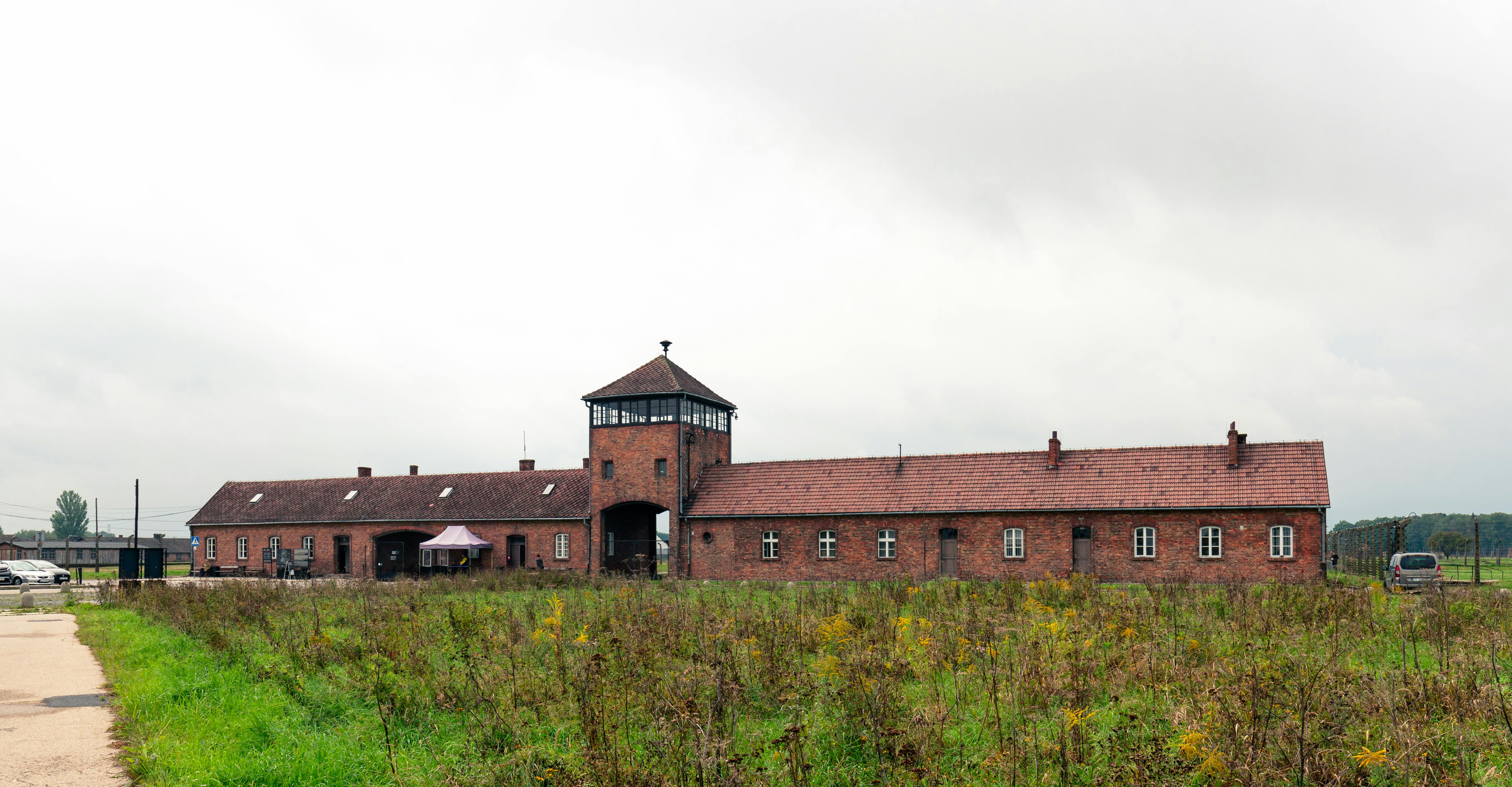
Auschwitz-Birkenau Memorial: Where Memory Meets Humanity's Darkest Hour
The first light of dawn filters through the iconic "Arbeit Macht Frei" gate as you stand before the vast expanse of Auschwitz-Birkenau Memorial—a place where the air carries a profound silence despite the distant sounds of birdsong, where the earth seems to hold its breath beneath your feet, and where every step connects you to the memory of 1.1 million souls who perished here. This isn't merely a historical site—it's a sacred space of remembrance where 191 brick barracks, 300 wooden structures, and 46 kilometers of railway tracks form a landscape of profound significance, where the remnants of gas chambers stand as silent witnesses to humanity's darkest chapter. You hear the soft shuffle of footsteps on gravel paths, the occasional murmur of visitors in dozens of languages, and beneath it all, the quiet persistence of memory that refuses to be forgotten. Walking these grounds, you confront the tangible evidence of industrialized murder while honoring the resilience of those who survived and the obligation we bear to ensure such atrocities never happen again. This place matters because it transforms historical fact into visceral understanding—a physical testament to the consequences of hatred, indifference, and the failure of humanity to protect its most vulnerable.
Why Auschwitz-Birkenau Embodies Historical Significance
Auschwitz-Birkenau represents far more than architectural remnants—it embodies the systematic implementation of genocide on an industrial scale, a transformation of a Polish army barracks into the epicenter of the Holocaust. Established in 1940 as a concentration camp for Polish political prisoners, Auschwitz I evolved into a killing center by 1942, while Birkenau (Auschwitz II), constructed 3 kilometers away, became the primary extermination site capable of processing 6,000 victims daily [[18]]. The complex solved a horrific "problem" for the Nazi regime: how to efficiently murder millions while exploiting slave labor. The railway system, with its infamous unloading platform, transported victims from across Europe to the gas chambers disguised as showers, where Zyklon B pellets released lethal hydrogen cyanide. The camp's design reflected chilling efficiency: selection areas, undressing rooms, crematoria with furnaces capable of incinerating 4,400 bodies daily, and prisoner barracks designed for maximum overcrowding. What makes Auschwitz-Birkenau unique is its scale and preservation—20% of the original 175-hectare Birkenau site remains intact, including the reconstructed gas chamber and crematorium II, the iconic railway entrance, and the haunting wooden barracks where prisoners endured unimaginable conditions. Unlike many Holocaust sites destroyed by retreating Nazis, Soviet forces liberated Auschwitz-Birkenau on January 27, 1945, preserving evidence that would become crucial for historical documentation and education [[24]].
The Best Time to Experience Auschwitz-Birkenau Memorial
To visit Auschwitz-Birkenau with the appropriate solemnity, plan your trip between May 10–June 5 or September 20–October 15, when daytime temperatures range from 12–20°C (54–68°F) and visitor numbers are more manageable before peak summer crowds [[9]]. During these windows, you'll experience comfortable conditions for respectful contemplation, photography (where appropriate), and walking the expansive grounds without the congestion of July–August. The memorial maintains a constant atmosphere of reverence year-round, but spring and autumn offer milder weather for the 3-kilometer walk between Auschwitz I and Birkenau. For optimal contemplation without crowds, arrive at 8:00–9:30 AM when the memorial opens, allowing quiet reflection before larger tour groups arrive. Alternatively, consider a late afternoon visit 3:00–5:00 PM when the golden light casts long shadows across the barracks, creating a particularly poignant atmosphere. You should firmly avoid July 15–August 25 when surface temperatures exceed 30°C (86°F), visitor numbers peak, and the emotional weight of the site becomes compounded by physical discomfort. For visitor information, guided tours, and educational resources, visit auschwitz.org [[7]].
Approximate Budget for Visiting Auschwitz-Birkenau Memorial
Visiting Auschwitz-Birkenau requires basing yourself in Oświęcim (Auschwitz) or nearby Kraków, with easy transportation access to the memorial site. The following budget assumes respectful, thoughtful travel with appropriate accommodations for reflection. Prices are listed in Polish Złoty (PLN) with euro equivalents for international travelers (1 EUR ≈ 4.3 PLN in 2026) [[19]].
- Accommodation: 75–185 PLN (17–43€) per night in Oświęcim or nearby Kraków. Budget hotels start at 40 PLN; mid-range options run 175–350 PLN (40–80€) [[26]].
- Food: 35–55 PLN (8–13€) per day. Breakfast: 12–18 PLN for simple café meal. Lunch: 18–28 PLN at local restaurants like Pod Kaskami. Dinner: 35–55 PLN for sit-down meals featuring traditional Polish cuisine [[21]].
- Transportation: Kraków-Oświęcim train: 12.50 PLN (2.90€) one-way; bus from Oświęcim to memorial: 3.80 PLN (0.90€); taxi round-trip: ~80 PLN (18.50€); Uber/Bolt available from Kraków [[26]].
- Attractions: Auschwitz-Birkenau Memorial entry: free; Guided tour: 140 PLN (32.50€) standard, 190 PLN (44€) with licensed historian; Audio guide: 45 PLN (10.50€); Educational materials: 20–60 PLN (5–14€) [[13]].
- Miscellaneous: Memorial candles: 5 PLN (1.20€); educational books: 35–120 PLN (8–28€); transportation to/from Kraków: 30–80 PLN (7–18.50€) [[22]].
Total 2-Day Visit Budget: 550–900 PLN (128–210€) per person (excluding international flights and main accommodation)
7 Essential Auschwitz-Birkenau Memorial Experiences
- Walk Through the "Arbeit Macht Frei" Gate at Dawn: Arrive at opening time to experience the solemnity of Auschwitz I as morning light illuminates the infamous gate. The quiet atmosphere allows for reflection on the inscription's cruel irony as you enter the preserved camp complex. Wear comfortable shoes for walking on uneven ground; no flash photography in memorial areas; free entry.
- Visit Block 6: Exhibition on the Holocaust of the European Jews: Explore this comprehensive exhibition featuring artifacts, photographs, and personal items of victims that document the systematic persecution and murder of Jewish communities across Europe. The displays provide crucial historical context for understanding the Holocaust's scope. Visit mid-morning (10:00 AM–12:00 PM) when lighting enhances exhibit visibility. Allow 45 minutes; included with entry.
- Stand on the Birkenau Railway Platform: Walk the 3-kilometer route from Auschwitz I to Birkenau to reach the reconstructed railway platform where selections determined life or death for arriving prisoners. The vast expanse of the camp, with its rows of wooden barracks stretching toward the horizon, creates a visceral understanding of the site's scale. Visit midday (12:00–2:00 PM) for full visibility; wear sun protection; allow 40 minutes.
- Observe the Memorial Wall at Birkenau: Stand before the black stone memorial dedicated to the victims of Auschwitz-Birkenau, where representatives of various nations have placed commemorative stones. The wall's design symbolizes the diversity of victims while honoring their collective tragedy. Best experienced during quieter afternoon hours (2:00–4:00 PM) for contemplation; free; allow 15 minutes.
- Visit the Crematorium and Gas Chamber Reconstruction: View the reconstructed gas chamber and crematorium at Birkenau, preserved as they were found by Soviet liberators. The site serves as a powerful testament to the industrialized murder that occurred here. Visit mid-morning (10:00 AM–12:00 PM) when guide explanations provide historical context. Allow 25 minutes; included with entry.
- Attend the Educational Program at the International Youth Meeting Center: Participate in one of the center's educational programs designed to foster dialogue about the Holocaust's lessons for contemporary society. Programs vary by season—check schedule in advance. Sessions typically begin at 10:00 AM or 2:00 PM; free with registration; allow 90 minutes.
- Light a Memorial Candle at the Synagogue: Visit the small synagogue within Auschwitz I to light a candle in remembrance of victims. The simple act connects visitors to centuries of Jewish tradition and the specific tragedy of Jewish communities targeted during the Holocaust. Best experienced early morning (8:00–10:00 AM) or late afternoon for peaceful reflection. Candle donation: 5 PLN suggested.
3 Meaningful Aspects Most Visitors Overlook
- The Shoes of the Victims Exhibit: In Block 5, a powerful display of approximately 8,000 pairs of shoes removed from victims before they entered the gas chambers creates a visceral understanding of individual loss. Most visitors rush through this section, missing the emotional impact of seeing children's shoes, wedding slippers, and work boots arranged in haunting patterns. Access: Included with Auschwitz I entry; visit mid-morning (10:00 AM–12:00 PM) when fewer crowds allow for reflection. No additional fee; allow 20 minutes.
- The Wall of Names at Birkenau: Near Crematorium II, a wall bears the names of identified victims—a poignant contrast to the overwhelming anonymity of mass murder. Most visitors miss it because it's located away from the main path. Access: Included with Birkenau entry; visit during afternoon slots (2:00–4:00 PM) for quieter observation. No additional fee; allow 10 minutes.
- The International Monument's Inscription Details: The memorial wall features inscriptions in multiple languages, each carefully chosen to reflect the specific experience of different victim groups. Most visitors overlook the nuanced wording that acknowledges the particular suffering of Jews, Poles, Roma, Soviet prisoners, and others. Access: Included with Birkenau entry; visit midday (12:00–2:00 PM) when sunlight enhances readability. No additional fee; allow 15 minutes.
Cultural & Practical Tips
- Respect the Sacred Space: Auschwitz-Birkenau is a memorial site and cemetery, not a tourist attraction. Dress modestly, speak quietly, and avoid casual behavior. Photography is prohibited in certain areas (gas chambers, morgues)—observe posted signs.
- Essential Phrases for Reflection: "Z pamięci" (z pah-my-eh-chi) = In memory; "Nie zapomnimy" (nye zah-poh-mnee-myeh) = We will not forget; "Pokoju dla dusz" (poh-koyoo dyah doosh) = Peace for the souls. These phrases honor the site's solemn purpose.
- Preparation Strategy: Read about the Holocaust before visiting to deepen your understanding. The memorial's website offers educational resources; consider booking a guided tour with a licensed historian for contextual understanding.
- Photography Guidelines: Photography is permitted in outdoor areas but strictly prohibited in certain indoor exhibits and memorial spaces. Never photograph human remains or personal effects of victims. Tripods are not permitted.
- Emotional Preparedness: The site can be emotionally overwhelming. Take breaks as needed, visit at your own pace, and consider bringing water. The memorial has benches throughout for reflection. If you feel overwhelmed, visit the pastoral care office for support.
- Accessibility Notes: Auschwitz I has paved paths suitable for wheelchairs; Birkenau's terrain is more challenging with gravel paths and uneven ground. Electric carts are available for visitors with mobility challenges—reserve in advance through the memorial's website.
- Combine with Educational Context: Enhance your visit with related sites: the Schindler's Factory Museum in Kraków (45 minutes by train), the Galicia Jewish Museum, or the Kazimierz Jewish Quarter. A regional perspective enriches understanding of pre-war Jewish life and the Holocaust's impact.
Conclusion: Travel with Remembrance, Not Just Observation
Auschwitz-Birkenau invites you to do more than walk through historic grounds—it calls you to bear witness with profound responsibility. This is a place to stand where humanity's darkest hour unfolded, where the industrial machinery of murder transformed individuals into statistics, where memory must triumph over forgetting. When you walk the railway tracks to Birkenau, when you see the mountains of human hair preserved in Block 5, when you stand before the memorial wall bearing names of the lost, you participate in an act of collective remembrance that transcends tourism. Travel to Auschwitz-Birkenau with reverence for the victims whose lives were extinguished here, for the survivors who shared their testimony, for the educators who preserve this history against the tide of time. Respect the sacredness of this space—every artifact, every building, every grain of soil holds the memory of those who perished. Understand that the solemn atmosphere you experience depends on the mindfulness of every visitor who comes after you. Let the memorial's vast scale humble your understanding, let its stories deepen your compassion, and let the convergence of history and humanity remind you that the most profound journeys are those that transform understanding into action—ensuring that "Never Again" becomes more than words, but a commitment lived through generations.