
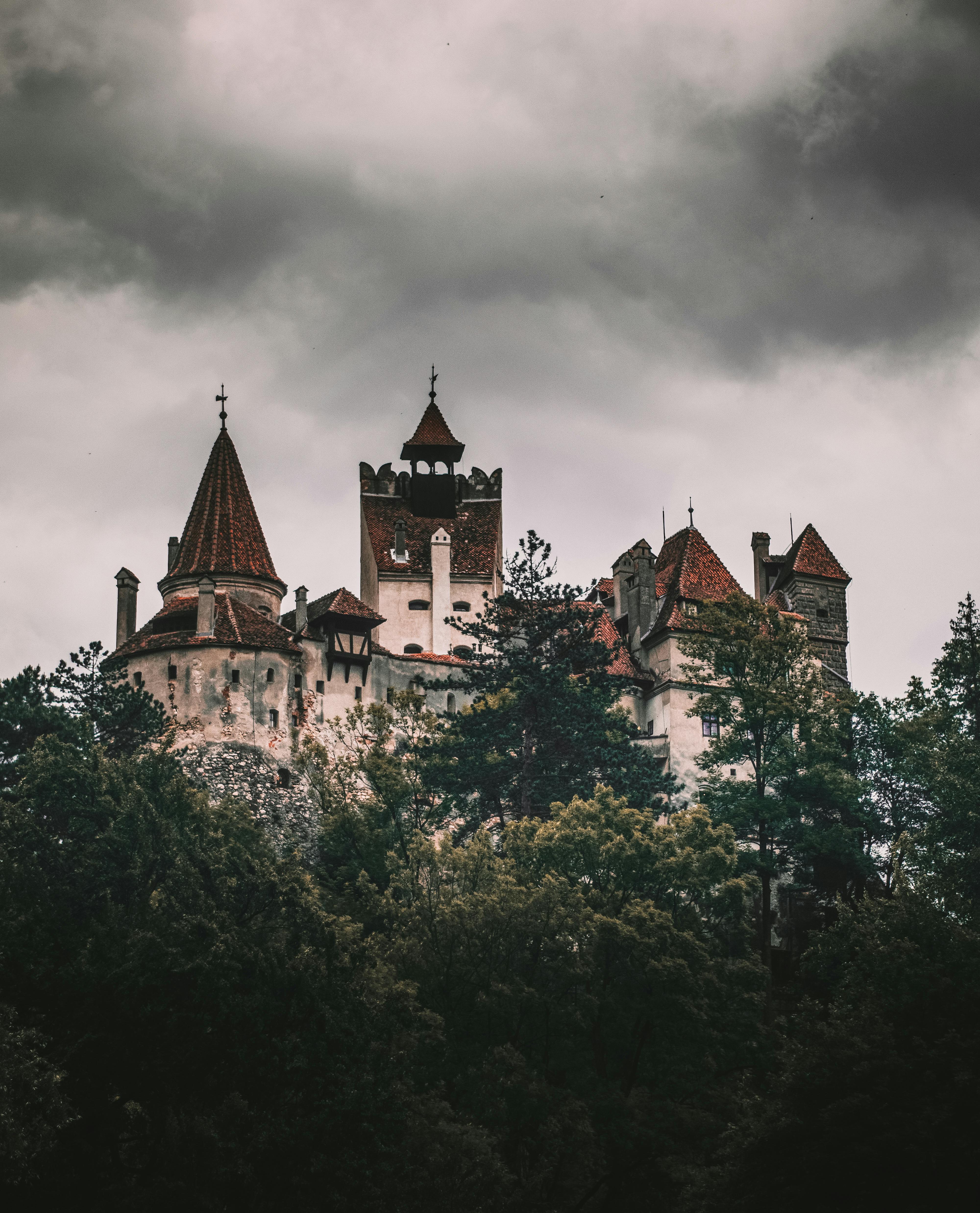
Bran Castle: Where Gothic Legends Meet Transylvanian Mountain Majesty
Morning mist curls around the Gothic turrets of Bran Castle as the first light of dawn illuminates red-tiled roofs perched atop a 60-meter rocky outcrop, where the Carpathian Mountains rise like ancient sentinels guarding secrets older than memory itself. You stand before the drawbridge of Bran Castle, a medieval fortress first documented in 1377 and forever entwined with the legend of Vlad the Impaler—Vlad III Dracula—whose name inspired Bram Stoker's immortal vampire, though the historical connection remains tantalizingly ambiguous. The air carries the scent of pine forests and mountain wildflowers, the distant call of hawks circling above limestone cliffs, and the gentle murmur of visitors crossing the wooden bridge into a courtyard where 57 rooms await exploration across four levels of winding stone corridors. This is Transylvania's most iconic castle, a place where historical truth and literary fantasy dance together in perpetual twilight, where Queen Marie of Romania transformed a military fortress into a royal residence in 1920, and where every shadow seems to whisper tales of medieval intrigue, royal elegance, and Gothic mystery. Standing here, with the fortress walls rising 40 meters above the valley floor and the forested slopes of the Bucegi Mountains stretching toward the horizon, you understand why this castle has captivated imaginations for centuries: it reminds us that some of humanity's most enduring stories emerge not from facts alone, but from the creative tension between history and legend, where stone walls become canvases for our deepest fascinations with power, darkness, and the eternal question of what lies beyond the veil between life and death.
Why Bran Castle Embodies Gothic Romance
Bran Castle represents one of Europe's most fascinating intersections of medieval military architecture, royal heritage, and literary mythology—a fortress that solved the critical defensive need of protecting the Bran Pass, a vital trade route between Transylvania and Wallachia, while simultaneously becoming the stage for one of literature's most enduring legends. Constructed between 1377 and 1388 by Saxon merchants of Brașov under privilege granted by Louis I of Hungary, the castle's strategic position atop a dramatic rock formation allowed it to control movement through the Carpathian Mountains and collect tolls from merchants traversing the pass. The fortress's distinctive layout—featuring a central courtyard surrounded by fortified towers, narrow winding staircases, and secret passages—reflected the military engineering principles of the late fourteenth century, when vertical stone walls and elevated positions provided crucial advantages against siege warfare.
The technical mastery behind Bran Castle's construction lies in its adaptation to the challenging topography. Builders anchored the fortress directly onto the limestone outcrop, creating foundations that have endured for over 640 years despite earthquakes and centuries of weathering. The castle's 57 rooms are connected by a labyrinth of corridors and staircases that descend 40 meters from the highest tower to the lowest courtyard, with walls up to 3 meters thick in defensive sections. A secret passage, discovered during Queen Marie's restoration in the 1920s, connects the first floor directly to the rocky base of the hill—a feature that likely served as an emergency escape route during sieges.
While popular culture associates Bran Castle with Vlad III Dracula (Vlad the Impaler), the historical connection remains tenuous: Vlad was imprisoned in the castle briefly in 1462, but there is no evidence he ever lived there. The true transformation came in 1920, when the citizens of Brașov gifted the castle to Queen Marie of Romania, who undertook extensive renovations between 1920 and 1930, converting the military fortress into a romantic royal residence. Today, Bran Castle welcomes approximately 600,000 visitors annually, serving as both a museum of medieval and royal history and a pilgrimage site for Gothic literature enthusiasts, fulfilling multiple needs: preserving architectural heritage, celebrating Romanian royal history, and providing a tangible connection to the vampire legends that continue to captivate the global imagination.
The Best Time to Experience Bran Castle
The optimal window for visiting Bran Castle stretches from May 15 through September 30, when temperatures in the Transylvanian mountains range from 18–26°C (64–79°F) during daytime hours, creating ideal conditions for exploring the castle's outdoor terraces and hiking the surrounding trails. For the clearest mountain views and most comfortable walking conditions, plan your visit between June 10 and September 15, when humidity levels drop and afternoon thunderstorms become less frequent. Early morning visits between 8:00–9:30 AM offer the dual advantage of softer light for photography and significantly fewer crowds, as most tour groups from Bucharest and Brașov arrive after 10:00 AM.
Late spring (May through June) brings blooming wildflowers in the mountain meadows and lush green forests, though temperatures can dip to 12–18°C (54–64°F) in early mornings. Autumn (mid-September through October) offers spectacular foliage as beech and oak forests surrounding the castle turn brilliant shades of gold and crimson, with comfortable temperatures of 14–22°C (57–72°F) and dramatically fewer visitors after the summer peak.
Avoid visiting during Romanian national holidays—particularly June 1 (Great Union Day) and August 15 (Assumption Day)—when domestic tourism peaks and waiting times can exceed 90 minutes. Also skip the last week of October if you prefer quiet exploration, as the castle hosts Halloween-themed events that attract up to 5,000 daily visitors. Winter visits (November through March) offer a different atmosphere with fewer crowds and occasional snow creating a genuinely Gothic ambiance, but outdoor terraces close and some museum sections operate on reduced schedules. The castle is closed on December 25–26 and January 1–2.
Approximate Budget for a 7-Day Trip
Exploring Bran Castle and the broader Transylvania region requires modest financial planning, as Romania remains significantly more affordable than Western European destinations while offering exceptional cultural and historical value. The following budget assumes a comfortable mid-range travel style with quality accommodations, regional Romanian cuisine, and comprehensive exploration of Bran Castle, nearby fortresses, and surrounding Carpathian attractions over seven days.
- Accommodation: €38–€72 per night for a double room in Bran village (guesthouses and three-star hotels); Brașov city center €45–€85 per night; budget hostels from €22–€35 per person
- Food: €20–€32 per day (breakfast €4–€7 at accommodation with coffee, pastries, and eggs; lunch €7–€11 for traditional Romanian dishes like sarmale or mămăligă with brânză at local restaurants; dinner €9–€14 for grilled meats, ciorbă soup, or trout at regional restaurants)
- Transportation: Train from Bucharest to Brașov €15 round-trip (2.5 hours); bus from Brașov to Bran €6 round-trip (45 minutes); local bus within Bran €2 per day; parking at castle €3 per day if driving; taxi from Brașov to Bran €35 one-way
- Attractions: Bran Castle entry €12 (50 RON); Bran Castle garden access included; Peleș Castle day trip €18 transport + €11 entry; Râșnov Fortress entry €6; Brașov Black Church entry €4; Transylvanian village tour €25
- Miscellaneous: Authentic Transylvanian crafts and souvenirs €10–€28; local wine and țuică €5–€9 per evening; travel insurance €21 for the week; guidebook €8; bottled water and snacks €11
Total estimated cost for 7 days: €445–€665 per person (depending on accommodation choices and dining preferences)
5 Essential Bran Castle Experiences
- Join the Morning Historical Tour: Reserve the 8:30 AM guided tour (€12 entry includes audio guide), when angled morning light illuminates the castle's Gothic chambers and Queen Marie's restored rooms. The 90-minute self-guided exploration reveals the castle's evolution from medieval fortress to royal residence: original 14th-century stone walls, Renaissance furniture, and Queen Marie's personal collection of art and artifacts. Stand in the central courtyard to appreciate the vertical drama of the four-level structure, where narrow staircases wind between towers. Photography without flash is permitted in most areas; bring a wide-angle lens to capture the confined medieval spaces. Download the official app beforehand for detailed room descriptions in English, German, French, and Romanian.
- Explore Queen Marie's Secret Passage: Dedicate 20 minutes to discovering the hidden staircase that connects the first floor directly to the castle's rocky foundation—a feature revealed during the 1920s restoration. This narrow passage, carved directly into the limestone outcrop, descends 12 meters through dimly lit corridors that evoke the castle's medieval defensive origins. Visit between 10:00–11:30 AM when natural light filters through ventilation shafts to illuminate the rough-hewn stone. The passage demonstrates the practical engineering that allowed defenders to escape during sieges, and its cool temperature (14–16°C / 57–61°F year-round) provides relief on hot summer days.
- Walk the Castle Gardens at Sunset: After exploring the interior, descend to the terraced gardens surrounding the castle's base, where Queen Marie created romantic landscaping that frames views of the fortress against the Carpathian backdrop. Visit between 6:00–7:30 PM in summer when the setting sun bathes the red-tiled roofs in amber light and the mountain slopes glow golden. The gardens feature walking paths, benches with panoramic viewpoints, and a small tea house serving traditional Romanian pastries. Allow 45 minutes for the complete garden circuit; the southern terrace offers the classic postcard view of Bran Castle's silhouette against the mountains.
- Visit the Open-Air Ethnographic Museum: Located in the valley below the castle, this collection of traditional Transylvanian peasant structures—including wooden houses, mills, and workshops—demonstrates rural life in the Bran region from the 18th to early 20th centuries. Entry is included with the castle ticket; allow 30–40 minutes to explore the dozen preserved buildings. Visit between 2:00–4:00 PM when demonstrations of traditional crafts (weaving, woodworking, cheese-making) often occur on weekends. The museum provides essential context for understanding the cultural landscape that surrounded the castle throughout its history.
- Photograph the Castle from the Hillside Viewpoint: Position yourself at the designated viewpoint 400 meters southeast of the castle entrance at 7:00–8:30 AM in summer, when morning mist often curls around the towers and the rising sun creates dramatic side-lighting on the Gothic façade. The composition—castle towers framed by forest with mountain peaks in the background—captures the essence of Transylvanian Gothic romance. Bring a telephoto lens (70–200mm) to compress the distance between the castle and the Carpathian peaks; a tripod is permitted on the viewpoint platform but not on narrow trails where it obstructs other visitors.
3 Hidden Gems Most Travelers Miss
- Dracula's Legend Exhibition: This specialized exhibition, located in a building adjacent to the castle's main entrance, explores the historical Vlad the Impaler and the literary evolution of the Dracula myth through artifacts, manuscripts, and multimedia displays. Entry costs €6 (25 RON) and is separate from the castle ticket; the exhibition is overlooked because it requires additional payment, but the reward is nuanced understanding of how a 15th-century Wallachian prince became the world's most famous vampire. Visit between 11:00 AM–1:00 PM when the exhibition is least crowded; allow 45 minutes for thorough exploration. Photography permitted without flash; audio guides available in six languages.
- Magura Village Traditional Church: This wooden Orthodox church, located 3 kilometers northwest of Bran Castle in the village of Magura, features 18th-century frescoes and traditional Transylvanian religious architecture rarely visited by international tourists. Access via the blue-marked hiking trail from Bran village center (35-minute walk through forest and meadows); the church is open daily 9:00 AM–5:00 PM with free entry (donations appreciated). The site is overlooked because it requires independent transportation or a moderate hike, but the reward is peaceful contemplation of authentic Romanian religious art and architecture. Visit between 3:00–5:00 PM when afternoon light illuminates the interior frescoes. Dress modestly (shoulders and knees covered); photography permitted without flash.
- Castle's Moonlight Tour (Halloween Season): During the last week of October, Bran Castle offers special evening tours (€25 / 110 RON) that include access to normally closed areas, Gothic music performances, and storytelling sessions about Vlad the Impaler and Transylvanian folklore. These limited-capacity tours (maximum 30 guests) run Thursday–Saturday at 7:00 PM and 9:00 PM; advance booking essential via www.bran-castle.com. The experience is overlooked by visitors who assume Bran is only a daytime attraction, but the reward is atmospheric exploration of the castle by candlelight, with costumed guides weaving historical fact and Gothic legend. Photography permitted; warm clothing essential as the castle is unheated in October evenings.
Cultural & Practical Tips
- Respect the Historical Site: Bran Castle is a protected monument and museum. Never touch displayed artifacts, maintain a respectful distance from exhibits, and follow all posted photography guidelines. The castle's narrow staircases and corridors can become congested; allow faster visitors to pass and avoid blocking doorways.
- Learn Basic Romanian Phrases: While castle staff and many restaurant employees speak English, knowing a few Romanian phrases enhances your experience: "Bună ziua" (BOO-nah ZEE-wah) means "Good day"; "Mulțumesc" (mool-tsoo-MESK) means "Thank you"; "Vă rog" (vah ROHG) means "Please"; "Unde este toaleta?" (OON-deh yes-teh twah-LEH-tah) means "Where is the restroom?"
- Prepare for Crowds: Bran Castle is Romania's most visited tourist attraction. Purchase tickets online at www.bran-castle.com to skip the ticket queue (€1 extra fee). Arrive before 9:00 AM or after 3:00 PM to avoid peak crowds. Expect 60–90 minute waiting times during midday in July and August.
- Carry Cash (Romanian Lei): While the castle ticket office and larger restaurants accept cards, smaller vendors, rural facilities, and parking attendants often operate on cash only. The currency is Romanian leu (RON), with an approximate exchange rate of 4.9 RON to €1. ATMs are available in Bran village center and Brașov but not at the castle itself.
- Photography Guidelines: Tripods are permitted in the gardens and outdoor viewpoints but not inside the castle where they obstruct narrow corridors. Flash photography is prohibited throughout interior spaces to protect historical artifacts and textiles. Drone use requires written permission from castle administration—contact office@bran-castle.com at least two weeks in advance.
- Weather Preparedness: Mountain weather changes rapidly—pack layers even in summer, including a lightweight waterproof jacket. Afternoon thunderstorms are common from June through August; if you hear thunder while on outdoor terraces, descend to shelter immediately. Check the forecast at the Bran tourist information center before starting your visit.
- Accessibility Considerations: Bran Castle's medieval architecture involves steep, narrow staircases and uneven surfaces throughout. The castle is not wheelchair-accessible beyond the ground-floor courtyard. Contact the visitor center (+40 268 237 700) at least 48 hours in advance to arrange alternative viewing options or virtual tour access for mobility-impaired visitors.
Conclusion: Travel with Curiosity, Not Just Legends
Bran Castle endures not because it confirms vampire myths, but because it invites us to explore the space between history and imagination—because six centuries of stone and story have taught us that legends persist not through literal truth, but through their power to illuminate our deepest fascinations with mystery, power, and the eternal dance between light and darkness. When you stand in those Gothic chambers, tracing the journey from medieval fortress to royal residence to global icon, you participate in a continuum of wonder that stretches from Saxon merchants to Queen Marie to your own moment of discovery. But with that privilege comes responsibility: to approach the site with intellectual curiosity rather than sensationalist expectation, to respect the historical complexity that transcends pop-culture mythology, to let the castle's authentic stories—of trade routes defended, of royal elegance created, of architectural mastery preserved—remind you that truth, when examined with care, proves more fascinating than fiction alone. The castle will continue to guard its secrets long after we've departed—let our presence here be measured not in selfies taken, but in the understanding we carry forward, the respect we show to layered narratives, and the willingness to slow down long enough to hear what both history and legend have to teach.