
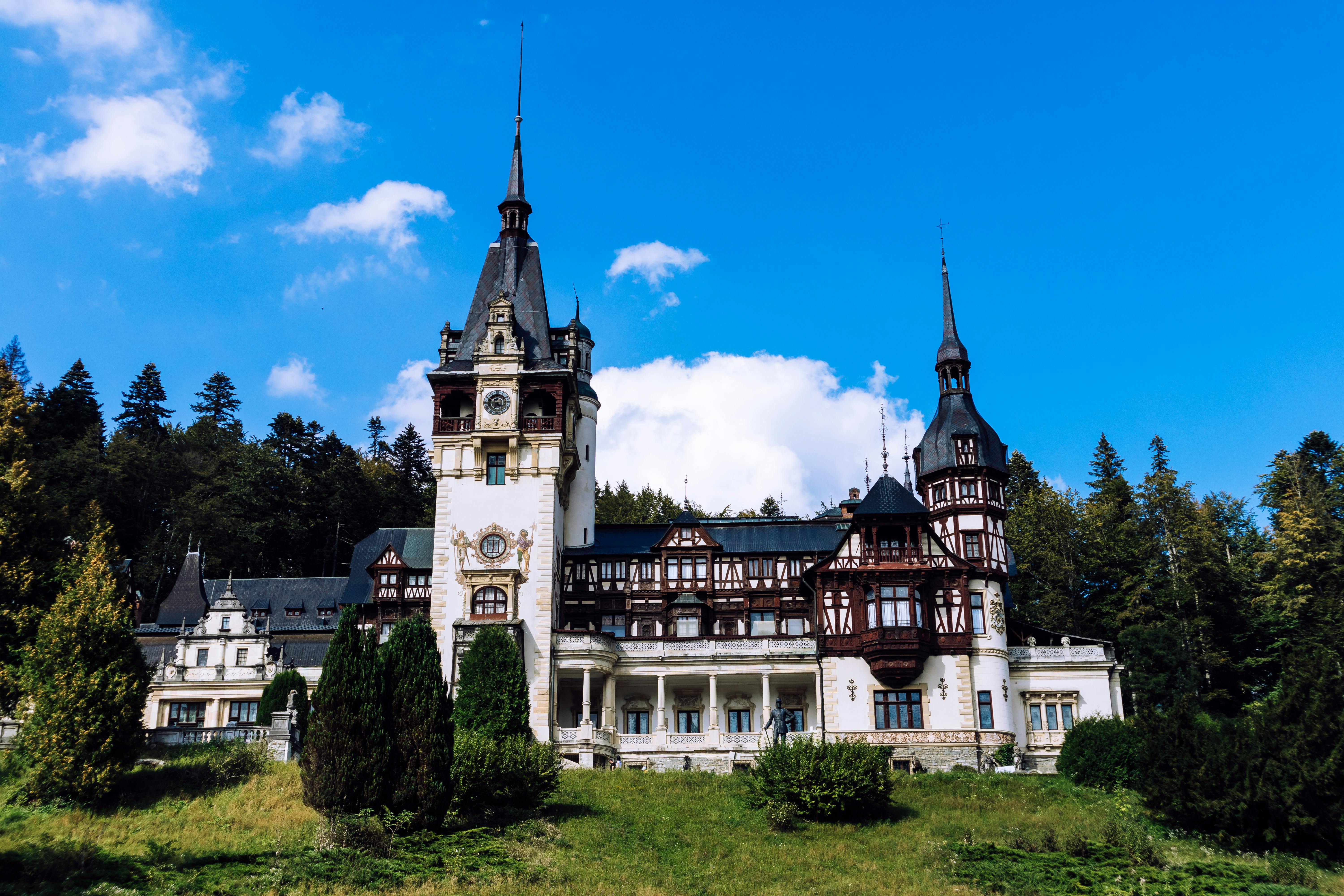
Peleș Castle: Where Neo-Renaissance Splendor Meets Carpathian Mountain Majesty
Golden light spills across the ornate façade of Peleș Castle as morning mist lifts from the pine forests of the Bucegi Mountains, revealing a masterpiece of German Neo-Renaissance architecture perched at 850 meters elevation in the heart of the Carpathians. You stand before the grand entrance of Peleș Castle, a royal residence commissioned by King Carol I of Romania in 1873 and completed in 1914—a palace where 160 rooms showcase exquisite woodcarvings, stained-glass windows depicting Romanian folklore, and collections of European art and armor that rival any museum in the continent. The air carries the scent of aged cedar from interior paneling, mountain wildflowers from terraced gardens, and the distant chime of church bells from Sinaia village below. This is not merely a castle but a testament to royal ambition and artistic synthesis, where Swiss chalet influences merge with Italian Renaissance motifs, where the first electric lighting in a European castle illuminates frescoes painted by Gustav Klimt's contemporaries, and where every corridor whispers tales of a monarchy that sought to craft a national identity through architecture. Standing here, with the castle's 42-meter central tower rising above forested slopes and the dramatic Piatra Mare peak visible on the horizon, you understand why this palace has captivated visitors for over a century: it reminds us that some of humanity's most enduring creations emerge when cultural vision meets natural grandeur, when stone and timber learn to sing the story of a people finding their place in Europe.
Why Peleș Castle Embodies Architectural Synthesis
Peleș Castle represents one of Europe's most ambitious exercises in architectural eclecticism—a royal residence that solved the fundamental challenge of creating a distinctly Romanian palace while embracing the finest craftsmanship from across the continent. Commissioned in 1873 by King Carol I, the first monarch of modern Romania, the castle was designed by German architect Johannes Schultz and later modified by Czech architect Karel Liman and French architect André Lecomte du Noüy. Construction spanned four decades (1873–1914), reflecting both the king's perfectionism and the evolving aesthetic ambitions of a young nation seeking cultural legitimacy.
The technical mastery behind Peleș lies in its pioneering integration of modern engineering with traditional craftsmanship. It was the first castle in Europe equipped with a complete electrical system (installed 1883), central heating, and an internal elevator—innovations that required careful concealment within the Neo-Renaissance aesthetic to preserve historical authenticity. The castle's 160 rooms span approximately 3,200 square meters across three levels, with walls adorned by hand-carved walnut and linden woodwork executed by artisans from across the Habsburg Empire. Stained-glass windows, produced by the renowned Swiss firm Kirsch & Cie, depict scenes from Romanian folklore alongside European heraldry, creating a visual dialogue between national identity and continental heritage.
Today, Peleș Castle fulfills multiple needs: preserving one of Europe's most intact examples of 19th-century royal architecture, showcasing collections of over 4,000 European and Oriental artworks, and offering visitors a tangible connection to Romania's journey from principality to modern nation. The castle welcomes approximately 250,000 visitors annually, serving as both a museum of royal history and a celebration of the artistic synthesis that defined Romania's cultural renaissance at the turn of the 20th century.
The Best Time to Experience Peleș Castle
The optimal window for visiting Peleș Castle stretches from May 20 through September 25, when temperatures in the Sinaia mountain resort range from 16–24°C (61–75°F) during daytime hours, creating ideal conditions for exploring the castle's terraced gardens and hiking surrounding Carpathian trails. For the clearest mountain views and most comfortable walking conditions, plan your visit between June 15 and September 10, when humidity levels drop and afternoon thunderstorms become less frequent. Early morning visits between 8:30–10:00 AM offer the dual advantage of softer light for photography and significantly fewer crowds, as most tour groups from Bucharest arrive after 10:30 AM.
Late spring (May through June) brings blooming rhododendrons in the castle gardens and lush green forests, though temperatures can dip to 10–16°C (50–61°F) in early mornings. Autumn (mid-September through October) offers spectacular foliage as beech and fir forests surrounding the castle turn brilliant shades of gold and crimson, with comfortable temperatures of 12–20°C (54–68°F) and dramatically fewer visitors after the summer peak.
Avoid visiting during Romanian national holidays—particularly June 1 (Great Union Day) and August 15 (Assumption Day)—when domestic tourism peaks and waiting times can exceed 75 minutes. Also skip the last week of December if you prefer quiet exploration, as the castle hosts special holiday events that attract crowds despite winter weather. Winter visits (November through March) offer a different atmosphere with fewer crowds and occasional snow creating a fairy-tale ambiance, but garden access is limited and some exterior terraces close for safety. The castle is closed on December 25–26 and January 1–2.
Approximate Budget for a 7-Day Trip
Exploring Peleș Castle and the broader Prahova Valley region requires modest financial planning, as Romania remains significantly more affordable than Western European destinations while offering exceptional cultural and historical value. The following budget assumes a comfortable mid-range travel style with quality accommodations, regional Romanian cuisine, and comprehensive exploration of Peleș Castle, nearby attractions, and surrounding Carpathian experiences over seven days.
- Accommodation: €42–€78 per night for a double room in Sinaia town center (boutique guesthouses and three-star hotels); luxury mountain resorts €65–€110 per night; budget hostels from €24–€38 per person
- Food: €21–€34 per day (breakfast €5–€8 at accommodation with coffee, pastries, and eggs; lunch €7–€12 for traditional Romanian dishes like sarmale or mămăligă with brânză at local restaurants; dinner €9–€14 for grilled meats, ciorbă soup, or trout at regional restaurants)
- Transportation: Train from Bucharest to Sinaia €14 round-trip (2 hours scenic mountain route); local bus within Sinaia €2 per day; taxi from Sinaia station to castle €5 one-way; parking at castle €3 per day if driving
- Attractions: Peleș Castle basic tour €13 (55 RON); premium tour with armory €21 (90 RON); castle gardens included; nearby Peleș Museum entry €6; Sinaia Monastery entry €3; Bucegi Mountains cable car €12 round-trip; Bran Castle day trip €18 transport + €12 entry
- Miscellaneous: Authentic Romanian crafts and souvenirs €11–€30; local wine and țuică €6–€10 per evening; travel insurance €22 for the week; guidebook €9; bottled water and mountain snacks €12
Total estimated cost for 7 days: €465–€695 per person (depending on accommodation choices and dining preferences)
5 Essential Peleș Castle Experiences
- Join the Morning Premium Tour: Reserve the 9:00 AM premium guided tour (€21 / 90 RON), when angled morning light illuminates the castle's most ornate chambers and King Carol I's private apartments. The 75-minute tour reveals the castle's artistic synthesis: the Royal Library with hand-tooled leather walls, the Music Room featuring a 19th-century pipe organ, and the Armory displaying over 4,000 European and Oriental weapons. Stand beneath the grand staircase to appreciate the hand-carved walnut balustrade—a masterpiece executed by Viennese artisans over three years. Photography without flash is permitted in designated areas; bring a wide-angle lens to capture the vertical drama of the central hall. Book at least 48 hours in advance via www.peles.ro.
- Explore the Royal Theater: Dedicate 20 minutes to the castle's intimate theater, one of Europe's finest private performance spaces, featuring a stage with mechanical scenery changes and seating for 60 guests. The room's ceiling fresco depicts scenes from Romanian mythology, while the proscenium arch showcases gilded carvings of musical instruments. Visit between 10:30–11:30 AM when natural light filters through stained-glass windows to illuminate the intricate details. The theater demonstrates how royal leisure spaces doubled as statements of cultural sophistication—a venue where European artists once performed for Romania's monarchy.
- Walk the Terraced Gardens at Sunset: After exploring the interior, descend to the Italian-style terraced gardens surrounding the castle's southern façade, where formal parterres, ornamental fountains, and mountain vistas create a romantic landscape. Visit between 6:00–7:30 PM in summer when the setting sun bathes the Neo-Renaissance façade in amber light and the Carpathian peaks glow golden. The gardens feature walking paths, benches with panoramic viewpoints, and seasonal flower displays that change with the mountain climate. Allow 45 minutes for the complete garden circuit; the upper terrace offers the classic postcard view of Peleș Castle's silhouette against the forested slopes.
- Visit the Royal Stables and Carriage Museum: Located in a separate building 200 meters from the main castle, this exhibition displays the royal family's collection of 19th-century carriages, sleighs, and equestrian equipment. Entry is included with the castle ticket; allow 30 minutes to explore the dozen preserved vehicles, including the ornate coronation carriage used for King Carol I's 1881 ceremony. Visit between 2:00–4:00 PM when natural light illuminates the polished wood and leather details. The museum provides essential context for understanding royal transportation and ceremony in late 19th-century Romania.
- Photograph the Castle from the Forest Viewpoint: Position yourself at the designated viewpoint 300 meters northwest of the castle entrance at 7:30–9:00 AM in summer, when morning mist often curls around the turrets and the rising sun creates dramatic side-lighting on the ornate façade. The composition—castle towers framed by pine forest with mountain peaks in the background—captures the essence of Carpathian royal romance. Bring a telephoto lens (70–200mm) to compress the distance between the castle and the Bucegi peaks; a tripod is permitted on the viewpoint platform but not on narrow trails where it obstructs other visitors.
3 Hidden Gems Most Travelers Miss
- Secret Royal Chapel: This intimate Orthodox chapel, located on the castle's second floor and accessible only via the premium tour, features original frescoes by Romanian artist Gheorghe Tattarescu and a hand-carved iconostasis of walnut and gold leaf. The chapel is overlooked because it is not included in the basic tour, but the reward is witnessing the spiritual dimension of royal life—a space where Carol I and Queen Elisabeth worshipped in private. Visit during the premium tour (book in advance); photography is prohibited inside the chapel out of respect for its sacred function. Allow 10 minutes for quiet contemplation; the chapel's acoustics create a serene atmosphere even during guided visits.
- Sinaia Monastery Historic Complex: This 17th-century Orthodox monastery, located 1.5 kilometers southeast of Peleș Castle in Sinaia town, features original frescoes, a museum of religious art, and peaceful gardens rarely visited by international tourists. Access via the blue-marked walking path from the castle (20-minute walk through forest); the monastery is open daily 8:00 AM–6:00 PM with free entry (donations appreciated). The site is overlooked because most visitors focus exclusively on the castle, but the reward is authentic insight into Romanian Orthodox spirituality and monastic life. Visit between 3:00–5:00 PM when afternoon light illuminates the interior frescoes. Dress modestly (shoulders and knees covered); photography permitted without flash in exterior areas only.
- Castle's Evening Illumination Walk: During summer months (June–August), Peleș Castle offers special evening access (€8 / 35 RON supplement) allowing visitors to photograph the illuminated façade after regular closing hours. These limited-capacity sessions (maximum 40 guests) run Thursday–Saturday at 8:30 PM; advance booking essential via www.peles.ro. The experience is overlooked by visitors who assume the castle is only a daytime attraction, but the reward is atmospheric photography of the Neo-Renaissance details highlighted by strategic lighting, with the forested mountains creating a dramatic backdrop. Photography encouraged; warm clothing essential as mountain evenings cool rapidly even in summer.
Cultural & Practical Tips
- Respect the Royal Heritage: Peleș Castle is a protected national monument and museum. Never touch displayed artifacts, maintain a respectful distance from exhibits, and follow all posted photography guidelines. The castle's narrow corridors and ornate staircases can become congested; allow faster visitors to pass and avoid blocking doorways.
- Learn Basic Romanian Phrases: While castle staff and many restaurant employees speak English, knowing a few Romanian phrases enhances your experience: "Bună ziua" (BOO-nah ZEE-wah) means "Good day"; "Mulțumesc" (mool-tsoo-MESK) means "Thank you"; "Vă rog" (vah ROHG) means "Please"; "Unde este toaleta?" (OON-deh yes-teh twah-LEH-tah) means "Where is the restroom?"
- Book Tours in Advance: Peleș Castle limits premium tour groups to 20 participants to protect interior spaces and ensure quality interpretation. Reserve your preferred time slot online at www.peles.ro at least 48 hours in advance, especially for weekend visits or during the summer peak. Basic tours depart hourly from 9:00 AM–4:00 PM (May–September).
- Carry Cash (Romanian Lei): While the castle ticket office and larger restaurants accept cards, smaller vendors, rural facilities, and parking attendants often operate on cash only. The currency is Romanian leu (RON), with an approximate exchange rate of 4.9 RON to €1. ATMs are available in Sinaia town center but not at the castle itself.
- Photography Guidelines: Tripods are permitted in the gardens and outdoor viewpoints but not inside the castle where they obstruct narrow corridors. Flash photography is prohibited throughout interior spaces to protect historical textiles, frescoes, and woodwork. Drone use requires written permission from castle administration—contact office@peles.ro at least two weeks in advance.
- Weather Preparedness: Mountain weather changes rapidly—pack layers even in summer, including a lightweight waterproof jacket. Afternoon thunderstorms are common from June through August; if you hear thunder while on outdoor terraces, descend to shelter immediately. Check the forecast at the Sinaia tourist information center before starting your visit.
- Accessibility Considerations: Peleș Castle's historic architecture involves steep staircases and uneven surfaces throughout. The ground floor and gardens are wheelchair-accessible, but upper floors require navigating narrow staircases without elevator access. Contact the visitor center (+40 244 310 596) at least 48 hours in advance to arrange alternative routes or virtual tour access for mobility-impaired visitors.
Conclusion: Travel with Appreciation, Not Just Admiration
Peleș Castle endures not because it showcases royal opulence, but because it invites us to appreciate the creative synthesis of cultures—a palace where German precision, Italian elegance, and Romanian soul converged to create something uniquely beautiful. When you stand in those wood-paneled halls, tracing the journey from royal residence to national treasure, you participate in a continuum of craftsmanship that stretches from 19th-century artisans to your own moment of wonder. But with that privilege comes responsibility: to value the stories embedded in stone and timber, to respect the delicate balance between preservation and access, to let the castle's authentic heritage remind you that true beauty emerges when vision honors both tradition and innovation. The palace will continue to shelter memory and artistry long after we've departed—let our presence here be measured not in photographs taken, but in the appreciation we carry forward, the respect we show to living heritage, and the willingness to slow down long enough to hear what craftsmanship has to teach.