
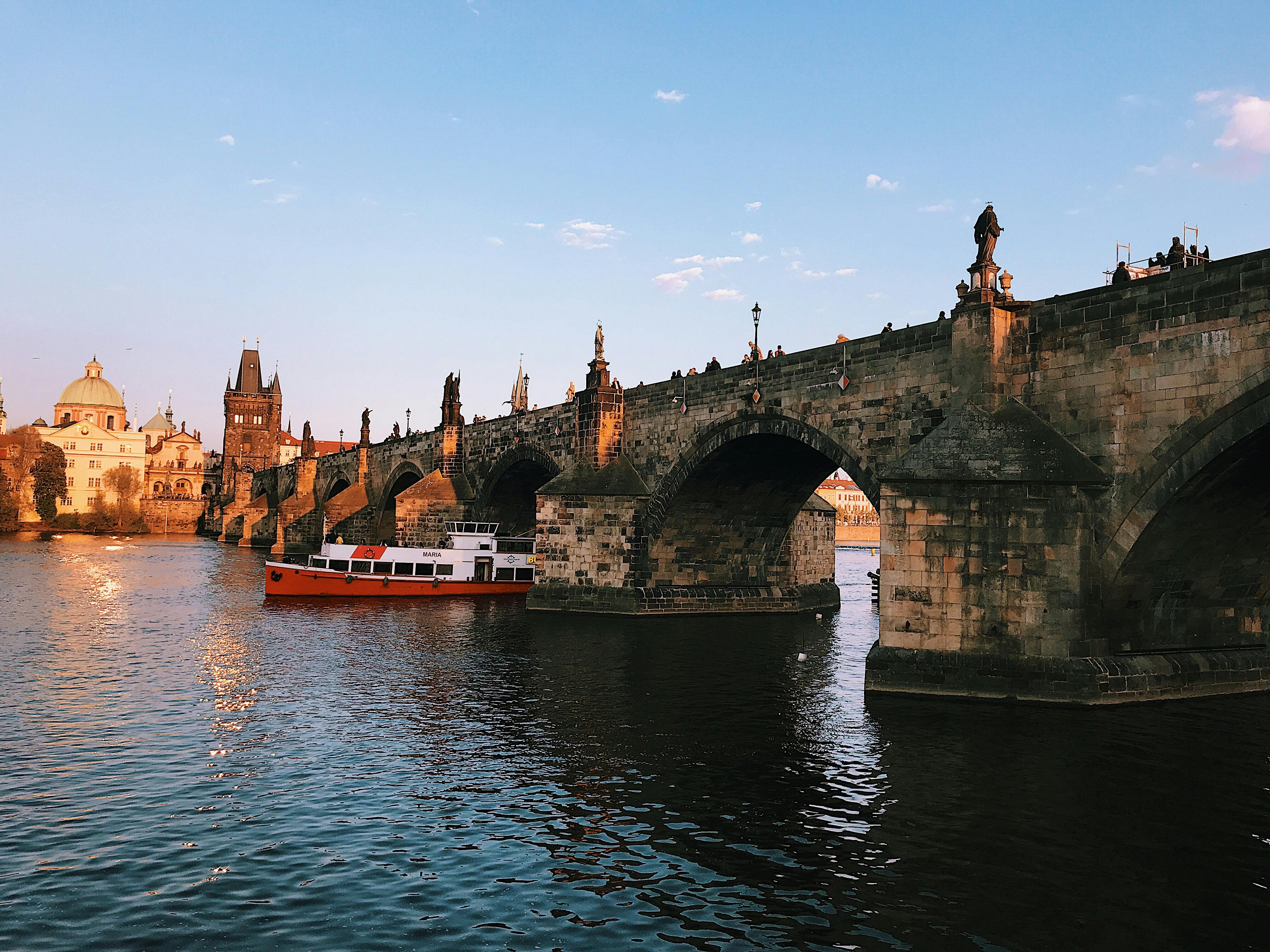
Charles Bridge: Where Medieval Craftsmanship Meets Vltava Majesty
Golden hour light spills across the ancient stones of Charles Bridge—Prague's iconic 14th-century crossing where the scent of freshly baked trdelník pastry mingles with the mineral freshness of the Vltava River below. The air carries the soft chime of street musicians' violins, the distant strains of Czech folk songs drifting from riverboats, and the gentle murmur of conversations in dozens of languages that have echoed across this span since the Middle Ages. You hear the rhythmic clop of horse-drawn carriages on weathered sandstone, the soft laughter of children gathered around the famous St. John of Nepomuk statue, and beneath it all, the profound silence that honors the memory of what transpired here. This isn't merely a bridge—it's a living chronicle of European engineering, where 516 meters of perfectly fitted sandstone blocks create one of the world's most distinctive river crossings, and where every statue tells a story of religious devotion through centuries of political change. Standing on the bridge's central span with panoramic views of Prague Castle and the Old Town, you connect with the same landscape that has drawn visitors since King Charles IV first commissioned its construction, where history breathes through the daily rhythm of street performances, photography, and quiet contemplation along ancient pathways. This place matters because it represents humanity's capacity to transform functional necessity into enduring artistic expression—a testament to the enduring power of craftsmanship that continues to inspire awe centuries after its completion.
Why Charles Bridge Embodies Architectural Harmony
Charles Bridge represents far more than scenic beauty—it embodies one of Europe's most extraordinary examples of medieval engineering, where strategic necessity merged with artistic vision. Commissioned by King Charles IV and constructed between 1357–1402 by master builder Petr Parléř, this bridge spans 516 meters in length with a width of 9.5 meters, making it one of Central Europe's most impressive stone bridges. The bridge solved a fundamental transportation challenge: how to create a permanent river crossing that could withstand the Vltava's seasonal floods while connecting Prague Castle with the Old Town for trade and defense. Built using precisely cut sandstone blocks without mortar, the bridge features distinctive Gothic arches and 16 graceful spans that have withstood centuries of floods, wars, and changing political regimes. What makes Charles Bridge unique is its completeness: unlike many European bridges altered beyond recognition, this crossing has maintained much of its original structure while gaining its famous Baroque additions—the 30 statues of saints installed between 1683–1714 that transformed it into an "open-air gallery of Baroque sculpture." The bridge's strategic location at the narrowest point of the Vltava River created a visual language that speaks of its historical importance, where each statue placement follows deliberate religious and political symbolism. Today, Charles Bridge stands as one of Europe's most significant cultural treasures and a protected National Cultural Monument since 1961, where the constant interplay between historical preservation and modern tourism creates a dynamic landmark that continues to shape our understanding of medieval engineering and Baroque artistry—a testament to the enduring power of architectural vision when given proper reverence and protection.
The Best Time to Experience Charles Bridge
To experience Charles Bridge at its most atmospheric, plan your visit between May 15–June 15 or September 15–October 15, when daytime temperatures range from 14–22°C (57–72°F) and the surrounding landscape blooms with spring blossoms or glows with autumn colors. During these windows, you'll enjoy comfortable conditions for exploring the bridge, photography, and walking the historic pathways without summer's humidity or winter's biting cold. For optimal photography of the Baroque statues and river views, arrive at 6:30–8:00 AM when morning light illuminates the eastern statues, revealing intricate details with soft, directional illumination while the bridge remains relatively quiet. Alternatively, visit at 5:30–7:00 PM during golden hour when warm light transforms sandstone into amber tones and creates dramatic reflections on the Vltava River's surface. You should firmly avoid July 15–August 25 when temperatures can exceed 28°C (82°F), the bridge becomes congested with tour groups, and the intense midday sun diminishes the visual impact of the delicate statue details. For visitor information, historical context, and special events, visit prague.eu.
Approximate Budget for a 7-Day Trip
Visiting Charles Bridge requires basing yourself in Prague's historic center with easy walking access to the bridge, museums, and cultural venues. The following budget assumes moderate travel style—comfortable boutique hotels, authentic Czech cuisine, and a mix of public transportation and occasional taxi rides. Prices are listed in Czech Koruna (CZK) with euro equivalents for international travelers (1 EUR ≈ 24 CZK in 2026).
- Accommodation: 1,000–2,500 CZK (42–104€) per night in Prague 1 (Old Town) or Prague 5 (Lesser Town). Budget pensions start at 500 CZK; mid-range boutique hotels run 2,500–4,800 CZK (104–200€).
- Food: 300–500 CZK (13–21€) per day total. Breakfast: 90–150 CZK for traditional snídaně with vejce, local cheese, and fresh bread. Lunch: 120–200 CZK for regional specialties at a pub like U Modré Kachničky. Dinner: 250–400 CZK for sit-down meals featuring svíčková, goulash, and Czech beer.
- Transportation: Local tram/bus: 32 CZK (1.30€) for 30 minutes; one-day pass: 150 CZK (6.30€); Uber/Bolt: ~150 CZK (6.30€) for short trips within city center.
- Attractions: Charles Bridge entry: free; Prague Castle entry: 350 CZK (14.60€); St. Vitus Cathedral: included with castle entry; Guided bridge tour: 500 CZK (20.80€); Vltava River cruise: 300 CZK (12.50€).
- Miscellaneous: Traditional Czech crystal: 600–1,500 CZK (25–63€); Bohemian garnet jewelry: 400–900 CZK (17–38€); folk music concert ticket: 400–1,000 CZK (17–42€).
Total 7-Day Budget: 13,000–21,000 CZK (540–875€) per person (excluding international flights)
7 Essential Charles Bridge Experiences
- Witness the Bridge at Dawn: Arrive at opening time to experience the bridge with minimal crowds as morning light illuminates the Baroque statues. The quiet atmosphere allows for reflection on the artistic legacy preserved within these stone figures. Visit mid-week (Tuesday–Thursday) for the quietest experience; free; allow 60 minutes; wear comfortable shoes.
- Marvel at the St. John of Nepomuk Statue: Stand before the famous bronze relief of St. John of Nepomuk, where locals and visitors alike touch the plaque for good luck. The worn bronze creates a visceral connection to centuries of tradition and superstition. Best experienced mid-morning (10:00 AM–12:00 PM) when lighting enhances the statue's details; free; allow 20 minutes.
- Walk the Full Bridge Circuit: Follow the 516-meter circuit across the entire span for constantly changing perspectives of the Vltava River and Prague skyline. The elevated path offers panoramic views that reveal the bridge's strategic importance in connecting the city. Best experienced mid-day (12:00–2:00 PM) when lighting illuminates statue details; free; allow 75 minutes; wear comfortable shoes.
- Photograph the Bridge at Golden Hour: Position yourself from the Kampa Island viewpoint to capture the iconic view of the bridge with its Baroque statues against the Prague Castle backdrop. The elevated vantage points offer perfect perspectives for both wide-angle landscapes and detailed statue close-ups. Visit during golden hour (5:30–7:00 PM) for optimal lighting; free; allow 30 minutes; wide-angle lens recommended.
- Visit the Charles Bridge Museum: Explore exhibits on the bridge's construction, featuring remarkable displays on medieval engineering techniques and the history of the Baroque statues. The museum features historical artifacts from the bridge's construction through modern preservation efforts. Visit mid-week (Tuesday–Thursday) when guides provide detailed explanations; entry 200 CZK; allow 60 minutes.
- Taste Traditional Czech Cuisine: Sample authentic dishes at restaurants like U Modré Kachničky or Cafe Imperial: try svíčková, goulash, and regional specialties that connect you to centuries of culinary tradition. Best experienced during lunch (12:00–2:00 PM); budget 250–400 CZK per meal.
- Take a Vltava River Cruise: Experience the bridge from the water with a river cruise that passes beneath its arches. The unique perspective reveals the bridge's structural engineering and the relationship between the bridge and the river it spans. Events typically begin at 10:00 AM; tickets 300 CZK; book online to secure spots; allow 90 minutes.
3 Hidden Gems Most Travelers Miss
- The Secret Viewing Platform on the Left Bank: Tucked away behind the Church of St. Francis of Assisi, this elevated platform offers panoramic views of the entire bridge span that reveal the precise alignment of the statues often missed by visitors focused on individual figures. Most visitors miss it because it's not marked on standard tourist maps. Access: Located 200 meters east of the bridge's eastern end; visit early morning (6:30–8:00 AM) when lighting enhances the bridge's details. No additional fee; allow 25 minutes; bring binoculars.
- The Hidden Stone Carvings: Hidden along the northern parapet of the bridge, these lesser-known medieval carvings feature intricate details often overlooked by visitors focused on the more famous Baroque statues. Often overlooked because they're at eye-level rather than statue height. Access: Included with bridge visit; visit mid-morning (10:00 AM–12:00 PM) when lighting enhances the carvings. No additional fee; allow 20 minutes; bring magnifying glass.
- The Moonlight Path Across the Bridge: This lesser-known evening walking route follows the southern edge of the bridge where strategically placed streetlights create dramatic moonlight effects on the statues. Most visitors leave before dusk, missing this serene experience. Access: Available during evening hours; best visited on clear nights with full moon. No additional fee; allow 45 minutes; bring a flashlight and wear quiet footwear.
Cultural & Practical Tips
- Respect Historical Significance: Charles Bridge represents centuries of Czech cultural heritage—speak thoughtfully about its historical context. Avoid making casual comparisons to other European bridges without acknowledging its unique role in connecting Prague's historic districts.
- Essential Czech Phrases: "Dobrý den" (doh-brii den) = Good day; "Děkuji" (dyeh-kooyee) = Thank you; "Prosím" (proh-seem) = Please/You're welcome; "Most" (most) = Bridge. Locals appreciate respectful efforts.
- Bridge Strategy: Visit early morning for photography, late evening for atmosphere. Avoid midday when the bridge is most congested with tour groups. Consider returning at different times to experience its changing character throughout the day.
- Photography Guidelines: Photography is permitted throughout the bridge. When photographing street performers, ask for permission before taking close-up shots. Avoid using tripods during peak hours (10:00 AM–4:00 PM).
- Weather Preparedness: Prague experiences temperate continental climate: summer highs reach 25°C (77°F); winter lows drop to -5°C (23°F). The bridge can be windy year-round; carry a light layer even in summer.
- Accessibility Notes: Charles Bridge has limited accessibility due to historic stone pathways and slight inclines. Wheelchair access is possible but challenging; consider river cruises as an alternative viewing option.
- Combine with Nearby Sites: Enhance your Charles Bridge visit with walking-distance attractions: Prague Castle (5 minutes), Old Town Square (15 minutes), and the Jewish Quarter (20 minutes). A regional perspective enriches understanding of Prague's historical layers.
Conclusion: Travel with Reverence, Not Just Observation
Charles Bridge invites you to do more than walk across historic stones—it calls you to understand with profound responsibility. This is a place to stand where medieval craftsmen transformed raw sandstone into enduring artistry, where the rhythmic pulse of daily life has continued uninterrupted for over six centuries, where memory must triumph over forgetting. When you walk the same path trodden by Habsburg emperors and generations of Prague citizens, when you touch the worn bronze of St. John of Nepomuk's plaque that countless hands have polished smooth, when you see the preserved evidence of Gothic engineering that shaped European bridge design, you participate in an act of historical understanding that transcends tourism. Travel to Charles Bridge with reverence for the stonemasons who created this architectural masterpiece, for the preservationists who maintained it through turbulent times, for the community that cherishes this space as their living heritage. Respect the fragility of historical continuity—every footprint off-trail, every piece of litter left behind, disrupts a balance measured in centuries rather than moments. Understand that the vibrant atmosphere you experience depends on the mindfulness of every visitor who comes after you. Let the bridge's strategic significance humble your understanding, let its stories deepen your compassion, and let the convergence of engineering, art, and community remind you that the most profound journeys are those that transform observation into meaningful connection with the enduring power of human creation that nurtures our shared cultural identity across generations.