
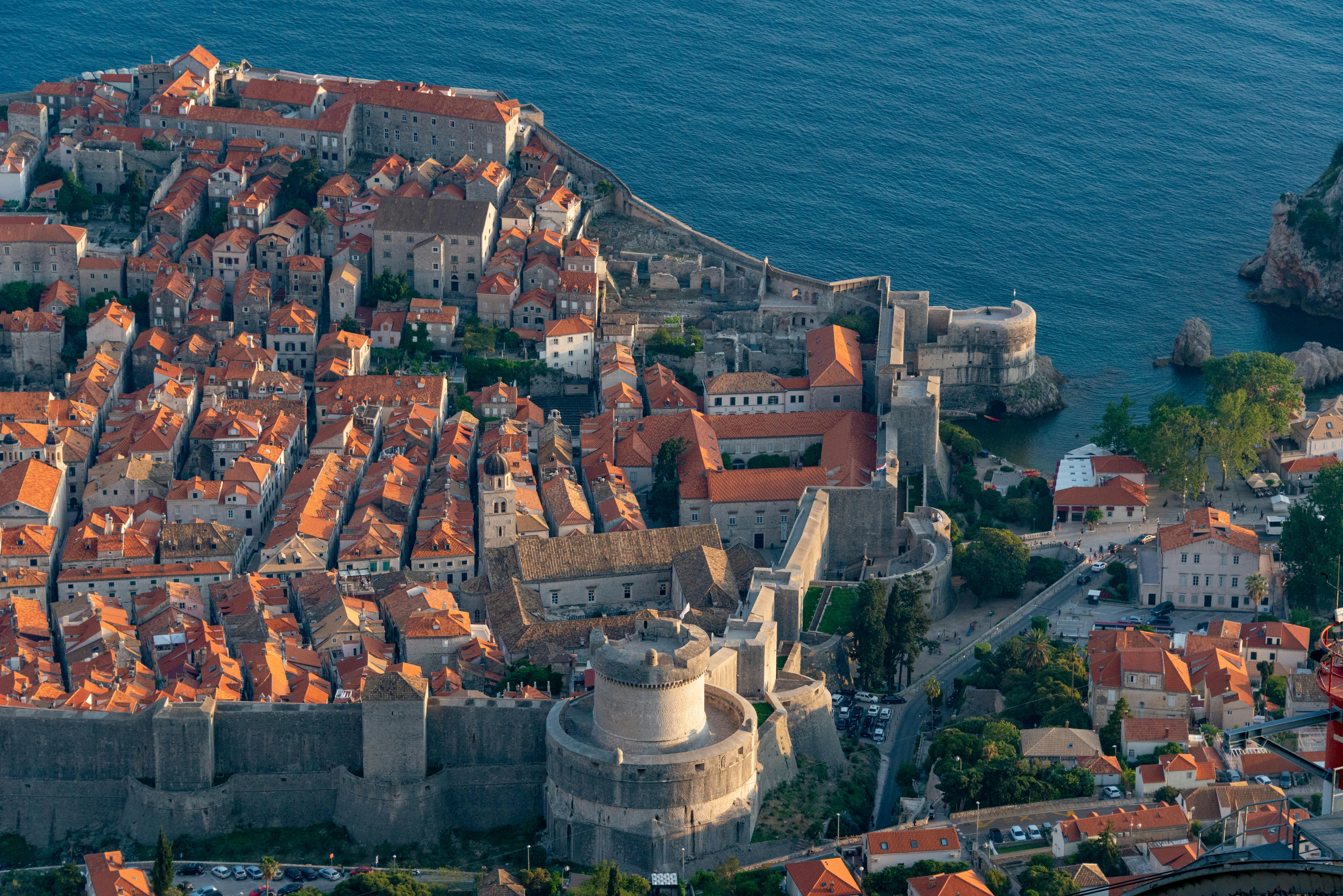
Dubrovnik City Walls: Where Medieval Stone Meets Adriatic Light
The sun climbs over the Adriatic as you step onto limestone battlements worn smooth by centuries of footsteps, the sea stretching endlessly to the horizon in shades of turquoise and sapphire. The air carries salt from the waves below, the faint scent of rosemary from terracotta rooftops, and the distant murmur of Croatian echoing through narrow streets. You hear the gentle clatter of tourist groups ahead, the soft shuffle of sandals on ancient stone, and the occasional cry of seagulls circling the fortress towers. These walls—1,940 meters (1.2 miles) of continuous fortification rising up to 25 meters (82 feet) above the city—were constructed between the 12th and 17th centuries to solve a fundamental problem: how to protect the maritime Republic of Ragusa from Venetian ambition, Ottoman expansion, and pirate raids. Today, as you walk the ramparts with the old town's red roofs to your left and the sparkling sea to your right, you experience not just a historical monument but a living testament to civic pride, engineering ingenuity, and the enduring power of stone. The Dubrovnik city walls matter because they preserve something increasingly rare: an intact medieval urban defense system that continues to define a city's identity while welcoming the world with open gates.
Why Dubrovnik City Walls Embody Adriatic Resilience
The Dubrovnik city walls represent one of Europe's most complete examples of medieval military architecture, engineered to protect the independent Republic of Ragusa—a maritime power that rivaled Venice in trade and diplomacy. Construction began in the 12th century with the earliest fortifications around the old town, but the walls reached their definitive form between 1350 and 1450, when Ragusan engineers incorporated advanced defensive features: 15 towers (including the iconic Minčeta Tower at 31 meters/102 feet), three strategic fortresses (Lovrijenac, Revelin, and Bokar), and a continuous curtain wall 1.5-3 meters (5-10 feet) thick designed to withstand cannon fire.
The engineering brilliance lies in adaptive construction. Local limestone—quarried from the nearby Srđ mountain—was cut into precise blocks bound with lime mortar that hardens over time, creating structures that have withstood earthquakes, sieges, and centuries of coastal weather. The walls' seaward side features a sloped base to deflect naval attacks, while the landward side incorporates a dry moat (now a park) and additional bastions. Watchtowers were positioned at 50-meter intervals for optimal arrow coverage, and secret passages allowed defenders to move troops unseen during sieges.
Today, the walls serve a different purpose: preserving cultural heritage while generating revenue for conservation. Managed by the Dubrovnik City Walls Authority and protected as a UNESCO World Heritage site since 1979, the fortifications welcome approximately 1.2 million visitors annually. Entry fees fund ongoing restoration using traditional techniques—master stonemasons still repair damage with hand-cut limestone and lime mortar, ensuring the walls remain authentic. This living preservation model solves a modern need: balancing tourism access with structural integrity, allowing visitors to walk history without compromising its future.
The Best Time to Experience Dubrovnik City Walls
Optimal conditions for walking the Dubrovnik city walls occur during two distinct windows: May 15 through June 20 and September 10 to October 15. During these periods, temperatures range between 20-26°C (68-79°F), rainfall averages just 40-60mm monthly, and the Adriatic shimmers in brilliant blues that enhance photography from the ramparts. Visit between 7:30-8:30 AM when the walls open to experience soft morning light, minimal crowds, and comfortable temperatures before cruise ship excursions arrive around 10:00 AM.
Summer months (July-August) present significant challenges: temperatures soar to 28-32°C (82-90°F), crowds peak with 15,000+ daily visitors, and the exposed limestone retains heat, making the 2-hour circuit physically demanding. Winter (November-February) brings cooler temperatures—10-15°C (50-59°F)—and occasional rain that makes stone slippery; some sections may close during high winds. Avoid visiting during midday in summer (11:00 AM-3:00 PM) when sun exposure is intense and queues at entrance gates exceed 45 minutes.
For current opening hours, ticket availability, and conservation updates, visit www.visitdubrovnik.hr, the official tourism portal maintained by the Dubrovnik-Neretva County Tourist Board. The website provides real-time updates on wall access, links to the official City Walls booking system at dubrovnikcitywalls.com, and detailed information about guided tours, combination tickets with Fort Lovrijenac, and seasonal photography workshops. The walls operate daily from 8:00 AM to 7:30 PM (April-October) and 8:00 AM to 3:00 PM (November-March), with final entry one hour before closing.
Approximate Budget for a 7-Day Trip
Dubrovnik offers good value for a Mediterranean coastal destination, though prices peak during summer. This breakdown assumes a mid-range travel style with comfortable accommodations, authentic local dining, and public transportation—walkability within the old town reduces transit costs significantly.
- Accommodation: €70-€130 per night for a double room in a family-run pansion or three-star hotel in Dubrovnik's Old Town, Ploče, or Lapad neighborhoods
- Food: €35-50 per day total
- Breakfast: €6-10 (coffee, fresh burek, and local cheese at a pekara)
- Lunch: €12-18 (crni rižot—black cuttlefish risotto, or pašticada—beef stew with gnocchi)
- Dinner: €17-22 (grilled Adriatic fish or peka slow-cooked meat with local Plavac Mali wine)
- Transportation:
- Libertas bus day pass: €6.50 (covers city routes and airport shuttle)
- Taxi from Dubrovnik Airport: €35-45 one-way
- Inter-city bus to Mostar or Kotor: €25-40 round-trip
- Old Town is pedestrian-only; no car needed within walls
- Attractions:
- Dubrovnik city walls entry: €35 adults, €15 children (7-18), free under 7
- Fort Lovrijenac: €15 (or included in walls combo ticket)
- Cable car to Srđ mountain: €27 round-trip
- War Photo Limited exhibition: €10
- Island-hopping boat tour: €45-75
- Miscellaneous:
- Souvenir lavender products: €8-20
- Local olive oil tasting: €12-18
- Ratafija liqueur tastings: €6-10
Total estimated cost for 7 days: €980-1,450 per person (excluding international flights)
7 Essential Dubrovnik City Walls Experiences
- Sunrise Walk from Pile Gate: Enter at 7:30 AM when the walls open to experience the ramparts in golden morning light with minimal crowds. Walk clockwise to reach Minčeta Tower first—the highest point offers panoramic views of the old town's terracotta roofs and the Adriatic beyond. The soft light enhances photography; bring a polarizing filter to reduce sea glare. Allow 90 minutes for the full circuit at a leisurely pace.
- Minčeta Tower Summit: Climb the 150-step spiral staircase inside the fortress tower (built 1464) to reach the highest viewpoint on the walls at 31 meters (102 feet). The 360-degree panorama encompasses the entire old town, Lokrum Island, and the Elafiti archipelago. Visit at 9:00-10:00 AM for optimal light; the tower can get crowded later. Wear sturdy shoes—the medieval stone steps are uneven.
- Seaward Photography at Bokar Fortress: Position yourself at the westernmost fortress (Bokar, built 1461) around 5:00-6:30 PM in summer for dramatic side-lighting on the walls with the Adriatic as backdrop. The fortress's circular design creates leading lines toward the setting sun. Tripods permitted in designated areas; avoid blocking pedestrian flow during peak hours.
- Historical Context with Audio Guide: Rent the official audio guide (€7, available at Pile Gate entrance) to hear detailed narratives about each tower, fortress, and historical event as you walk. The guide includes accounts of the 1667 earthquake, Ragusan diplomacy, and daily life in the republic. Allow extra time for listening stops; the full commentary adds 30-45 minutes to the circuit.
- Fort Lovrijenac Extension: After completing the walls, descend to Fort Lovrijenac (St. Lawrence Fortress), perched on a 37-meter (121-foot) cliff west of the old town. The fortress, connected to the walls by a wooden bridge, offers complementary views and houses summer Shakespeare performances. Entry included with walls ticket; allow 45 minutes for exploration.
- Traditional Lunch in Old Town: After your walk, dine at Proto or 360 Restaurant, both offering terrace seating with harbor views and menus featuring Dalmatian specialties. Order brodet (fish stew) or grilled lamb with blitva (Swiss chard with potatoes). Expect to pay €20-30 per person for a complete meal with wine; reservations recommended for sunset tables.
- Evening Stroll with Local Crowds: Return to the walls at 6:00-7:00 PM (summer) when entry fees decrease and Dubrovnik residents take their evening korzo (promenade). Experience the ramparts as locals do: leisurely, social, with gelato in hand. The warm light creates magical photography opportunities as the city transitions from day to night.
3 Hidden Gems Most Travelers Miss
- St. John's Fortress Maritime Museum: Tucked inside the southeastern fortress (accessed via walls or harbor entrance), this small museum showcases Dubrovnik's naval history with model ships, navigation instruments, and artifacts from the Republic's merchant fleet. Open daily 9:00 AM-7:00 PM; entry €8 or included in city museum pass. Visit at 4:00 PM to avoid cruise-ship crowds; the terrace offers quiet harbor views.
- Revelin Fortress Cultural Center: This massive 16th-century fortress east of Ploče Gate hosts contemporary art exhibitions, concerts, and the Dubrovnik Summer Festival. While most visitors photograph it from the walls, entering reveals vaulted chambers and rooftop panoramas. Open seasonally (May-October) 10:00 AM-10:00 PM; check revelin.hr for event schedules. Entry €10; combine with walls visit for discounted combo ticket.
- Secret Garden of Buža Bar: Accessible via a discreet hole in the seaward wall near St. John's Fortress (look for the sign "Cold Drinks"), this cliffside bar offers sunset cocktails with unparalleled Adriatic views. Arrive at 5:30 PM to secure a ledge seat; drinks cost €8-12. The path involves uneven stone steps—wear secure footwear. Locals call it "the hole in the wall"; follow the sound of clinking glasses.
Cultural & Practical Tips
- Wall etiquette: Walk clockwise (as directed) to maintain pedestrian flow; step into designated pullouts to let others pass. Never climb on battlements or touch fragile stonework—preservation depends on visitor respect.
- Footwear essentials: Wear sturdy, closed-toe shoes with good traction—the limestone surface becomes slippery when wet or dusty. Avoid flip-flops; the uneven medieval stone requires stable footing.
- Hydration strategy: Carry at least 1 liter of water per person; there are no refill stations on the walls. Small vendors sell drinks at entrance/exit points, but prices are elevated. Visit in morning or late afternoon to avoid peak heat exposure.
- Essential Croatian phrases: "Dobar dan" (DOH-bar dahn = good day), "Hvala" (HVAH-lah = thank you), "Oprostite" (oh-PROH-stee-teh = excuse me), "Gdje je...?" (gdyeh yeh = where is...?).
- Photography guidelines: Drones require special permission from the Dubrovnik City Administration—contact visitdubrovnik.hr at least 72 hours in advance. Respect other visitors' experiences; avoid blocking viewpoints for extended shots during peak hours.
- Weather considerations: The Adriatic coast can experience sudden bura (northeasterly) winds that make exposed sections chilly even in summer. Pack a light windbreaker; check the Croatian Meteorological Service at dhms.hr before visiting.
- Accessibility information: The walls involve numerous stairs, uneven surfaces, and steep sections unsuitable for wheelchairs or mobility devices. Alternative viewpoints include the cable car to Srđ mountain or Fort Lovrijenac's lower terrace; contact +385 20 323 570 for accessibility guidance.
Conclusion: Travel with Reverence, Not Just Sightseeing
The Dubrovnik city walls ask something deeper than your camera lens—they invite your reverence for stone that has witnessed centuries of human ambition, conflict, and resilience. As you walk battlements built by hands long turned to dust, remember that you're experiencing not just a monument but a covenant: a promise that some things endure because communities choose to protect them. The walls matter because they remind us that preservation is an active verb, requiring both visitor respect and local stewardship.
Responsible travel here means recognizing that these fortifications belong first to Dubrovnik's people and their heritage. It means walking mindfully to protect ancient stone, supporting local artisans rather than mass-produced souvenirs, and understanding that your entry fee funds conservation keeping this legacy intact. The stonemasons, guides, and residents who maintain these walls aren't service providers—they're custodians of a story written in limestone and sea light.
Slow down. Feel the sun-warmed stone beneath your palm. Listen to the Adriatic whispering against the cliffs below. When you leave Dubrovnik, carry not just photographs of red roofs and blue sea but a commitment to value places where history breathes in daily life. That's the difference between visiting a landmark and truly honoring a legacy.