
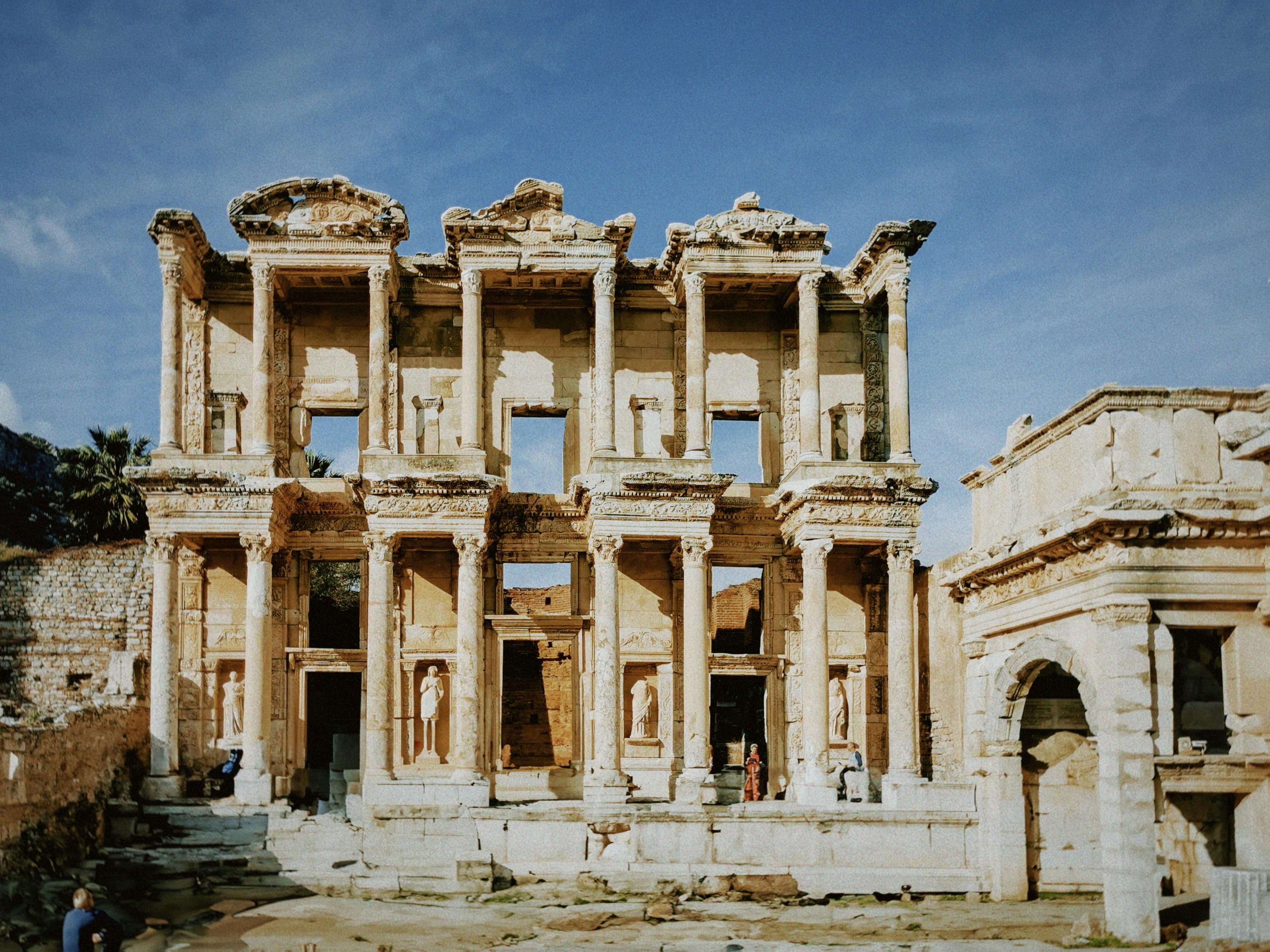
Ephesus Library of Celsus: Where Ancient Wisdom Meets Aegean Stone
The morning sun climbs over the Anatolian hills, casting long shadows across marble pathways worn smooth by two millennia of footsteps. You stand before the Library of Celsus—its two-story facade rising in perfect proportion, Corinthian columns reaching toward the Turkish sky like stone sentinels guarding forgotten knowledge. The air carries the scent of wild thyme and dust, while somewhere beyond the ruins, the Aegean whispers its eternal song. This isn't merely a building—it's a testament to human ambition carved from local marble, standing forty-seven feet tall with niches that once held twelve thousand scrolls. As tourists filter through the ancient gateway and guides weave tales of Roman governors and Greek philosophers, you feel the weight of history pressing gently against your shoulders. The library matters because it reminds us that the pursuit of knowledge transcends empires, outlasting the very civilization that built it.
Why the Library of Celsus Embodies Timeless Grandeur
Built as a monumental tomb for the Roman Senator Tiberius Julius Celsus Polemaeanus, who served as governor of Asia Province, this architectural masterpiece represents the pinnacle of Roman engineering fused with Hellenistic aesthetics. The structure housed approximately twelve thousand papyrus scrolls in wall niches, maintaining a constant temperature and humidity level through its double-wall construction—a sophisticated climate control system that protected precious texts from the Anatolian heat. The facade features four goddess statues representing virtue, thought, intelligence, and knowledge, though the originals now reside in Vienna's Ephesus Museum while replicas stand guard here.
The library solved a critical need in ancient Ephesus: providing a public space for learning while honoring a benefactor who funded major civic projects. Celsus left an enormous bequest of twenty-five thousand denarii for construction, creating not just a repository of knowledge but a statement of cultural sophistication that rivaled Alexandria. The building's orientation faces east, allowing morning light to flood the reading rooms—an intentional design choice that maximized natural illumination before artificial lighting existed. The marble facade employs sophisticated optical refinements: columns bulge slightly at their centers (entasis) to counteract visual distortion, while the entire structure tilts forward imperceptibly to appear grander from ground level.
Archaeological excavations between 1903 and 1904, led by Austrian archaeologist Wilhelm Wilberg, revealed the library buried under landslides and earthquakes that struck in the third and tenth centuries. The restoration you see today represents decades of meticulous anastylosis—the archaeological practice of rebuilding structures using original materials whenever possible. Modern visitors walk the same marble steps that ancient scholars ascended, touching the same weathered stone that witnessed the transition from paganism to Christianity, from Roman rule to Byzantine administration, and finally to the silence that fell when Ephesus was abandoned in the fifteenth century.
The Best Time to Experience the Library of Celsus
Timing transforms a visit from merely educational to genuinely transcendent. The optimal window stretches from May 18–June 12 and September 15–October 20, when temperatures hover between 22–27°C (72–81°F) and tourist crowds remain manageable. Arrive precisely at 8:00–9:30 AM when the site opens—the morning light strikes the library's facade at an angle that makes the marble glow amber, and you'll have approximately forty-five minutes before tour buses descend from cruise ports in Kuşadası.
Avoid July and August at all costs: temperatures soar to 35–40°C (95–104°F), the marble reflects heat like a mirror, and crowds exceed five thousand daily visitors, making photography nearly impossible. The midday sun between 11:00 AM and 3:00 PM creates harsh shadows that obscure architectural details and makes the exposed site brutally hot—even in shoulder seasons.
Winter months (November through March) offer solitude but bring unpredictable rain and temperatures dropping to 8–14°C (46–57°F), with occasional storms that close the site for safety. The library's facade faces east, meaning afternoon visits leave the structure in shadow—beautiful for dramatic photography but less impressive for appreciating sculptural details.
For current opening hours and ticket availability, always check the official resource: www.kulturportali.gov.tr—Turkey's Ministry of Culture and Tourism portal provides real-time updates on archaeological site access, special closures for conservation work, and combined ticket options for Ephesus's multiple monuments.
Approximate Budget for a 7-Day Trip
Ephesus and the surrounding Selçuk region offer remarkable value compared to Western European archaeological destinations. This budget assumes moderate comfort—clean boutique hotels, local tavernas mixed with occasional upscale meals, and public transportation with one or two private tours. Prices reflect 2026 rates for travelers seeking authentic experiences without luxury excess.
- Accommodation: €45–€85 per night in Selçuk town center (boutique pensions with rooftop terraces overlooking the ruins; budget hostels from €25, luxury resorts from €150)
- Food: €25–€35 per day (breakfast €5—Turkish tea, simit, olives, cheese; lunch €8–€10—gözleme stuffed flatbread or köfte platter; dinner €12–€20—fresh sea bass meze or lamb tandır with local wine)
- Transportation: €60 total (İzmir Airport to Selçuk train: €3 each way; local dolmuş minibuses: €1 per ride; taxi to Şirince village: €15; optional day trip to Pamukkale: €35)
- Attractions: €75 total (Ephesus archaeological site including Library of Celsus: €28; Ephesus Museum: €6; House of Virgin Mary: €12; Basilica of St. John: €8; Temple of Artemis: free; Şirince village wine tasting: €10)
- Miscellaneous: €50 (evil eye charms €5, hand-painted ceramics €15–€30, Turkish coffee set €20, guided audio tour €8, travel insurance prorated €15)
Total: €450–€650 for 7 days (excluding international flights to İzmir)
7 Essential Library of Celsus Experiences
- Stand directly before the facade at sunrise: Position yourself on the marble-paved Curetes Way exactly as the first light hits the Corinthian capitals. Watch how the shadows retreat across the statues of Sophia (wisdom), Episteme (knowledge), Ennoia (thought), and Arete (virtue). The stone seems to breathe as temperature changes make the marble expand—listen for faint creaking sounds that locals claim are the library awakening.
- Enter through the original side door: Most visitors photograph from the front, but the ancient entrance sits on the left flank. Step inside the reading room where the temperature drops noticeably—the double walls created natural air conditioning. Look up to see where wooden shelves once held scrolls, and notice the ventilation gaps that prevented moisture damage to papyrus.
- Climb to the terrace viewpoint: Follow the path behind the library to access the elevated walkway. From here, you grasp the library's position within the ancient city grid—aligned perfectly with the Great Theatre 500 meters away, demonstrating Roman urban planning precision. Bring binoculars to spot the distant Aegean coast where Ephesus's harbor once bustled before silting up.
- Photograph the reflection pool: At the library's base sits a shallow water feature installed during restoration. Kneel at the edge during mid-morning when wind calms, capturing the inverted columns in still water—a shot that mirrors how ancient visitors would have seen the structure reflected in polished bronze mirrors used for reading in dim interiors.
- Trace the Latin inscriptions: Above the central doorway, weathered letters spell out Celsus's name and titles. Run your fingers gently over the stone (without damaging it) to feel the chisel marks from stonemasons who carved this tribute nearly two thousand years ago. The inscription reveals his full honorific titles—a lesson in Roman epigraphy and political propaganda.
- Visit the adjacent latrine: Fifty meters southeast lies one of the ancient world's most sophisticated public toilets—eighty marble seats with running water beneath. This proximity to the library reveals Roman attitudes about bodily and intellectual purification. Notice the drainage channels still functional after rainfall, demonstrating engineering that outlasted empires.
- Attend the evening sound and light show: From June through September, the library becomes a canvas for projection mapping at 9:00 PM. The show reconstructs the building's original polychrome paint—vivid reds, blues, and golds that modern eyes rarely imagine on "classical" white marble. Book tickets through your Selçuk hotel for €18, including multilingual audio headsets.
3 Hidden Gems Most Travelers Miss
- The Nymphaeum of Pollio: Located 200 meters northwest of the library along the Slope Houses path, this ornate fountain dedicated to water nymphs features intricate shell mosaics and a curved facade that once spouted water from lion-head spouts. Most tour groups bypass it, but arrive at 4:30 PM when the setting sun illuminates the blue glass tesserae. Access requires the standard Ephesus ticket—no additional fee. Look for the small bronze plaque indicating its construction date and donor.
- The Odeon's underground chambers: While thousands photograph the small theater's seating, few notice the door on the eastern side leading to vaulted storage rooms where actors changed costumes. Ask the guard at the Odeon entrance for permission—usually granted if you speak politely and mention academic interest. Inside, you'll find faint frescoes of theatrical masks and graffiti from Roman soldiers carved during winter garrisons. Bring a flashlight; no electric lighting exists.
- Celsus's actual tomb chamber: Beneath the library's apse lies a sarcophagus accessible via a metal grate in the floor. The chamber remained sealed until 1904 and contains Celsus's ornate marble coffin decorated with garlands and ox skulls (bucrania). Most visitors walk directly over it unaware. Kneel beside the grate at noon when sunlight penetrates the opening, illuminating carved details. The tomb survived earthquakes because the library's weight protected it—a poetic irony for a structure dedicated to preserving knowledge.
Cultural & Practical Tips
- Respect the no-touch policy: Despite temptation, never lean against or climb on the marble columns. Oils from skin accelerate erosion, and Turkish authorities impose fines up to ₺2,000 (approximately €60) for violations. Guards patrol constantly with whistle warnings.
- Carry cash in Turkish Lira: While Ephesus accepts credit cards, surrounding villages like Şirince operate on cash only. Small vendors selling pomegranate juice and handmade textiles prefer exact change. Learn the phrase "Teşekkür ederim" (teh-shek-kür eh-deh-rim—thank you) to build rapport.
- Wear proper footwear: The marble pathways become treacherously slippery when wet or dusty. Sturdy sandals with grip or hiking shoes prevent ankle injuries on uneven surfaces. Avoid flip-flops—they're culturally inappropriate and dangerous on ancient stones.
- Photography etiquette: Tripods require special permits (€25 from the ticket office), but handheld cameras face no restrictions. Never photograph military installations visible in the distance—Turkish law prohibits this. When photographing local vendors, always ask "Fotoğraf çekebilir miyim?" (foh-toh-raf cheh-keh-bee-leer mee-yim—may I take a photo?).
- Hydration strategy: Temperatures exceed comfort levels by 10:00 AM even in spring. Carry two liters of water per person—refill stations exist near the restrooms but run dry by midday. Purchase electrolyte tablets from Selçuk pharmacies to prevent heat exhaustion.
- Understand the siesta culture: Between 1:00–4:00 PM, many shops in Selçuk close for rest. Plan your library visit for morning hours, then explore the Ephesus Museum during afternoon heat when indoor air conditioning provides relief. The museum houses the original Celsus statues removed for preservation.
- Learn basic Turkish greetings: "Merhaba" (mehr-hah-bah—hello), "Lütfen" (lü-tfen—please), and "Ne kadar?" (neh kah-dar—how much?) demonstrate respect. While English is widely spoken at major sites, rural areas appreciate effort. Locals often reward polite tourists with discounts or homemade treats.
Conclusion: Travel with Reverence, Not Just Checklists
The Library of Celsus doesn't yield its secrets to hurried visitors snapping photos before rushing to the next Instagram-worthy ruin. It demands patience—the kind that sits on warm marble steps watching light migrate across carved capitals, that notices how wind whistles through column flutes creating an accidental Aeolian harp, that contemplates the senator who dreamed of immortality through stone and scroll. When you stand here, you're not merely consuming a tourist attraction; you're entering a dialogue with antiquity, becoming part of the library's ongoing story of preservation and loss.
Responsible travel means treading lightly on stones worn by countless feet before yours, supporting local guides who fund archaeological conservation through their expertise, and recognizing that these ruins aren't playgrounds but sacred ground where human intellect once flourished. Buy your ceramics from Selçuk artisans rather than airport souvenir shops. Eat at family-run meyhanes where recipes pass through generations. Hire guides certified by the Turkish Ministry of Culture who contribute to site maintenance funds.
Leave only footprints—temporary impressions on dust that wind will erase by dusk. Take only photographs and the profound understanding that wisdom, like marble, endures when we treat it with care. The Library of Celsus has survived earthquakes, invasions, and neglect. It deserves visitors who arrive not as conquerors checking boxes, but as students ready to learn from stone.