
Epidaurus Ancient Theater: Where Perfect Acoustics Meet Classical Drama
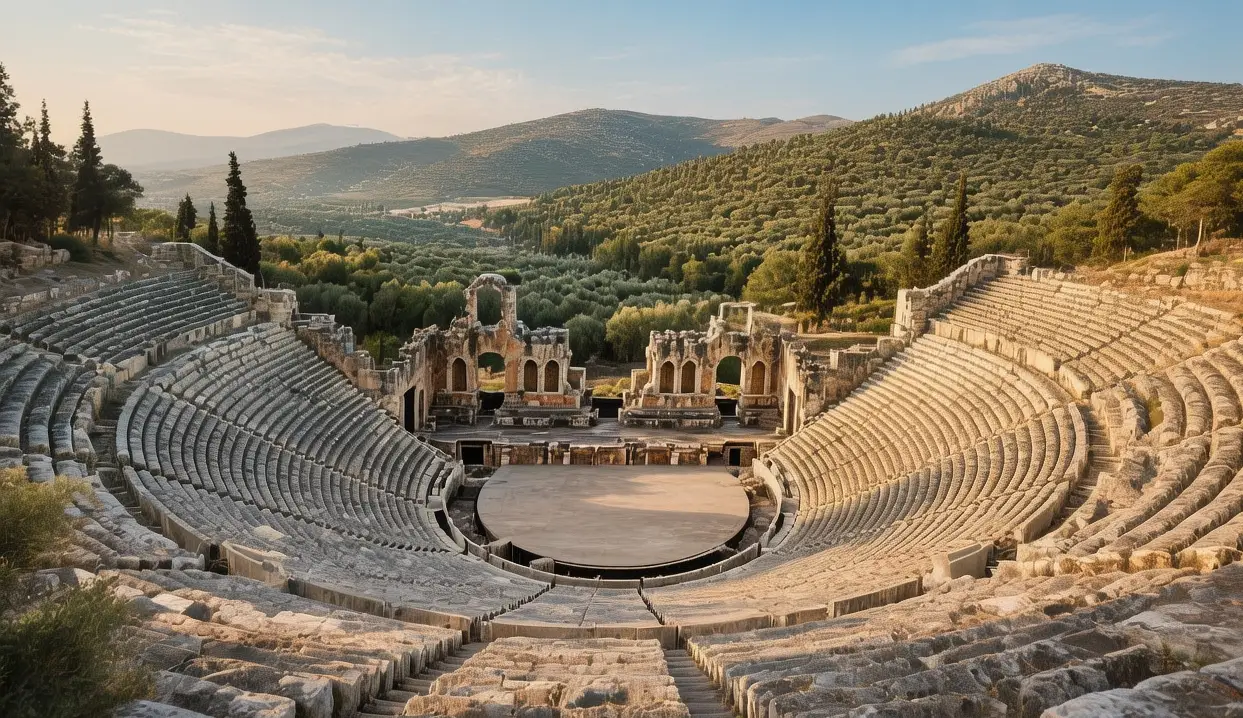
Golden light spills across 55 concentric rows of limestone seats as you settle into the ancient theatron, and a whisper from the orchestra circle travels 60 meters upward with crystalline clarity—no microphone, no amplification, just geometry and genius. The afternoon breeze carries the scent of wild thyme and pine from the surrounding hills, while distant cicadas provide a rhythmic underscore to this 2,300-year-old symphony of stone. You stand within the Sanctuary of Asklepios, where healing and art once intertwined, and the theater's perfect semicircle—118 meters in diameter, with a 20-meter orchestra—frames the Argive plain like a natural amphitheater designed by the gods themselves. This is the Epidaurus ancient theater, engineered by Polykleitos the Younger around 330 BCE, where mathematical precision meets artistic vision to create acoustics so refined that a coin dropped on stage can be heard in the highest row. The theater matters because it preserves not just architecture, but an experience: the living connection between performer and audience that defined classical Greek culture and continues to inspire every modern stage built since.
Why Epidaurus Ancient Theater Embodies Architectural Perfection
The Epidaurus ancient theater represents the zenith of classical Greek engineering—a masterpiece where mathematics, medicine, and music converged to solve a fundamental challenge: how to ensure every spectator, from the front row to the highest tier, could hear actors clearly without artificial amplification. Constructed circa 330 BCE by architect Polykleitos the Younger, the theater accommodates 13,000–14,000 spectators across 55 rows divided into two sections: the lower ima cavea with 34 rows and the upper summa cavea with 21 rows added during Roman times.
The solution lay in precise geometry and material science. The seating slope rises at a consistent 26-degree angle, optimizing both sightlines and sound reflection. Limestone seats—quarried locally from Mount Kynortion—possess acoustic properties that filter low-frequency background noise while amplifying mid-to-high frequencies, the range of human speech. The orchestra's circular design, measuring exactly 20.4 meters in diameter, creates a natural sound chamber where voices resonate before projecting upward.
Modern acoustic studies reveal the theater's secret: the stepped rows act as an acoustic filter, trapping ambient noise below 500 Hz while reflecting frequencies above 700 Hz—precisely the range of consonants critical for speech intelligibility. This "acoustic trap" effect means that even in a crowd of 14,000, a performer's voice travels with minimal degradation. The skene (stage building), though largely ruined, originally stood 12 meters high, providing a reflective surface that directed sound toward the audience.
Beyond engineering, the theater fulfilled a profound cultural need: it served as a therapeutic space within the Sanctuary of Asklepios, where drama functioned as catharsis—emotional purification essential to the healing process. Patients slept in the adjacent abaton (dream incubation hall), then attended performances believed to complete their recovery. This integration of art and medicine created a holistic wellness model that anticipated modern psychosomatic therapy by two millennia.
The Best Time to Experience Epidaurus Ancient Theater
Timing your visit to the Epidaurus ancient theater requires balancing weather, crowd dynamics, and cultural programming. The optimal window runs from May 20 through June 15, when temperatures range 20–28°C (68–82°F) and the surrounding hills bloom with wild poppies and asphodel. During this period, morning light between 8:30–10:00 AM illuminates the limestone seats without creating harsh glare, perfect for photography and acoustic appreciation.
A second exceptional season spans September 10 through October 20, with temperatures of 18–26°C (64–79°F) and clearer atmospheric conditions that enhance visibility across the Argive plain. The late afternoon sun between 4:30–6:00 PM casts long shadows across the seating tiers, creating dramatic contrasts ideal for capturing the theater's architectural rhythm.
For the ultimate experience, attend a performance during the Athens and Epidaurus Festival (typically June–August), when ancient tragedies and comedies resonate through the original space. However, avoid peak festival dates (July 15–August 10) if you prefer quieter exploration, as tour groups and performance audiences create significant crowds.
Avoid visiting midday during July and August, when temperatures exceed 35°C (95°F) and the exposed limestone radiates intense heat with minimal shade. Winter months (November–February) bring frequent rain and temperatures of 8–14°C (46–57°F); while crowds thin, some facilities operate on reduced hours.
For official information and performance schedules: www.visitgreece.gr and www.greekfestival.gr
Approximate Budget for a 7-Day Trip
Exploring the Epidaurus ancient theater as part of a Peloponnese cultural itinerary offers exceptional value, combining archaeological wonders with coastal relaxation at prices well below Greek island destinations. The following breakdown assumes a mid-range travel style with comfortable accommodation in Nafplio (the nearest charming town), dining at traditional tavernas, and a mix of independent exploration and guided experiences.
- Accommodation: €50–€90 per night for boutique hotels or traditional guesthouses in Nafplio's old town (Plaka or Syntagma Square area). Budget rooms start at €35; luxury sea-view suites reach €140.
- Food: €28–€38 per day. Breakfast €5 (Greek coffee, honey yogurt, fresh bread); lunch €11 (horiatiki salad, grilled sardines, house wine); dinner €16–€20 (slow-cooked lamb, fresh octopus, local Moschofilero wine).
- Transportation: Bus from Athens to Nafplio €16 (2.5 hours, KTEL route); Nafplio to Epidaurus taxi €25 round-trip or local bus €4 each way; rental car €32/day (recommended for flexibility); parking at site €2.
- Attractions: Epidaurus theater + Sanctuary combined ticket €12; Mycenae archaeological site €12; Ancient Corinth €8; Nafplio Palamidi Fortress €8; combined 3-site ticket €20; guided theater acoustics tour €35.
- Miscellaneous: Handmade olive wood souvenirs €10–€20; local thyme honey 250g €7; festival performance ticket €25–€45; travel insurance €35/week; water/snacks at site €5.
Total for 7 days: €720–€920 per person (excluding international flights to Athens)
7 Essential Epidaurus Ancient Theater Experiences
- Test the acoustics from the orchestra center: Stand precisely at the center of the 20.4-meter circular orchestra and speak softly or clap once. Walk slowly up the seating tiers while a companion remains in the orchestra; you'll hear every syllable with remarkable clarity even from the 55th row. Best performed early morning (8:30–9:30 AM) when ambient noise is minimal and light is soft for photography.
- Attend a classical performance under the stars: Book tickets for the Athens and Epidaurus Festival (June–August) to experience ancient drama in its original setting. Arrive by 7:00 PM to explore the site before performances begin at 9:00 PM. Bring a cushion for the limestone seats and a light wrap—evenings can cool to 18°C (64°F) after sunset.
- Walk the full seating circumference: Follow the diazoma (horizontal walkway) that divides the lower and upper seating sections. This 360-degree path offers changing perspectives of the orchestra, stage, and surrounding landscape. Allow 20 minutes for the complete circuit, stopping at the eastern viewpoint for panoramic photos of the Argive plain.
- Explore the Sanctuary of Asklepios: Adjacent to the theater, this UNESCO World Heritage healing center includes the tholos (circular temple), abaton (dream incubation hall), and ancient hospital ruins. Purchase the combined ticket (€12) for access to both sites. The museum displays surgical instruments and votive offerings that reveal ancient medical practices.
- Photograph from the upper diazoma at golden hour: Position yourself on the horizontal walkway at row 35 between 6:00–7:30 PM in summer. The low-angle sun creates dramatic shadows across the seating tiers while illuminating the orchestra in warm amber tones. Use a polarizing filter to enhance the contrast between limestone and blue sky.
- Visit the ancient stadium: A 10-minute walk north of the theater, this 180-meter-long stadium hosted athletic competitions during the Asklepian Games. The starting line grooves and spectator terraces remain visible. Few visitors make this short detour, offering peaceful exploration and excellent photo opportunities without crowds.
- Experience sunrise solitude: Arrive at opening time (8:00 AM April–October) to have the theater nearly to yourself for 30–45 minutes before tour groups arrive. Sit in the highest row and watch light transform the limestone from indigo to gold while listening to the morning chorus of birds. Bring a thermos of Greek coffee to enhance the meditative atmosphere.
3 Hidden Gems Most Travelers Miss
- The Propylon Gate Inscription: At the sanctuary's main entrance, a partially eroded marble lintel bears a 4th-century BCE inscription dedicating the complex to Asklepios. Most visitors rush past this weathered stone, but the Greek text reveals the ancient belief that "health is the greatest gift." Visit between 2:00–4:00 PM when the angled sunlight makes the carved letters most legible. Bring a small mirror to reflect light into the recessed characters for photography.
- The Secret Water Channel: Behind the stage building ruins, a covered limestone channel carried fresh water from Mount Kynortion to the sanctuary's fountains and healing baths. This engineering feature, rarely marked on maps, demonstrates the sophisticated infrastructure supporting the healing center. Access via the path behind the museum; look for the stone-covered trench running parallel to the theater's western wall. Best explored mid-morning when guides focus on the main theater.
- The Wild Orchid Meadow: Between the theater and the ancient stadium, an unmarked meadow blooms with 17 species of wild orchids from March through May, including the rare Ophrys epidavriensis found only in this region. This area receives minimal foot traffic and offers the site's best birdwatching—golden orioles and hoopoes nest in the surrounding pines. Visit early morning (7:30–9:00 AM) with binoculars; do not pick flowers or stray from informal paths to protect the fragile ecosystem.
Cultural & Practical Tips
- Respect the performance space: When no festival performance is scheduled, you may walk on the orchestra and seating areas. However, never climb on the stage building ruins or remove stones—these are protected archaeological materials. Speak softly to preserve the acoustic atmosphere for other visitors.
- Carry cash for tickets and vendors: The ticket office accepts cash only (no credit cards). Combined theater + sanctuary entry costs €12; students/seniors with ID pay €6; children under 18 enter free. Small vendors near the entrance sell water and snacks—prices are reasonable, but bring your own refillable bottle to reduce waste.
- Learn essential Greek phrases: "Yassou" (YAH-soo) = hello; "Efharisto" (ef-hah-REE-stoh) = thank you; "Poso kani?" (POH-soh KAH-nee) = how much?; "Pou ine i tourleta?" (poo EE-nee ee toor-LEH-tah) = where is the toilet?; "Ela na akousoume" (EH-lah nah ah-KOO-soo-meh) = let's listen.
- Prepare for sun exposure: The theater offers zero shade. Wear a wide-brimmed hat, apply SPF 30+ sunscreen, and carry at least 2 liters of water per person. The white limestone reflects UV rays intensely, increasing sunburn risk even on cloudy days. Visit early morning or late afternoon to avoid peak heat.
- Photography guidelines: Tripods are permitted but cannot obstruct pathways or other visitors. Drone use requires written permission from the Hellenic Ministry of Culture (+30 210 8211000) and is rarely granted for heritage sites. Commercial photography requires a permit obtained 48 hours in advance from the Argolis Ephorate of Antiquities.
- Accessibility considerations: The theater's steep seating tiers are not wheelchair accessible. However, the orchestra level and museum are accessible via paved paths. Visitors with mobility issues can experience the acoustics from the orchestra circle and view the seating from the lower diazoma. Request assistance at the entrance; staff can provide seating for rest breaks.
- Weather considerations: Afternoon thunderstorms can develop rapidly July–September. The limestone becomes extremely slippery when wet—descend carefully if rain begins. Strong meltemi winds occasionally reach 30 km/h (19 mph) on the upper tiers; secure loose items and be cautious near unprotected edges.
Conclusion: Travel with Reverence, Not Just Sightseeing
The Epidaurus ancient theater asks for more than a quick photo and a checklist mark—it invites reverence for the human ingenuity that transformed stone into song. This isn't merely an archaeological site; it's a living testament to the belief that beauty, truth, and healing are intertwined. When you stand in the orchestra and whisper, hearing your voice travel effortlessly to the highest row, you're not just testing acoustics—you're participating in a ritual that has connected performers and audiences for twenty-three centuries.
Responsible travel here means understanding that you're a guest in a space where history breathes. It means moving slowly enough to appreciate the mathematical precision of each limestone seat, pausing to imagine the actors who once commanded this stage, and supporting the local community that preserves this legacy. Purchase tickets directly, hire local guides who share stories passed through generations, and dine at family tavernas that have served the Argolid for decades.
Slow down. Sit in the highest row and watch light shift across the Argive plain. Listen to the wind moving through the pines that Polykleitos the Younger knew. Share a moment of silence with fellow travelers, letting the theater's perfect acoustics carry not just sound, but stillness. The Epidaurus ancient theater will endure—if we treat it not as a backdrop for selfies, but as a teacher of harmony, a witness to human expression, a legacy to protect. Travel here with humility, and the stones will speak.