
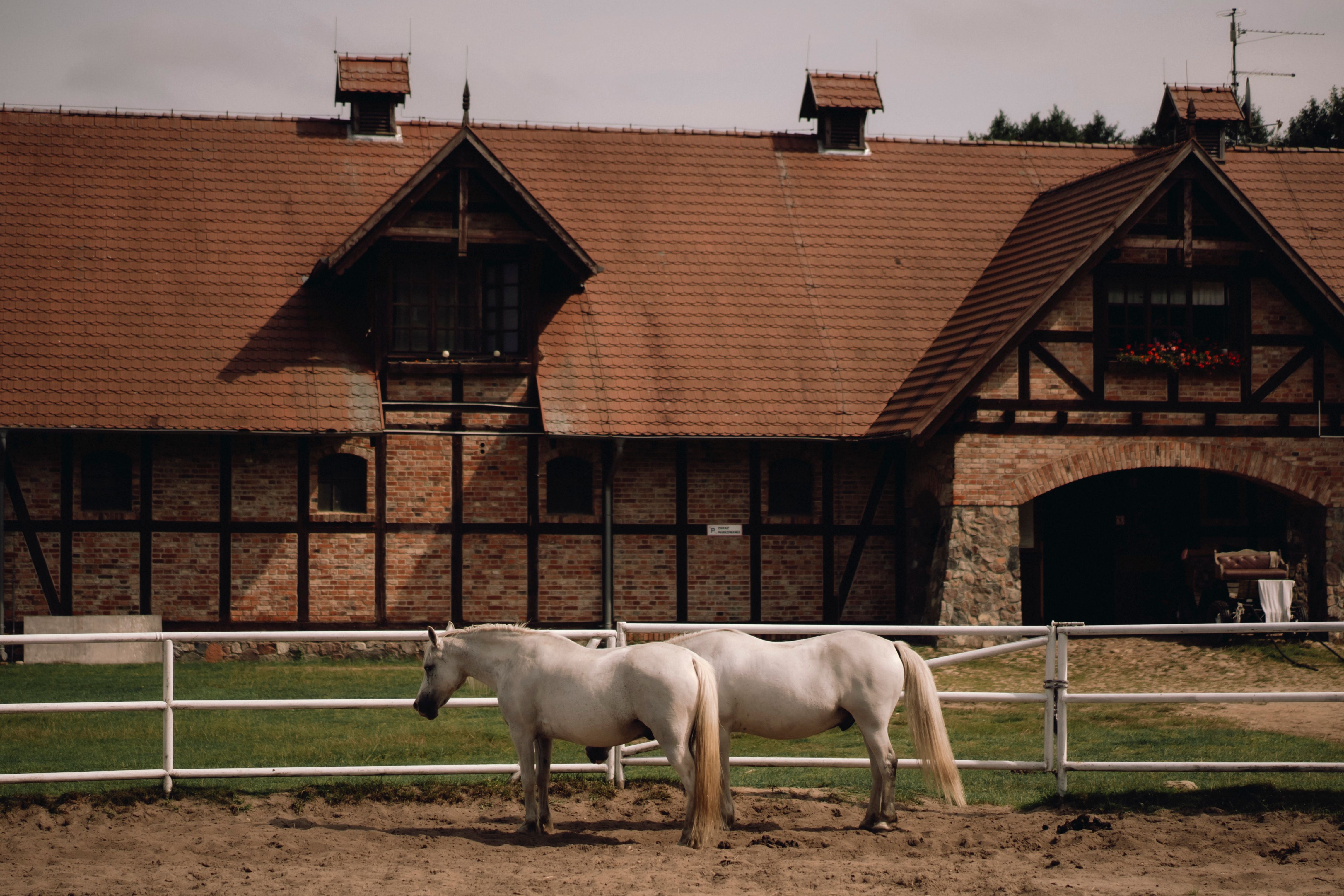
Kladruby Stud Farm: Where Imperial Horse Breeding Meets Bohemian Pastoral Heritage
Morning mist rises from the Elbe River meadows as the rhythmic clip-clop of hooves echoes across cobblestone courtyards, where black and white Kladruber horses—each standing 165 centimeters at the withers—move with the dignified gait perfected over four and a half centuries of selective breeding. You stand before the Baroque stables of Národní hřebčín Kladruby nad Labem, a UNESCO World Heritage Site since 2019, where the air carries the scent of fresh hay, aged wood, and the subtle musk of horses whose lineage traces directly to the imperial court of Emperor Rudolf II. This is not merely a working farm but a living museum of equine heritage, where every stall, every pasture boundary, and every training protocol preserves techniques documented in 1579 when the Habsburgs established this facility to breed ceremonial carriage horses worthy of imperial processions. The landscape itself—1,200 hectares of carefully managed meadows, tree-lined avenues, and geometric paddocks—represents one of Europe's most intact examples of a cultural landscape designed specifically for aristocratic equestrian culture. Standing here, watching a groom in traditional livery guide a team of six black Kladrubers through precise dressage movements, you understand why this place has endured wars, political revolutions, and changing tastes: it reminds us that some of humanity's most enduring legacies are those that honor patience, partnership with nature, and the quiet dignity of craftsmanship passed from hand to hand across generations.
Why Kladruby Stud Farm Embodies Living Heritage
Kladruby nad Labem represents one of the world's most remarkable continuities of purpose—a stud farm that has bred the same horse breed, using the same landscape management principles, for 445 years without interruption. Founded in 1579 by Emperor Rudolf II, the facility solved a critical need for the Habsburg monarchy: how to produce horses with the specific combination of strength, elegance, and temperament required for ceremonial carriage duties in Vienna and Prague. The solution was a breeding program that prioritized consistency over speed, selecting for the distinctive high-stepping gait, calm disposition, and striking appearance that made Kladrubers ideal for state processions.
The technical mastery behind this achievement lies in the integration of animal husbandry with landscape architecture. The 1,200-hectare cultural landscape was designed with precise hydrological engineering: drainage channels maintain optimal pasture moisture, tree-lined avenues provide windbreaks and shade, and the geometric layout facilitates efficient movement of horses between stables, training grounds, and grazing areas. The Baroque stables, constructed between 1700 and 1730, feature 48 individual stalls with original oak fittings, ventilation systems that maintain ideal humidity for equine health, and a central riding hall with acoustics designed to calm horses during training.
Today, the stud farm maintains approximately 100 breeding mares and 15 stallions, producing 25–30 foals annually using traditional methods that avoid artificial insemination. The Kladruber breed exists in two color varieties—black for imperial mourning ceremonies and white for celebratory occasions—each maintained through separate bloodlines documented in studbooks dating to the 17th century. Beyond preserving equine genetics, Kladruby fulfills multiple needs: sustaining traditional landscape management practices, providing educational programs about historical agriculture, and offering visitors a tangible connection to Central European aristocratic culture. In an age of industrialized animal production, this living heritage site stands as a testament to the enduring value of patience, place-based knowledge, and respect for the partnership between humans and horses.
The Best Time to Experience Kladruby Stud Farm
The optimal window for visiting Kladruby nad Labem stretches from May 20 through September 25, when temperatures in eastern Bohemia range from 16–24°C (61–75°F) during daytime hours, creating ideal conditions for observing outdoor training sessions and exploring the cultural landscape on foot or by carriage. For the most immersive experience, plan your visit between June 15 and September 10, when humidity levels drop and afternoon thunderstorms become less frequent. Early morning visits between 7:00–9:00 AM offer the dual advantage of observing horses during their most active period and significantly fewer crowds, as most tour groups from Prague arrive after 10:30 AM.
Spring (late May through June) brings foaling season, when visitors may observe newborn Kladrubers taking their first steps under the watchful eyes of experienced grooms, though temperatures can dip to 8–14°C (46–57°F) in early mornings. Autumn (mid-September through October) offers spectacular foliage as oak and linden trees surrounding the pastures turn brilliant shades of gold and crimson, with comfortable temperatures of 10–18°C (50–64°F) and dramatically fewer visitors after the summer peak.
Avoid visiting during Czech national holidays—particularly May 1 (Labor Day) and July 5–6 (Saints Cyril and Methodius Day)—when the stud farm closes for observance. Also skip the week between Christmas and New Year's if you prefer outdoor activities, as many training sessions move indoors and landscape access is limited by weather. Winter visits (November through March) offer a different atmosphere with fewer crowds, but outdoor photography suffers from limited daylight and some facilities operate on reduced schedules.
Approximate Budget for a 7-Day Trip
Exploring Kladruby Stud Farm and the broader Pardubice Region requires modest financial planning, as the Czech Republic remains significantly more affordable than Western European destinations while offering exceptional cultural value. The following budget assumes a comfortable mid-range travel style with quality accommodations, regional Czech cuisine, and comprehensive exploration of the stud farm, nearby equestrian heritage sites, and surrounding East Bohemian attractions over seven days.
- Accommodation: €46–€82 per night for a double room in Kladruby nad Labem or nearby Přelouč (guesthouses and three-star hotels); equestrian-themed pensions €54–€88 per night; budget hostels from €25–€38 per person
- Food: €23–€35 per day (breakfast €5–€8 at accommodation with coffee, pastries, and eggs; lunch €8–€12 for traditional Czech dishes like svíčková na smetaně or duck with dumplings at local restaurants; dinner €10–€15 for roasted pork, goulash, or freshwater trout at regional hospoda)
- Transportation: Train from Prague to Přelouč €13 round-trip (1.5 hours); local bus to Kladruby nad Labem €2 each way; regional day pass for Pardubice buses €6; parking at stud farm €2 per day if driving; horse-drawn carriage tour €18 per person
- Attractions: Kladruby Stud Farm guided tour €7; Baroque stables access included; horse training demonstration €5; nearby Pardubice Castle entry €5; Kunětická Hora Castle entry €5; Litomyšl Castle day trip €12 transport + €8 entry; East Bohemian Museum Pardubice €4
- Miscellaneous: Authentic Kladruber-themed souvenirs €12–€30 per item; local craft beer and Moravian wine €6–€10 per evening; travel insurance €23 for the week; equestrian guidebook €9; bottled water and trail snacks €11
Total estimated cost for 7 days: €490–€715 per person (depending on accommodation choices and dining preferences)
5 Essential Kladruby Stud Farm Experiences
- Join the Morning Training Demonstration: Reserve the 8:00 AM horse training session at the historic riding hall (€5), when master grooms demonstrate the classical dressage techniques perfected for imperial carriage horses. The 45-minute demonstration reveals how Kladrubers are trained to respond to subtle rein cues while maintaining their distinctive high-stepping gait. Stand near the arena's eastern windows for optimal natural light to photograph the horses' powerful movement and glossy coats. Photography permitted without flash; seating limited to 30 visitors, so arrive 15 minutes early. Sessions run Tuesday–Sunday (May–September); book at least 48 hours in advance via www.narodni-hrebcin.cz.
- Explore the Baroque Stables and Museum: Dedicate 60 minutes to the guided tour of the 18th-century stables complex (€7), where 48 original oak stalls house breeding horses and historical tack. The tour includes access to the stud farm museum, displaying imperial carriage harnesses, 17th-century breeding records, and photographs documenting the farm's survival through wars and political change. Visit between 9:00–10:30 AM for the quietest experience; audio guides available in English, German, and Polish. Don't miss the central riding hall's original ventilation system—a passive engineering solution that maintains ideal air quality without mechanical assistance.
- Take a Horse-Drawn Carriage Ride Through the Cultural Landscape: Experience the landscape as imperial visitors would have by booking a 45-minute carriage tour (€18 per person) pulled by a team of four black Kladrubers. The route traverses the geometric pastures, tree-lined avenues, and historic drainage channels that define this UNESCO site, with commentary explaining how landscape design supports equine health and training. Tours depart hourly from 10:00 AM–4:00 PM (May–September); reserve in advance as capacity is limited to eight passengers per carriage. Dress warmly even in summer—the open carriage offers no protection from wind.
- Observe Foaling Season (Late May–June): If visiting in late spring, request access to the foaling barn during morning hours (7:00–9:00 AM) when newborn Kladrubers are most active. This behind-the-scenes experience (arranged through the visitor center, no additional fee) reveals the careful husbandry practices that maintain breed health: temperature-controlled stalls, specialized nutrition for nursing mares, and gentle handling protocols that preserve the breed's calm temperament. Photography permitted with prior approval; maintain quiet voices to avoid stressing animals. This experience is limited to small groups and requires advance arrangement.
- Attend the Annual Kladruber Festival: If visiting in early September, experience the Kladruber Days festival (typically first weekend of September), when the stud farm hosts demonstrations of historical carriage driving, traditional grooming techniques, and folk music celebrating equestrian culture. Festival entry is free; specialized workshops €5–€12. Arrive by 9:00 AM to secure viewing positions for popular demonstrations. The festival coincides with harvest activities in the surrounding meadows, creating a multi-sensory celebration of Bohemian rural traditions.
3 Hidden Gems Most Travelers Miss
- Historic Tree-Lined Avenue Cycling Route: This 8-kilometer cycling path, following the original 18th-century avenue of linden and oak trees that connects Kladruby nad Labem to the nearby village of Svojšice, offers peaceful exploration of the cultural landscape with minimal crowds. Access via bicycle rental at the stud farm visitor center (€12 per day) or bring your own bike; the route is paved and suitable for casual cyclists. The avenue's geometric planting pattern—trees spaced exactly 12 meters apart—demonstrates the precision of Baroque landscape design. Best visited between 4:00–6:30 PM when afternoon light filters through the canopy. No entrance fee; open year-round but avoid during high winds when branches may fall.
- Elbe River Meadow Birdwatching Hide: This discreet observation platform, located 1.2 kilometers northeast of the main stables near the riverbank, offers exceptional opportunities to observe wetland birds that share the Kladruby landscape with the horses. Access via the blue-marked hiking trail from the stud farm's eastern gate (20-minute walk); the hide accommodates four visitors and includes identification charts for local species. The site is overlooked because it requires a short hike, but the reward is peaceful observation of black storks, kingfishers, and occasionally white-tailed eagles. Best visited at dawn (6:00–8:00 AM) when bird activity peaks. No facilities; bring binoculars and weather-appropriate clothing.
- Traditional Farrier Workshop Demonstration: By special arrangement, visitors can observe the stud farm's master farrier demonstrating historical horseshoeing techniques using tools and methods unchanged since the 18th century. This experience, limited to six guests per session and requiring advance booking (info@narodni-hrebcin.cz), reveals how specialized hoof care maintains the Kladruber's distinctive gait and health. Sessions run Thursday mornings at 10:00 AM (May–September); cost €10 per person includes a small commemorative horseshoe. The workshop is overlooked because it doesn't appear on standard tour schedules, but it offers a tangible connection to the skilled trades that sustain living heritage. Photography permitted with permission; wear closed-toe shoes for safety.
Cultural & Practical Tips
- Respect Equine Welfare: Kladruby horses are working animals with carefully managed routines. Never approach horses without staff permission, avoid sudden movements or loud noises near stables, and follow all posted guidelines about photography distances. The stud farm prioritizes animal well-being over tourist access—trust staff guidance about restricted areas.
- Learn Basic Czech Phrases: While stud farm staff speak English and German, knowing a few Czech phrases enhances your experience: "Dobrý den" (DOH-bree den) means "Good day"; "Děkuji" (DYEH-kooyi) means "Thank you"; "Prosím" (PROH-seem) means "Please" or "You're welcome"; "Mohu se podívat blíž?" (MOH-hoo seh POH-dye-vat bleesh) means "May I look closer?"
- Dress Appropriately for Rural Settings: The stud farm is a working agricultural facility. Wear sturdy, closed-toe footwear for stable tours (manure and uneven surfaces are common), bring layers for variable outdoor conditions, and avoid strong perfumes that may disturb horses. Rain gear recommended year-round—pasture paths can become muddy after precipitation.
- Carry Cash (Czech Koruna): While the visitor center accepts cards, smaller vendors, carriage tour operators, and rural facilities often operate on cash only. The currency is Czech koruna (CZK), with an approximate exchange rate of 25 CZK to €1. ATMs are available in Přelouč and Pardubice but not at the stud farm itself.
- Photography Guidelines: Flash photography is prohibited in stables to avoid startling horses. Tripods are permitted in outdoor areas but not during training demonstrations where they obstruct other visitors. Drone use requires written permission from stud farm administration—contact info@narodni-hrebcin.cz at least two weeks in advance.
- Accessibility Considerations: The visitor center and museum are wheelchair-accessible, but historic stable areas and pasture paths involve uneven surfaces and steps without elevator access. Contact the visitor center (+420 466 981 611) at least 48 hours in advance to arrange alternative routes or a virtual tour option for mobility-impaired visitors.
- Seasonal Preparation: Summer visits require sun protection and insect repellent for pasture exploration; winter visits demand warm, waterproof clothing for outdoor activities. Check the stud farm website for weather-related schedule changes, especially for carriage tours and outdoor demonstrations.
Conclusion: Travel with Reverence, Not Just Sightseeing
Kladruby Stud Farm endures not because it showcases horses, but because it honors a rhythm—because four and a half centuries of careful breeding have taught that excellence emerges through patience, that partnership with living creatures requires humility, and that heritage survives when knowledge passes from hand to hand with respect. When you stand beside a Kladruber, feeling the warmth of its breath and watching its intelligent eyes observe you in return, you participate in a continuum of care that stretches from imperial grooms to your own moment of connection. But with that privilege comes responsibility: to tread softly in working landscapes, to value slowness over spectacle, to let the quiet dignity of these horses remind you that some of life's richest experiences cannot be rushed. The pastures will green and fade, the horses will age and new foals will arrive, long after we've departed—let our presence here be measured not in photographs taken, but in the reverence we carry forward, the respect we show to living traditions, and the willingness to slow down long enough to listen to what patience has to teach.