
Kopački Rit: Where Wild Waters Meet Untamed Wilderness
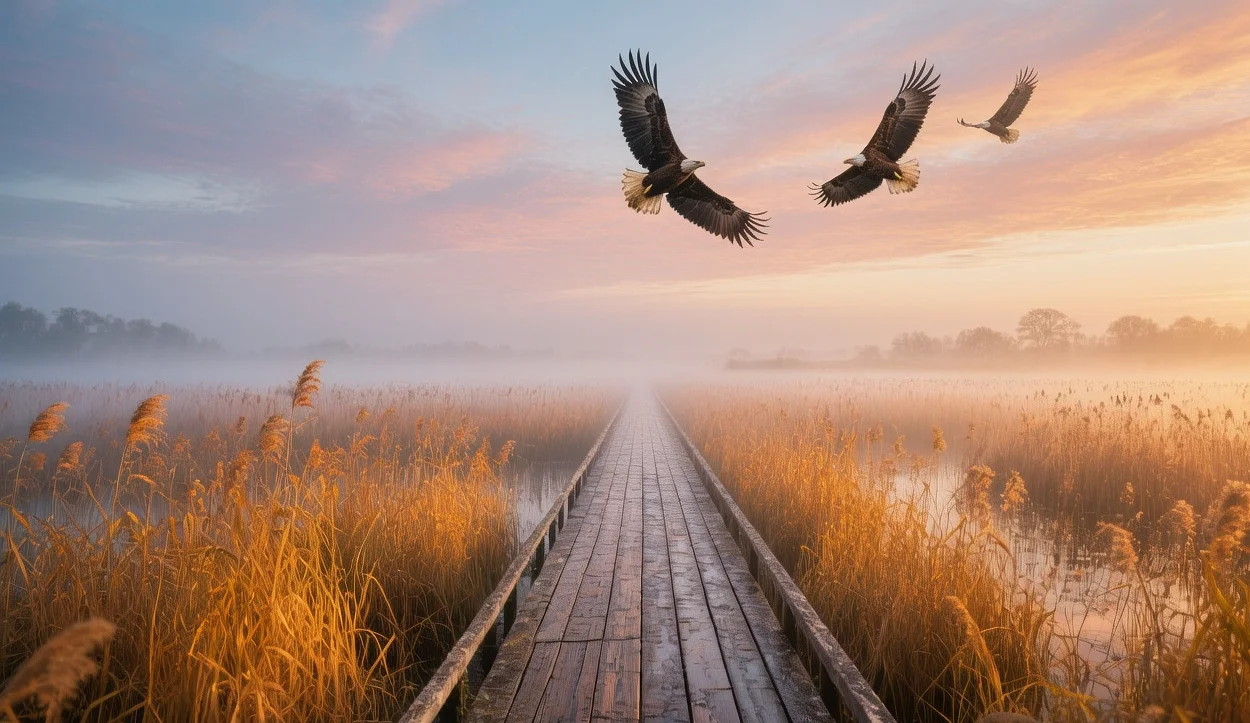
The first light of dawn breaks across the marshes of Kopački Rit, transforming 231 square kilometers of interconnected wetlands into a shimmering mosaic of silver water, golden reeds, and emerald willow forests. You hear it before you see the wildlife—the soft splash of a beaver diving into still channels, the distant call of a white-tailed eagle circling on thermal currents, the gentle rustle of reeds swaying in the morning breeze. This is Croatia's most significant wetland ecosystem, where the Drava River surrenders to the mighty Danube, creating a dynamic floodplain that pulses with life across seasons and centuries. Within this labyrinth of oxbow lakes, marshy meadows, and ancient oak galleries, over 260 bird species nest, migrate, and thrive alongside red deer, wild boar, and elusive otters that call this watery realm home. Kopački Rit matters not merely as a birdwatcher's paradise but as a living testament to nature's resilience—a place where you can stand on a wooden boardwalk at sunrise and feel, with visceral clarity, the profound connection between water, land, and the enduring rhythm of wild Europe that has flowed unchanged since the last ice age.
Why Kopački Rit Embodies Wetland Conservation
Kopački Rit represents far more than a scenic nature reserve—it embodies one of Europe's most successful examples of dynamic floodplain management, where ecological processes are allowed to unfold with minimal human interference. Designated a Nature Park in 1976 and recognized under the Ramsar Convention on Wetlands of International Importance, this 231-square-kilometer protected area solves a critical conservation challenge: preserving a naturally functioning river-floodplain system in an age of widespread wetland drainage and channelization. The park's hydrology depends on the seasonal flooding of the Danube and Drava rivers, which inundate up to 80% of the area during spring high waters, depositing nutrient-rich sediments that sustain the entire food web—from microscopic plankton to apex predators like the white-tailed eagle (Haliaeetus albicilla) [[4]].
Beyond its ecological significance, Kopački Rit fulfills a profound scientific need: serving as a living laboratory for studying floodplain dynamics, biodiversity adaptation, and climate resilience. Researchers from the University of Osijek and international institutions monitor water quality, bird migration patterns, and vegetation succession within the park's strictly protected core zone (78 square kilometers), where human access is limited to designated boardwalks and guided boat tours [[7]]. Engineering solutions respect natural processes: elevated wooden pathways minimize soil compaction, observation hides are positioned to avoid disturbing nesting sites, and visitor centers use renewable energy and rainwater harvesting to reduce environmental impact. This philosophy extends to community engagement: local villages participate in sustainable tourism initiatives, traditional fishing practices are preserved under regulated quotas, and educational programs connect schoolchildren with wetland ecology [[12]].
Today, Kopački Rit's conservation model demonstrates that protection and access can coexist: over 30,000 visitors annually experience the wetlands through low-impact activities while critical habitats remain undisturbed. The park's success has earned recognition from the European Diploma for Protected Areas and made it a reference site for wetland restoration projects across the Danube Basin—a place where you don't just observe nature but participate in its careful stewardship.
The Best Time to Experience Kopački Rit
Timing your Kopački Rit visit dramatically shapes your encounter with this wetland sanctuary. For optimal wildlife viewing—peak bird migration, active mammals, and comfortable conditions—plan your arrival between April 15 and May 25 or September 10 and October 20. During these shoulder seasons, daytime temperatures range from 16–24°C (61–75°F), with refreshing river breezes keeping humidity pleasant. Morning boat tours between 6:30–9:00 AM offer the best opportunities for bird photography and wildlife spotting, when animals are most active and mist creates atmospheric conditions [[15]].
Summer brings lush vegetation but also increased insects and heat: from June 1 through August 31, temperatures climb to 25–31°C (77–88°F), and mosquito activity peaks in July. However, this period features extended daylight hours and warm evenings of 19–23°C (66–73°F), perfect for sunset boat tours when herons and egrets return to roosting sites. If visiting during peak season, book early morning tours (before 8:00 AM) to avoid midday heat and maximize wildlife encounters [[18]].
Avoid November through February unless you specifically seek solitude and don't mind temperatures of -3–8°C (27–46°F) with frequent fog, rain, or occasional ice. While winter offers dramatic bird concentrations (including rare species like the lesser spotted eagle) and empty trails, boat tours operate on reduced schedules, and some boardwalks may close due to flooding or ice conditions.
For current tour schedules, bird migration updates, and booking information, visit the www.pp-kopacki-rit.hr official tourism website, which provides comprehensive visitor information for Kopački Rit Nature Park in Croatian, English, and German [[2]].
Approximate Budget for a 7-Day Trip
Kopački Rit Nature Park offers exceptional value for nature-focused travelers, with guided tours providing access to otherwise restricted areas. The following budget assumes a mid-range travel style with comfortable accommodations in nearby Osijek or Belišće, quality dining, and active wildlife exploration.
- Accommodation: €55–€115 per night for a double room in a family-run guesthouse or three-star hotel within 30 minutes' drive of the park. Budget options in rural Slavonia start at €40/night; upscale eco-lodges with wetland views run €90–€140/night during peak birding season. Booking directly with properties often yields 10–15% discounts.
- Food: €28–€50 per day per person
- Breakfast: €5–€9 (coffee €2, pastry €2.50, or full breakfast €7 at local konoba)
- Lunch: €10–€16 (fish stew €13, grilled river carp €15, local kulen and cheese board €11)
- Dinner: €15–€25 (three-course Slavonian meal with wine at family restaurant; mid-range dinner for two averages €48)
- Transportation:
- Car rental: €30–€48/day (essential for accessing park entrances; parking at visitor centers is free)
- Fuel: €32 total for week (Kopački Rit is 20 km from Osijek, 45 km from Belišće)
- Osijek Airport transfers: €40 one-way taxi or €10 bus to city center + €5 local transport
- Attractions:
- Kopački Rit guided boat tour (2.5 hours): €25 per person (includes binoculars, expert guide)
- Boardwalk self-guided access: €6 per person
- Birdwatching hide rental (half-day): €12
- Photography workshop with naturalist: €45 per person (3 hours)
- Wine tasting at local Slavonian vineyards: €10–€18
- Miscellaneous:
- Souvenirs: €8–€30 (bird field guides, local honey, wetland-themed crafts)
- Tourist tax: €1.00 per person per night (April–September); €0.60 off-season
- Travel insurance: €20–€35 for week-long coverage
Total estimated cost for 7 days: €640–€1,140 per person (based on double occupancy; solo travelers should add 25–35% for single-room supplements)
7 Essential Kopački Rit Experiences
- Take a dawn boat tour through the marshes: Book the early morning guided boat excursion (departs 6:30 AM, €25 per person) from the Sakadaš visitor center. The 2.5-hour journey navigates narrow channels through reed beds, oxbow lakes, and willow forests, with an expert naturalist pointing out wildlife. Bring binoculars and a telephoto lens; white-tailed eagles, black storks, and purple herons are frequently spotted in the soft morning light. Dress in layers—mornings can be cool even in summer—and wear waterproof shoes for potential splashes [[15]].
- Walk the Sakadaš boardwalk at golden hour: Access the elevated wooden pathway (open daily 8:00 AM–6:00 PM, entry €6) that winds through floodplain forest and marsh meadows. The 1.8-kilometer loop takes 45–60 minutes at a leisurely pace, with observation platforms positioned for optimal bird photography. Visit between 5:00–7:00 PM in summer, when the setting sun casts golden light across reeds and waterfowl become active. Look for red deer tracks in muddy areas and listen for the distinctive call of the European bee-eater nesting in riverbanks.
- Visit the ornithological reserve at dawn: The strictly protected core zone (accessible only with special permit or guided tour) offers unparalleled birdwatching opportunities. Book the "Birds of Kopački Rit" specialist tour (€35 per person, departs 5:30 AM, advance reservation required) to access hides near nesting colonies of herons, egrets, and cormorants. Bring a spotting scope and field guide; guides share insights into migration patterns and conservation efforts. This experience is limited to 8 participants to minimize disturbance—book 2–3 weeks ahead during peak season.
- Explore the visitor center exhibitions: Enter the modern interpretation center at Sakadaš (open daily 9:00 AM–5:00 PM, free entry) to engage with interactive displays on wetland ecology, floodplain dynamics, and park conservation. Allow 45–60 minutes to explore multimedia presentations, specimen displays, and augmented-reality stations that reveal hidden aspects of the ecosystem—from underwater fish communities to nocturnal mammal activity. The center's terrace offers panoramic views and a café serving local specialties.
- Join a photography workshop with a naturalist: Several licensed guides offer specialized sessions for wildlife photographers (€45 per person, 3 hours, small groups of 4–6). These workshops focus on technique (long-lens etiquette, ethical framing), location scouting, and understanding animal behavior to anticipate shots. Sessions typically run 6:00–9:00 AM or 4:00–7:00 PM for optimal light. Participants receive digital resources including species checklists and location maps. Book via the official website or contact +385 31 761 111.
- Experience a sunset river cruise on the Danube: Conclude your wetland adventure with a 90-minute boat excursion along the Danube's edge (departs 6:00 PM, €22 per person), where the river meets the floodplain. Watch ospreys diving for fish, beavers slapping their tails as warning signals, and bats emerging at twilight. The cruise includes commentary on river ecology and cross-border conservation efforts with Serbia. Bring a light jacket—evenings cool quickly on the water—and a camera for silhouette photography against the setting sun.
- Attend a ranger-led night walk: During summer months, the park offers guided nocturnal experiences (€18 per person, Fridays and Saturdays at 8:30 PM) to discover Kopački Rit's after-dark inhabitants. Equipped with red-light headlamps to minimize wildlife disturbance, you'll listen for owls, spot nocturnal mammals like otters and wildcats (with luck), and learn about the wetland's 24-hour rhythm. Tours depart from the Sakadaš center; wear sturdy shoes and bring insect repellent. Maximum 10 participants; advance booking essential.
3 Hidden Gems Most Travelers Miss
- The abandoned fishing lodge near Vardarac: Hidden along a little-used trail 2.3 kilometers southeast of the Vardarac entrance, this weathered wooden structure was once used by traditional fishermen who worked the floodplain before the park's establishment. Most visitors never venture this far from main boardwalks. Access via the unmarked footpath from the Vardarac parking area (GPS coordinates 45.6821°N, 18.8456°E); the 25-minute walk follows an overgrown cart track through oak forest. The lodge offers a quiet spot for contemplation and photography, especially atmospheric in morning mist. No facilities; bring water and insect repellent.
- The beaver colony observation point: Near the northern boundary of the park, a discreet viewing platform (unmarked on standard maps) overlooks an active Eurasian beaver (Castor fiber) lodge. Access requires asking a ranger at Sakadaš for directions (permission granted based on current wildlife activity to avoid disturbance). The platform is best visited late afternoon (4:00–6:00 PM) when beavers emerge to feed. Bring a telephoto lens (200mm+) and patience; beavers are shy but predictable in their routines. This site receives perhaps two dozen visitors annually—truly a secret for dedicated naturalists.
- The seasonal wildflower meadow near Podunavlje: In late spring (May–June), a floodplain meadow near the Podunavlje entrance bursts with rare wetland flowers: yellow iris, marsh marigold, and the protected Slavonian gentian. Most tourists focus on bird hides and miss this botanical treasure. Access via the marked trail from Podunavlje visitor point; the meadow lies 600 meters along the path. Visit mid-morning (9:30–11:00 AM) when light illuminates petals and pollinators are active. No picking allowed; photograph and enjoy. Rangers occasionally offer wildflower walks—check the official website for announcements.
Cultural & Practical Tips
- Language essentials: Croatian is the official language, though Hungarian and Serbian are also spoken in eastern Croatia due to the region's multicultural heritage. Essential phrases: Dobar dan (DOH-bar dahn) for "Good day," Hvala (HVAH-lah) for "Thank you," Oprostite (oh-PROH-stee-teh) for "Excuse me," and Živjeli (ZHEE-vyeh-lee) for "Cheers." Park signage is multilingual (Croatian/English/German).
- Photography etiquette: Kopački Rit is a protected wildlife area—maintain respectful distances from animals (minimum 30 meters for birds, 50+ meters for mammals), avoid using flash near nesting sites, and never playback bird calls to attract subjects. Drone photography requires prior permission from park management (+385 31 761 111) due to wildlife sensitivity.
- Footwear and gear: Wetland trails can be muddy or slippery, especially after rain. Wear waterproof hiking boots with good grip and quick-dry clothing. Pack insect repellent (DEET-based recommended for summer), sun protection, and a lightweight rain jacket. Binoculars (8x42 or 10x42) are essential for birdwatching; telephoto lenses (200mm+) enhance photography opportunities.
- Currency and payments: Croatia adopted the Euro (€) in January 2023. While the visitor center café and tour bookings accept credit cards, smaller vendors and parking donations may require cash. ATMs are available in Osijek and Belišće; bring €20–€50 in small denominations for incidental purchases.
- Weather preparedness: Continental climate means distinct seasons. Even in summer, bring layers—mornings can be 8–10°C cooler than afternoons. Check forecasts for afternoon thunderstorms in summer and fog in autumn. The park's microclimate can differ from nearby towns; dress for variable conditions.
- Respect protected zones: Kopački Rit has strictly protected core areas where access is limited to guided tours. Stay on marked trails and boardwalks to avoid disturbing sensitive habitats. Do not feed wildlife, pick plants, or remove natural objects. Report unusual wildlife sightings or conservation concerns to park rangers.
- Accessibility information: The Sakadaš boardwalk is wheelchair-accessible with gentle gradients and resting benches. Boat tours can accommodate limited mobility with advance notice. Consult the official website for detailed accessibility notes and staff assistance options. Accessible restrooms are available at visitor centers.
Conclusion: Travel with Reverence, Not Just Checklists
Kopački Rit invites a different rhythm of travel—one measured not in species photographed but in connections felt: the sudden appearance of a white-tailed eagle silhouetted against dawn sky, the delicate perfection of a marsh orchid reflected in still water, the profound silence that settles over reed beds at twilight. To rush through this wetland sanctuary, ticking bird species off a list without pausing to listen to the chorus of frogs or feel the mist on your face, is to miss its essential gift: the opportunity to slow down, to reconnect with the wild, to let the ancient rhythm of flood and flow recalibrate your sense of time and wonder.
Your journey through Kopački Rit carries gentle responsibility: support conservation by staying on marked trails and respecting wildlife distances; honor the scientific value of this living laboratory by learning from ranger-guides and sharing knowledge responsibly; and recognize that the wetland's power lies not in spectacle but in authenticity. Leave space in your itinerary for unplanned moments—the unexpected encounter with a red deer at dawn, the impromptu conversation with a naturalist about climate adaptation, the realization that sometimes the most profound travel experiences arrive not from grand achievements but from simply being present.
Walk these marshes not as a tourist collecting sightings, but as a guest honored to share in a landscape where water, land, and life converge. Let the river air clear your mind, let the reeds whisper ancient stories, and let Kopački Rit's wild beauty remind you that the greatest luxury is not speed but stillness—the courage to linger, to notice, to truly arrive.