
Vukovar Memorial: Where Remembrance Meets Danube Resilience
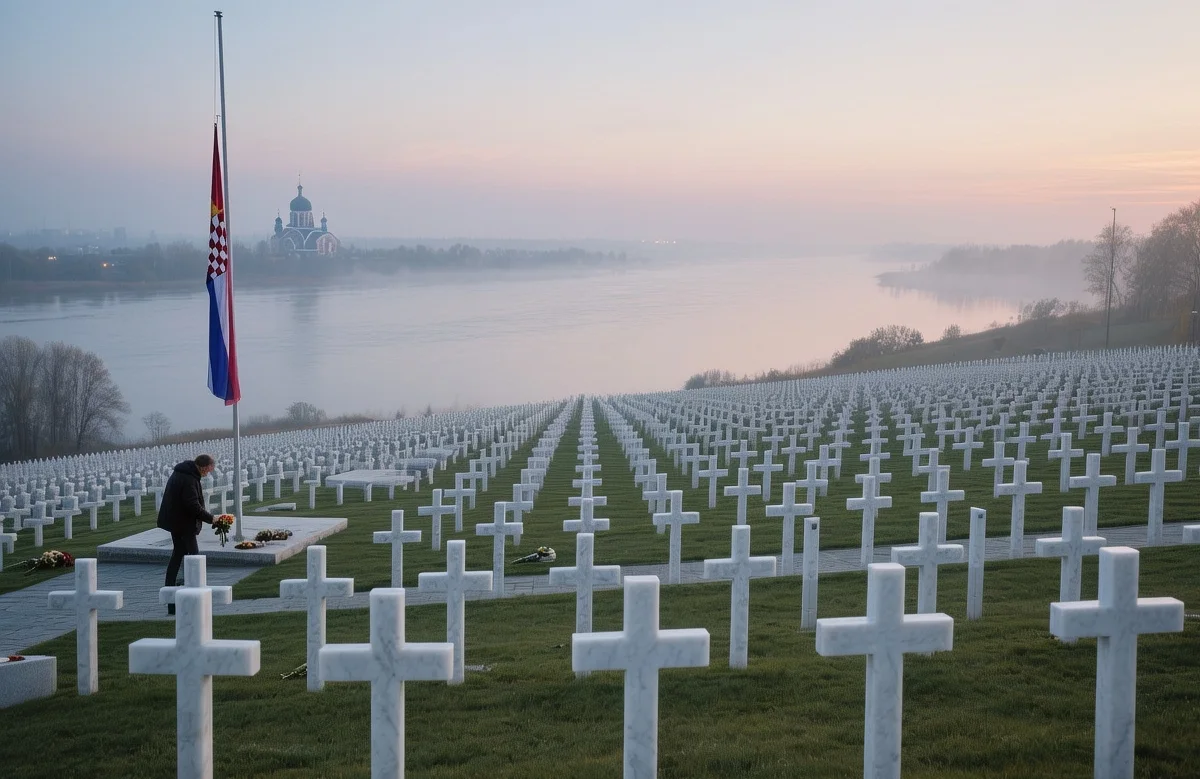
The first light of dawn breaks over the Danube, casting a silver veil across the Memorial Cemetery of the Victims of the Homeland War in Vukovar, where over 938 white marble crosses stand in solemn rows on a gentle slope overlooking the river. You hear it before you feel the weight of history—the soft rustle of flags at half-mast, the distant tolling of church bells from the reconstructed St. Nicholas Orthodox Church, the quiet footsteps of visitors placing flowers at the eternal flame. This is Croatia's most profound site of remembrance, a 27-hectare sanctuary dedicated to those who fell during the 87-day siege of Vukovar in 1991, when a city of 44,000 became a symbol of resistance and sacrifice. Within these carefully tended grounds, where pathways wind through rose gardens and limestone monuments bear names of the fallen, the Vukovar Memorial matters not merely as a historical record but as a living testament to reconciliation—a place where you can walk among symbols of loss and hope while breathing air scented with river mist, blooming linden trees, and the quiet dignity of a community that has chosen memory as a foundation for peace.
Why Vukovar Memorial Embodies Collective Healing
The Vukovar Memorial complex represents far more than a cemetery—it embodies one of Europe's most thoughtful approaches to post-conflict remembrance, where honoring the past serves as a bridge toward reconciliation. Designed by architects and landscape artists following the end of the Croatian War of Independence, the Memorial Cemetery opened in 1998 to provide a dignified resting place for victims identified through painstaking forensic work. The site's layout follows a deliberate symbolic geometry: the central pathway, 300 meters long and lined with 938 white marble crosses, represents the journey from suffering to peace, while the eternal flame at the entrance symbolizes memory that never extinguishes [[4]]. Each cross bears a name, date of birth, and date of death—personalizing loss while creating a collective monument to resilience.
Beyond its commemorative function, the memorial fulfills a profound educational need: ensuring that future generations understand the human cost of conflict while learning the value of dialogue and tolerance. The adjacent Memorial Center, opened in 2015, houses exhibitions documenting Vukovar's history from pre-war multicultural harmony through the siege and into contemporary reconstruction efforts. Conservation techniques prioritize dignity and permanence: marble crosses are crafted from locally quarried stone resistant to continental weathering, bronze plaques use protective coatings to prevent oxidation, and landscaping incorporates native species that require minimal intervention while providing seasonal beauty [[7]]. This philosophy extends to visitor experience: guided tours led by trained interpreters provide historical context without sensationalism, multilingual signage ensures accessibility, and quiet zones encourage reflection rather than tourism.
Today, the Vukovar Memorial serves as a model for how societies can transform sites of trauma into spaces of education and hope. Its integration with the city's broader reconstruction—where bullet-scarred buildings stand beside restored Baroque architecture—creates a living landscape where memory and renewal coexist, inviting visitors not merely to observe history but to participate in the ongoing work of building peace.
The Best Time to Experience Vukovar Memorial
Timing your visit to the Vukovar Memorial profoundly shapes your encounter with this sanctuary of remembrance. For optimal conditions—respectful atmosphere, comfortable weather, and meaningful programming—plan your arrival between May 10 and June 20 or September 5 and October 15. During these shoulder seasons, daytime temperatures range from 17–25°C (63–77°F), with refreshing Danube breezes keeping humidity pleasant. Morning visits between 8:00–10:00 AM offer the softest light for photography and the quietest atmosphere for reflection, while late afternoon walks from 4:30–6:30 PM capture golden-hour warmth that softens the marble monuments.
Summer brings longer days but also increased visitation: from June 21 through September 4, temperatures climb to 26–31°C (79–88°F), and the memorial sees peak crowds during commemorative events, particularly around November 18 (Vukovar Remembrance Day). However, this period features extended daylight hours and warm evenings of 19–23°C (66–73°F), perfect for walking the Danube promenade after memorial visits. If visiting during peak season, arrive before 9:00 AM or after 5:00 PM to experience the site's tranquility and secure unobstructed viewpoints [[12]].
Avoid November through February unless you specifically seek solitude and don't mind temperatures of -3–8°C (27–46°F) with frequent fog, rain, or occasional snow. While winter offers atmospheric mist-shrouded monuments and empty pathways, the Memorial Center reduces hours, and outdoor ceremonies may be limited by weather conditions.
For current opening hours, commemorative event schedules, and guided tour bookings, visit the https://mcdrvu.hr/en/ official tourism website, which provides comprehensive visitor information for Vukovar and its memorial sites in Croatian, English, and German [[2]].
Approximate Budget for a 7-Day Trip
Vukovar offers exceptional value among European heritage destinations, with memorial sites accessible at no cost. The following budget assumes a mid-range travel style with comfortable accommodations, quality dining, and active cultural immersion in eastern Croatia.
- Accommodation: €48–€105 per night for a double room in a family-run guesthouse or three-star hotel within Vukovar city center. Budget options start at €35/night; upscale hotels with Danube views run €80–€130/night during commemorative periods. Booking directly with properties often yields 10–15% discounts.
- Food: €25–€46 per day per person
- Breakfast: €4–€8 (coffee €1.80, pastry €2.20, or full breakfast €6 at local konoba)
- Lunch: €9–€14 (fish stew €12, grilled river carp €13, local kulen and cheese board €10)
- Dinner: €13–€23 (three-course Slavonian meal with wine at family restaurant; mid-range dinner for two averages €42)
- Transportation:
- Local bus (one zone within Vukovar): €1.20 per ride
- Regional bus to Osijek or Belgrade: €10–€22 depending on distance
- Car rental: €27–€41/day (useful for exploring Slavonia; parking near memorial is free)
- Osijek Airport transfers: €38 one-way taxi or €9 bus to Vukovar + €3 local transport
- Attractions:
- Vukovar Memorial Cemetery entry: Free
- Memorial Center guided tour: €5 per person (English/German)
- Ovčara Memorial Center visit: Free (donations appreciated)
- Vukovar Water Tower observation deck: €3
- Danube River boat excursion: €12–€20
- Miscellaneous:
- Souvenirs: €6–€25 (memorial postcards, local honey, peace-themed crafts)
- Tourist tax: €1.00 per person per night (April–September); €0.60 off-season
- Travel insurance: €19–€33 for week-long coverage
Total estimated cost for 7 days: €570–€1,020 per person (based on double occupancy; solo travelers should add 25–35% for single-room supplements)
7 Essential Vukovar Memorial Experiences
- Walk the Avenue of Crosses at dawn: Begin at the memorial entrance by 7:00–8:00 AM, when morning mist often rises from the Danube and the first light illuminates the 938 white marble crosses. Follow the central pathway (300 meters, 20–30 minutes at reflective pace), pausing to read names and dates inscribed on each monument. The soft light enhances the texture of carved stone, and you'll experience the site's profound silence without crowds. Bring a journal for reflection; photography is permitted but maintain respectful distance from visitors paying respects [[4]].
- Visit the Memorial Center exhibition: Enter the modern interpretation center adjacent to the cemetery (open Tuesday–Sunday 9:00 AM–5:00 PM, free entry) to engage with multimedia displays documenting Vukovar's history from pre-war multicultural life through the siege and into reconstruction. Allow 60–75 minutes to explore interactive timelines, survivor testimonies, and artifacts that illustrate daily life during the 87-day siege. Audio guides in English, German, and Italian (€2 supplement) provide rich context without overwhelming emotion.
- Attend the eternal flame ceremony: Each evening at 6:00 PM, a brief ceremony at the memorial's eternal flame honors the fallen with a moment of silence and the laying of flowers. Visitors are welcome to participate; arrive by 5:45 PM to secure a respectful position. The ritual, unchanged since the memorial's opening, offers a powerful connection to Vukovar's ongoing commitment to remembrance. Dress modestly; photography during the ceremony should be discreet and non-intrusive.
- Explore the Ovčara Memorial Center: Located 5 kilometers east of Vukovar, this site commemorates victims of the Ovčara farm massacre. Access via guided tour only (departs Vukovar Tourist Office daily at 10:00 AM and 2:00 PM, €8 per person includes transportation). The 90-minute experience includes a documentary screening, walk through the preserved farm buildings, and time for reflection at the memorial wall. Advance booking recommended; groups limited to 15 participants to maintain dignity [[12]].
- Walk the Danube promenade at sunset: Conclude your memorial visit with a stroll along Vukovar's reconstructed riverside promenade (2.1 kilometers, flat and accessible). Begin at the Water Tower memorial (bullet-scarred landmark now serving as observation deck) and walk westward as the setting sun casts golden light across the Danube. This path connects sites of destruction with symbols of renewal, offering perspective on Vukovar's journey from tragedy to hope. Best visited 5:00–7:00 PM in summer for optimal light and atmosphere.
- Participate in a peace education workshop: The Memorial Center offers monthly workshops on conflict resolution, intercultural dialogue, and historical empathy (typically first Saturday of each month, 10:00 AM–12:00 PM, free with advance registration). These sessions, led by trained facilitators, provide deeper understanding of Vukovar's role in contemporary European reconciliation efforts. Suitable for ages 16+; bring notebook for reflection exercises. Contact +385 32 221 444 for current schedule.
- Light a candle at the Chapel of Remembrance: Within the memorial complex, the small ecumenical chapel welcomes visitors of all faiths to light a candle in memory of the fallen. Open daily 8:00 AM–6:00 PM; candles available for €1 donation. The chapel's simple architecture—stone walls, wooden pews, stained glass depicting doves—creates a serene space for personal reflection. Visit mid-afternoon (2:00–4:00 PM) when natural light filters through windows, illuminating the space with gentle warmth.
3 Hidden Gems Most Travelers Miss
- The Rose Garden of Names: Tucked behind the main memorial pathway, a quiet garden features rose bushes planted in memory of individual victims, each labeled with a name and brief biography. Most visitors focus on the central avenue of crosses and miss this intimate space. Access via the path marked "Vrt Ruža" near the chapel; open daily during memorial hours. Best visited mid-morning (10:00–11:30 AM) when light illuminates petals and the garden is least crowded. Bring a single flower to place at a rose bush as a personal tribute; staff can assist in locating specific names.
- The Danube Reflection Point: At the memorial's eastern edge, a discreet wooden platform extends toward the river, offering a unique perspective: the memorial's white crosses reflected in Danube waters at sunrise. Most tourists overlook this unmarked spot; look for the small sign "Točka Razmišljanja" (Point of Reflection). Accessible via the eastern pathway; best visited 6:30–7:30 AM in summer when mist creates ethereal conditions. Bring a tripod for photography; maintain silence to honor the contemplative atmosphere.
- The Survivor Testimony Archive: Within the Memorial Center's research library, a digital archive preserves oral histories from Vukovar siege survivors. While primarily for scholars, the archive welcomes interested visitors by appointment (email archive@memorial-vukovar.hr at least 72 hours ahead). The 45-minute introduction (free) includes curated excerpts from testimonies, providing deeply personal perspectives on resilience and reconciliation. Open Tuesday–Thursday 1:00–4:00 PM; bring notebook for reflection. This experience offers profound insight rarely available to casual visitors.
Cultural & Practical Tips
- Language essentials: Croatian is the official language, though Serbian and Hungarian are also spoken in eastern Croatia due to the region's multicultural heritage. Essential phrases: Dobar dan (DOH-bar dahn) for "Good day," Hvala (HVAH-lah) for "Thank you," Oprostite (oh-PROH-stee-teh) for "Excuse me," and Živjeli (ZHEE-vyeh-lee) for "Cheers." Memorial signage is multilingual (Croatian/English/German).
- Photography etiquette: The Vukovar Memorial is a sacred space—maintain respectful distance from visitors paying respects, avoid photographing individuals without permission, and refrain from using flash inside exhibition spaces. Drone photography requires prior permission from memorial management (+385 32 221 444) due to the site's solemn nature.
- Dress code considerations: Modest attire is expected at memorial sites: shoulders and knees covered, hats removed indoors. Comfortable walking shoes recommended for the 300-meter central pathway and surrounding grounds. Bring a light jacket even in summer—early mornings and evenings can be cool near the Danube.
- Currency and payments: Croatia adopted the Euro (€) in January 2023. While the Memorial Center café accepts credit cards, candle donations and small vendors may require cash. ATMs are available in Vukovar city center; bring €20–€50 in small denominations for incidental purchases.
- Emotional preparedness: Visiting sites of remembrance can evoke strong emotions. Allow time for reflection after your visit; the Danube promenade offers a gentle transition space. If needed, memorial staff can provide information about counseling resources. Traveling with companions allows for shared processing of the experience.
- Respect commemorative events: Vukovar hosts several annual commemorations, particularly around November 18 (Remembrance Day). During these periods, expect larger crowds, ceremonial protocols, and potential road closures. Check the official tourism website for event schedules; visitors are welcome but should observe respectful behavior and follow staff guidance.
- Accessibility information: The memorial's main pathways are wheelchair-accessible with gentle gradients and resting benches. The Memorial Center features elevators and accessible restrooms. Consult the official website for detailed accessibility notes and staff assistance options. Guided tours can be adapted for visitors with mobility considerations with advance notice.
Conclusion: Travel with Reverence, Not Just Curiosity
Vukovar Memorial invites a different rhythm of travel—one measured not in sights collected but in understanding deepened: the weight of a name carved in marble, the quiet solidarity of strangers sharing a moment of silence, the profound realization that memory, when tended with care, becomes a foundation for peace. To rush through this sanctuary of remembrance, treating it as merely another stop on an itinerary without pausing to feel the human stories behind each cross or listen to the lessons embedded in Vukovar's journey from destruction to renewal, is to miss its essential gift: the opportunity to slow down, to reflect, to let the courage of those who suffered recalibrate your sense of what matters.
Your visit carries gentle responsibility: honor the memorial's purpose by observing respectful behavior and supporting educational initiatives; recognize that Vukovar's story is not merely Croatian but universally relevant to societies navigating the aftermath of conflict; and understand that true remembrance requires not just observation but engagement—with history, with others, and with the ongoing work of building a more peaceful world. Leave space in your journey for unplanned moments—the conversation with a survivor, the unexpected connection with a fellow traveler, the quiet resolve to carry Vukovar's lesson of resilience forward.
Walk these grounds not as a tourist collecting experiences, but as a guest honored to share in a community's commitment to memory and hope. Let the Danube's steady flow remind you of time's healing power, let the white crosses inspire your commitment to peace, and let Vukovar's courage teach you that the greatest luxury is not speed but stillness—the courage to linger, to notice, to truly arrive.