
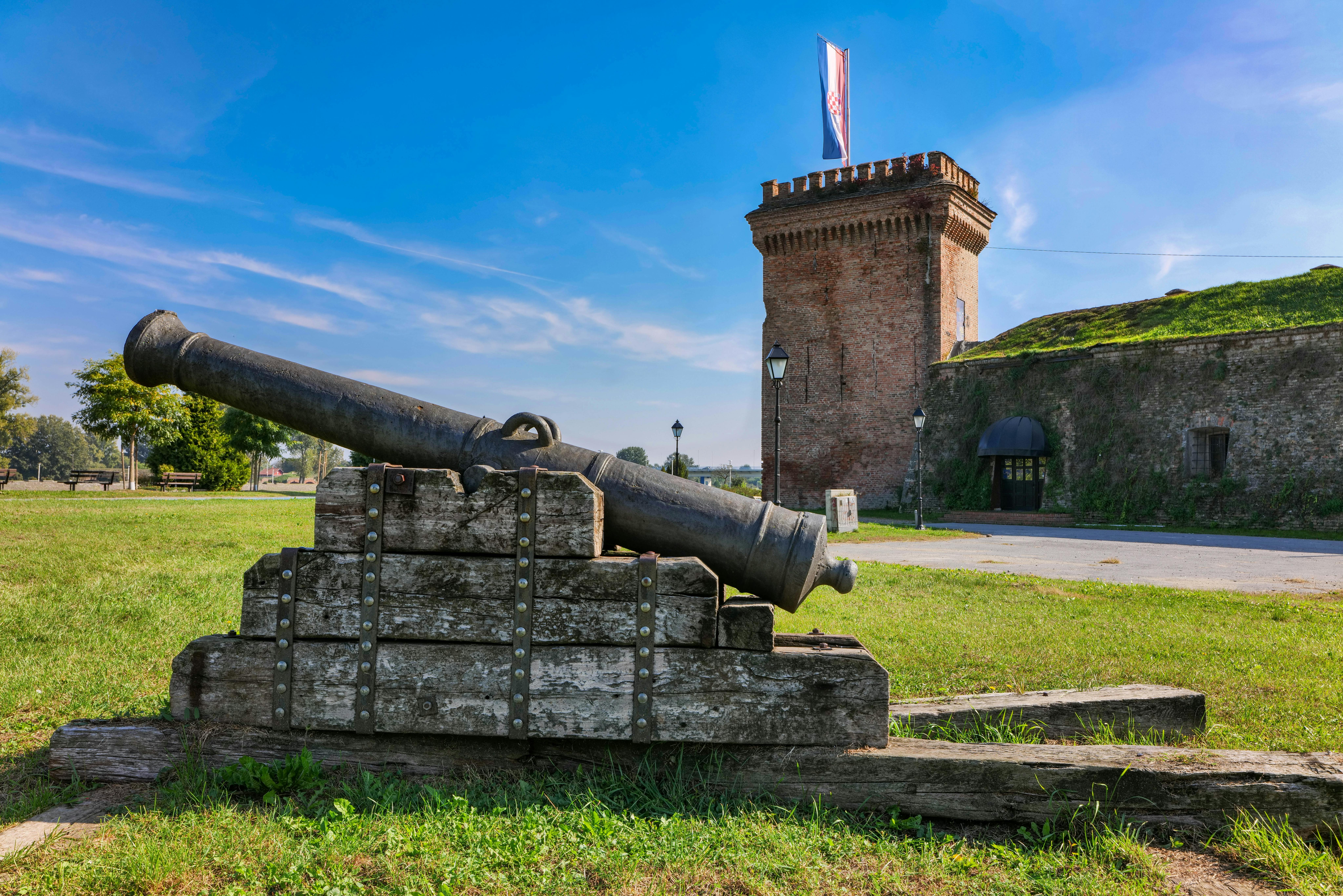
Osijek Fortress: Where Baroque Grandeur Meets Danube Spirit
The late afternoon sun gilds the ochre facades of Tvrđa, Osijek's 18th-century fortress district, casting long shadows across cobblestones worn smooth by three centuries of footsteps. You hear it before you see the full panorama: the distant chime of church bells from St. Peter and St. Paul, the gentle murmur of café conversations spilling onto pedestrian streets, the soft rustle of leaves from linden trees planted along the main square. This is Croatia's best-preserved Habsburg-era military complex—a geometric marvel of star-shaped fortifications, Baroque palaces, and tree-lined boulevards that once defended the frontier between empire and Ottoman territory. Within these carefully restored walls, where original 1700s masonry stands beside vibrant street art and period architecture houses contemporary galleries, Tvrđa matters not merely as a historical exhibit but as a living testament to resilience—a place where you can walk through layers of imperial history while breathing air scented with roasted coffee, river mist from the nearby Drava, and the quiet confidence of a community that has transformed military precision into cultural vitality.
Why Osijek Fortress Embodies Baroque Urban Planning
Tvrđa represents far more than a charming historic quarter—it embodies one of Central Europe's most sophisticated examples of 18th-century military urbanism, where defensive engineering and aesthetic harmony converged to create a functional fortress that doubled as a civic masterpiece. Constructed between 1712 and 1780 under Habsburg direction following the retreat of Ottoman forces, the fortress solved a critical strategic problem: securing the volatile border region between the Austrian Empire and former Ottoman territories. Engineers employed the Vauban system of fortification—named for French military architect Sébastien Le Prestre de Vauban—creating a star-shaped perimeter with eight bastions, each positioned to provide overlapping fields of fire across the surrounding plain [[4]]. The defensive walls, averaging 12 meters in height and 3 meters in thickness, were built from locally fired brick bonded with lime mortar, a technique that has allowed the structures to withstand centuries of weathering while maintaining structural integrity.
Beyond its military function, Tvrđa fulfilled a profound civic need: establishing a model European town that could attract administrators, merchants, and artisans to stabilize the region. The urban plan follows strict Baroque principles: a central square (Trg Svetog Trojstva) measuring approximately 100 by 60 meters anchors the composition, while two primary axes—Kapucinska Street and Županijska Street—intersect at right angles, creating a grid that facilitates both military movement and commercial activity. Building regulations mandated uniform cornice heights of 10–12 meters, facade alignments within 0.5 meters of the street line, and consistent window proportions to maintain visual harmony [[7]]. This meticulous planning extends to infrastructure: underground brick-lined drainage channels, still functional today, prevent flooding during Drava River high waters; wide streets (12–15 meters) allow for ventilation and fire prevention; and public squares incorporate mature linden trees planted in the 1750s that provide shade without obstructing defensive sightlines.
Today, Tvrđa's preservation philosophy prioritizes adaptive reuse over museum-style freezing: Baroque palaces now house the Museum of Slavonia, the Croatian National Theatre, and contemporary art galleries, ensuring that historic spaces remain vibrant cultural venues. This approach has earned recognition from the European Heritage Label program and made Tvrđa a model for sustainable heritage tourism in the Balkans—a place where you don't just observe history but participate in its ongoing story.
The Best Time to Experience Osijek Fortress
Timing your Tvrđa visit dramatically shapes your encounter with this Baroque sanctuary. For optimal conditions—pleasant weather, vibrant cultural programming, and manageable crowds—plan your arrival between May 12 and June 22 or September 6 and October 16. During these shoulder seasons, daytime temperatures range from 18–26°C (64–79°F), with refreshing breezes from the Drava River keeping humidity comfortable. Morning strolls between 8:00–10:00 AM offer the softest light for photographing ochre facades, while late afternoon walks from 5:00–7:00 PM capture golden-hour warmth that makes Baroque stuccowork glow.
Summer brings festival energy but also increased visitation: from June 23 through September 5, temperatures climb to 27–32°C (81–90°F), and the fortress sees peak crowds during the Osijek Summer of Culture festival (typically July 10–August 20), when outdoor concerts and street performances fill every square. However, this period features extended daylight hours and warm evenings of 20–24°C (68–75°F), perfect for riverside dining after fortress exploration. If visiting during peak season, arrive before 9:00 AM or after 6:00 PM to experience Tvrđa's tranquility and secure unobstructed viewpoints [[12]].
Avoid November through February unless you specifically seek solitude and don't mind temperatures of -2–7°C (28–45°F) with frequent fog, rain, or occasional snow. While winter offers atmospheric mist-shrouded streets and empty cafés, many outdoor attractions reduce hours, and the famous Baroque gardens enter dormancy.
Approximate Budget for a 7-Day Trip
Osijek offers exceptional value among Central European heritage destinations, with most Tvrđa attractions free to explore. The following budget assumes a mid-range travel style with comfortable accommodations, quality dining, and active cultural immersion in eastern Croatia.
- Accommodation: €50–€110 per night for a double room in a restored Baroque building within Tvrđa or nearby Donji Grad. Budget guesthouses start at €35/night; upscale boutique hotels with period furnishings run €85–€140/night during festival season. Booking directly with properties often yields 10–15% discounts.
- Food: €26–€48 per day per person
- Breakfast: €4–€8 (coffee €1.80, pastry €2.20, or full breakfast €6 at café)
- Lunch: €9–€15 (štrukli pastry €11, grilled river fish €13, local kulen and cheese board €10)
- Dinner: €14–€24 (three-course Slavonian meal with wine at konoba; mid-range dinner for two averages €45)
- Transportation:
- Local bus (one zone within Osijek): €1.30 per ride
- Regional bus to Zagreb or Belgrade: €12–€25 depending on distance
- Car rental: €28–€42/day (useful for exploring Slavonia; parking in Tvrđa averages €0.80/hour)
- Osijek Airport transfers: €35 one-way taxi or €8 bus to city center + €2 local transport
- Attractions:
- Museum of Slavonia entry: €3.50 per person
- Tvrđa guided walking tour: €8 per person (90 minutes, English/German)
- Summer festival concert tickets: €6–€12
- Drava River boat excursion: €10–€18
- Wine tasting at local Slavonian vineyards: €8–€15
- Miscellaneous:
- Souvenirs: €7–€28 (Baroque-themed crafts, local paprika, honey)
- Tourist tax: €1.00 per person per night (April–September); €0.60 off-season
- Travel insurance: €18–€32 for week-long coverage
Total estimated cost for 7 days: €590–€1,050 per person (based on double occupancy; solo travelers should add 25–35% for single-room supplements)
7 Essential Osijek Fortress Experiences
- Walk the Baroque Trail at sunrise: Begin at Trg Svetog Trojstva by 7:00–8:00 AM, when Tvrđa is quiet and morning light illuminates the ornate facades of the General Command Building and Holy Trinity Column. Follow the marked heritage route (approximately 2.2 kilometers, 75 minutes at leisurely pace), pausing to photograph details: Baroque window frames, wrought-iron balcony railings, and stucco medallions depicting military motifs. The soft light enhances the texture of 300-year-old plasterwork, and you'll capture images without crowds. Bring a polarizing filter to reduce glare on ochre surfaces [[4]].
- Explore the Museum of Slavonia: Enter the former General Command building (open Tuesday–Sunday 9:00 AM–5:00 PM, entry €3.50) to discover exhibitions spanning prehistoric artifacts to 20th-century Slavonian culture. Allow 60–75 minutes to engage with period rooms, archaeological finds from nearby Roman sites, and interactive displays about Tvrđa's military history. The museum's courtyard hosts summer concerts; check the schedule for evening performances featuring traditional Slavonian music.
- Attend an evening concert in the fortress square: During summer months, Trg Svetog Trojstva hosts open-air classical and folk music performances (typically Fridays at 8:00 PM, free or €5–€10 admission). The acoustics of the enclosed square amplify every note, creating an intimate experience where you can hear the resonance of traditional tamburica instruments. Arrive by 7:30 PM to claim seating on stone benches; dress smart-casual. The combination of live music, historic architecture, and candlelight creates an unforgettable sensory experience [[12]].
- Savor coffee at a historic café: Pause at Café Evropa or Kavana Tvrđa, establishments housed in restored Baroque buildings with original frescoed ceilings. Order a kava (Croatian coffee, similar to espresso) for €1.80 and a slice of štrudla (fruit strudel) for €3, then linger while observing the rhythm of local life. Morning visits (8:00–10:00 AM) provide the most authentic atmosphere, when residents gather to discuss politics and culture over their second coffee.
- Walk the fortress ramparts: Access the preserved sections of Tvrđa's defensive walls near the Water Gate (slobodan pristup, open daily) for panoramic views across the Drava River floodplain. The 400-meter walkway follows the original bastion line, offering perspectives on the fortress's geometric layout and the modern city beyond. Best visited late afternoon (4:30–6:00 PM) when the setting sun casts golden light across brick fortifications and the river shimmers in the distance.
- Visit the Holy Trinity Column at golden hour: Conclude your Tvrđa exploration at the square's centerpiece: the 1729 Baroque plague column adorned with statues of saints. Position yourself on the eastern side of the square approximately one hour before sunset (6:30–7:30 PM in summer) to capture the monument illuminated in warm amber light. The column's intricate carvings—depicting scenes of divine protection—become especially vivid in directional light, offering exceptional photography opportunities.
- Experience Slavonian cuisine at a traditional konoba: Reserve a table at Konoba Didin San or Restaurant Waldinger for an authentic taste of eastern Croatia. Order the fiš paprikaš (spicy river fish stew, €14) or kulen (spicy smoked sausage) with local cheese, followed by orehnjača (walnut roll) for dessert. The wine list features Slavonian Graševina and Frankovka varieties at €12–€22 per bottle—ask the owner for pairing recommendations. Evening reservations between 7:00–9:00 PM provide the most atmospheric experience.
3 Hidden Gems Most Travelers Miss
- The Underground Casemates: Beneath Tvrđa's northern bastion lies a network of restored 18th-century military tunnels, originally designed as bomb-proof storage and troop shelters. Most visitors overlook the unmarked entrance near the Water Tower; ask at the Tourist Office for access (guided tours Saturdays at 3:00 PM, €5 per person, advance booking recommended). The 45-minute tour reveals vaulted brick chambers that maintain a constant 14°C (57°F) year-round, with informational panels explaining Vauban fortification engineering. Bring a light jacket even in summer; the tour concludes with a tasting of local rakija in a historic cellar.
- The Artists' Alley on Županijska Street: Tucked behind the main pedestrian thoroughfare, this narrow passage features rotating exhibitions by local painters, sculptors, and photographers working in restored ground-floor studios. Most tourists rush past the unmarked courtyard entrance; look for the green door with brass plaque. Open Wednesday–Sunday 11:00 AM–6:00 PM (free entry). The intimate setting allows direct conversation with creators about their Slavonian-inspired work. Visit mid-afternoon (2:00–4:00 PM) when natural light illuminates the studios and artists are most likely to be present.
- The Drava River Embankment at Dawn: While most visitors focus on Tvrđa's interior, the fortress's eastern edge offers a serene riverside promenade with views across the Drava to Serbia. Access via the path behind the Museum of Slavonia; the 1.2-kilometer walkway follows the historic defensive moat, now a linear park with native wetland plants. Best visited early morning (6:30–8:00 AM) when mist rises from the river and birdwatchers spot herons, kingfishers, and occasional white-tailed eagles. Bring binoculars; the embankment is also a popular spot for sunrise photography.
Cultural & Practical Tips
- Language essentials: Croatian is the official language, though Hungarian and Serbian are also spoken in eastern Croatia due to the region's multicultural heritage. Essential phrases: Dobar dan (DOH-bar dahn) for "Good day," Hvala (HVAH-lah) for "Thank you," Oprostite (oh-PROH-stee-teh) for "Excuse me," and Živjeli (ZHEE-vyeh-lee) for "Cheers." Many signs are trilingual (Croatian/English/Hungarian).
- Photography etiquette: Tvrđa is a public space, but respect residents' privacy when photographing windows or private courtyards. Avoid using tripods during peak hours (10:00 AM–4:00 PM) to prevent obstructing pedestrian flow. Interior photography in museums requires permission; flash is prohibited in all exhibition spaces.
- Footwear recommendations: Tvrđa's cobblestone streets are charming but uneven. Wear comfortable walking shoes with good grip—heels are impractical on historic paving. The fortress district is largely flat, making it accessible for most mobility levels.
- Currency and payments: Croatia adopted the Euro (€) in January 2023. While most cafés and shops accept credit cards, smaller vendors and museum entry fees may require cash. ATMs are plentiful in the city center; bring €20–€50 in small denominations for incidental purchases.
- Weather preparedness: Continental climate means distinct seasons. Even in summer, bring a light jacket for evenings—the Drava River valley can cool quickly after sunset. In spring and fall, pack layers; temperatures can vary by 10°C (18°F) between morning and afternoon. Check forecasts for afternoon thunderstorms in summer.
- Respect local rhythms: Many Osijek residents use Tvrđa for daily exercise and socializing. Keep conversations at a moderate volume, yield to faster walkers, and avoid blocking narrow passages for extended photo sessions. Between 1:00–4:00 PM, some cafés observe a quiet period aligned with traditional rest time.
- Accessibility information: Tvrđa's main pedestrian streets are wheelchair-accessible, with smooth paving on primary routes. Some historic buildings feature steps; consult the official tourism website for detailed accessibility notes. Accessible restrooms are available at the Tourist Office and Museum of Slavonia.
Conclusion: Travel with Presence, Not Just Checklists
Tvrđa invites a different rhythm of travel—one measured not in landmarks checked but in moments noticed: the way morning light catches the curve of a Baroque balcony, the sound of tamburica music echoing through a stone courtyard, the shared smile with a local who pauses to admire the same facade you're photographing. To rush through this Baroque jewel, snapping photos without pausing to feel the texture of 300-year-old brick or listen to the stories embedded in every military motif, is to miss its essential gift: the opportunity to slow down, to appreciate craftsmanship that valued precision over speed, to let imperial elegance recalibrate your sense of what endures.
Your visit carries gentle responsibility: support preservation by purchasing from local artisans and respecting historic surfaces; honor the residential nature of this living community by observing quiet hours and treading lightly on ancient cobblestones; and recognize that Tvrđa's magic lies not in spectacle but in authenticity. Leave space in your itinerary for unplanned discoveries—the impromptu conversation with a conservator restoring a fresco, the unexpected view of a hidden courtyard garden, the realization that sometimes the most profound travel experiences arrive not from grand gestures but from simply being present.
Walk Tvrđa not as a tourist collecting destinations, but as a guest honored to share in a centuries-old tradition of military artistry transformed into cultural vitality. Let the Baroque facades inspire your eye, let the cobblestones ground your steps, and let this Slavonian fortress remind you that the greatest luxury is not speed but stillness—the courage to linger, to notice, to truly arrive.