
Krushuna Waterfalls: Where Turquoise Cascades Meet Medieval Silence
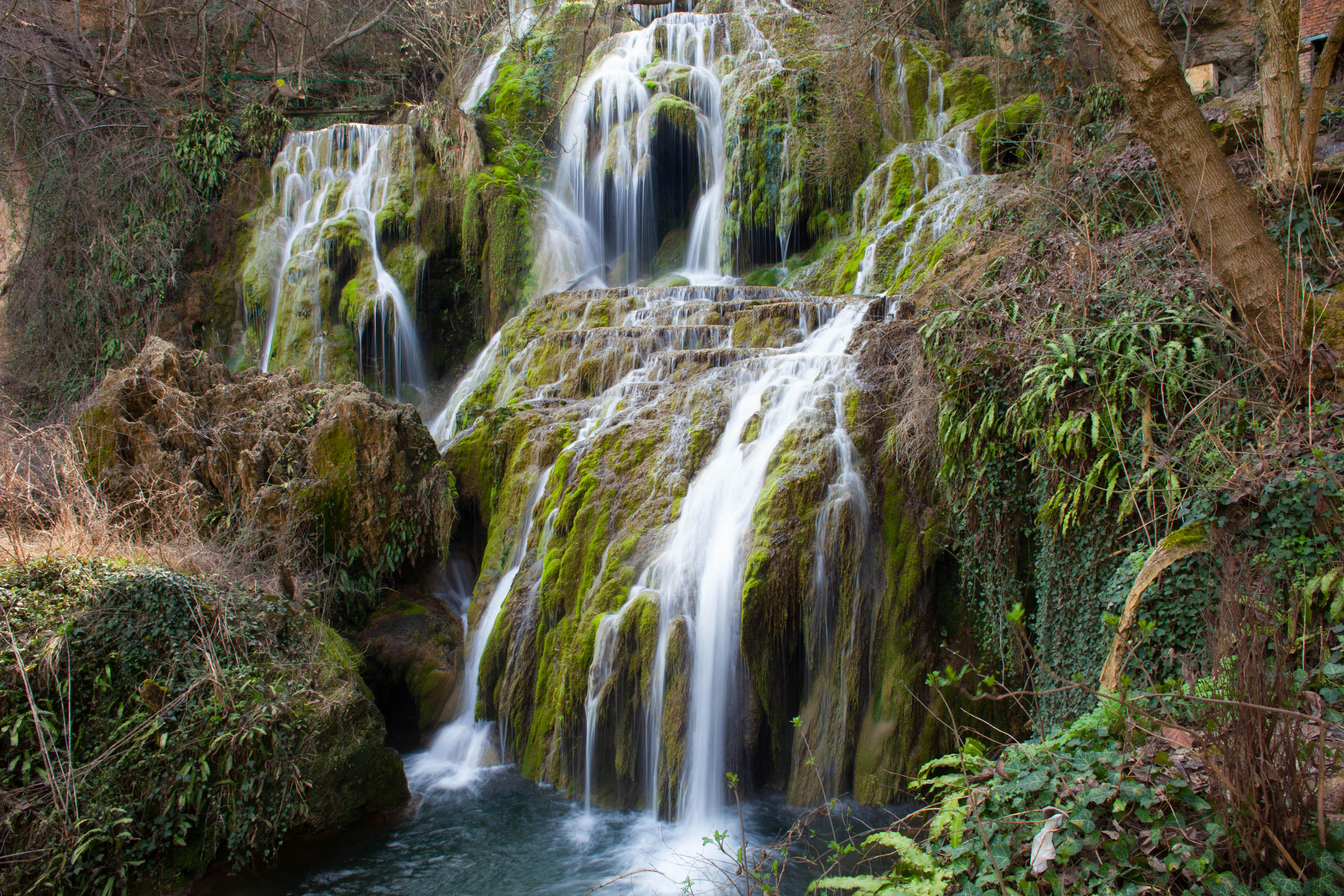
The sound reaches you before the sight—a constant, soothing rush that seems to wash the tension from your shoulders with every step. You follow the wooden path through dense forest, crossing 15 small bridges that span the winding stream, until suddenly the trees part and you are standing before Bulgaria's largest travertine cascade . Water the color of melted turquoise tumbles over creamy limestone terraces, dropping 20 meters into a crystalline pool that locals believe holds healing powers . This is Krushuna Falls—known officially as the "Maarata" natural landmark—a series of cascades and emerald pools formed over 120 million years, when this entire region lay beneath an ancient sea . Designated as one of Bulgaria's 100 National Tourist Sites, this is not merely a waterfall; it is a geological masterpiece, a medieval sanctuary, and the most refreshing escape in the Balkan countryside .
Why Krushuna Embodies Bulgaria's Karst Magic
The story of Krushuna begins 120 million years ago, when the Devetaki Plateau lay submerged beneath a prehistoric sea . Over eons, the mineral-rich waters that still emerge from the mountain created something extraordinary: travertine terraces formed by dissolved limestone precipitating back into solid rock, building the creamy cascades inch by painstaking inch . The water's stunning turquoise color comes from this same dissolved limestone, which scatters sunlight into shades of blue and green . Above the main waterfall, the Krushuna Cave serves as the spring's source, its galleries coated in a strange white formation called "Moon Milk"—a substance so unusual that scientists have discovered bacteria within it suitable for producing antibiotics . In the 13th and 14th centuries, Hesychast monks—followers of a mystical Orthodox Christian tradition emphasizing solitude and prayer—chose this dramatic gorge for their retreat . Their rock-hewn cells and meditation chapel still cling to the cliffs above the cascades, visible to those who climb the steep path to the waterfall's source .
The Best Time to Experience Krushuna Waterfalls
Spring and early summer deliver the waterfalls at their most dramatic. From April 1 through June 30, snowmelt from the Balkan Mountains swells the springs, creating the strongest flow and the most impressive cascade heights . Daytime temperatures during this period average a pleasant 18°C to 24°C (64°F to 75°F). The vegetation is at its greenest, and the path is alive with birdsong and wildflowers . September offers an alternative for those seeking fewer crowds: temperatures average 20°C to 26°C (68°F to 79°F), and the water, while lower, maintains its striking color . The best hours to visit are 8:00–10:00 AM or 4:00–6:00 PM, when the light slants through the trees and the day-trippers from Sofia have not yet arrived—or have already departed . Avoid July and August for solitude, as summer weekends bring crowds of up to 80,000 annual visitors ; also avoid December through February, when the paths become muddy and icy, and the water levels drop significantly . For up-to-date information on opening hours, consult the official tourism portal: www.bulgariatravel.org
Approximate Budget for a 7-Day Trip
This budget assumes a mid-range stay in Lovech (30 km from the waterfalls) or in a rural guesthouse near Krushuna village, with day trips to the waterfalls, Devetashka Cave, and the surrounding natural wonders. Bulgaria remains one of Europe's most affordable destinations. Prices are in Bulgarian Lev (BGN), with approximate US Dollars (1 BGN ≈ $0.55 USD).
- Accommodation: 50 BGN–150 BGN ($28–$83) per night. Family hotels in Lovech average 70 BGN ($38) per night. Guesthouses in Krushuna village start at 50 BGN ($28). The Krushuna waterfalls complex also includes a small hotel by the entrance for those who wish to stay on-site .
- Food: 25–50 BGN ($14–$28) per day. Breakfast: 5–10 BGN for banitsa and Bulgarian yogurt. Lunch at VITTO Bar & Grill near the waterfall entrance: 10–15 BGN for grilled meat and salad . Dinner: 15–25 BGN for traditional Bulgarian dishes at a Lovech mehana (tavern).
- Transportation: Bus from Sofia to Lovech: 15–20 BGN ($8–$11) one way, journey time 2.5–3 hours. Car rental from Sofia Airport: 40–60 BGN ($22–$33) per day—strongly recommended for accessing both the waterfalls and nearby cave. Taxi from Lovech to Krushuna Waterfalls: 20–30 BGN ($11–$17) each way.
- Attractions: Krushuna Waterfalls entrance: 6 BGN ($3.30) per adult . Devetashka Cave entrance: 4–5 BGN ($2.20–$2.75). Hisarya Fortress (Lovech): 3 BGN ($1.65). Covered Bridge (Lovech): free.
- Miscellaneous: Swimming pool access at Mineral Baths Krushuna (located at the waterfall entrance complex): 10 BGN ($5.50) . Combined guided tour from Sofia including Lovech, Devetashka Cave, and Krushuna Waterfalls: 95–135 EUR ($102–$145) per adult . Jar of local honey from village vendors: 6–10 BGN ($3.30–$5.50).
- Total for 7 days (mid-range, excluding flights): 600–1,100 BGN ($330–$605) per person.
7 Essential Krushuna Waterfalls Experiences
- Walk the 15 Bridges of the Eco-Trail: The well-maintained eco-path at Krushuna features 15 wooden bridges that crisscross the stream as it winds through the forest . The main red trail is easy and family-friendly, taking approximately one hour to complete while offering multiple viewpoints of the main cascade . The path is shaded, cool, and the sound of rushing water follows you the entire way—a sensory experience that has been described as "therapeutic" .
- Stand Before the 20-Meter Main Cascade: The Great Waterfall (Golyam Vodopad) plunges approximately 20 meters (65 feet) from the limestone cliffs into a clear, green pool below . The water splits into several branches as it falls, creating a multi-tiered spectacle that is the most photographed spot in the park. The cascade's turquoise color is most vivid on sunny days between 10:00 AM and 2:00 PM .
- Climb to the Source at Krushuna Cave: A steeper path (the blue trail, requiring 1.5–2 hours round trip) leads to the cave where the waterfall springs from the earth . Inside, you will find white formations known as "Moon Milk"—a strange, moldable substance that scientists have discovered contains bacteria with antibiotic properties . The cave is also the source of the water's healing reputation; locals have long believed it can treat joint and skin ailments .
- Discover the 13th-Century Monastic Cells: Hidden in the cliffs above the main cascade, accessible via a narrow path that branches from the blue trail, lie the rock-hewn cells and chapel of the Krushuna Hesychast Monastery . These monks chose this dramatically inaccessible spot in the 13th and 14th centuries to practice a mystical form of Orthodox Christianity focused on solitude and prayer . The cells are small—barely large enough for a person to lie down—and the chapel, carved into the rock, still shows traces of its original purpose.
- Swim in the Emerald Pools (Responsibly): Swimming is permitted in designated areas of the cascades, particularly in the pool at the base of the main waterfall . The water is cold and refreshing—a perfect relief on a hot summer day. On Saint George's Day (May 6), locals perform a ceremony at the waterfall, immersing themselves in the water to embrace its healing powers . Lifeguards are not always present; swim at your own risk and respect any posted signs.
- Combine with Devetashka Cave (15 Minutes Away): The spectacular Devetashka Cave, with its 35-meter-wide entrance and massive main hall illuminated by seven ceiling openings, lies just 15 kilometers (15 minutes by car) from Krushuna . The cave is one of Europe's most important bat habitats, home to 30,000 individuals of 15 species, and served as the filming location for "The Expendables 2" . The two sites—waterfalls and cave—are the classic Devetaki Plateau combination and are best visited together in a single day .
- Explore Lovech's Covered Bridge and Fortress: The historic city of Lovech (30 km from Krushuna) is worth a half-day exploration. Its famous Covered Bridge (Krivata Most), designed by Bulgarian architect Kolyo Ficheto in the 1870s, is the only structure of its kind in the Balkans . The Hisarya Fortress, perched on a hill above the city, offers panoramic views of the Osam River valley and dates to the First Bulgarian Empire (681–1018 CE) . The Varosha quarter, with over 160 restored Revival-era houses, is a living museum of Bulgarian architecture .
3 Hidden Gems Most Travelers Miss
- The Boninska Cave's Underground Lake: While most visitors focus on the main eco-trail, the Boninska Cave (2754 meters long) begins with a dry segment before opening into a water gallery containing an 800-meter underground lake—the longest in Bulgaria . The cave is part of a 6-kilometer system connected to the nearby Vodopada Cave. Access requires a guide (available for hire at the Krushuna entrance complex) and proper caving equipment (helmet, headlamp, boots)—this is not a casual detour but a serious adventure for experienced spelunkers. The underground lake's water is clear and still, reflecting the cave ceiling like black glass.
- The Hidden Waterfall of the Blue Route: Most tourists turn back after photographing the main cascade. But the longer blue trail (1.5–2 hours) continues beyond the cave to a lesser-known waterfall hidden deeper in the gorge . In spring, this cascade flows strongly, but in late summer it may be reduced to a trickle—local guides call it "the Secret." The path to it is more rugged than the main trail, and you will have the spot almost entirely to yourself.
- Saint George's Day Ceremony (May 6): If your travels bring you to Krushuna on May 6, you will witness a living tradition. On Saint George's Day, locals gather at the main waterfall for a ceremony dating back generations: they immerse themselves in the cold water, believing it carries healing properties for joint, skin, and other physical ailments . The ceremony begins around 10:00 AM and includes a priest's blessing and folk songs. Most tourists are unaware of the tradition; those who stumble upon it experience Krushuna not as a nature park but as a sacred landscape.
- Cash is essential at the entrance: The entrance fee of 6 BGN (approx. 3 EUR) per adult must be paid in cash; cards are not accepted at the ticket booth . Some cafés within the complex may accept cards, but do not rely on this. The parking is free .
- Opening hours: The waterfalls complex is open daily from 08:00 to 20:00 . The best time to visit is as close to 08:00 as possible—by 10:30 AM, the parking lot fills and the trails become crowded .
- Wear proper footwear: The eco-trail includes wooden bridges, stone steps, and natural terrain that can become slippery when wet. Hiking boots or sturdy sneakers with good grip are essential . Flip-flops are not safe, especially on the steeper sections of the blue trail.
- Nodding means NO: Bulgaria shares the famous head gesture quirk with Greece. A nod up and down means "no." A side-to-side shake means "yes." This confuses nearly every first-time visitor. If uncertain, use "da" (yes) and "ne" (no) verbally.
- Phrases to learn: "Zdravete" (ZDRA-ve-te) — hello. "Blagodarya" (bla-go-DA-rya) — thank you. "Vodopad" (vo-do-PAD) — waterfall. "Kolko struva vhodut?" (KOL-ko STRU-va VHO-dut?) — how much is the entrance?
- Bring water and snacks: While there are cafés at the entrance (including VITTO Bar & Grill), there are no facilities once you begin the eco-trail . The main trail takes 1–2 hours, the longer blue trail up to 2.5 hours. Carry your own water, especially in summer.
- Swimming information: Swimming is allowed in designated pools, but the water is cold (even in summer) due to its spring origin . There is no lifeguard on duty at the natural pools. The complex also includes a large public swimming pool called "Mineral Baths Krushuna" near the entrance, with an additional fee .
- Combine with Devetashka Cave: The two sites are only 15 minutes apart by car and are the classic day-trip combination . Devetashka Cave is closed from June 1 through July 31 for bat breeding, so plan your Krushuna visit accordingly if you wish to see both .
- Photography tips: The best light for photographing the main waterfall arrives between 10:00 AM and 2:00 PM, when the sun is high enough to illuminate the turquoise water without harsh shadows . A polarizing filter is essential to cut glare from the water's surface and enhance the blue-green color. Tripods are permitted but can be awkward on the narrow bridges; use a monopod for stability.
- Avoid weekends if possible: The site draws approximately 80,000 visitors annually, with peak crowding on summer weekends . If you can plan your visit for a weekday morning (Tuesday–Thursday), you will experience the falls in near-solitude—especially if you arrive by 09:00 AM.
Cultural & Practical Tips
Conclusion: Travel with Stillness, Not Just Selfies
You could walk the Krushuna eco-trail in 45 minutes—snap the main waterfall from every bridge, dip a toe in the turquoise pool, and tick another box on your Bulgarian itinerary. Many do. Or you could do what the Hesychast monks knew eight centuries ago: stay. Sit on the rock ledge beside the cascade and let the mist cool your face. Climb the steep path to the abandoned cells and imagine a life reduced to prayer, solitude, and the sound of falling water. Lower yourself into the pool on Saint George's Day and feel the cold spring on your skin—the same cold spring that has flowed from this limestone for 120 million years. Krushuna is not a theme park. It offers no light shows or glass elevators. What it offers is simpler: the chance to remember that water falling over stone, in the right light, at the right moment, can still stop you in your tracks. That the monks who carved their sanctuary into these cliffs were not escaping the world but discovering it. That the best souvenirs are not purchased but carried home in your bones: the sound of a cascade, the scent of wet limestone, the memory of a pool the color of melted sky. Stay until the late light turns the waterfall to liquid gold. Then walk out slowly. The bridges will still be here tomorrow. The moment will not.